2026 Toyota Grand Highlander Hybrid vs 2026 Hyundai Venue

Overview | |
MSRP$45,610 | MSRP$20,550 |
Listings11 | Listings40 |
Ratings & Reviews | |
User Reviews | User Reviews |
Expert reviews7.0 out of 10 | Expert reviews5.2 out of 10 |
Pros
Cons
| Pros
Cons
|
2026 Toyota Grand Highlander Hybrid Reviews SummaryAs its name implies, the 2026 Grand Highlander is bigger than the regular Highlander. It’s also just plain huge inside. With three available powertrains and trim levels ranging from budget-friendly to legitimately upscale, there is a Grand Highlander for anyone shopping in the $40,000 to $60,000 range. The current version launched as a 2024 model and carries over essentially unchanged for 2026. Verdict: Do super-functional appliances that promise to save money in the long run make buyers smile? If they do, drivers will probably be very happy with a 2026 Toyota Grand Highlander. | |
2026 Hyundai Venue Reviews SummaryAutomakers have traditionally had a hard time making money on entry-level subcompact cars, because they have low profit margins, but America has largely moved away from cars to crossover SUVs—and higher prices. That allows car companies to offer an entry-level subcompact SUV for thousands more than a similar sedan or hatchback. Such is the case with the Hyundai Venue, which costs more than its predecessor, the subcompact Accent that was dropped after the 2022 model year. While the price is higher, the advantage for buyers is a vehicle that generally has more cargo space and is more practical. We recently drove the 2026 Hyundai Venue SEL w/2-Tone Roof (yes, that’s the trim level name) to find out if a subcompact crossover is a better buy than a cheaper subcompact car. Verdict: The Hyundai Venue sacrifices refinement for a price point that isn’t as low as a comparable subcompact car. We’d be tempted to spend a little more for a slightly larger compact car with more power, features, and refinement. | |
No video found | No video found |
Popular Features & Specs | |
Engine2.5L 245 hp I4 Hybrid | Engine1.6L 121 hp I4 |
Drive TrainAWD | Drive TrainFWD |
Seating Capacity8 | Seating Capacity5 |
Horsepower | Horsepower121 hp @ 6300 rpm |
EV Battery Capacity1.3 kWh | EV Battery Capacity |
MPG City36 | MPG City29 |
MPG Highway32 | MPG Highway33 |
Engine | |
Engine Name2.5L 245 hp I4 Hybrid | Engine Name1.6L 121 hp I4 |
Torque | Torque113 lb-ft @ 4500 rpm |
Horsepower | Horsepower121 hp @ 6300 rpm |
DrivetrainAWD | DrivetrainFWD |
Fuel Economy | |
EV Battery Capacity1.3 kWh | EV Battery Capacity |
MPG City36 | MPG City29 |
MPG Highway32 | MPG Highway33 |
Interior | |
Seating Capacity8 | Seating Capacity5 |
Key Features | |
Navigation SystemStandard | Navigation System |
Safety | |
Front Crash Overall4 | Front Crash Overall4 |
Side Crash Overall5 | Side Crash Overall5 |
Dimensions & Capacity | |
Cargo Space20.6 cu ft | Cargo Space18.7 cu ft |
Curb Weight4565 lbs | Curb Weight2612 lbs |
Height72.1 in | Height61.6 in |
Length201.4 in | Length159.1 in |
Width78.3 in | Width69.7 in |
Wheelbase116.1 in | Wheelbase99.2 in |
Maximum Payload1410 lbs | Maximum Payload1158 lbs |
Number of doors4 | Number of doors4 |
Maximum Towing Capacity3500 lbs | Maximum Towing Capacity |
Overview | ||
MSRP | $45,610 | $20,550 |
Listings | ||
Ratings & Reviews | ||
User reviews | ||
Expert reviews | 7.0 out of 10Read full review | 5.2 out of 10Read full review |
Pros & cons | Pros
Cons
| Pros
Cons
|
Summary | As its name implies, the 2026 Grand Highlander is bigger than the regular Highlander. It’s also just plain huge inside. With three available powertrains and trim levels ranging from budget-friendly to legitimately upscale, there is a Grand Highlander for anyone shopping in the $40,000 to $60,000 range. The current version launched as a 2024 model and carries over essentially unchanged for 2026. Verdict: Do super-functional appliances that promise to save money in the long run make buyers smile? If they do, drivers will probably be very happy with a 2026 Toyota Grand Highlander. | Automakers have traditionally had a hard time making money on entry-level subcompact cars, because they have low profit margins, but America has largely moved away from cars to crossover SUVs—and higher prices. That allows car companies to offer an entry-level subcompact SUV for thousands more than a similar sedan or hatchback. Such is the case with the Hyundai Venue, which costs more than its predecessor, the subcompact Accent that was dropped after the 2022 model year. While the price is higher, the advantage for buyers is a vehicle that generally has more cargo space and is more practical. We recently drove the 2026 Hyundai Venue SEL w/2-Tone Roof (yes, that’s the trim level name) to find out if a subcompact crossover is a better buy than a cheaper subcompact car. Verdict: The Hyundai Venue sacrifices refinement for a price point that isn’t as low as a comparable subcompact car. We’d be tempted to spend a little more for a slightly larger compact car with more power, features, and refinement. |
Video | No video found | No video found |
Popular Features & Specs | ||
Engine | 2.5L 245 hp I4 Hybrid | 1.6L 121 hp I4 |
Drive Train | AWD | FWD |
Seating Capacity | 8 | 5 |
Horsepower | 121 hp @ 6300 rpm | |
EV Battery Capacity | 1.3 kWh | |
MPG City | 36 | 29 |
MPG Highway | 32 | 33 |
Engine | ||
Engine Name | 2.5L 245 hp I4 Hybrid | 1.6L 121 hp I4 |
Torque | 113 lb-ft @ 4500 rpm | |
Horsepower | 121 hp @ 6300 rpm | |
Drivetrain | AWD | FWD |
Fuel Economy | ||
EV Battery Capacity | 1.3 kWh | |
MPG City | 36 | 29 |
MPG Highway | 32 | 33 |
Interior | ||
Seating Capacity | 8 | 5 |
Key Features | ||
Navigation System | Standard | |
Safety | ||
Front Crash Overall | 4 | 4 |
Side Crash Overall | 5 | 5 |
Dimensions & Capacity | ||
Cargo Space | 20.6 cu ft | 18.7 cu ft |
Curb Weight | 4565 lbs | 2612 lbs |
Height | 72.1 in | 61.6 in |
Length | 201.4 in | 159.1 in |
Width | 78.3 in | 69.7 in |
Wheelbase | 116.1 in | 99.2 in |
Maximum Payload | 1410 lbs | 1158 lbs |
Number of doors | 4 | 4 |
Maximum Towing Capacity | 3500 lbs | |
The 2026 Toyota Grand Highlander Hybrid was a versatile SUV that offered a range of powertrains, including a turbocharged gas engine, a hybrid system achieving up to 36 mpg, and the robust Hybrid Max with 362 horsepower and full-time AWD. Trim levels ranged from LE to Platinum, with prices spanning $43,855 to $61,770. The top-tier Hybrid Max Platinum, priced at $61,770, featured a Storm Cloud paint finish, resembling a large RAV4 with seating for eight and ample cargo space. The interior prioritized functionality, with a touch of luxury in the Platinum trim, though some materials like glossy hard plastics were evident. The climate controls were user-friendly, but the infotainment system's volume knob was less so.
The 2026 Hyundai Venue, classified as a crossover SUV, resembled a tall hatchback with its compact dimensions and 6.7 inches of ground clearance. Its design leaned more towards a crossover, with an upright windshield, bluff nose, and standard roof rails. The Venue's exterior featured SUV-like elements, such as black wheel flares and a two-tone roof option. Inside, the Venue's interior was simple and functional, with a digital instrument cluster and a small touchscreen that appeared like an iPad on the dash. The body-color trim added a touch of flair, but the overall design was straightforward.
The 2026 Toyota Grand Highlander Hybrid Max was built for performance, boasting a turbocharged 2.4-liter four-cylinder engine paired with electronic full-time AWD and two electric motors, delivering 362 horsepower. This setup allowed the Grand Highlander to accelerate swiftly, aided by a traditional six-speed automatic transmission that avoided the droning typical of CVTs. While the Hybrid Max sacrificed some fuel efficiency, achieving 27 mpg compared to the Hybrid's 36 mpg, it offered a towing capacity of up to 5,000 pounds. During testing, it averaged 26 mpg on a balanced city-highway route and 23.3 mpg on a mountainous loop. The Hybrid Max's acceleration was smooth, with electric motors eliminating turbo lag, and the ride quality was soft and isolating. Handling was secure, though the tires squealed early, and the front camera's frequent screen takeover was a minor annoyance.
In contrast, the 2026 Hyundai Venue was one of the least powerful vehicles on the market, with a naturally aspirated 1.6-liter four-cylinder engine producing 121 horsepower and 113 lb-ft of torque. Power was delivered to the front wheels via a CVT, with no AWD option. The Venue's acceleration was modest, with a 0-60 mph time of 8.5–8.8 seconds, aided by its lightweight 2,738-pound frame. While peppy in city traffic, the Venue struggled at highway speeds, with the transmission slow to downshift. The Venue's handling benefited from its small size and low weight, making it agile in traffic and easy to park. However, the ride was jiggly on rough surfaces due to the solid rear axle.
The Toyota Grand Highlander offered spacious seating across three rows, with nearly 100 cubic feet of maximum cargo space. The Platinum trim featured a Portobello interior with leather and artificial suede upholstery, heated and ventilated front and second-row seats, and a removable center console for easy third-row access. The rear doors were long, posing challenges for child seat installation, and the sharp door corners could cause dents. The Grand Highlander provided 20.6 cubic feet of cargo space behind the third row, expanding to 97.5 cubic feet with the second row folded.
The Hyundai Venue's interior featured cloth and H-Tex seats with manual adjustments and seat heating in the SEL models. While headroom was ample, legroom was limited for taller occupants. The rear seat accommodated two adults comfortably, but three would be cramped. The Venue offered 31.9 cubic feet of cargo space with the rear seats folded, and 18.7 cubic feet with them up. The rear cargo floor lifted to access the spare tire, but cost-cutting was evident in the lack of sound deadening. The interior was dominated by hard black plastic, with limited soft-touch surfaces.
The 2026 Toyota Grand Highlander Hybrid came equipped with a 12.3-inch touchscreen infotainment system, offering wireless Apple CarPlay, Android Auto, SiriusXM, and access to Apple Music and Amazon Music. Toyota Connected Services provided features like a Wi-Fi hotspot and a digital voice assistant. The system was user-friendly, though the font was low-contrast, and the inability to view multiple screens simultaneously was a drawback. The Platinum trim included a head-up display, digital rear-view mirror, and a JBL premium audio system.
The Hyundai Venue featured an 8-inch touchscreen for basic infotainment, with wireless Apple CarPlay and Android Auto. While lacking navigation, a Wi-Fi hotspot, and SiriusXM, the system was responsive and easy to use. The Venue's audio system was a simple six-speaker unit, with no premium option available. The digital instrument cluster displayed limited information and was not programmable.
The Toyota Grand Highlander Hybrid was equipped with Toyota Safety Sense 3.0, offering features like lane-keep assist, adaptive cruise control, and Proactive Driving Assist. While the safety tech operated accurately, the PDA system was often irritating. The Grand Highlander received a five-star overall rating from the NHTSA but fell short of the IIHS Top Safety Pick due to headlight performance and frontal-impact protection.
The Hyundai Venue offered standard safety features like forward-collision warning, automatic emergency braking, and lane-keep assist. Blind-spot monitors and rear cross-traffic alert were available on all but the base SE. The Venue received a four-star rating from the NHTSA, with the IIHS yet to release full safety ratings. Its headlights received "Acceptable" or "Marginal" ratings, depending on the trim.
CarGurus highlights
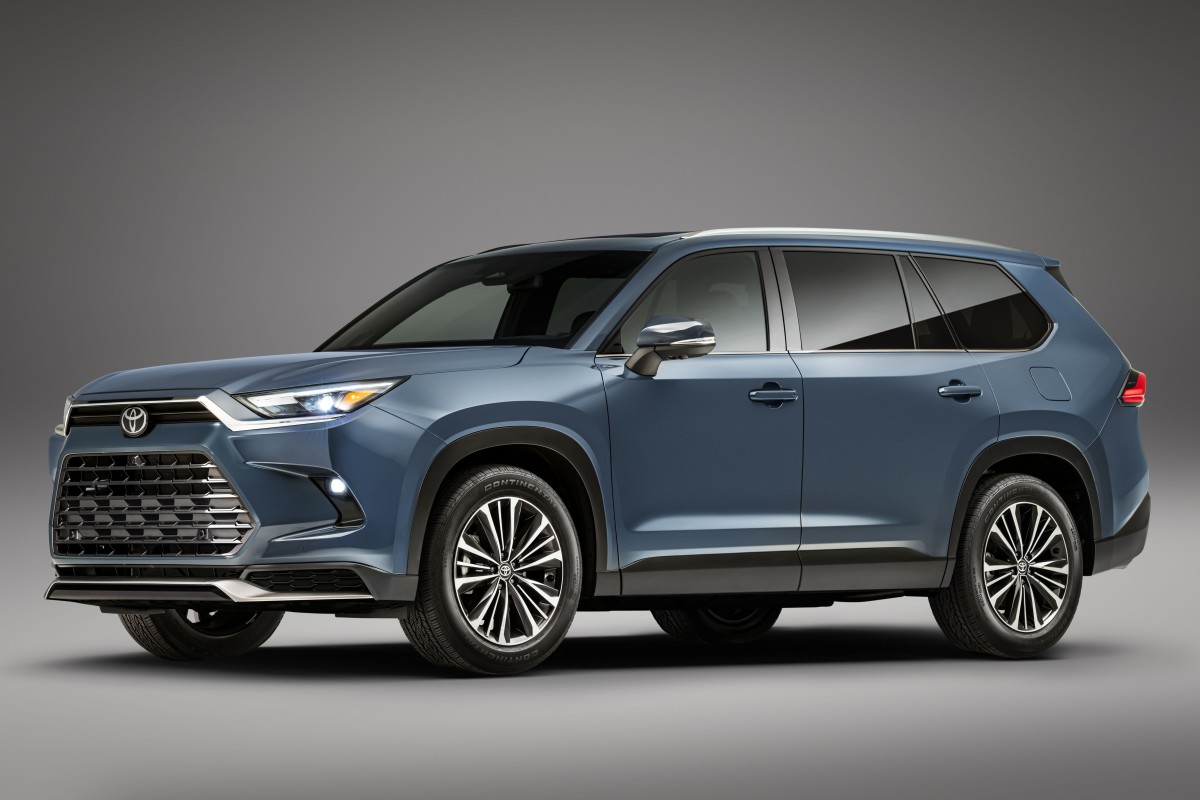
According to CarGurus experts, the overall rating for the 2026 Toyota Grand Highlander Hybrid is 7.0 out of 10, while the 2026 Hyundai Venue scores 5.2 out of 10. Based on these ratings, the Toyota Grand Highlander Hybrid is the recommended choice, offering a more comprehensive package of performance, space, and technology.
Choose the 2026 Toyota Grand Highlander Hybrid if:
- You need a spacious SUV with seating for up to eight and ample cargo space.
- You prioritize performance with a powerful Hybrid Max powertrain and AWD.
- You value advanced technology features and a premium audio system.


Choose the 2026 Hyundai Venue if:
- You are looking for a budget-friendly, compact vehicle for city driving.
- You prefer a simple, easy-to-use infotainment system with wireless smartphone integration.
- You need a vehicle with standard safety features at an affordable price.


CarGurus highlights
According to CarGurus experts, the overall rating for the 2026 Toyota Grand Highlander Hybrid is 7.0 out of 10, while the 2026 Hyundai Venue scores 5.2 out of 10. Based on these ratings, the Toyota Grand Highlander Hybrid is the recommended choice, offering a more comprehensive package of performance, space, and technology.
Choose the 2026 Toyota Grand Highlander Hybrid if:
Shop Now- You need a spacious SUV with seating for up to eight and ample cargo space.
- You prioritize performance with a powerful Hybrid Max powertrain and AWD.
- You value advanced technology features and a premium audio system.
Choose the 2026 Hyundai Venue if:
Shop Now- You are looking for a budget-friendly, compact vehicle for city driving.
- You prefer a simple, easy-to-use infotainment system with wireless smartphone integration.
- You need a vehicle with standard safety features at an affordable price.

By: CarGurus + AI
At CarGurus, our team of experienced automotive writers remain at the heart of our content operation, conducting hands-on car tests and writing insightful guides that are backed by years of industry experience. To complement this, we are harnessing AI to make our content offering more diverse and more helpful to shoppers than ever. To achieve this, our AI systems are based exclusively on CarGurus content, ratings and data, so that what we produce is both unique to CarGurus, and uniquely helpful to car shoppers.

