2026 Toyota RAV4 Plug-in Hybrid vs 2026 Honda HR-V
Overview | |
MSRP$26,500 | MSRP |
Listings83 | Listings19 |
Ratings & Reviews | |
User Reviews | User Reviews |
Expert reviews5.3 out of 10 | Expert reviews7.0 out of 10 |
Pros
Cons
| Pros
Cons
|
2026 Honda HR-V Reviews SummaryAvailable in three trim levels equipped with an underpowered engine and optional all-wheel drive (AWD), the HR-V is an unremarkable subcompact SUV. A refresh for the 2026 model year adds an improved standard infotainment system and minor styling and interior modifications, but nothing that addresses this model’s primary shortcomings. The changes include a larger touchscreen with faster response times, wireless Apple CarPlay and Android Auto, and wireless smartphone charging. Verdict: Simply put, the 2026 HR-V is not one of the best subcompact SUVs. It is dreadfully slow, disappointingly inefficient, and barely meets the minimum technological expectations of the young people who might want to buy it. Plus, it demonstrates none of the innovation seen in the original HR-V and in some competitors in the small SUV segment. | |
2026 Toyota RAV4 Plug-in Hybrid Reviews SummaryThe more powerful RAV4 PHEV is even stronger for 2026, and Toyota has introduced a new GR Sport trim to showcase its sportier side. The expanded lineup has four distinct trims, and the electric range has increased by at least 20% over the 2025 RAV4, so Toyota has furthered its lead over plug-in hybrid newcomers such as the Hyundai Tucson and Kia Sportage—and even the Lexus NX 450h+. Verdict: This is the best version of the RAV4, though we can’t recommend the slightly sportier GR Sport until we know exactly how much it will cost. With improved tech and a greater focus on electrification, as well as available DC charging (despite the charge ports changing sides between trims), the RAV4 PHEV leans forward. | |
No video found | No video found |
Popular Features & Specs | |
Engine2.0L 158 hp I4 | Engine |
Drive TrainFWD | Drive Train |
Seating Capacity5 | Seating Capacity |
Horsepower158 hp @ 6500 rpm | Horsepower |
MPG City26 | MPG City |
MPG Highway32 | MPG Highway |
Engine | |
Engine Name2.0L 158 hp I4 | Engine Name |
Torque138 lb-ft @ 4200 rpm | Torque |
Horsepower158 hp @ 6500 rpm | Horsepower |
DrivetrainFWD | Drivetrain |
Fuel Economy | |
MPG City26 | MPG City |
MPG Highway32 | MPG Highway |
Interior | |
Seating Capacity5 | Seating Capacity |
Safety | |
Front Crash Overall5 | Front Crash Overall |
Side Crash Overall5 | Side Crash Overall |
Dimensions & Capacity | |
Cargo Space24.4 cu ft | Cargo Space |
Curb Weight3159 lbs | Curb Weight |
Height63.4 in | Height |
Length179.8 in | Length |
Width72.4 in | Width |
Wheelbase104.5 in | Wheelbase |
Maximum Payload1051 lbs | Maximum Payload |
Number of doors4 | Number of doors |
Overview | ||
MSRP | $26,500 | |
Listings | ||
Ratings & Reviews | ||
User reviews | ||
Expert reviews | 5.3 out of 10Read full review | 7.0 out of 10Read full review |
Pros & cons | Pros
Cons
| Pros
Cons
|
Summary | Available in three trim levels equipped with an underpowered engine and optional all-wheel drive (AWD), the HR-V is an unremarkable subcompact SUV. A refresh for the 2026 model year adds an improved standard infotainment system and minor styling and interior modifications, but nothing that addresses this model’s primary shortcomings. The changes include a larger touchscreen with faster response times, wireless Apple CarPlay and Android Auto, and wireless smartphone charging. Verdict: Simply put, the 2026 HR-V is not one of the best subcompact SUVs. It is dreadfully slow, disappointingly inefficient, and barely meets the minimum technological expectations of the young people who might want to buy it. Plus, it demonstrates none of the innovation seen in the original HR-V and in some competitors in the small SUV segment. | The more powerful RAV4 PHEV is even stronger for 2026, and Toyota has introduced a new GR Sport trim to showcase its sportier side. The expanded lineup has four distinct trims, and the electric range has increased by at least 20% over the 2025 RAV4, so Toyota has furthered its lead over plug-in hybrid newcomers such as the Hyundai Tucson and Kia Sportage—and even the Lexus NX 450h+. Verdict: This is the best version of the RAV4, though we can’t recommend the slightly sportier GR Sport until we know exactly how much it will cost. With improved tech and a greater focus on electrification, as well as available DC charging (despite the charge ports changing sides between trims), the RAV4 PHEV leans forward. |
Video | No video found | No video found |
Popular Features & Specs | ||
Engine | 2.0L 158 hp I4 | |
Drive Train | FWD | |
Seating Capacity | 5 | |
Horsepower | 158 hp @ 6500 rpm | |
MPG City | 26 | |
MPG Highway | 32 | |
Engine | ||
Engine Name | 2.0L 158 hp I4 | |
Torque | 138 lb-ft @ 4200 rpm | |
Horsepower | 158 hp @ 6500 rpm | |
Drivetrain | FWD | |
Fuel Economy | ||
MPG City | 26 | |
MPG Highway | 32 | |
Interior | ||
Seating Capacity | 5 | |
Safety | ||
Front Crash Overall | 5 | |
Side Crash Overall | 5 | |
Dimensions & Capacity | ||
Cargo Space | 24.4 cu ft | |
Curb Weight | 3159 lbs | |
Height | 63.4 in | |
Length | 179.8 in | |
Width | 72.4 in | |
Wheelbase | 104.5 in | |
Maximum Payload | 1051 lbs | |
Number of doors | 4 | |
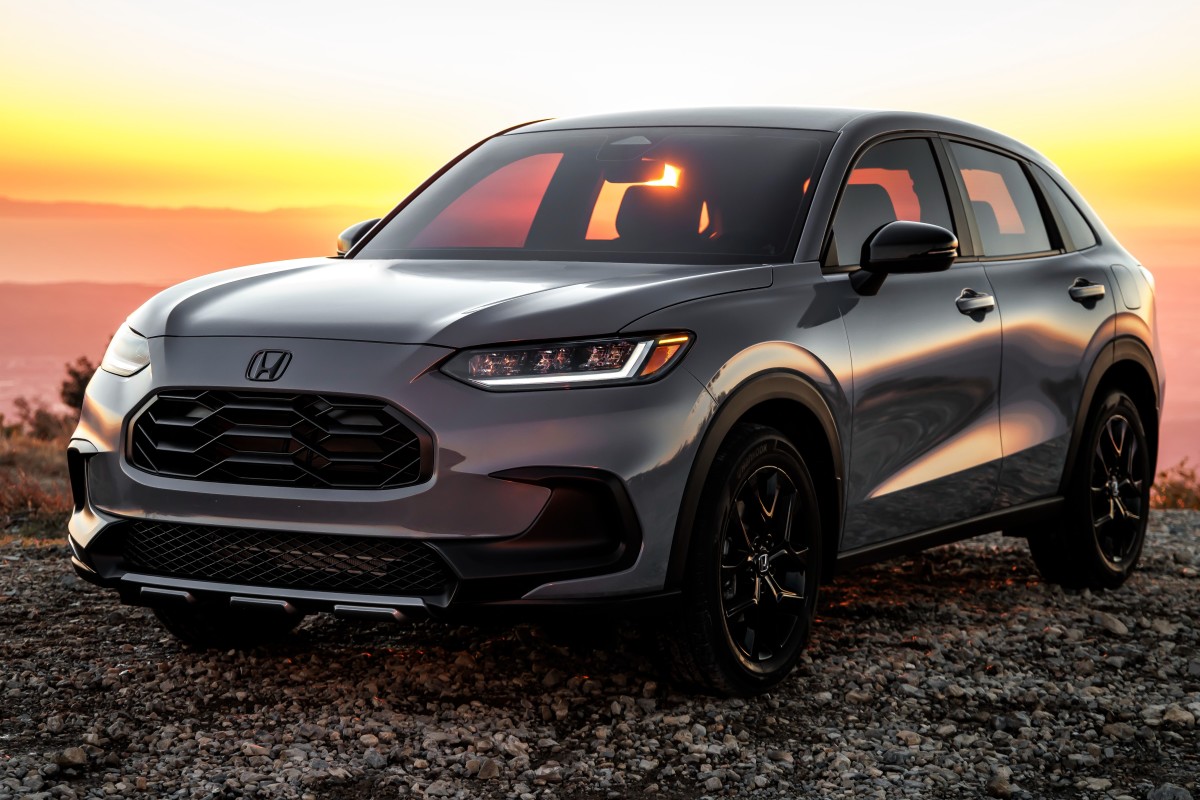
The 2026 Honda HR-V, available in LX, Sport, and EX-L trims, was priced between $27,650 and $31,500, with an additional $1,500 for all-wheel drive. The EX-L AWD model, featuring Nordic Forest Pearl paint, had an MSRP of $33,455. The HR-V's design, while not inherently appealing with its blobby grille and stubby rear, was enhanced by the green paint and 18-inch alloy wheels. Styling updates included new wheel designs across trims and standard dark-tinted rear privacy glass. Inside, the HR-V offered a more upscale feel with gray upholstery and trim, although this was limited to certain trims and colors. The EX-L featured genuine leather seats with Z-pattern stitching and improved cabin lighting, adding a touch of sophistication to the interior.
In contrast, the 2026 Toyota RAV4 Plug-in Hybrid was available in the Rugged Woodland trim and three Sport grades: SE, XSE, and the new GR Sport. The RAV4 maintained its footprint but added buffer bumpers for increased length. Its boxy design, consistent with Toyota's SUV lineup, featured daytime running lights, an integrated rear roof spoiler, and vertical taillights. The Woodland trim emphasized off-road capability with a wide front fascia, solid panels replacing fog lights, and chunky all-terrain tires. Sport trims showcased gloss black accents and racier elements, particularly in the GR Sport, which included red brake calipers and a wide mesh grille. The charge port location varied by trim, and interior accents differed, with the GR Sport featuring red stitching and badging. The RAV4's interior boasted a 12.3-inch digital instrument cluster and a touchscreen system, with storage features optimized for convenience.
The 2026 Honda HR-V was powered by a 2.0-liter four-cylinder engine, producing 158 horsepower and 138 pound-feet of torque. Weighing up to 3,336 pounds, the HR-V's engine and continuously variable transmission (CVT) worked hard, especially during acceleration and overtaking. Despite its modest power, the HR-V's fuel economy was underwhelming, averaging 24.8 mpg compared to the EPA's 28 mpg estimate for FWD models. The HR-V's dynamic tuning, featuring a multi-link rear suspension and Agile Handling Assist, provided a lively driving experience, although its steering was not particularly quick.
The 2026 Toyota RAV4 Plug-in Hybrid featured an updated 2.5-liter inline four-cylinder engine, producing 186 horsepower, paired with a larger 22.7-kwh battery pack. The PHEV's power increased to 324 hp, making it the most powerful RAV4 to date. With standard all-wheel drive, the RAV4 PHEV offered a seamless transition of power, achieving an unofficial 0-60 mph time in the low five seconds. The GR Sport trim, with its lower ride height and performance tires, provided enhanced handling. Despite its 4,500-pound weight, the RAV4 PHEV maintained a spirited ride without sacrificing comfort, thanks to a strengthened chassis and improved suspension.
The 2026 Honda HR-V's interior lacked the innovation of its predecessor, with a standard rear seat that folded flat. It missed features like a fold-flat front passenger seat, panoramic sunroof, and rear climate control vents. The driver and front passenger enjoyed reasonable storage and comfortable seats, with heated front seats in the Sport and EX-L trims. The back seat offered adequate space but lacked support and amenities like cupholders. The HR-V's cargo area provided 24.4 cubic feet of space, expanding to 55.1 cubic feet with the rear seats folded.
The 2026 Toyota RAV4 Plug-in Hybrid's interior was well-equipped, with a power driver's seat, heated front seats, and multiple USB ports. The XSE trim extended power adjustments to the passenger seat, and ventilated seats were standard on higher trims. The RAV4's interior dimensions remained similar to the previous generation, with clever storage features like a dashboard shelf and center console storage. The rear legroom was spacious, though slightly less than larger models. The PHEV's cargo area offered 33.6 cubic feet, expanding to 63.5 cubic feet with the rear seats folded, and included a temporary spare tire.
The 2026 Honda HR-V featured a 9-inch touchscreen with a faster processor, wireless Apple CarPlay and Android Auto, and a wireless smartphone charger. However, it lacked built-in navigation and SiriusXM satellite radio. The EX-L trim offered an eight-speaker audio system, and the 7-inch digital instrumentation panel was user-friendly. The HR-V's tech was simple and functional, though it lagged behind competitors like the Hyundai Kona.
The 2026 Toyota RAV4 Plug-in Hybrid boasted a 12.3-inch digital instrument cluster and an enhanced 10.5-inch touchscreen system, with a larger 12.9-inch screen on top trims. The touchscreen featured customizable tiles and a quick menu, while the digital displays offered improved graphics and user interface. Toyota's new operating system, Arene, enhanced responsiveness, and the Voice Assistant supported a wide range of commands. The RAV4 PHEV also included a built-in dash cam and features for managing the plug-in hybrid system.
The 2026 Honda HR-V came equipped with Honda Sensing, a suite of driver-assistive features including forward collision warning, automatic emergency braking, and adaptive cruise control. However, the adaptive cruise control occasionally failed to perform as expected, requiring driver intervention. The HR-V received favorable safety ratings from the NHTSA and a Top Safety Pick+ rating from the IIHS for 2025.
The 2026 Toyota RAV4 Plug-in Hybrid featured Toyota Safety Sense 4.0, offering a comprehensive suite of driver-assistance features. The system included automatic emergency braking, lane-departure alert, adaptive cruise control, and blind-spot monitors. The RAV4's safety enhancements aimed to improve responsiveness and detection, contributing to its strong safety record. Crash-testing results for the 2026 model were pending, but the 2025 RAV4 received a five-star rating from the NHTSA.
CarGurus highlights
According to CarGurus experts, the overall rating for the 2026 Honda HR-V is 5.3 out of 10, while the 2026 Toyota RAV4 Plug-in Hybrid scores 7.0 out of 10. Based on these ratings, the Toyota RAV4 Plug-in Hybrid is the recommended choice, offering superior performance, technology, and safety features.
Choose the 2026 Toyota RAV4 Plug-in Hybrid if:
- You seek a more powerful and efficient vehicle with a plug-in hybrid powertrain.
- You desire advanced technology features, including a larger touchscreen and built-in dash cam.
- You prioritize a comprehensive suite of safety features with enhanced detection capabilities.


Choose the 2026 Honda HR-V if:
- You prefer a more affordable crossover with a starting price lower than the RAV4 PHEV.
- You value a simple and straightforward infotainment system with wireless smartphone integration.
- You appreciate Honda's reputation for reliability and attention to detail in interior design.


CarGurus highlights
According to CarGurus experts, the overall rating for the 2026 Honda HR-V is 5.3 out of 10, while the 2026 Toyota RAV4 Plug-in Hybrid scores 7.0 out of 10. Based on these ratings, the Toyota RAV4 Plug-in Hybrid is the recommended choice, offering superior performance, technology, and safety features.
Choose the 2026 Toyota RAV4 Plug-in Hybrid if:
Shop Now- You seek a more powerful and efficient vehicle with a plug-in hybrid powertrain.
- You desire advanced technology features, including a larger touchscreen and built-in dash cam.
- You prioritize a comprehensive suite of safety features with enhanced detection capabilities.
Choose the 2026 Honda HR-V if:
Shop Now- You prefer a more affordable crossover with a starting price lower than the RAV4 PHEV.
- You value a simple and straightforward infotainment system with wireless smartphone integration.
- You appreciate Honda's reputation for reliability and attention to detail in interior design.

By: CarGurus + AI
At CarGurus, our team of experienced automotive writers remain at the heart of our content operation, conducting hands-on car tests and writing insightful guides that are backed by years of industry experience. To complement this, we are harnessing AI to make our content offering more diverse and more helpful to shoppers than ever. To achieve this, our AI systems are based exclusively on CarGurus content, ratings and data, so that what we produce is both unique to CarGurus, and uniquely helpful to car shoppers.

