Nissan LEAF vs Kia Niro EV
Overview | |
MSRP$31,600 | MSRP$38,500 |
Listings181 | Listings97 |
Ratings & Reviews | |
User Reviews | User Reviews |
Expert reviews6.8 out of 10 | Expert reviews6.7 out of 10 |
Pros
Cons
| |
Reviews SummaryThis is the car I wish Nissan made 10 years ago, when the first-generation Leaf almost stranded me on my way to work. Batteries have improved so much since 2010, they've made those early cars practically worthless on the used market. Case in point: with the second-generation Leaf, Nissan has added a new Plus model that claims up to 226 miles per charge, offers quicker acceleration, and includes more technology for every Leaf trim. It's enough to make the Leaf feel like a real car. | |
Reviews SummaryBrand-new for 2019, the Niro EV is the first electric Kia to crack 200 miles of range. It’s based on the Niro Hybrid and Plug-In Hybrid, which Kia introduced in 2017, but it forgoes the gasoline engine (and the affordable price tag). Most Americans won’t ever see a Niro EV because it’s sold in only 12 states and you can’t even ask a dealer in the ineligible 38 states to order one. That didn’t stop us from putting more than 500 miles on this compact hatch, temporarily rewiring daily life to accommodate an electric car in freezing weather. New England is a prime market for the Niro EV. So how does it stand up to the simplest of tasks, like a two-hour drive to Boston? | |
Popular Features & Specs | |
Engine147 hp Electric | Engine201 hp Electric |
DrivetrainFWD | DrivetrainFWD |
Seating Capacity5 | Seating Capacity5 |
EV Battery Capacity40 kWh | EV Battery Capacity64 kWh |
MPG City123 | MPG City123 |
MPG Highway99 | MPG Highway102 |
Battery Charge Time (120V) | Battery Charge Time (120V)59 hours |
Battery Charge Time (240V)8 hours | Battery Charge Time (240V)9.5 hours |
Engine | |
Engine Name147 hp Electric | Engine Name201 hp Electric |
Battery Charge Time (120V) | Battery Charge Time (120V)59 hours |
Battery Charge Time (240V)8 hours | Battery Charge Time (240V)9.5 hours |
DrivetrainFWD | DrivetrainFWD |
Fuel Economy | |
EV Battery Capacity40 kWh | EV Battery Capacity64 kWh |
MPG City123 | MPG City123 |
MPG Highway99 | MPG Highway102 |
Interior | |
Seating Capacity5 | Seating Capacity5 |
Key Features | |
Sunroof/Moonroof | Sunroof/MoonroofStandard |
Safety | |
Front Crash Overall4 | Front Crash Overall |
Side Crash Overall5 | Side Crash Overall |
Dimensions & Capacity | |
Cargo Space23.6 cu ft | Cargo Space18.5 cu ft |
Curb Weight3538 lbs | Curb Weight3854 lbs |
Height61.4 in | Height61.8 in |
Length176.4 in | Length172.2 in |
Width70.5 in | Width71.1 in |
Wheelbase106.3 in | Wheelbase106.3 in |
Maximum Payload1220 lbs | Maximum Payload1062 lbs |
Number of doors4 | Number of doors4 |
Overview | ||
MSRP | $31,600 | $38,500 |
Listings | ||
Ratings & Reviews | ||
User reviews | ||
Expert reviews | 6.8 out of 10Read full review | 6.7 out of 10Read full review |
Pros & cons | Pros
Cons
| |
Summary | This is the car I wish Nissan made 10 years ago, when the first-generation Leaf almost stranded me on my way to work. Batteries have improved so much since 2010, they've made those early cars practically worthless on the used market. Case in point: with the second-generation Leaf, Nissan has added a new Plus model that claims up to 226 miles per charge, offers quicker acceleration, and includes more technology for every Leaf trim. It's enough to make the Leaf feel like a real car. | Brand-new for 2019, the Niro EV is the first electric Kia to crack 200 miles of range. It’s based on the Niro Hybrid and Plug-In Hybrid, which Kia introduced in 2017, but it forgoes the gasoline engine (and the affordable price tag). Most Americans won’t ever see a Niro EV because it’s sold in only 12 states and you can’t even ask a dealer in the ineligible 38 states to order one. That didn’t stop us from putting more than 500 miles on this compact hatch, temporarily rewiring daily life to accommodate an electric car in freezing weather. New England is a prime market for the Niro EV. So how does it stand up to the simplest of tasks, like a two-hour drive to Boston? |
Video | ||
Popular Features & Specs | ||
Engine | 147 hp Electric | 201 hp Electric |
Drivetrain | FWD | FWD |
Seating Capacity | 5 | 5 |
EV Battery Capacity | 40 kWh | 64 kWh |
MPG City | 123 | 123 |
MPG Highway | 99 | 102 |
Battery Charge Time (120V) | 59 hours | |
Battery Charge Time (240V) | 8 hours | 9.5 hours |
Engine | ||
Engine Name | 147 hp Electric | 201 hp Electric |
Battery Charge Time (120V) | 59 hours | |
Battery Charge Time (240V) | 8 hours | 9.5 hours |
Drivetrain | FWD | FWD |
Fuel Economy | ||
EV Battery Capacity | 40 kWh | 64 kWh |
MPG City | 123 | 123 |
MPG Highway | 99 | 102 |
Interior | ||
Seating Capacity | 5 | 5 |
Key Features | ||
Sunroof/Moonroof | Standard | |
Safety | ||
Front Crash Overall | 4 | |
Side Crash Overall | 5 | |
Dimensions & Capacity | ||
Cargo Space | 23.6 cu ft | 18.5 cu ft |
Curb Weight | 3538 lbs | 3854 lbs |
Height | 61.4 in | 61.8 in |
Length | 176.4 in | 172.2 in |
Width | 70.5 in | 71.1 in |
Wheelbase | 106.3 in | 106.3 in |
Maximum Payload | 1220 lbs | 1062 lbs |
Number of doors | 4 | 4 |
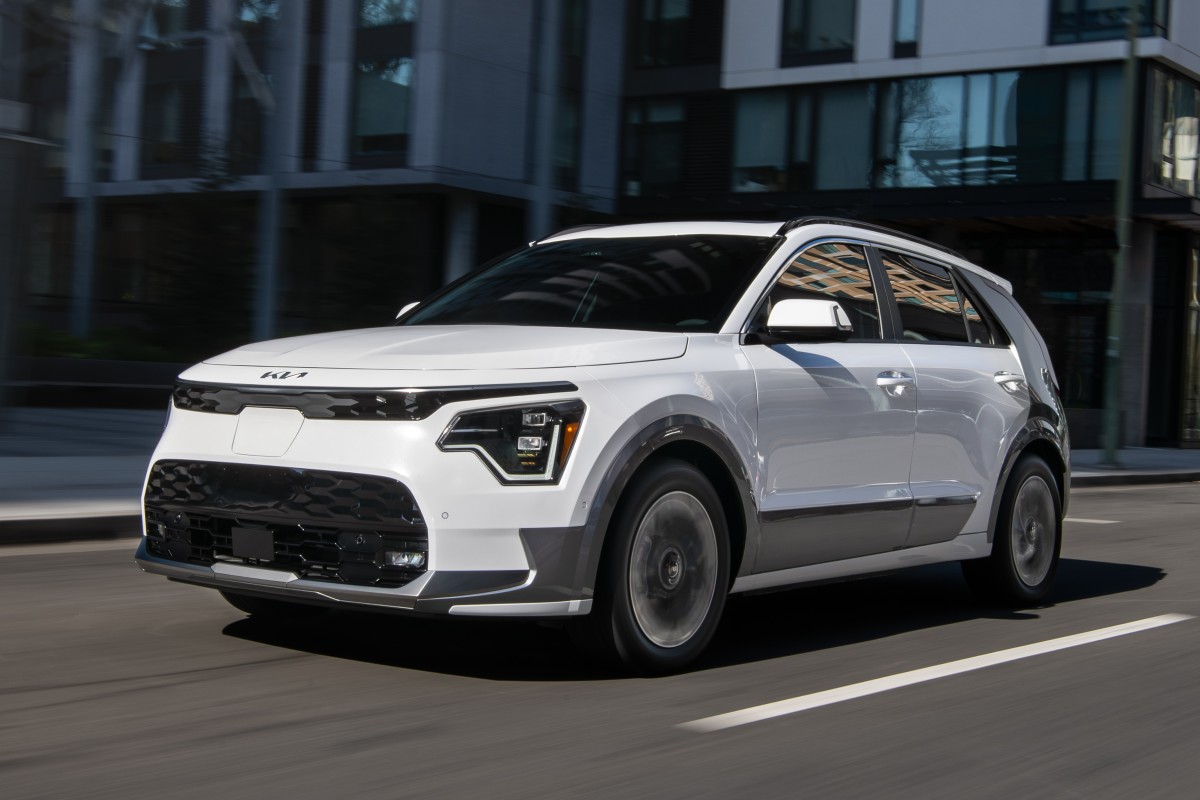
The 2019 Kia Niro EV presented a rather uninspiring exterior design, characterized by its normcore aesthetic that seemed intentionally drab. Despite being a high-end EX Premium Launch Edition priced at $45,995, the Niro EV lacked the visual excitement found in other Kia models like the Stinger sedan or Telluride SUV. Its flat 17-inch wheels, formless silhouette, and cheap-looking bumper cutouts were only slightly offset by unique teal accents and arrow-shaped LED running lamps. The interior, however, offered some redemption with LED ambient lighting, gloss black door panels, and dark teal accents. The center console was cleverly designed for open storage, and the material quality was commendable for its category. Yet, the instrument panel's dated appearance left much to be desired.
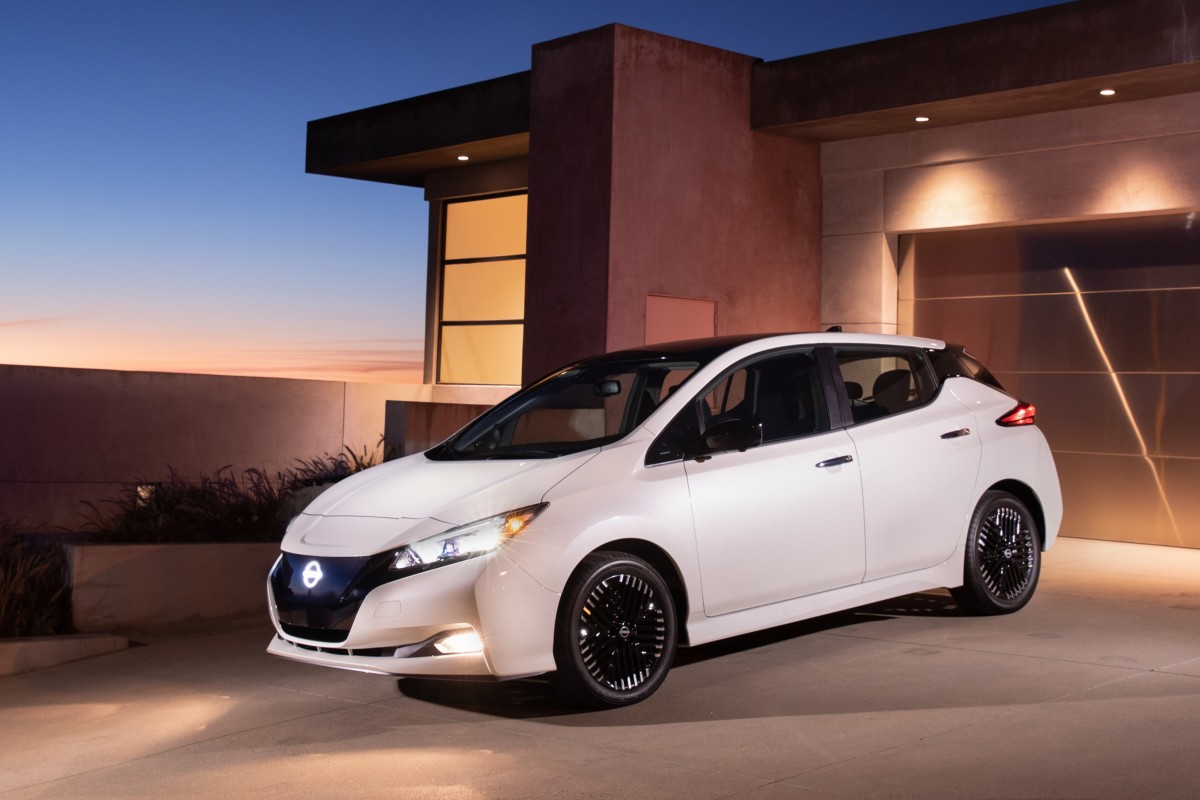
In contrast, the 2020 Nissan LEAF showcased a more modern and appealing design, shedding the quirky look of its predecessor. The edgier shape, combined with Nissan's V-shaped motif and gloss-black trim, gave the LEAF a sportier appearance. The floating roof effect, achieved through black D-pillars, added a touch of visual drama. The interior retained some funky design elements but was modernized with polished black trim and blue stitching. The flat-bottom steering wheel and high-resolution 8-inch touchscreen contributed to a contemporary feel. Overall, the LEAF's design was more cohesive and attractive compared to the Niro EV.
The 2019 Kia Niro EV was rated by the EPA for up to 239 miles per charge, but real-world testing revealed discrepancies, especially in colder conditions. The 64-kilowatt-hour battery could be recharged to 80% in less than an hour, according to Kia, but practical experiences showed challenges in achieving this. The Niro EV's electric motor delivered 201 horsepower and 291 pound-feet of torque, providing a zippy driving experience. However, the traction control limited acceleration in Sport mode, and the absence of all-wheel drive was notable. The steering was accurate, and the regenerative braking system was intuitive, offering multiple modes for different driving preferences. Despite its efficiency, the Niro EV struggled with long-distance travel without frequent charging stops.
The 2020 Nissan LEAF offered two powertrains, catering to different driving needs. The base models featured a 40-kilowatt-hour battery with an EPA-estimated 149 miles of range, while the Plus trims boasted a 62-kWh battery with up to 226 miles of range. The Plus models delivered 214 horsepower and 251 pound-feet of torque, providing a noticeable performance boost. The range was variable, influenced by driving conditions and weather. Charging was facilitated by the CHAdeMO standard, with fast-charging capabilities up to 100 kW for the Plus models. The driving experience was enjoyable, with quiet operation and impressive handling. The Leaf's efficiency ratings varied depending on the battery size, with the Plus models consuming more power.
The 2019 Kia Niro EV's design, while bland, contributed to its practicality. The interior was spacious, with 18.5 cubic feet of cargo space, expandable to 53 cubic feet with the rear seats folded. The central cubby featured innovative cupholders, and the storage bin offered cord cutouts for neat cable management. The instrument panel, though dated, was easy to read, and the infotainment screen provided useful EV-specific information. The overall driving experience was conventional and user-friendly.
The 2020 Nissan LEAF's interior was straightforward, with a unique shifter design reminiscent of the Toyota Prius. The instrument panel combined analog and digital elements, providing clear information on throttle and regeneration. Visibility was excellent, and the cabin offered generous headroom. Cargo space was limited to 24 cubic feet behind the rear seats, expandable to 30 cubic feet, but the interior felt spacious. The Leaf's interior design was functional and intuitive, with easy-to-use controls and ample visibility.
The 2019 Kia Niro EV featured a responsive infotainment system with standard Apple CarPlay, Android Auto, and 4G WiFi. Kia's UVO connected services offered maintenance alerts and online POI searches. However, the charging station list was incomplete, and the map's green travel radius was misleading. The Niro EV's heat pump was a standout feature, providing efficient cabin heating without significant battery drain.
The 2020 Nissan LEAF came equipped with an 8-inch touchscreen, Apple CarPlay, and Android Auto. SV models included NissanConnect services, allowing remote access to climate control and charging status. However, the navigation system was flawed, lacking charging waypoint routing and detailed charger information. ProPilot Assist, available on the SL Plus, offered semi-automated driving capabilities. The SL Plus also featured a premium Bose stereo and other luxury amenities.
The 2019 Kia Niro EV came standard with automatic emergency braking, lane-keep assist, and adaptive cruise control. Blind-spot monitoring was optional, and exterior sounds alerted pedestrians at low speeds. While the Niro EV had not been crash-tested, the 2018 Niro Hybrid and Plug-In Hybrid received a Top Safety Pick+ rating from the IIHS, suggesting similar safety performance for the EV.
The 2020 Nissan LEAF introduced additional airbags and enhanced pedestrian alert sounds. Standard safety features included forward emergency braking with pedestrian detection, rear emergency braking, lane-keep assist, and blind-spot monitoring. Adaptive cruise control and active steering were available on higher trims. While the Leaf had not been fully rated by the NHTSA, the IIHS provided top ratings for several tests, indicating improved safety with the new model.
CarGurus highlights
According to CarGurus experts, the overall rating for the 2019 Kia Niro EV is 6.7 out of 10, while the 2020 Nissan LEAF scores 6.8 out of 10. Based on these ratings, the 2020 Nissan LEAF is recommended for its superior design, performance, and technology features.
Choose the 2019 Kia Niro EV if:
- You prioritize a spacious interior with innovative storage solutions.
- Efficient heating is important for your driving conditions.
- You value a user-friendly infotainment system with strong connectivity features.


Choose the 2020 Nissan LEAF if:
- You prefer a modern and sporty exterior design.
- A more powerful and versatile powertrain is essential for your driving needs.
- Advanced semi-automated driving features are a priority.


CarGurus highlights
According to CarGurus experts, the overall rating for the 2019 Kia Niro EV is 6.7 out of 10, while the 2020 Nissan LEAF scores 6.8 out of 10. Based on these ratings, the 2020 Nissan LEAF is recommended for its superior design, performance, and technology features.
Choose the 2019 Kia Niro EV if:
Shop Now- You prioritize a spacious interior with innovative storage solutions.
- Efficient heating is important for your driving conditions.
- You value a user-friendly infotainment system with strong connectivity features.
Choose the 2020 Nissan LEAF if:
Shop Now- You prefer a modern and sporty exterior design.
- A more powerful and versatile powertrain is essential for your driving needs.
- Advanced semi-automated driving features are a priority.

By: CarGurus + AI
At CarGurus, our team of experienced automotive writers remain at the heart of our content operation, conducting hands-on car tests and writing insightful guides that are backed by years of industry experience. To complement this, we are harnessing AI to make our content offering more diverse and more helpful to shoppers than ever. To achieve this, our AI systems are based exclusively on CarGurus content, ratings and data, so that what we produce is both unique to CarGurus, and uniquely helpful to car shoppers.

