Hyundai Kona Electric vs Hyundai Ioniq 5

Overview | |
MSRP$32,875 | MSRP$35,000 |
Listings32 | Listings165 |
Ratings & Reviews | |
User Reviews | User Reviews |
Expert reviews8.3 out of 10 | Expert reviews8.0 out of 10 |
Pros
Cons
| Pros
Cons
|
Reviews SummaryIf you’re shopping for an electric vehicle, you might think all battery-powered options are priced out of reach. Heck, it’s tough to find a gas-powered vehicle that won’t break the bank, let alone one that is powered by the latest and greatest technology. That is where the 2025 Hyundai Kona EV comes in. This second-generation subcompact crossover got a redesign for the previous model year and now comes with more features and value than before, all wrapped up in a sleek little package. Sure, there are others that might perform better, but if you’re cost-conscious and are willing to settle for slightly slower acceleration, you’ll be rewarded with a competent and comfortable electric car. Verdict: The 2025 Hyundai Kona Electric goes big on value with fresh styling, myriad features, and an excellent starting price. | |
Reviews SummaryMany automakers have had a tough time launching electric vehicles, as teething problems have resulted in build-quality issues, gremlins, and production delays. Hyundai, however, got it right from the start with the Ioniq 5. Not only did this compact crossover nail the basics, it has also struck a chord for its stylish looks, fast charging capability, good range, and practicality. Verdict: Five years into its run, the Ioniq 5 is still the electric vehicle we would recommend to most EV buyers. A drive around Hyundai’s factory in Savannah, Georgia, only reinforced our position. | |
No video found | No video found |
Popular Features & Specs | |
Engine133 hp Electric | Engine168 hp Electric |
Drive TrainFWD | Drive TrainRWD |
Seating Capacity5 | Seating Capacity5 |
EV Battery Capacity48.6 kWh | EV Battery Capacity63 kWh |
MPG City131 | MPG City131 |
MPG Highway105 | MPG Highway100 |
Battery Charge Time (120V)43 hours | Battery Charge Time (120V)54 hours |
Battery Charge Time (240V)5 hours | Battery Charge Time (240V)5.7 hours |
Engine | |
Engine Name133 hp Electric | Engine Name168 hp Electric |
Battery Charge Time (120V)43 hours | Battery Charge Time (120V)54 hours |
Battery Charge Time (240V)5 hours | Battery Charge Time (240V)5.7 hours |
DrivetrainFWD | DrivetrainRWD |
Fuel Economy | |
EV Battery Capacity48.6 kWh | EV Battery Capacity63 kWh |
MPG City131 | MPG City131 |
MPG Highway105 | MPG Highway100 |
Interior | |
Seating Capacity5 | Seating Capacity5 |
Key Features | |
Navigation SystemStandard | Navigation SystemStandard |
Dimensions & Capacity | |
Cargo Space25.5 cu ft | Cargo Space26.3 cu ft |
Curb Weight3571 lbs | Curb Weight4145 lbs |
Height62.0 in | Height63.0 in |
Length171.5 in | Length183.3 in |
Width71.9 in | Width74.4 in |
Wheelbase104.7 in | Wheelbase118.1 in |
Maximum Payload1081 lbs | Maximum Payload1080 lbs |
Number of doors4 | Number of doors4 |
Overview | ||
MSRP | $32,875 | $35,000 |
Listings | ||
Ratings & Reviews | ||
User reviews | ||
Expert reviews | 8.3 out of 10Read full review | 8.0 out of 10Read full review |
Pros & cons | Pros
Cons
| Pros
Cons
|
Summary | If you’re shopping for an electric vehicle, you might think all battery-powered options are priced out of reach. Heck, it’s tough to find a gas-powered vehicle that won’t break the bank, let alone one that is powered by the latest and greatest technology. That is where the 2025 Hyundai Kona EV comes in. This second-generation subcompact crossover got a redesign for the previous model year and now comes with more features and value than before, all wrapped up in a sleek little package. Sure, there are others that might perform better, but if you’re cost-conscious and are willing to settle for slightly slower acceleration, you’ll be rewarded with a competent and comfortable electric car. Verdict: The 2025 Hyundai Kona Electric goes big on value with fresh styling, myriad features, and an excellent starting price. | Many automakers have had a tough time launching electric vehicles, as teething problems have resulted in build-quality issues, gremlins, and production delays. Hyundai, however, got it right from the start with the Ioniq 5. Not only did this compact crossover nail the basics, it has also struck a chord for its stylish looks, fast charging capability, good range, and practicality. Verdict: Five years into its run, the Ioniq 5 is still the electric vehicle we would recommend to most EV buyers. A drive around Hyundai’s factory in Savannah, Georgia, only reinforced our position. |
Video | No video found | No video found |
Popular Features & Specs | ||
Engine | 133 hp Electric | 168 hp Electric |
Drive Train | FWD | RWD |
Seating Capacity | 5 | 5 |
EV Battery Capacity | 48.6 kWh | 63 kWh |
MPG City | 131 | 131 |
MPG Highway | 105 | 100 |
Battery Charge Time (120V) | 43 hours | 54 hours |
Battery Charge Time (240V) | 5 hours | 5.7 hours |
Engine | ||
Engine Name | 133 hp Electric | 168 hp Electric |
Battery Charge Time (120V) | 43 hours | 54 hours |
Battery Charge Time (240V) | 5 hours | 5.7 hours |
Drivetrain | FWD | RWD |
Fuel Economy | ||
EV Battery Capacity | 48.6 kWh | 63 kWh |
MPG City | 131 | 131 |
MPG Highway | 105 | 100 |
Interior | ||
Seating Capacity | 5 | 5 |
Key Features | ||
Navigation System | Standard | Standard |
Dimensions & Capacity | ||
Cargo Space | 25.5 cu ft | 26.3 cu ft |
Curb Weight | 3571 lbs | 4145 lbs |
Height | 62.0 in | 63.0 in |
Length | 171.5 in | 183.3 in |
Width | 71.9 in | 74.4 in |
Wheelbase | 104.7 in | 118.1 in |
Maximum Payload | 1081 lbs | 1080 lbs |
Number of doors | 4 | 4 |
The 2025 Hyundai Kona Electric was available in several trims, including SE, SEL, the new N-Line, and the top-tier Limited. Despite being in its second generation, Hyundai introduced new features like ambient lighting for N Line and above, and LED interior lighting for all but the base model. A new Red Metallic paint was offered, but the Neoteric Yellow hue was a standout choice, adding a vibrant touch for an additional $500. The exterior design resembled a space-age art project with pixelated LED lighting and chiseled fenders, while the interior boasted a spacious cabin with a Sage-Green-with-Lime interior option. The N Line trim featured sporty elements like 19-inch wheels and unique fasciae, while the Limited trim offered high-quality leatherette seating and metallic-looking trim.
The 2026 Hyundai Ioniq 5 combined the aesthetics of a 1980s hatchback with modern crossover SUV elements. Its profile was distinctly hatchback, larger than typical models like the Volkswagen GTI, with angular lines and a triangular shape defined by character lines. The front featured a visor slit with rectangular headlights, while the rear had an integrated spoiler and darkened panels. The XRT model added unique 18-inch alloys and pixel-patterned cladding, enhancing its rally car-like appearance. Inside, the Ioniq 5 was utilitarian with a tech-forward approach, featuring cloth upholstery in the base model and synthetic leather in higher trims. The interior was equipped with dual 12.3-inch screens and touch controls for climate settings, maintaining a modern yet sterile look.

The 2025 Hyundai Kona Electric was limited to front-wheel drive, with the base SE trim featuring a 48.6-kWh battery offering a modest 200-mile range. The single electric motor produced 133 horsepower and 188 pound-feet of torque. Opting for the Long Range 64.8-kWh battery increased the range to 261 miles and power to 201 hp and 291 lb-ft of torque. The N-Line trim, despite having the larger battery, had a reduced range of 230 miles due to its larger wheels. The Kona's acceleration was moderate, taking around seven seconds to reach 60 mph. It featured paddle shifters for regenerative braking and a 400-volt electrical architecture, with DC fast-charging taking over 40 minutes to reach 80% charge.
The 2026 Hyundai Ioniq 5 offered a single-motor, rear-wheel-drive powertrain with 168 horsepower and 258 pound-feet of torque in the base SE Standard Range trim, or 220 hp in other trims. A dual-motor, all-wheel-drive option increased output to 320 hp and 446 lb-ft, while the Ioniq 5 N performance model boasted 641 hp and 568 lb-ft. The Limited and XRT trims, both with dual-motor powertrains, provided robust power and a 0-60 mph time of 5.3 seconds. The Ioniq 5 featured five regenerative braking settings and a smooth ride, with the XRT trim offering off-road capabilities with increased ground clearance and terrain modes. The XRT excelled on loose trails, though it lacked underbody protection for more extreme conditions.
The 2025 Hyundai Kona Electric offered dual-zone climate control and proximity key as standard on the SE trim, with the Limited trim adding features like heated and ventilated front seats, a heated steering wheel, and a Bose sound system. The Kona's interior had a clever cupholder design and a small storage compartment in the center armrest. Despite increased space from the previous generation, the Kona's cargo capacity was slightly below average, with 25.5 cubic feet behind the second row and 63.7 cubic feet with seats folded.
The 2026 Hyundai Ioniq 5 featured spacious front seats with standard eight-way power adjustments for the driver and heated front seats across all trims. The Limited trim added ventilated front seats and a "Relaxation" seat for the driver. The rear seat offered 39.4 inches of legroom, accommodating two adults comfortably. Cargo space was slightly smaller than average, with 26.3 cubic feet behind the rear seats and 58.5 cubic feet with seats folded. The Ioniq 5 also had a small front trunk, adding to its cargo versatility.
The 2025 Hyundai Kona Electric came with dual 12.3-inch displays, wireless Apple CarPlay and Android Auto, and a WiFi hotspot. The infotainment system included an EV page for battery usage insights and a navigation system that predicted charging needs. The Kona featured four USB-C ports and vehicle-to-load capability for charging external devices. Higher trims offered Hyundai's Digital Key 2 for smartphone or smartwatch access.
The 2026 Hyundai Ioniq 5 featured a 12.3-inch digital instrument cluster and infotainment touchscreen, with wireless Apple CarPlay and Android Auto. The Limited trim added a head-up display and a Bose audio system. The Ioniq 5 included a Wi-Fi hotspot and the MyHyundai app for remote vehicle management. The infotainment system was user-friendly, with voice command capabilities and separate touch controls for climate settings.
The 2025 Hyundai Kona Electric included Hyundai's SmartSense suite with features like automatic emergency braking, blind-spot monitoring, and lane-keeping assist. The Limited trim added parking aids and a Blind-View Monitor. At the time of publication, the Kona EV had not been rated by NHTSA or IIHS.
The 2026 Hyundai Ioniq 5 offered a comprehensive list of standard safety features, including blind-spot monitors, adaptive cruise control, and Hyundai's Highway Driving Assist 1. Higher trims added features like a surround-view camera system and Highway Driving Assist 2. The Ioniq 5 earned a Top Safety Pick+ from IIHS but had no NHTSA ratings at the time of writing.
CarGurus highlights
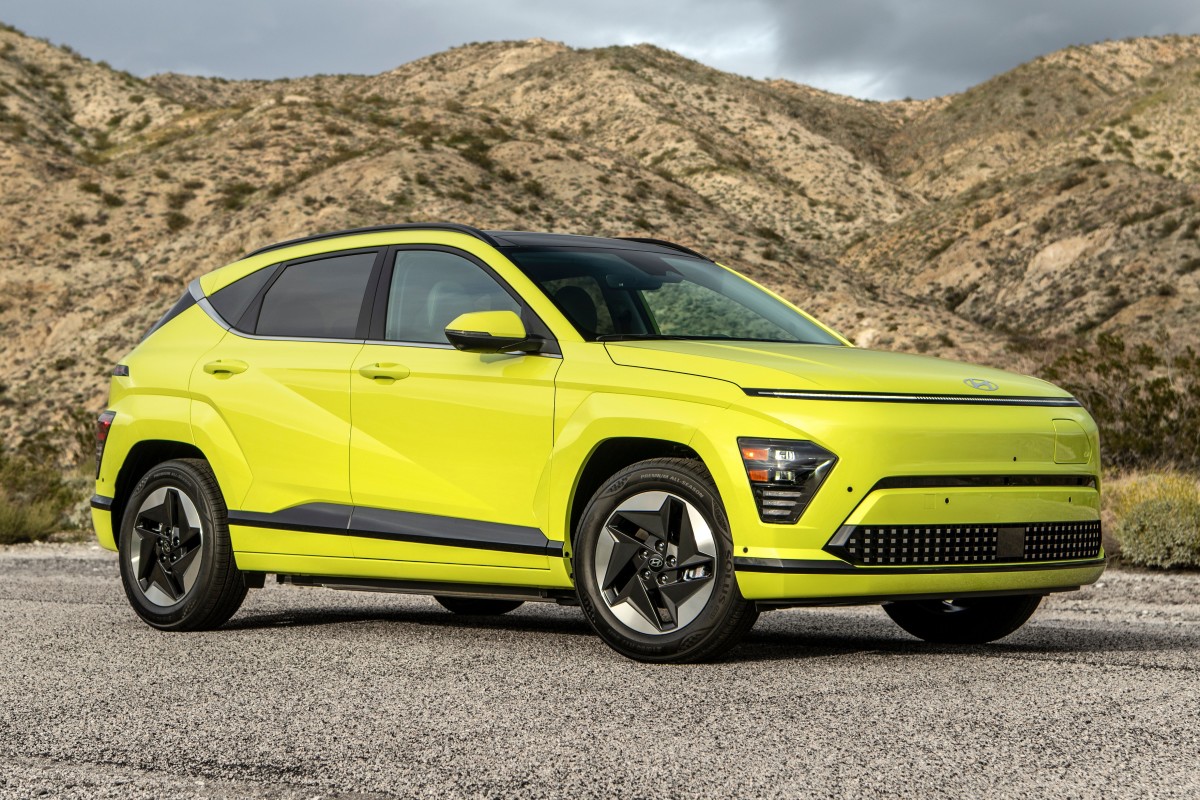
According to CarGurus experts, the overall rating for the 2025 Hyundai Kona Electric is 8.3 out of 10, while the 2026 Hyundai Ioniq 5 scores 8.0 out of 10. Based on these ratings, the 2025 Hyundai Kona Electric is recommended for its higher overall score, offering a balance of affordability, comfort, and essential features.
Choose the 2025 Hyundai Kona Electric if:
- You prioritize a more affordable electric vehicle with essential features.
- You prefer a compact SUV with a unique design and vibrant color options.
- You value a comfortable ride with practical regenerative braking options.


Choose the 2026 Hyundai Ioniq 5 if:
- You seek a more powerful electric vehicle with advanced performance options.
- You need a spacious interior with modern technology and off-road capabilities.
- You appreciate a comprehensive suite of safety features and a high safety rating.


CarGurus highlights
According to CarGurus experts, the overall rating for the 2025 Hyundai Kona Electric is 8.3 out of 10, while the 2026 Hyundai Ioniq 5 scores 8.0 out of 10. Based on these ratings, the 2025 Hyundai Kona Electric is recommended for its higher overall score, offering a balance of affordability, comfort, and essential features.
Choose the 2025 Hyundai Kona Electric if:
Shop Now- You prioritize a more affordable electric vehicle with essential features.
- You prefer a compact SUV with a unique design and vibrant color options.
- You value a comfortable ride with practical regenerative braking options.
Choose the 2026 Hyundai Ioniq 5 if:
Shop Now- You seek a more powerful electric vehicle with advanced performance options.
- You need a spacious interior with modern technology and off-road capabilities.
- You appreciate a comprehensive suite of safety features and a high safety rating.

By: CarGurus + AI
At CarGurus, our team of experienced automotive writers remain at the heart of our content operation, conducting hands-on car tests and writing insightful guides that are backed by years of industry experience. To complement this, we are harnessing AI to make our content offering more diverse and more helpful to shoppers than ever. To achieve this, our AI systems are based exclusively on CarGurus content, ratings and data, so that what we produce is both unique to CarGurus, and uniquely helpful to car shoppers.

