2025 Hyundai Kona vs 2025 Toyota 4Runner
Overview | |
MSRP$41,270 | MSRP$24,550 |
Listings117 | Listings141 |
Ratings & Reviews | |
User Reviews | User Reviews |
Expert reviews7.7 out of 10 | Expert reviews8.0 out of 10 |
Pros
Cons
| Pros
Cons
|
2025 Toyota 4Runner Reviews SummaryAfter a very long 15 years, we finally got a new Toyota 4Runner with more capabilities, power, comfort, and technology. It's also more efficient thanks to a new hybrid option and more composed on pavement, but it remains a solid all-terrain vehicle to extend your adventures further. Verdict: Toyota doesn't throw out the fomula with its newly redesigned 4Runner. Instead, the 2025 model keeps many of the features shoppers have loved for over a decade, while also adding a more contemporary selection of four-cylinder powertrains. | |
2025 Hyundai Kona Reviews SummaryThat there are no major changes beyond a couple of new trim levels for the 2025 Hyundai Kona is neither a surprise nor a bad thing. Not a surprise because this second-generation model only made its debut one year ago, making it too soon to expect any major updates. And not a bad thing because, frankly, this second-generation Kona was already a great subcompact SUV. Time does not stand still, however, particularly when it comes to crossovers, so it’s time to find out how the Kona performs one year on, and whether it continues to deliver value in an increasingly busy part of the market. | |
Popular Features & Specs | |
Seating Capacity7 | Seating Capacity5 |
Engine | |
Engine Name2.4L 278 hp I4 | Engine Name2.0L 147 hp I4 |
Torque317 lb-ft @ 1700 rpm | Torque132 lb-ft @ 4500 rpm |
Horsepower278 hp @ 6000 rpm | Horsepower147 hp @ 6200 rpm |
Drivetrain4X2 | DrivetrainFWD |
Interior | |
Seating Capacity7 | Seating Capacity5 |
Key Features | |
Navigation System | Navigation SystemStandard |
Safety | |
Front Crash Overall4 | Front Crash Overall4 |
Side Crash Overall5 | Side Crash Overall5 |
Dimensions & Capacity | |
Cargo Space48.4 cu ft | Cargo Space25.5 cu ft |
Curb Weight4455 lbs | Curb Weight3005 lbs |
Height72.6 in | Height62.2 in |
Length194.9 in | Length171.3 in |
Width78.0 in | Width71.9 in |
Wheelbase112.2 in | Wheelbase104.7 in |
Maximum Payload895 lbs | Maximum Payload1085 lbs |
Number of doors4 | Number of doors4 |
Maximum Towing Capacity6000 lbs | Maximum Towing Capacity |
Standard Towing Capacity6000 lbs | Standard Towing Capacity |
Overview | ||
MSRP | $41,270 | $24,550 |
Listings | ||
Ratings & Reviews | ||
User reviews | ||
Expert reviews | 7.7 out of 10Read full review | 8.0 out of 10Read full review |
Pros & cons | Pros
Cons
| Pros
Cons
|
Summary | After a very long 15 years, we finally got a new Toyota 4Runner with more capabilities, power, comfort, and technology. It's also more efficient thanks to a new hybrid option and more composed on pavement, but it remains a solid all-terrain vehicle to extend your adventures further. Verdict: Toyota doesn't throw out the fomula with its newly redesigned 4Runner. Instead, the 2025 model keeps many of the features shoppers have loved for over a decade, while also adding a more contemporary selection of four-cylinder powertrains. | That there are no major changes beyond a couple of new trim levels for the 2025 Hyundai Kona is neither a surprise nor a bad thing. Not a surprise because this second-generation model only made its debut one year ago, making it too soon to expect any major updates. And not a bad thing because, frankly, this second-generation Kona was already a great subcompact SUV. Time does not stand still, however, particularly when it comes to crossovers, so it’s time to find out how the Kona performs one year on, and whether it continues to deliver value in an increasingly busy part of the market. |
Video | ||
Popular Features & Specs | ||
Seating Capacity | 7 | 5 |
Engine | ||
Engine Name | 2.4L 278 hp I4 | 2.0L 147 hp I4 |
Torque | 317 lb-ft @ 1700 rpm | 132 lb-ft @ 4500 rpm |
Horsepower | 278 hp @ 6000 rpm | 147 hp @ 6200 rpm |
Drivetrain | 4X2 | FWD |
Interior | ||
Seating Capacity | 7 | 5 |
Key Features | ||
Navigation System | Standard | |
Safety | ||
Front Crash Overall | 4 | 4 |
Side Crash Overall | 5 | 5 |
Dimensions & Capacity | ||
Cargo Space | 48.4 cu ft | 25.5 cu ft |
Curb Weight | 4455 lbs | 3005 lbs |
Height | 72.6 in | 62.2 in |
Length | 194.9 in | 171.3 in |
Width | 78.0 in | 71.9 in |
Wheelbase | 112.2 in | 104.7 in |
Maximum Payload | 895 lbs | 1085 lbs |
Number of doors | 4 | 4 |
Maximum Towing Capacity | 6000 lbs | |
Standard Towing Capacity | 6000 lbs | |
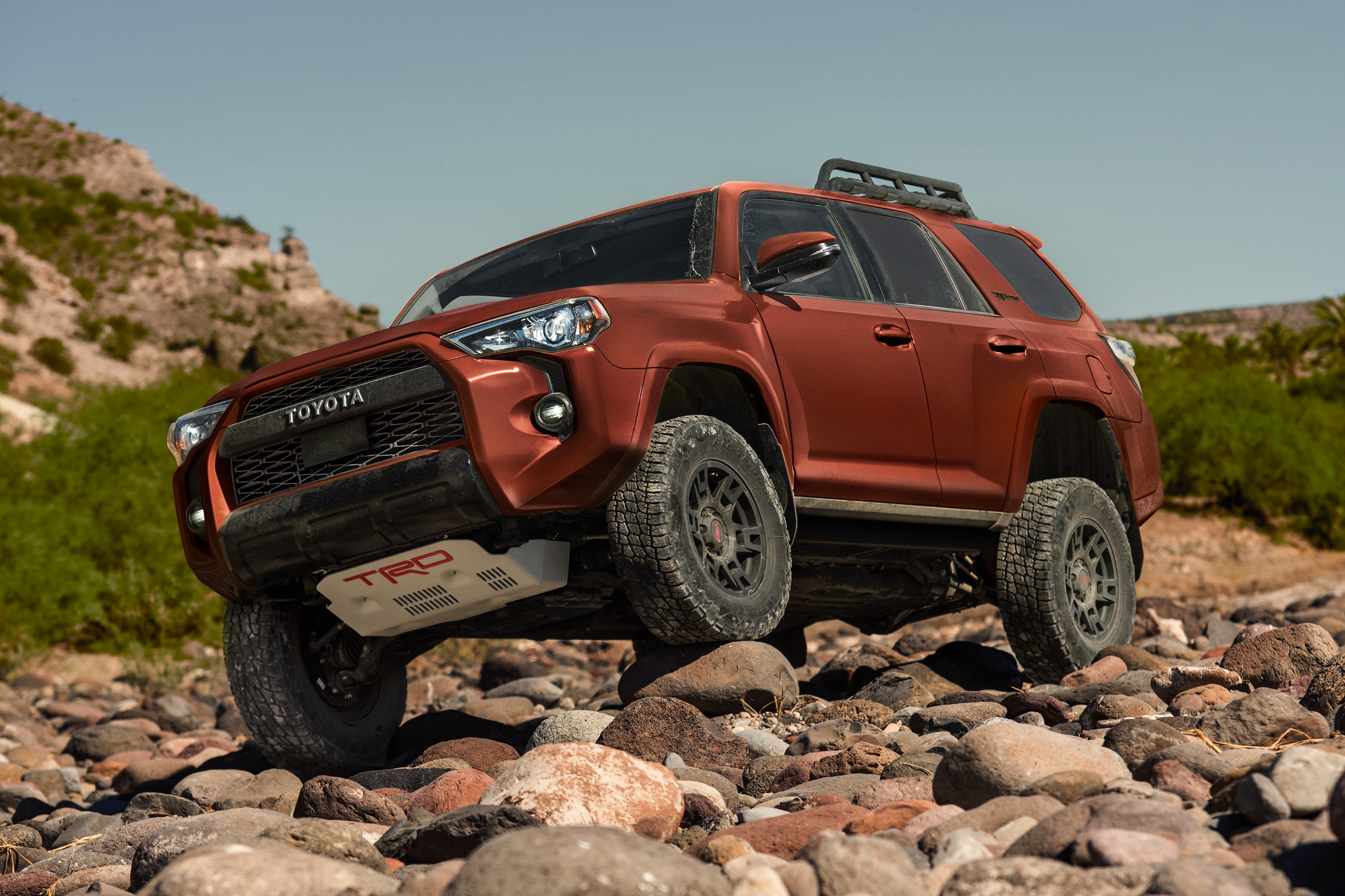
The 2025 Toyota 4Runner, in its sixth generation, maintained a design evolution rather than a complete overhaul. It retained the horseshoe-shaped grilles from the previous generation, but with a more robust and industrial look. The side body panels featured deep beveled creases that seamlessly blended with the flared wheel arches, giving the 4Runner a broad-shouldered stance suitable for an off-road SUV. Paying homage to its predecessors, the new model included design elements like the slanted rearmost window from the first-gen 4Runner. Inside, the cabin mirrored the Toyota Tacoma's design, with beveled styling throughout. The interior was functional, with hard plastics for durability and light cushioning for comfort, offering a quality that surpassed the Jeep Wrangler and Ford Bronco but fell short of the Land Rover Defender.
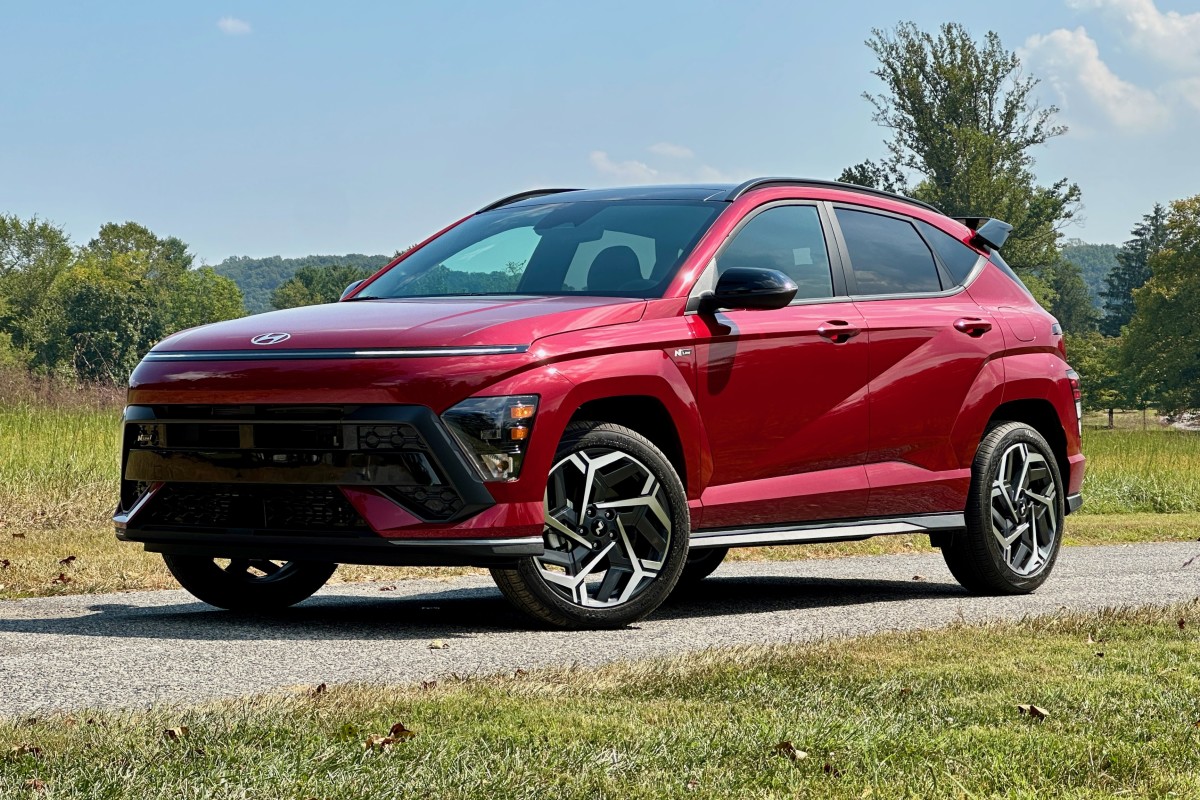
The 2025 Hyundai Kona, visually unchanged from the 2024 model, still stood out in the crossover class with its futuristic design. The single-piece grille and ultra-slim LED light bars gave even the gas-powered models a modern look. The Kona's increased size, about six inches longer, improved interior space and road presence. The new N Line S and N Line trims offered a sportier design with body-colored bumpers and cladding. The interior remained unchanged from 2024, featuring solid construction and ample tech. The 64-color ambient lighting became standard on higher trims, enhancing the cabin's ambiance. The Kona's interior was practical, with a focus on comfort and storage, making it a versatile choice for drivers.
The 2025 Toyota 4Runner offered two engine options. The base model featured a 2.4-liter turbocharged four-cylinder engine producing 317 horsepower and 278 lb-ft of torque, paired with an eight-speed automatic transmission. This setup improved acceleration and fuel economy compared to the previous generation. Rear-wheel drive was standard, with four-wheel drive available. The more powerful i-Force Max Hybrid powertrain combined the four-cylinder engine with a 1.87-kWh battery and an electric motor, delivering 326 horsepower and 465 lb-ft of torque. This hybrid option provided stronger power at lower speeds, ideal for off-roading. The 4Runner's handling improved significantly, offering a more composed ride on pavement while maintaining its off-road capabilities. With nine trims, the 4Runner catered to various off-road needs, with the TRD Pro and Trailhunter models being the most capable.
The 2025 Hyundai Kona offered two gas-powered engine options. The SE, SEL, and SEL Convenience trims featured a 2.0-liter naturally aspirated four-cylinder engine with 147 horsepower and 132 lb-ft of torque, paired with a Continuously Variable Transmission (CVT). For more power, the N Line S, N Line, and Limited trims came with a turbocharged 1.6-liter four-cylinder engine producing 190 horsepower and 195 lb-ft of torque, mated to an eight-speed automatic transmission. The turbo engine provided a broader torque band, enhancing performance. All-wheel drive was available across the lineup, offering active on-demand drive to the rear axle and a dedicated Snow mode. The Kona's ride and handling focused on competence, with AWD models featuring a more sophisticated suspension setup.
The 2025 Toyota 4Runner grew five inches longer, with a 2.4-inch increase in wheelbase. While this typically results in more passenger space, the gains were minimal. The front seats offered ample room for taller passengers, but the middle row was less accommodating, with adequate legroom and headroom. Third-row seating was available on non-hybrid models but was cramped, suitable only for short trips. The cockpit was well-organized, with oversized climate control knobs and tactile off-road controls. Storage options included door pockets, a dashboard tray, and a center armrest bin. Cargo capacity was slightly reduced, with 44.8 cubic feet behind the second row, and 42.6 cubic feet in the hybrid due to the battery. A sturdy roof rack compensated for cargo deficits.
The 2025 Hyundai Kona offered 25.5 cubic feet of cargo space with the rear seats in place, expanding to 63.7 cubic feet when folded. Rear legroom measured 38.2 inches, with 38.3 inches of headroom, providing adequate space for passengers. The front seats featured a generous range of movement, and the steering wheel was adjustable for reach and height. The drive selector was relocated to a stalk on the steering column, creating additional storage space. The Kona's interior offered excellent storage options, with numerous shelves, trays, and cubbies. Upholstery varied by trim, with cloth on lower trims and Alcantara or leatherette on higher trims. Heating and ventilation features progressed with trim levels, enhancing comfort.
The 2025 Toyota 4Runner featured an 8-inch infotainment touchscreen as standard, with a 14-inch option available. Both systems offered logical menus and quick responses, with wireless Apple CarPlay and Android Auto. A digital instrument panel was standard on Hybrid models and available on others. Off-road models included external camera views for precise tire placement, with automatic activation when crawling. A 14-speaker JBL audio system was available, along with a portable Bluetooth speaker. Remote monitoring and control were possible through a smartphone app, and a digital key function replaced the key fob.
The 2025 Hyundai Kona came with a 12.3-inch central touchscreen infotainment display across all trims, featuring wireless Android Auto and Apple CarPlay. Higher trims included wireless smartphone charging and Hyundai's digital key. The SEL Convenience trim and above featured a 12.3-inch digital instrument cluster, offering customization options. N Line and Limited trims offered an eight-speaker Bose audio system, while lower trims had a six-speaker setup. Built-in navigation was available on select trims, with Hyundai's Bluelink connectivity enabling over-the-air updates.
The 2025 Toyota 4Runner's crash test results were not available, but the Tacoma, on which it was based, received a Top Safety Pick from the IIHS. All 4Runner models came with Toyota Safety Sense 3.0, including features like frontal collision warning, lane-keep assist, adaptive cruise control, and automatic high beams. Proactive Driving Assist was included but could be disabled if intrusive. A blind-spot monitor with rear cross-traffic alerts was optional.
The 2025 Hyundai Kona impressed with its standard safety features, including Forward Collision-Avoidance Assist, Lane Keeping Assist, Blind-Spot Collision Warning, and Safe Exit Warning. Higher trims added Highway Driving Assist and enhanced Forward Collision-Avoidance Assist. Limited trim included parking assistance features. All Konas came with six airbags, electronic stability control, and a tire pressure monitoring system. The Kona received a Top Safety Pick+ from the IIHS.
CarGurus highlights
According to CarGurus experts, the overall rating for the 2025 Toyota 4Runner is 7.7 out of 10, while the 2025 Hyundai Kona scores 8.0 out of 10. Based on these ratings, the 2025 Hyundai Kona is the recommended choice, offering a better balance of modern design, safety features, and practicality.
Choose the 2025 Hyundai Kona if:
- You want a vehicle with a modern and futuristic design that stands out in the crossover class.
- You prioritize advanced safety features and a Top Safety Pick+ rating from the IIHS.
- You need a compact vehicle with ample cargo space and practical interior storage options.


Choose the 2025 Toyota 4Runner if:
- You need a vehicle with strong off-road capabilities and multiple trims catering to different off-road needs.
- You prefer a more rugged and industrial design with homage to previous generations.
- You require a vehicle with a higher towing capacity, ranging from 5,800 to 6,000 pounds.


CarGurus highlights
According to CarGurus experts, the overall rating for the 2025 Toyota 4Runner is 7.7 out of 10, while the 2025 Hyundai Kona scores 8.0 out of 10. Based on these ratings, the 2025 Hyundai Kona is the recommended choice, offering a better balance of modern design, safety features, and practicality.
Choose the 2025 Hyundai Kona if:
Shop Now- You want a vehicle with a modern and futuristic design that stands out in the crossover class.
- You prioritize advanced safety features and a Top Safety Pick+ rating from the IIHS.
- You need a compact vehicle with ample cargo space and practical interior storage options.
Choose the 2025 Toyota 4Runner if:
Shop Now- You need a vehicle with strong off-road capabilities and multiple trims catering to different off-road needs.
- You prefer a more rugged and industrial design with homage to previous generations.
- You require a vehicle with a higher towing capacity, ranging from 5,800 to 6,000 pounds.

By: CarGurus + AI
At CarGurus, our team of experienced automotive writers remain at the heart of our content operation, conducting hands-on car tests and writing insightful guides that are backed by years of industry experience. To complement this, we are harnessing AI to make our content offering more diverse and more helpful to shoppers than ever. To achieve this, our AI systems are based exclusively on CarGurus content, ratings and data, so that what we produce is both unique to CarGurus, and uniquely helpful to car shoppers.

