2025 Hyundai Kona vs 2025 Mercedes-Benz GLE
Overview | |
MSRP$61,850 | MSRP$24,550 |
Listings409 | Listings141 |
Ratings & Reviews | |
User Reviews | User Reviews |
Expert reviews7.5 out of 10 | Expert reviews8.0 out of 10 |
Pros
Cons
| Pros
Cons
|
2025 Mercedes-Benz GLE Reviews SummarySummary: G-Wagens aside, the now-discontinued M-Class is what cemented Mercedes’ place in the SUV jungle. The descendent of that pioneering model is the 2025 Mercedes-Benz GLE-Class, which continues as the automaker’s entry into a midsize luxury SUV segment populated by the Acura MDX, Audi Q7, BMW X5, Genesis GV80, and Lexus RX. Mercedes also sells a GLE Coupe that competes with the BMW X6. Changes for 2025 are limited to two new configurations—a GLE 350 SUV base model and GLE 450 4Matic Coupe—and several new paint colors. Verdict: The GLE-Class is a solid luxury SUV for families, but its competition is equally good. | |
2025 Hyundai Kona Reviews SummaryThat there are no major changes beyond a couple of new trim levels for the 2025 Hyundai Kona is neither a surprise nor a bad thing. Not a surprise because this second-generation model only made its debut one year ago, making it too soon to expect any major updates. And not a bad thing because, frankly, this second-generation Kona was already a great subcompact SUV. Time does not stand still, however, particularly when it comes to crossovers, so it’s time to find out how the Kona performs one year on, and whether it continues to deliver value in an increasingly busy part of the market. | |
No video found | |
Popular Features & Specs | |
Engine2.0L 255 hp I4 | Engine |
Drive TrainRWD | Drive Train |
Seating Capacity7 | Seating Capacity5 |
Horsepower255 hp @ 5800 rpm | Horsepower |
MPG City21 | MPG City |
MPG Highway28 | MPG Highway |
Engine | |
Engine Name2.0L 255 hp I4 | Engine Name2.0L 147 hp I4 |
Torque295 lb-ft @ 1800 rpm | Torque132 lb-ft @ 4500 rpm |
Horsepower255 hp @ 5800 rpm | Horsepower147 hp @ 6200 rpm |
DrivetrainRWD | DrivetrainFWD |
Fuel Economy | |
MPG City21 | MPG City |
MPG Highway28 | MPG Highway |
Interior | |
Seating Capacity7 | Seating Capacity5 |
Key Features | |
Navigation SystemStandard | Navigation SystemStandard |
Sunroof/MoonroofStandard | Sunroof/Moonroof |
Safety | |
Front Crash Overall | Front Crash Overall4 |
Side Crash Overall | Side Crash Overall5 |
Dimensions & Capacity | |
Cargo Space33.3 cu ft | Cargo Space25.5 cu ft |
Curb Weight4806 lbs | Curb Weight3005 lbs |
Height70.8 in | Height62.2 in |
Length193.9 in | Length171.3 in |
Width84.9 in | Width71.9 in |
Wheelbase117.9 in | Wheelbase104.7 in |
Maximum Payload1676 lbs | Maximum Payload1085 lbs |
Number of doors4 | Number of doors4 |
Maximum Towing Capacity5950 lbs | Maximum Towing Capacity |
Overview | ||
MSRP | $61,850 | $24,550 |
Listings | ||
Ratings & Reviews | ||
User reviews | ||
Expert reviews | 7.5 out of 10Read full review | 8.0 out of 10Read full review |
Pros & cons | Pros
Cons
| Pros
Cons
|
Summary | Summary: G-Wagens aside, the now-discontinued M-Class is what cemented Mercedes’ place in the SUV jungle. The descendent of that pioneering model is the 2025 Mercedes-Benz GLE-Class, which continues as the automaker’s entry into a midsize luxury SUV segment populated by the Acura MDX, Audi Q7, BMW X5, Genesis GV80, and Lexus RX. Mercedes also sells a GLE Coupe that competes with the BMW X6. Changes for 2025 are limited to two new configurations—a GLE 350 SUV base model and GLE 450 4Matic Coupe—and several new paint colors. Verdict: The GLE-Class is a solid luxury SUV for families, but its competition is equally good. | That there are no major changes beyond a couple of new trim levels for the 2025 Hyundai Kona is neither a surprise nor a bad thing. Not a surprise because this second-generation model only made its debut one year ago, making it too soon to expect any major updates. And not a bad thing because, frankly, this second-generation Kona was already a great subcompact SUV. Time does not stand still, however, particularly when it comes to crossovers, so it’s time to find out how the Kona performs one year on, and whether it continues to deliver value in an increasingly busy part of the market. |
Video | No video found | |
Popular Features & Specs | ||
Engine | 2.0L 255 hp I4 | |
Drive Train | RWD | |
Seating Capacity | 7 | 5 |
Horsepower | 255 hp @ 5800 rpm | |
MPG City | 21 | |
MPG Highway | 28 | |
Engine | ||
Engine Name | 2.0L 255 hp I4 | 2.0L 147 hp I4 |
Torque | 295 lb-ft @ 1800 rpm | 132 lb-ft @ 4500 rpm |
Horsepower | 255 hp @ 5800 rpm | 147 hp @ 6200 rpm |
Drivetrain | RWD | FWD |
Fuel Economy | ||
MPG City | 21 | |
MPG Highway | 28 | |
Interior | ||
Seating Capacity | 7 | 5 |
Key Features | ||
Navigation System | Standard | Standard |
Sunroof/Moonroof | Standard | |
Safety | ||
Front Crash Overall | 4 | |
Side Crash Overall | 5 | |
Dimensions & Capacity | ||
Cargo Space | 33.3 cu ft | 25.5 cu ft |
Curb Weight | 4806 lbs | 3005 lbs |
Height | 70.8 in | 62.2 in |
Length | 193.9 in | 171.3 in |
Width | 84.9 in | 71.9 in |
Wheelbase | 117.9 in | 104.7 in |
Maximum Payload | 1676 lbs | 1085 lbs |
Number of doors | 4 | 4 |
Maximum Towing Capacity | 5950 lbs | |
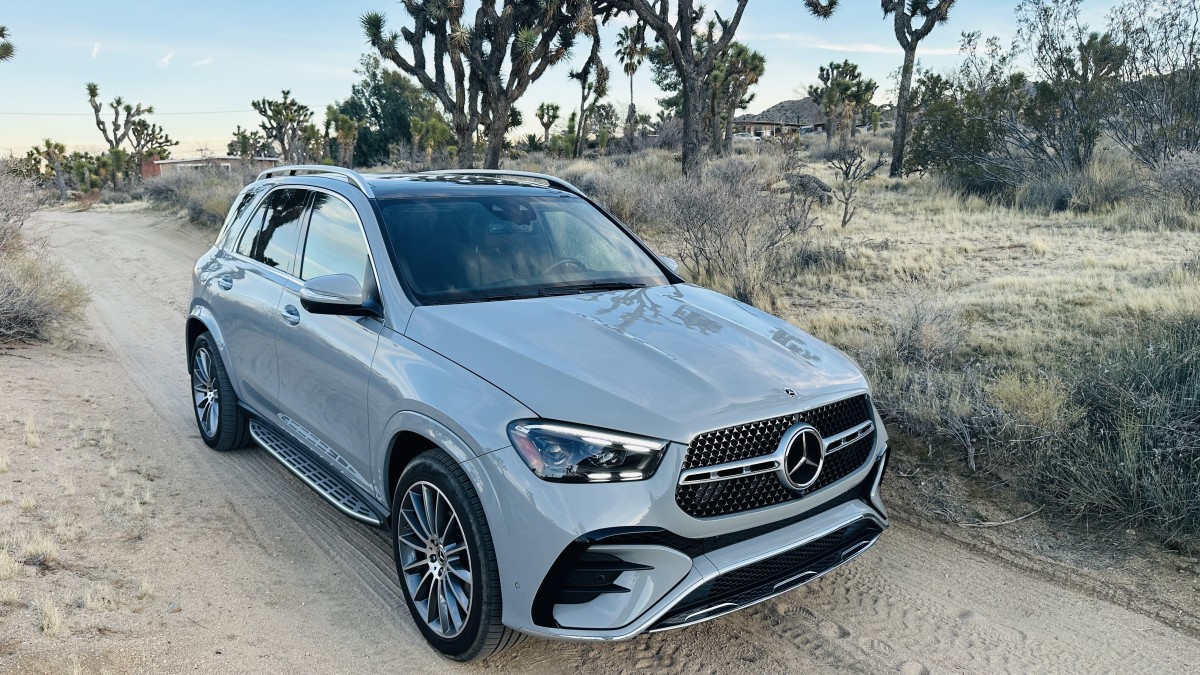
The 2025 Mercedes-Benz GLE, with its 2024 facelift, retained a distinctive design that set it apart from other Mercedes-Benz SUVs. It featured a rounded profile reminiscent of its predecessors, with squared-off wheel arches and a horizontal grille and headlights that gave it a wide stance. The side glass tapered sharply inward, creating a unique silhouette. However, the proportions appeared somewhat odd, especially on the GLE Coupe models, where the bulky lower body contrasted with the fastback-style roofline. Despite not being the most handsome model in the lineup, the GLE's styling adhered closely to the brand's identity, ensuring it was unmistakably a Mercedes-Benz. For 2025, Mercedes introduced new paint colors and interior options, allowing buyers to personalize their GLE. The interior, with its Yacht Blue option, exuded luxury, featuring Nappa leather upholstery, chunky air vents, mesh speaker grilles, and 64-color ambient lighting, creating an upscale and special atmosphere.
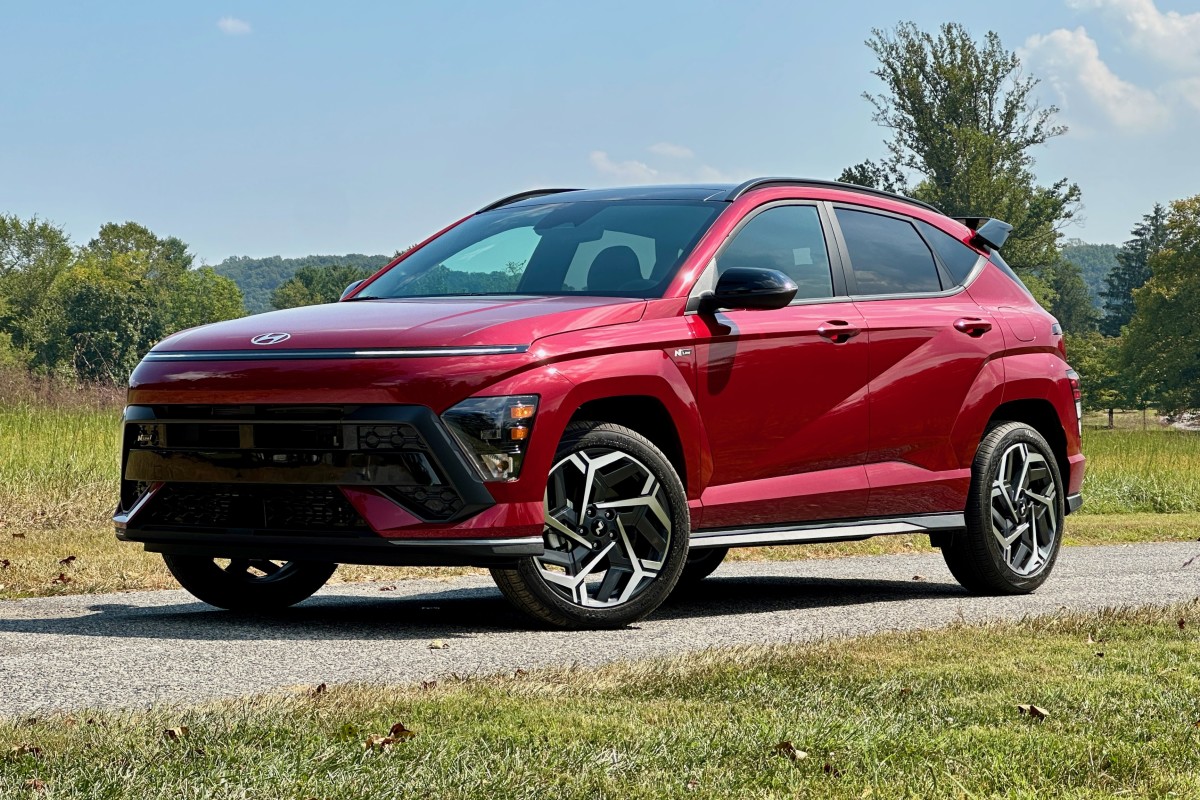
The 2025 Hyundai Kona, visually unchanged from the 2024 model, maintained its fresh and distinctive appearance in the crossover class. Its flush, single-piece grille and ultra-slim LED light bars gave even the gas-powered models a futuristic look. While not classically handsome, the Kona's design, with its curves, bulges, and sharp angles, created a satisfactory visual appeal. The newer model was around six inches longer, providing more interior space and a more assertive road presence. The Kona N Line S and N Line trims featured sportier design elements, including body-colored bumpers and cladding. The interior remained unchanged from 2024, offering a solidly constructed and airy feel. The 2025 model introduced 64-color ambient interior lighting as standard on higher trims, enhancing the cabin's ambiance. The Kona's interior was practical, with ample storage options and comfortable seating, making it a well-rounded choice for buyers.
The 2025 Mercedes-Benz GLE offered a diverse range of powertrain options, including a plug-in hybrid and two AMG performance models. The lineup began with the GLE 350, powered by a 2.0-liter turbocharged four-cylinder engine with a mild-hybrid system, producing 255 horsepower and 295 lb-ft of torque. It came with a nine-speed automatic transmission and rear-wheel drive, with all-wheel drive available. The GLE 450 4Matic featured a 3.0-liter turbocharged inline-six engine, generating 375 hp and 369 lb-ft of torque. The GLE 450e 4Matic combined a turbo-four engine with electric assistance, delivering 381 hp and 479 lb-ft, along with an EPA-rated 50 miles of electric range. The GLE 580 4Matic boasted a twin-turbo 4.0-liter V8 engine, producing 510 hp and 538 lb-ft. The AMG GLE 53 4Matic+ and AMG GLE 63 S 4Matic+ performance models offered even more power, with the GLE 53 producing 429 hp and 413 lb-ft, and the GLE 63 S delivering 603 hp and 627 lb-ft. The GLE 63 S could accelerate from 0 to 60 mph in just 3.7 seconds, providing exhilarating performance. Despite its impressive powertrains, the GLE's size and weight made it feel larger than it was, affecting its agility on backroads and maneuverability in tight spaces.
The 2025 Hyundai Kona offered a choice between gas-powered and fully electric drivetrains. The gas-powered Kona came in two flavors, depending on the trim level. The SE, SEL, and SEL Convenience trims featured a 2.0-liter naturally aspirated four-cylinder engine, producing 147 horsepower and 132 lb-ft of torque, paired with Hyundai's Intelligent Variable Transmission (IVT). This setup prioritized fuel efficiency but lacked the performance punch. The N Line S, N Line, and Limited trims offered a more powerful turbocharged 1.6-liter four-cylinder engine, generating 190 horsepower and 195 lb-ft of torque, mated to an eight-speed torque converter automatic transmission. The turbo engine provided a broader torque band, enhancing performance, although it could feel flat at low revs. All-wheel drive was available across the lineup for an additional cost, offering active on-demand drive to the rear axle and a dedicated Snow mode. AWD models featured a more sophisticated multi-link rear suspension, improving ride and handling. While the Kona's performance was adequate for its class, it prioritized competence over excitement.
The 2025 Mercedes-Benz GLE was available in two-row, five-seat, and three-row, seven-seat configurations, although Mercedes did not publish specifications for third-row space. The GLE offered competitive headroom and legroom in the front seats, although some rivals provided slightly more legroom. The high seating position provided an SUV-like feel, but outward visibility was limited. The second-row passengers enjoyed slightly more space than in most competitor SUVs, with headroom comparable to a BMW X5 and additional legroom compared to other rivals. The GLE offered 33.3 cubic feet of cargo space behind the second-row seats, expanding to 74.9 cubic feet with all seats folded. It had a maximum towing capacity of 7,700 pounds, matching the Audi Q7 in this metric. The GLE's interior featured a bulky center console with reasonable storage space for small items.
The 2025 Hyundai Kona offered 25.5 cubic feet of cargo capacity with the rear seats in place, expanding to 63.7 cubic feet when the seats were folded. The Kona's trunk featured a dual-level cargo floor, providing ample storage space. Rear legroom measured 38.2 inches, with 38.3 inches of headroom, ensuring comfort for most passengers. The front seats offered a generous range of movement, and the steering wheel was adjustable for reach and height. The drive selector was relocated to a stalk on the steering column, creating additional storage space. The Kona's interior featured numerous shelves, trays, and cubbies for storage. The SE, SEL, and SEL Convenience trims had cloth upholstery, while N Line S and N Line featured Alcantara sport seats, and Limited had H-Tex leatherette. Higher trims offered heated and ventilated front seats, with dual-zone automatic climate control and rear air vents.
The 2025 Mercedes-Benz GLE featured a pair of 12.3-inch screens, one serving as a digital instrument cluster and the other as an infotainment touchscreen. The Mercedes-Benz User Experience (MBUX) system included wireless Apple CarPlay and Android Auto, along with built-in navigation. The interface could be accessed through various methods, including a center-console touchpad, steering-wheel touchpads, and voice recognition. The AMG GLE 63 S Coupe test car offered additional settings, including six drive modes and customizable damper firmness, stability control, and exhaust noise. Some GLE models could be equipped with an off-road display and a "transparent hood" function for the 360-degree camera system, enhancing off-road capabilities.
The 2025 Hyundai Kona featured a 12.3-inch central touchscreen infotainment display across all trims, offering wireless Android Auto and Apple CarPlay. Higher trims included wireless smartphone charging and Hyundai's digital key. The SEL Convenience trim and above featured a 12.3-inch digital instrument cluster, providing customization options. The N Line and Limited trims offered an eight-speaker Bose premium audio system, while lower trims had a six-speaker setup. Built-in navigation was available on select trims, with Hyundai's Bluelink connectivity enabling over-the-air software updates.
The 2025 Mercedes-Benz GLE offered a range of driver-assist features, although some were not standard. Standard features included forward collision warning, automatic emergency braking, blind-spot monitoring, crosswind assist, parking assist, a driver attention monitor, and a 360-degree camera system. The Pre-Safe system aimed to mitigate collision effects by tightening seatbelts and closing windows. The optional Driver Assistance Package added adaptive cruise control, evasive steering assist, and an expanded driver-monitoring system. The GLE received a 2025 Top Safety Pick+ award from the IIHS, although its front-crash prevention tech received mixed ratings.
The 2025 Hyundai Kona impressed with its standard safety features, including Forward Collision-Avoidance Assist, Lane Keeping Assist, Lane Following Assist, Blind-Spot Collision Warning, and Safe Exit Warning. Higher trims added Highway Driving Assist and enhanced Forward Collision-Avoidance Assist. The Limited trim offered parking assistance features. All Konas included six airbags, electronic stability control, and a tire pressure monitoring system. The Kona received a Top Safety Pick+ award from the IIHS.
CarGurus highlights
According to CarGurus experts, the overall rating for the 2025 Mercedes-Benz GLE is 7.5 out of 10, while the 2025 Hyundai Kona scores 8.0 out of 10. Based on these ratings, the Hyundai Kona emerges as the better choice, offering a compelling combination of practicality, safety, and value.
Choose the 2025 Hyundai Kona if:
- You seek a compact crossover with a distinctive design and practical interior space.
- You value standard safety features and advanced driver-assist technology across all trims.
- You want a cost-effective vehicle with a choice of gas-powered and fully electric drivetrains.


Choose the 2025 Mercedes-Benz GLE if:
- You desire a luxury SUV with a wide range of powerful engine options, including AMG performance models.
- You prioritize a spacious interior with ample cargo capacity and towing capability.
- You appreciate advanced technology features, including a sophisticated infotainment system and customizable drive modes.


CarGurus highlights
According to CarGurus experts, the overall rating for the 2025 Mercedes-Benz GLE is 7.5 out of 10, while the 2025 Hyundai Kona scores 8.0 out of 10. Based on these ratings, the Hyundai Kona emerges as the better choice, offering a compelling combination of practicality, safety, and value.
Choose the 2025 Hyundai Kona if:
Shop Now- You seek a compact crossover with a distinctive design and practical interior space.
- You value standard safety features and advanced driver-assist technology across all trims.
- You want a cost-effective vehicle with a choice of gas-powered and fully electric drivetrains.
Choose the 2025 Mercedes-Benz GLE if:
Shop Now- You desire a luxury SUV with a wide range of powerful engine options, including AMG performance models.
- You prioritize a spacious interior with ample cargo capacity and towing capability.
- You appreciate advanced technology features, including a sophisticated infotainment system and customizable drive modes.

By: CarGurus + AI
At CarGurus, our team of experienced automotive writers remain at the heart of our content operation, conducting hands-on car tests and writing insightful guides that are backed by years of industry experience. To complement this, we are harnessing AI to make our content offering more diverse and more helpful to shoppers than ever. To achieve this, our AI systems are based exclusively on CarGurus content, ratings and data, so that what we produce is both unique to CarGurus, and uniquely helpful to car shoppers.

