2025 Hyundai Kona vs 2025 Mazda CX-5
Overview | |
MSRP$24,550 | MSRP$29,050 |
Listings138 | Listings217 |
Ratings & Reviews | |
User Reviews | User Reviews |
Expert reviews8.0 out of 10 | Expert reviews6.5 out of 10 |
Pros
Cons
| Pros
Cons
|
2025 Hyundai Kona Reviews SummaryThat there are no major changes beyond a couple of new trim levels for the 2025 Hyundai Kona is neither a surprise nor a bad thing. Not a surprise because this second-generation model only made its debut one year ago, making it too soon to expect any major updates. And not a bad thing because, frankly, this second-generation Kona was already a great subcompact SUV. Time does not stand still, however, particularly when it comes to crossovers, so it’s time to find out how the Kona performs one year on, and whether it continues to deliver value in an increasingly busy part of the market. | |
2025 Mazda CX-5 Reviews SummaryJust because you need more practicality, doesn't necessarily mean you'll have to sacrifice driving enjoyment or performance. Among compact SUVs, the 2025 Mazda CX-5 proves that you can satisfy your sporty appetite in an attractive and upscale alternative. Verdict: The CX-5 offers an enjoyable driving experience, but it falls short in practical areas like fuel economy and cargo space. | |
Popular Features & Specs | |
Seating Capacity5 | Seating Capacity5 |
Engine | |
Engine Name2.0L 147 hp I4 | Engine Name2.5L 187 hp I4 |
Torque132 lb-ft @ 4500 rpm | Torque185 lb-ft @ 4000 rpm |
Horsepower147 hp @ 6200 rpm | Horsepower187 hp @ 6000 rpm |
DrivetrainFWD | DrivetrainAWD |
Interior | |
Seating Capacity5 | Seating Capacity5 |
Key Features | |
Navigation SystemStandard | Navigation System |
Safety | |
Front Crash Overall4 | Front Crash Overall5 |
Side Crash Overall5 | Side Crash Overall5 |
Dimensions & Capacity | |
Cargo Space25.5 cu ft | Cargo Space30.8 cu ft |
Curb Weight3005 lbs | Curb Weight3679 lbs |
Height62.2 in | Height66.1 in |
Length171.3 in | Length180.1 in |
Width71.9 in | Width83.3 in |
Wheelbase104.7 in | Wheelbase106.2 in |
Maximum Payload1085 lbs | Maximum Payload1045 lbs |
Number of doors4 | Number of doors4 |
Maximum Towing Capacity | Maximum Towing Capacity2000 lbs |
Overview | ||
MSRP | $24,550 | $29,050 |
Listings | ||
Ratings & Reviews | ||
User reviews | ||
Expert reviews | 8.0 out of 10Read full review | 6.5 out of 10Read full review |
Pros & cons | Pros
Cons
| Pros
Cons
|
Summary | That there are no major changes beyond a couple of new trim levels for the 2025 Hyundai Kona is neither a surprise nor a bad thing. Not a surprise because this second-generation model only made its debut one year ago, making it too soon to expect any major updates. And not a bad thing because, frankly, this second-generation Kona was already a great subcompact SUV. Time does not stand still, however, particularly when it comes to crossovers, so it’s time to find out how the Kona performs one year on, and whether it continues to deliver value in an increasingly busy part of the market. | Just because you need more practicality, doesn't necessarily mean you'll have to sacrifice driving enjoyment or performance. Among compact SUVs, the 2025 Mazda CX-5 proves that you can satisfy your sporty appetite in an attractive and upscale alternative. Verdict: The CX-5 offers an enjoyable driving experience, but it falls short in practical areas like fuel economy and cargo space. |
Video | ||
Popular Features & Specs | ||
Seating Capacity | 5 | 5 |
Engine | ||
Engine Name | 2.0L 147 hp I4 | 2.5L 187 hp I4 |
Torque | 132 lb-ft @ 4500 rpm | 185 lb-ft @ 4000 rpm |
Horsepower | 147 hp @ 6200 rpm | 187 hp @ 6000 rpm |
Drivetrain | FWD | AWD |
Interior | ||
Seating Capacity | 5 | 5 |
Key Features | ||
Navigation System | Standard | |
Safety | ||
Front Crash Overall | 4 | 5 |
Side Crash Overall | 5 | 5 |
Dimensions & Capacity | ||
Cargo Space | 25.5 cu ft | 30.8 cu ft |
Curb Weight | 3005 lbs | 3679 lbs |
Height | 62.2 in | 66.1 in |
Length | 171.3 in | 180.1 in |
Width | 71.9 in | 83.3 in |
Wheelbase | 104.7 in | 106.2 in |
Maximum Payload | 1085 lbs | 1045 lbs |
Number of doors | 4 | 4 |
Maximum Towing Capacity | 2000 lbs | |
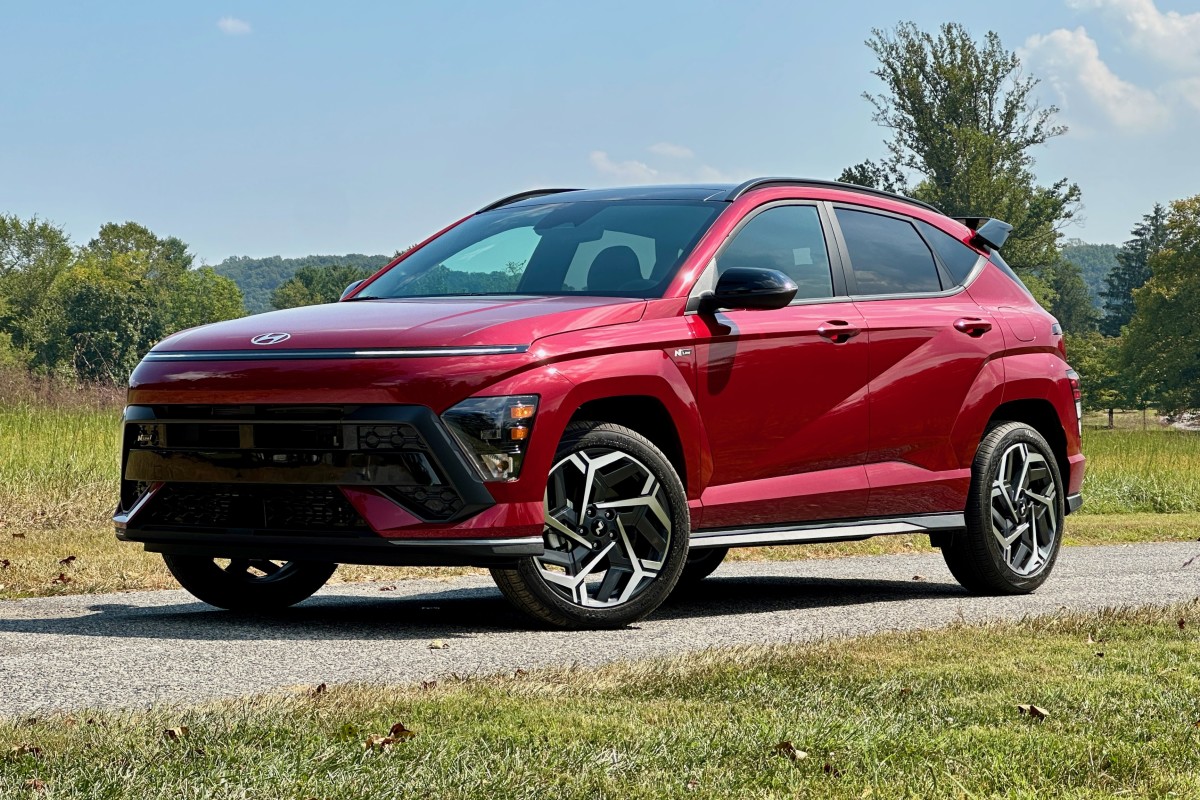
The 2025 Hyundai Kona retained its distinctive appearance from the previous year, maintaining a fresh and futuristic look that set it apart in the crossover class. Its design featured a largely flush, single-piece grille and ultra-slim LED light bars, giving even the gas-powered models a modern aesthetic. The Kona's design, with its curves, bulges, and sharp angles, created a visually satisfying vehicle, especially in the sportier N Line S and N Line trims, which boasted body-colored bumpers and cladding. The increased size of the 2025 model, about six inches longer than its predecessor, contributed to a more assertive road presence and improved interior space.
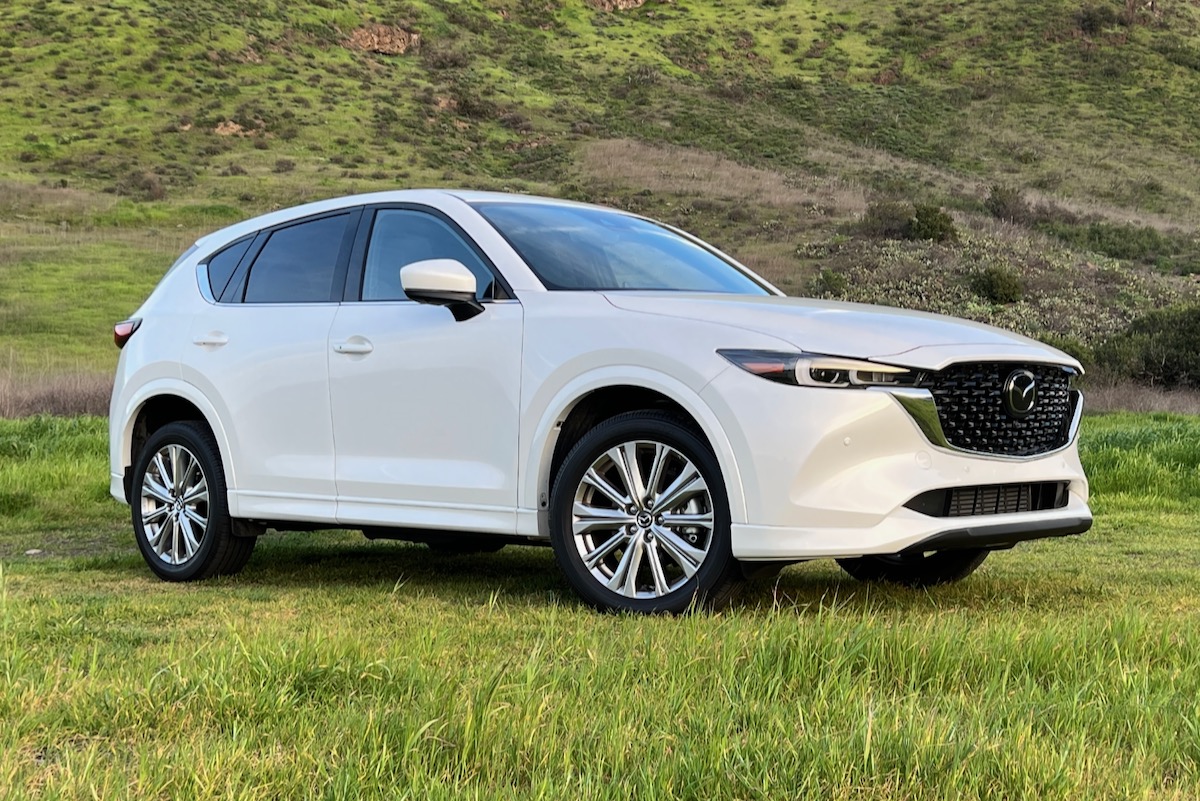
The 2025 Mazda CX-5, on the other hand, was celebrated for its elegant design, characterized by graceful curves that distinguished it from its competitors. Despite not having undergone a redesign since 2017, the CX-5's styling remained impressive, resembling an entry-level luxury SUV. Its interior was noted for its high-quality materials and a layout that balanced traditional analog elements with modern digital trends. While it lacked the large infotainment screens of some rivals, the CX-5's use of physical buttons and knobs was appreciated for its usability, offering a more tactile and intuitive experience.
The 2025 Hyundai Kona offered two gas-powered engine options. The SE, SEL, and SEL Convenience trims were equipped with a 2.0-liter naturally aspirated four-cylinder engine, producing 147 horsepower and 132 lb-ft of torque, paired with Hyundai's Intelligent Variable Transmission (IVT). This setup prioritized fuel efficiency but could feel less engaging due to the CVT's characteristic 'rubber band' sensation. For those seeking more power, the N Line S, N Line, and Limited trims featured a turbocharged 1.6-liter four-cylinder engine, delivering 190 horsepower and 195 lb-ft of torque, coupled with an eight-speed automatic transmission. This turbo engine provided a broader torque band and more muscular performance, although it could still feel slightly flat at low revs. All-wheel drive was available across the lineup, enhancing traction and handling, particularly with the more sophisticated multi-link rear suspension on AWD models.
The 2025 Mazda CX-5 offered two engine choices as well. The base engine was a 2.5-liter four-cylinder, generating 187 horsepower and 186 lb-ft of torque, while the Turbo model increased output to 256 horsepower and 320 lb-ft of torque. Both engines were paired with a six-speed automatic transmission, and all-wheel drive was standard across the range. The base engine provided adequate power, with a 0-60 mph time of about 8 seconds, while the turbocharged model was notably quicker, reaching 60 mph in approximately 6 seconds. The CX-5 was praised for its sporty driving dynamics, offering a confident and engaging experience on winding roads, although this resulted in a slightly firmer ride quality.
The 2025 Hyundai Kona impressed with its practicality, offering 25.5 cubic feet of cargo space with the rear seats in place, expanding to 63.7 cubic feet when folded. This capacity was complemented by a dual-level cargo floor, enhancing versatility. Rear passengers enjoyed 38.2 inches of legroom and 38.3 inches of headroom, providing ample space for most occupants. The front seats offered a generous range of adjustments, and the relocation of the drive selector to a stalk on the steering column created additional storage space. The Kona's interior featured various upholstery options, with heated and ventilated front seats available on higher trims, along with dual-zone automatic climate control.
The 2025 Mazda CX-5, while stylish and refined, offered less practicality compared to some rivals. It provided 30.8 cubic feet of cargo space behind the rear seats, expanding to 58.1 cubic feet with the seats folded. The cargo area was wide and flat, accommodating larger items, but competitors like the Honda CR-V and Kia Sportage offered more space. Rear legroom was competitive, but headroom was slightly less generous than some rivals. The CX-5's interior featured moderately sized storage compartments, with wireless charging available on midlevel trims, although the harder plastic surfaces allowed items to slide around.
The 2025 Hyundai Kona featured a 12.3-inch central touchscreen infotainment display across all trims, offering wireless Android Auto and Apple CarPlay as standard. Higher trims included wireless smartphone charging and a digital key. The SEL Convenience trim and above boasted a 12.3-inch digital instrument cluster, enhancing customization and cohesion. Audiophiles could opt for the N Line or Limited trims for an eight-speaker Bose premium audio system. Hyundai's Bluelink connectivity allowed for over-the-air software updates, ensuring features remained up to date.
The 2025 Mazda CX-5 came with a 10.25-inch infotainment display, controlled via a dial on the center console. This setup, reminiscent of older BMW and Audi systems, was praised for its ease of use while driving. Apple CarPlay and Android Auto were available, with wireless integration on midrange trims. The CX-5's analog gauges felt slightly dated, but a head-up display was standard on higher trims, projecting essential information onto the windshield. The audio system ranged from a four-speaker setup on the base trim to a 10-speaker Bose premium system on the Signature model.
The 2025 Hyundai Kona impressed with its comprehensive safety features, including Forward Collision-Avoidance Assist, Lane Keeping Assist, Blind-Spot Collision Warning, and Safe Exit Warning as standard across all trims. Higher trims added features like Highway Driving Assist and enhanced Forward Collision-Avoidance Assist. The Kona also included six airbags, electronic stability control, and a tire pressure monitoring system. It earned a Top Safety Pick+ rating from the IIHS.
The 2025 Mazda CX-5 received high safety ratings, earning five stars from the NHTSA in most evaluations and a "Good" rating from the IIHS for the 2024 model. Standard safety features included forward-collision warning, blind-spot monitoring, lane-departure warning, and adaptive cruise control. Higher trims added adaptive headlights, a head-up display, and a surround-view camera system. The Turbo Signature trim included a driver attention monitor and rear automatic braking.
CarGurus highlights
According to CarGurus experts, the overall rating for the 2025 Hyundai Kona is 8.0 out of 10, while the 2025 Mazda CX-5 scores 6.5 out of 10. Based on these ratings, the Hyundai Kona is the recommended choice, offering a better balance of design, practicality, technology, and safety features.
Choose the 2025 Hyundai Kona if:
- You prioritize a futuristic design with a spacious interior and ample cargo capacity.
- You value advanced safety features and a Top Safety Pick+ rating.
- You seek a vehicle with a comprehensive infotainment system and wireless connectivity options.


Choose the 2025 Mazda CX-5 if:
- You appreciate elegant styling and a refined interior with high-quality materials.
- You desire sporty driving dynamics and confident handling on winding roads.
- You prefer a user-friendly infotainment system with a control dial for ease of use while driving.


CarGurus highlights
According to CarGurus experts, the overall rating for the 2025 Hyundai Kona is 8.0 out of 10, while the 2025 Mazda CX-5 scores 6.5 out of 10. Based on these ratings, the Hyundai Kona is the recommended choice, offering a better balance of design, practicality, technology, and safety features.
Choose the 2025 Hyundai Kona if:
Shop Now- You prioritize a futuristic design with a spacious interior and ample cargo capacity.
- You value advanced safety features and a Top Safety Pick+ rating.
- You seek a vehicle with a comprehensive infotainment system and wireless connectivity options.
Choose the 2025 Mazda CX-5 if:
Shop Now- You appreciate elegant styling and a refined interior with high-quality materials.
- You desire sporty driving dynamics and confident handling on winding roads.
- You prefer a user-friendly infotainment system with a control dial for ease of use while driving.

By: CarGurus + AI
At CarGurus, our team of experienced automotive writers remain at the heart of our content operation, conducting hands-on car tests and writing insightful guides that are backed by years of industry experience. To complement this, we are harnessing AI to make our content offering more diverse and more helpful to shoppers than ever. To achieve this, our AI systems are based exclusively on CarGurus content, ratings and data, so that what we produce is both unique to CarGurus, and uniquely helpful to car shoppers.

