2025 Hyundai IONIQ 5 vs 2025 Toyota Sienna
Overview | |
MSRP$42,600 | MSRP$39,485 |
Listings118 | Listings121 |
Ratings & Reviews | |
User Reviews | User Reviews |
Expert reviews8.7 out of 10 | Expert reviews6.3 out of 10 |
Pros
Cons
| Pros
Cons
|
2025 Hyundai IONIQ 5 Reviews SummaryIt would appear to be the calendar, not the competition, that has the Ioniq 5 due for a mid-cycle refresh. We liked it when it burst onto the scene as an angular oddball in a sea of soft-lined sameness, and it has only improved over the last few years. Verdict: Hyundai makes minor but welcome changes and avoids tweaking the many things that were working well, successfully making a good thing better. | |
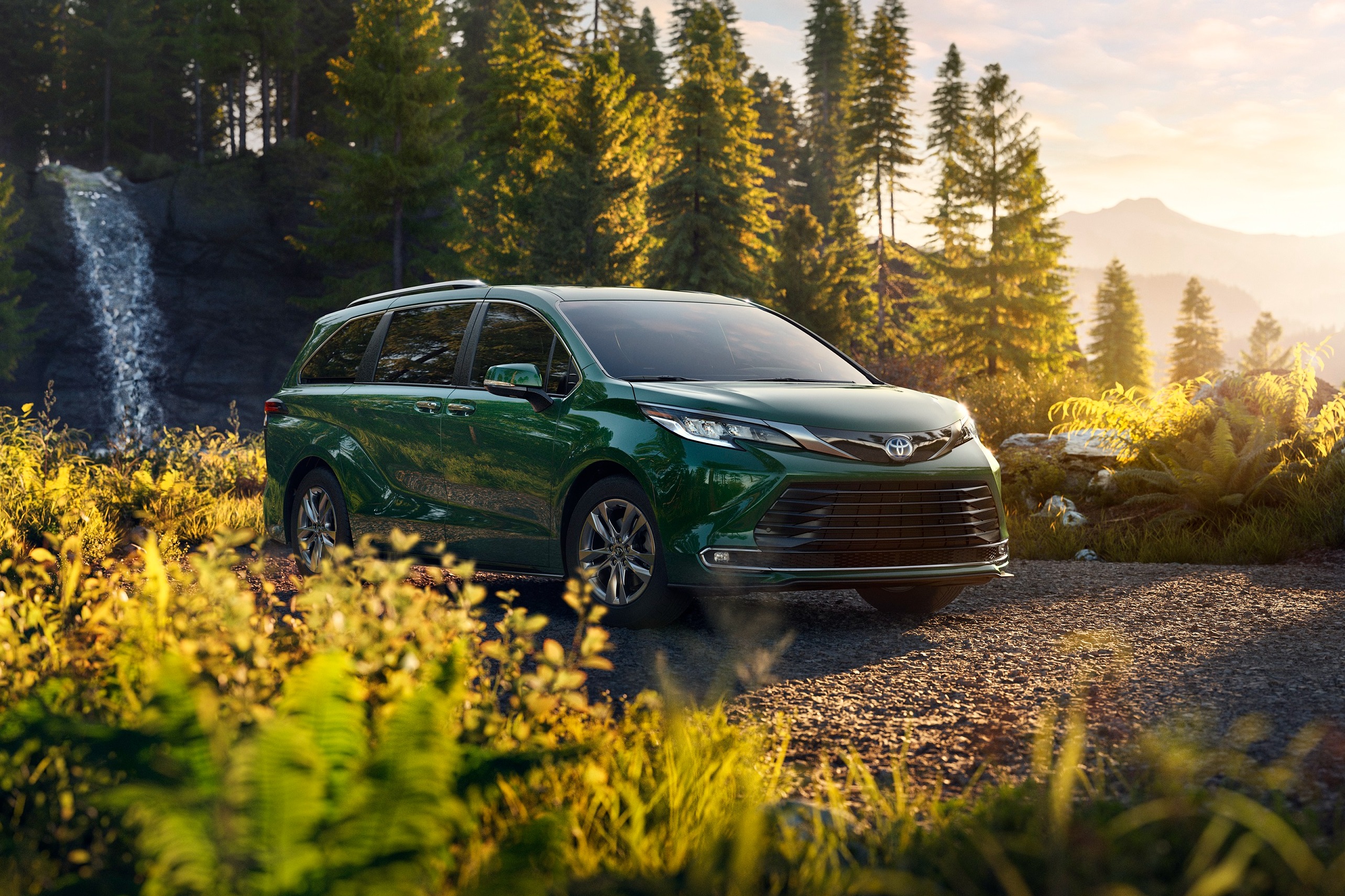
2025 Toyota Sienna Reviews SummaryIn addition to promising 35 to 36 mpg in combined driving, the 2025 Sienna distinguishes itself in several ways. First, it offers an available all-wheel-drive system for extra traction. Second, a Woodland Edition trim level provides half an inch of extra ground clearance for light off-roading capability. Third, while its maximum cargo capacity measurement falls short of rivals, you never need to remove the second-row seats to use it. Verdict: Saving money on gas, making life simpler, and the option of AWD ruggedness are all good things in a minivan, and they make the Toyota Sienna worth considering if you’re also looking at cars such as the Chrysler Pacifica, Honda Odyssey, and Kia Carnival. | |
No video found | No video found |
Popular Features & Specs | |
Engine168 hp Electric | Engine2.5L 245 hp I4 Hybrid |
DrivetrainRWD | DrivetrainFWD |
Seating Capacity5 | Seating Capacity8 |
EV Battery Capacity63 kWh | EV Battery Capacity1.9 kWh |
MPG City131 | MPG City36 |
MPG Highway100 | MPG Highway36 |
Battery Charge Time (120V)54 hours | Battery Charge Time (120V) |
Battery Charge Time (240V)5.7 hours | Battery Charge Time (240V) |
Engine | |
Engine Name168 hp Electric | Engine Name2.5L 245 hp I4 Hybrid |
Battery Charge Time (120V)54 hours | Battery Charge Time (120V) |
Battery Charge Time (240V)5.7 hours | Battery Charge Time (240V) |
DrivetrainRWD | DrivetrainFWD |
Fuel Economy | |
EV Battery Capacity63 kWh | EV Battery Capacity1.9 kWh |
MPG City131 | MPG City36 |
MPG Highway100 | MPG Highway36 |
Interior | |
Seating Capacity5 | Seating Capacity8 |
Key Features | |
Navigation SystemStandard | Navigation System |
Safety | |
Front Crash Overall | Front Crash Overall4 |
Side Crash Overall | Side Crash Overall5 |
Dimensions & Capacity | |
Cargo Space26.3 cu ft | Cargo Space33.5 cu ft |
Curb Weight4144 lbs | Curb Weight4610 lbs |
Height63.0 in | Height68.5 in |
Length183.3 in | Length203.7 in |
Width74.4 in | Width78.5 in |
Wheelbase118.1 in | Wheelbase120.5 in |
Maximum Payload1081 lbs | Maximum Payload1560 lbs |
Number of doors4 | Number of doors4 |
Maximum Towing Capacity | Maximum Towing Capacity3500 lbs |
Overview | ||
MSRP | $42,600 | $39,485 |
Listings | ||
Ratings & Reviews | ||
User reviews | ||
Expert reviews | 8.7 out of 10Read full review | 6.3 out of 10Read full review |
Pros & cons | Pros
Cons
| Pros
Cons
|
Summary | It would appear to be the calendar, not the competition, that has the Ioniq 5 due for a mid-cycle refresh. We liked it when it burst onto the scene as an angular oddball in a sea of soft-lined sameness, and it has only improved over the last few years. Verdict: Hyundai makes minor but welcome changes and avoids tweaking the many things that were working well, successfully making a good thing better. | In addition to promising 35 to 36 mpg in combined driving, the 2025 Sienna distinguishes itself in several ways. First, it offers an available all-wheel-drive system for extra traction. Second, a Woodland Edition trim level provides half an inch of extra ground clearance for light off-roading capability. Third, while its maximum cargo capacity measurement falls short of rivals, you never need to remove the second-row seats to use it. Verdict: Saving money on gas, making life simpler, and the option of AWD ruggedness are all good things in a minivan, and they make the Toyota Sienna worth considering if you’re also looking at cars such as the Chrysler Pacifica, Honda Odyssey, and Kia Carnival. |
Video | No video found | No video found |
Popular Features & Specs | ||
Engine | 168 hp Electric | 2.5L 245 hp I4 Hybrid |
Drivetrain | RWD | FWD |
Seating Capacity | 5 | 8 |
EV Battery Capacity | 63 kWh | 1.9 kWh |
MPG City | 131 | 36 |
MPG Highway | 100 | 36 |
Battery Charge Time (120V) | 54 hours | |
Battery Charge Time (240V) | 5.7 hours | |
Engine | ||
Engine Name | 168 hp Electric | 2.5L 245 hp I4 Hybrid |
Battery Charge Time (120V) | 54 hours | |
Battery Charge Time (240V) | 5.7 hours | |
Drivetrain | RWD | FWD |
Fuel Economy | ||
EV Battery Capacity | 63 kWh | 1.9 kWh |
MPG City | 131 | 36 |
MPG Highway | 100 | 36 |
Interior | ||
Seating Capacity | 5 | 8 |
Key Features | ||
Navigation System | Standard | |
Safety | ||
Front Crash Overall | 4 | |
Side Crash Overall | 5 | |
Dimensions & Capacity | ||
Cargo Space | 26.3 cu ft | 33.5 cu ft |
Curb Weight | 4144 lbs | 4610 lbs |
Height | 63.0 in | 68.5 in |
Length | 183.3 in | 203.7 in |
Width | 74.4 in | 78.5 in |
Wheelbase | 118.1 in | 120.5 in |
Maximum Payload | 1081 lbs | 1560 lbs |
Number of doors | 4 | 4 |
Maximum Towing Capacity | 3500 lbs | |
The 2025 Hyundai Ioniq 5 maintained its distinctive retro-inspired design, reminiscent of the 1986-1991 Lancia Delta, particularly in the high-performance Ioniq 5 N variant. Hyundai kept the styling largely unchanged through its mid-cycle refresh, with only mild revisions to the lower front fascia. The vehicle retained its signature "Parametric Pixel" headlights and taillights, round wheel arches, and a high rear spoiler. The new XRT trim stood out with red tow hooks and black plastic bumper cladding featuring a "digital camouflage" pattern. Exclusive colors like Ultimate Red and Cosmic Blue Pearl were introduced for the XRT, while the overall color palette expanded with Atlas White Matte and Ecotronic Gray Matte. The interior saw minimal changes, maintaining its open and uncluttered space with a modern feel. The XRT trim added a rugged touch with a dark interior, all-weather floor mats, and the XRT logo debossed in the seats.
In contrast, the 2025 Toyota Sienna retained its minivan appearance, despite Toyota's efforts to add style with features like a trapezoidal grille and upswept body lines. The Sienna's design included hidden sliding door tracks and swollen rear fenders, drawing a family resemblance to the Camry sedan. The Platinum trim level introduced new flower-petal wheel designs. Despite these efforts, the Sienna still looked like a traditional minivan, prioritizing practicality over style. The test vehicle, a top-of-the-line Platinum model, featured a new Magnetic Gray paint color and came loaded with accessories, bringing its MSRP to $58,634. The interior updates included a "new woodgrain finish," which received mixed reviews. The Sienna's interior was considered an improvement over previous models, but it still faced criticism for certain design choices.
The 2025 Hyundai Ioniq 5 XRT offered a Terrain Mode button on the steering wheel, allowing drivers to cycle through Snow, Mud, and Sand modes. These modes adjusted throttle mapping, wheel slip, power distribution, and regenerative braking. The XRT handled off-road conditions well, with its all-wheel-drive (AWD) system providing confidence and control. The Ioniq 5's battery capacity increased for 2025, offering a range of up to 318 miles in rear-wheel-drive (RWD) configuration. Power output varied with the powertrain choice, with RWD models producing up to 225 horsepower and AWD models delivering 320 horsepower. Despite its weight, the Ioniq 5's instant torque provided an enjoyable driving experience.
The 2025 Toyota Sienna featured a hybrid powertrain with a 2.5-liter four-cylinder engine and a continuously variable transmission (CVT). The net horsepower rating was 245, which was adequate for a minivan seating up to eight people and towing up to 3,500 pounds. The Sienna's hybrid system prioritized fuel economy, achieving an EPA rating of 36 mpg in combined driving. However, during testing, it averaged 26.3 mpg. The Sienna's handling was predictable but not particularly engaging, with a smooth and absorbent ride. The XSE trim offered a sport-tuned suspension for a slightly more dynamic driving experience. The Sienna's CVT could be noisy under hard acceleration, but it provided a quiet ride on the highway.
The 2025 Hyundai Ioniq 5 addressed previous complaints by adding a rear windshield wiper. The interior featured a movable center console with fore-and-aft cupholders and a wireless charging pad. Heated front seats were standard, with additional features like a heated steering wheel and front seat ventilation available on higher trims. The Ioniq 5 offered generous interior dimensions, with ample headroom and legroom for both front and rear passengers. Cargo space measured 26.3 cubic feet with the rear seats up and 58.5 cubic feet with them folded down. The Ioniq 5's transition to the North American Charging System (NACS) allowed access to Tesla's Supercharger network, enhancing its charging capabilities.
The 2025 Toyota Sienna prioritized form and function, offering power-adjustable, heated, and ventilated front seats. The second-row captain's chairs with ottoman-style leg rests were popular with passengers, and the third-row seat accommodated adults comfortably. The Sienna provided generous storage space, with a wide tray under the center console and a hands-free power liftgate. Cargo capacity measured 33.5 cubic feet behind the third-row seat, expanding to 75.2 cubic feet with the third row stowed. Maximum cargo capacity was 101 cubic feet, less than some rivals due to the non-removable second-row seats. The Sienna's design favored ease of use over maximum load space.
The 2025 Hyundai Ioniq 5 featured a pair of 12.3-inch screens for its infotainment system and digital instrument cluster. Hyundai improved functionality with faster processing speeds and added wireless Apple CarPlay and Android Auto as standard features. The Bose Premium Audio system was available on higher trims, while all models included standard navigation, dynamic voice recognition, and multiple USB-C ports. The Ioniq 5's tech offerings included a head-up display on the Limited trim and a wireless charging pad starting at the SEL trim level.
The 2025 Toyota Sienna offered a 12.3-inch digital instrumentation panel and a 12.3-inch touchscreen display for its Toyota Audio Multimedia (TAM) infotainment system on higher trims. The Platinum model featured a four-zone automatic climate control system, a 10-inch head-up display, and a camera-based digital rearview mirror. The TAM system provided access to various connected services plans, with features like a digital assistant and native music streaming. The Sienna Platinum included a 12-speaker JBL premium audio system, although sound quality could be improved. The four-zone climate control system and digital rearview camera added convenience and comfort for passengers.
The 2025 Hyundai Ioniq 5 received high safety ratings, earning a Top Safety Pick+ award from the IIHS and five stars from the NHTSA. The model included comprehensive safety and driver-assistance features, with new additions like an enhanced driver attention system and parking-distance warnings. The Ioniq 5 offered Highway Driving Assist 1 and 2, with the latter providing lane-changing capability and machine learning for improved performance.
The 2025 Toyota Sienna featured Toyota Safety Sense (TSS) 2.0, which included forward collision warning, lane departure warning, and adaptive cruise control. While not the latest version, TSS 2.0 provided a more straightforward driving experience. The Sienna added a new rear-seat reminder system for 2025, enhancing safety for families. The NHTSA awarded the Sienna a five-star overall rating, but it received lower scores in frontal crash tests, highlighting areas for improvement.
CarGurus highlights

According to CarGurus experts, the overall rating for the 2025 Hyundai Ioniq 5 is 8.7 out of 10, while the 2025 Toyota Sienna scores 6.3 out of 10. Based on these ratings, the Hyundai Ioniq 5 is the recommended choice, offering a more compelling combination of design, technology, and safety features.
Choose the 2025 Hyundai IONIQ 5 if:
- You prioritize a distinctive design with modern styling and a spacious, uncluttered interior.
- You value advanced technology features, including wireless smartphone connectivity and access to Tesla's Supercharger network.
- You seek a vehicle with strong safety ratings and comprehensive driver-assistance features.


Choose the 2025 Toyota Sienna if:
- You need a practical minivan with ample seating and cargo space for family use.
- You appreciate a straightforward driving experience with reliable safety features.
- You want a vehicle with a hybrid powertrain that prioritizes fuel economy.


CarGurus highlights
According to CarGurus experts, the overall rating for the 2025 Hyundai Ioniq 5 is 8.7 out of 10, while the 2025 Toyota Sienna scores 6.3 out of 10. Based on these ratings, the Hyundai Ioniq 5 is the recommended choice, offering a more compelling combination of design, technology, and safety features.
Choose the 2025 Hyundai IONIQ 5 if:
Shop Now- You prioritize a distinctive design with modern styling and a spacious, uncluttered interior.
- You value advanced technology features, including wireless smartphone connectivity and access to Tesla's Supercharger network.
- You seek a vehicle with strong safety ratings and comprehensive driver-assistance features.
Choose the 2025 Toyota Sienna if:
Shop Now- You need a practical minivan with ample seating and cargo space for family use.
- You appreciate a straightforward driving experience with reliable safety features.
- You want a vehicle with a hybrid powertrain that prioritizes fuel economy.

By: CarGurus + AI
At CarGurus, our team of experienced automotive writers remain at the heart of our content operation, conducting hands-on car tests and writing insightful guides that are backed by years of industry experience. To complement this, we are harnessing AI to make our content offering more diverse and more helpful to shoppers than ever. To achieve this, our AI systems are based exclusively on CarGurus content, ratings and data, so that what we produce is both unique to CarGurus, and uniquely helpful to car shoppers.

