2024 Toyota 4Runner vs 2025 Hyundai Kona
Overview | |
MSRP$40,705 | MSRP$24,550 |
Listings158 | Listings141 |
Ratings & Reviews | |
User Reviews | User Reviews |
Expert reviews4.5 out of 10 | Expert reviews8.0 out of 10 |
Pros
Cons
| Pros
Cons
|
2024 Toyota 4Runner Reviews SummaryVerdict: The Toyota 4Runner remains an accomplished off-road-capable vehicle with a strong reputation for reliability and durability. A new 4Runner is expected, and the current model's aging platform is in desperate need of a full redesign. It trails newer rivals when it comes to technology, safety features, fuel efficiency, and power. The 2024 Toyota 4Runner would be easier to recommend it if the price were significantly reduced. | |
2025 Hyundai Kona Reviews SummaryThat there are no major changes beyond a couple of new trim levels for the 2025 Hyundai Kona is neither a surprise nor a bad thing. Not a surprise because this second-generation model only made its debut one year ago, making it too soon to expect any major updates. And not a bad thing because, frankly, this second-generation Kona was already a great subcompact SUV. Time does not stand still, however, particularly when it comes to crossovers, so it’s time to find out how the Kona performs one year on, and whether it continues to deliver value in an increasingly busy part of the market. | |
Popular Features & Specs | |
Engine4.0L 270 hp V6 | Engine |
Drive Train4X2 | Drive Train |
Seating Capacity7 | Seating Capacity5 |
Horsepower270 hp @ 5600 rpm | Horsepower |
MPG City16 | MPG City |
MPG Highway19 | MPG Highway |
Engine | |
Engine Name4.0L 270 hp V6 | Engine Name2.0L 147 hp I4 |
Torque278 lb-ft @ 4400 rpm | Torque132 lb-ft @ 4500 rpm |
Horsepower270 hp @ 5600 rpm | Horsepower147 hp @ 6200 rpm |
Drivetrain4X2 | DrivetrainFWD |
Fuel Economy | |
MPG City16 | MPG City |
MPG Highway19 | MPG Highway |
Interior | |
Seating Capacity7 | Seating Capacity5 |
Key Features | |
Navigation System | Navigation SystemStandard |
Safety | |
Front Crash Overall4 | Front Crash Overall4 |
Side Crash Overall5 | Side Crash Overall5 |
Dimensions & Capacity | |
Cargo Space47.2 cu ft | Cargo Space25.5 cu ft |
Curb Weight4400 lbs | Curb Weight3005 lbs |
Height71.5 in | Height62.2 in |
Length190.2 in | Length171.3 in |
Width75.8 in | Width71.9 in |
Wheelbase109.8 in | Wheelbase104.7 in |
Maximum Payload1700 lbs | Maximum Payload1085 lbs |
Number of doors4 | Number of doors4 |
Maximum Towing Capacity5000 lbs | Maximum Towing Capacity |
Standard Towing Capacity5000 lbs | Standard Towing Capacity |
Overview | ||
MSRP | $40,705 | $24,550 |
Listings | ||
Ratings & Reviews | ||
User reviews | ||
Expert reviews | 4.5 out of 10Read full review | 8.0 out of 10Read full review |
Pros & cons | Pros
Cons
| Pros
Cons
|
Summary | Verdict: The Toyota 4Runner remains an accomplished off-road-capable vehicle with a strong reputation for reliability and durability. A new 4Runner is expected, and the current model's aging platform is in desperate need of a full redesign. It trails newer rivals when it comes to technology, safety features, fuel efficiency, and power. The 2024 Toyota 4Runner would be easier to recommend it if the price were significantly reduced. | That there are no major changes beyond a couple of new trim levels for the 2025 Hyundai Kona is neither a surprise nor a bad thing. Not a surprise because this second-generation model only made its debut one year ago, making it too soon to expect any major updates. And not a bad thing because, frankly, this second-generation Kona was already a great subcompact SUV. Time does not stand still, however, particularly when it comes to crossovers, so it’s time to find out how the Kona performs one year on, and whether it continues to deliver value in an increasingly busy part of the market. |
Video | ||
Popular Features & Specs | ||
Engine | 4.0L 270 hp V6 | |
Drive Train | 4X2 | |
Seating Capacity | 7 | 5 |
Horsepower | 270 hp @ 5600 rpm | |
MPG City | 16 | |
MPG Highway | 19 | |
Engine | ||
Engine Name | 4.0L 270 hp V6 | 2.0L 147 hp I4 |
Torque | 278 lb-ft @ 4400 rpm | 132 lb-ft @ 4500 rpm |
Horsepower | 270 hp @ 5600 rpm | 147 hp @ 6200 rpm |
Drivetrain | 4X2 | FWD |
Fuel Economy | ||
MPG City | 16 | |
MPG Highway | 19 | |
Interior | ||
Seating Capacity | 7 | 5 |
Key Features | ||
Navigation System | Standard | |
Safety | ||
Front Crash Overall | 4 | 4 |
Side Crash Overall | 5 | 5 |
Dimensions & Capacity | ||
Cargo Space | 47.2 cu ft | 25.5 cu ft |
Curb Weight | 4400 lbs | 3005 lbs |
Height | 71.5 in | 62.2 in |
Length | 190.2 in | 171.3 in |
Width | 75.8 in | 71.9 in |
Wheelbase | 109.8 in | 104.7 in |
Maximum Payload | 1700 lbs | 1085 lbs |
Number of doors | 4 | 4 |
Maximum Towing Capacity | 5000 lbs | |
Standard Towing Capacity | 5000 lbs | |
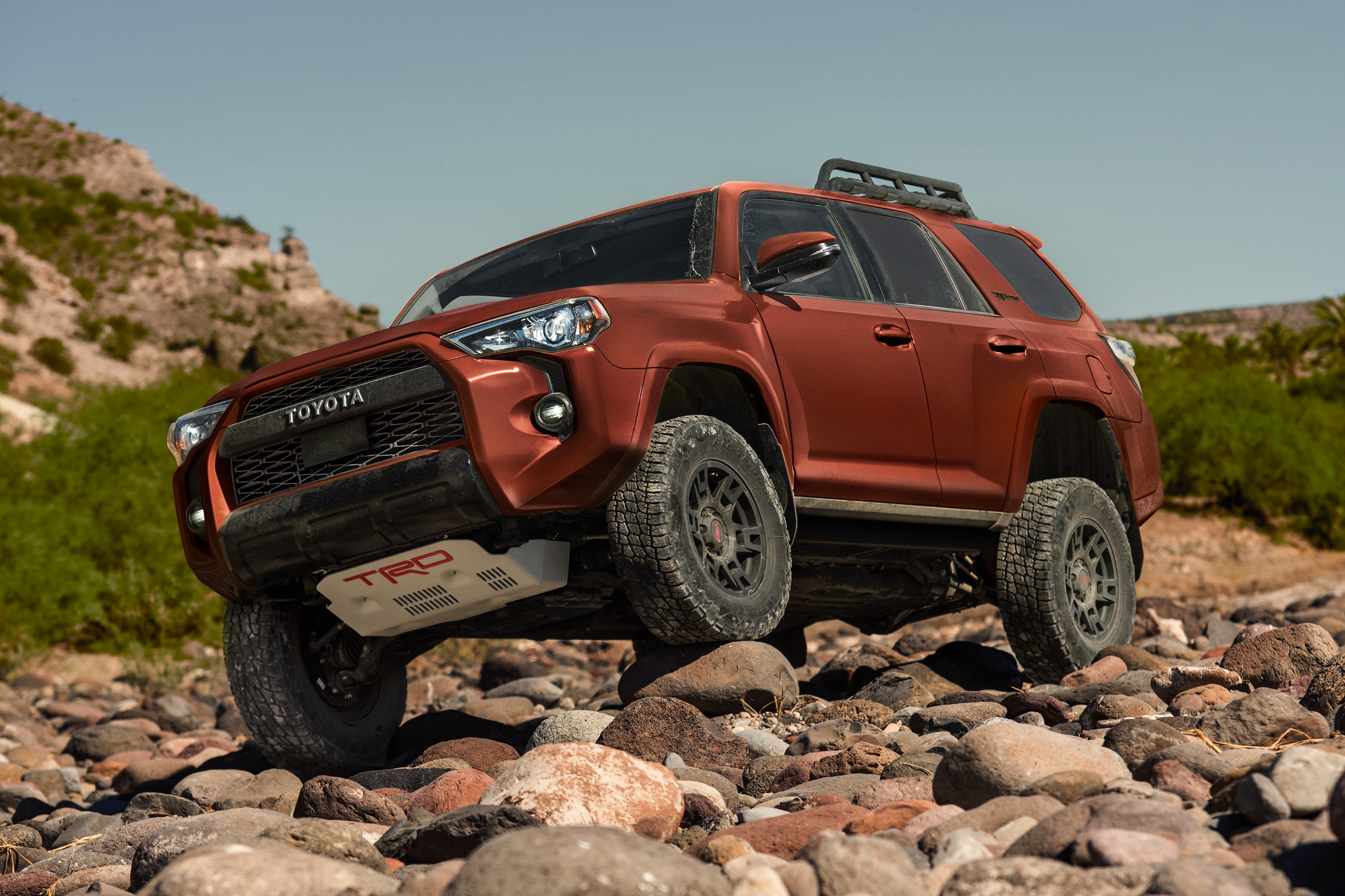
The 2024 Toyota 4Runner was a nostalgic nod to the past, with its design largely unchanged since its 2010 redesign. Despite minor updates over the years, it retained a boxy shape that was fitting for an all-terrain vehicle, even if it seemed outdated compared to more modern SUVs. Its flared fenders and rugged grille gave it a robust appearance, especially in the TRD Pro trim with its underbody skid plates and all-terrain tires. Inside, the 4Runner showed its age with an analog instrument panel and an eight-inch infotainment touchscreen that felt small by contemporary standards. The interior was filled with hard plastics, though cushioned panels provided some comfort.
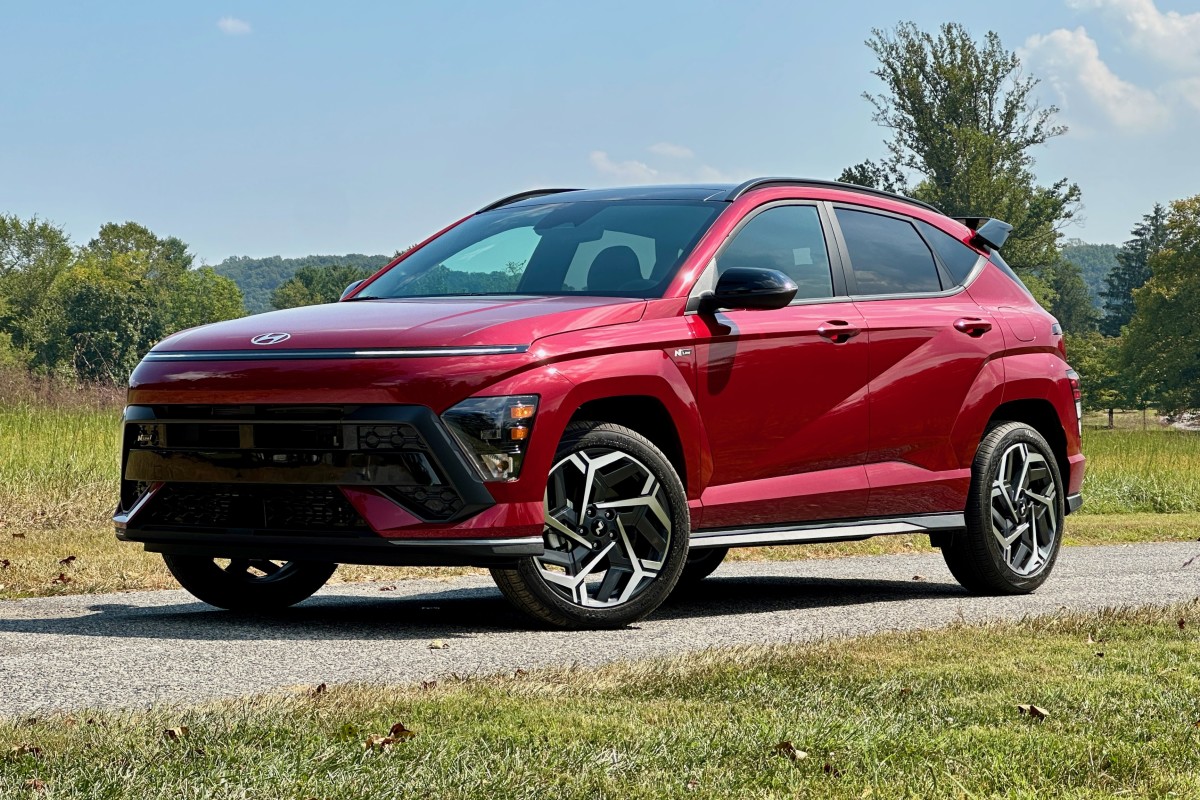
In contrast, the 2025 Hyundai Kona maintained a fresh and distinctive look, even though it visually resembled the 2024 model. Its sleek, single-piece grille and slim LED light bars gave it a futuristic appearance. The Kona's increased size, being six inches longer than its predecessor, improved interior space and road presence. The N Line S and N Line trims offered a sportier design with body-colored bumpers and cladding. The interior remained unchanged from 2024, featuring a solid construction and ample tech. Notably, the 2025 model introduced standard 64-color ambient lighting on higher trims, enhancing the cabin's ambiance.

The 2024 Toyota 4Runner was powered by a 4.0-liter V6 engine producing 270 horsepower and 278 lb-ft of torque. While these figures were competitive with rivals like the Bronco and Wrangler, the 4Runner's five-speed automatic transmission limited its acceleration and fuel efficiency. The TRD Pro model came with standard four-wheel drive and a two-speed transfer case, while other trims offered rear-wheel drive with optional 4WD. On-road, the 4Runner felt sluggish, with noticeable rear-end squat during acceleration and a loud engine. Its soft suspension, while beneficial off-road, resulted in body roll and floatiness on highways.
The 2025 Hyundai Kona offered two engine options for its gas-powered models. The SE, SEL, and SEL Convenience trims featured a 2.0-liter four-cylinder engine with 147 horsepower and 132 lb-ft of torque, paired with a CVT for fuel efficiency. The N Line S, N Line, and Limited trims boasted a turbocharged 1.6-liter engine delivering 190 horsepower and 195 lb-ft of torque, coupled with an eight-speed automatic transmission. The turbo engine provided a broader torque band, though it could feel flat at low revs. All-wheel drive was available across the lineup, enhancing traction and ride quality with a multi-link rear suspension.
The 2024 Toyota 4Runner's interior, though outdated, was functional with easy-to-use controls and excellent visibility. Front passengers enjoyed ample space, but taller drivers might find the steering wheel's reach limited. The second row offered generous legroom, though headroom was restricted due to the elevated bench. The 4Runner provided 47.2 cubic feet of cargo space, expandable to 89.7 cubic feet with the rear seats folded. However, folding the seats required manual effort. The sliding glass rear window and hitch receiver added convenience, with a towing capacity of 5,000 pounds.
The 2025 Hyundai Kona impressed with its cargo capacity, offering 25.5 cubic feet with rear seats up and 63.7 cubic feet when folded. Rear legroom was adequate at 38.2 inches, complemented by 38.3 inches of headroom. The front seats provided a comfortable range of adjustments, and the relocated drive selector created additional storage space. The Kona's interior featured various upholstery options, with heated and ventilated seats available on higher trims. Dual-zone climate control was standard on most trims, with physical controls for ease of use.
The 2024 Toyota 4Runner's infotainment system included Apple CarPlay and Android Auto, but its eight-inch touchscreen felt small and lacked off-road-specific apps. The TRD Pro trim featured a 15-speaker JBL audio system, though road noise often overshadowed its quality. Additional terrain controls were available, but their pictogram labels required consulting the owner's manual for full utilization.
The 2025 Hyundai Kona offered a 12.3-inch touchscreen infotainment display across all trims, with wireless Android Auto and Apple CarPlay. Higher trims included wireless charging and a digital key. The SEL Convenience trim and above featured a 12.3-inch digital instrument cluster, enhancing customization and cohesion. The N Line and Limited trims offered an eight-speaker Bose audio system, while all models included SiriusXM and HD Radio. Hyundai's Bluelink connectivity enabled over-the-air updates.
The 2024 Toyota 4Runner received mixed safety ratings, with four out of five stars from NHTSA for overall and frontal crash protection. It scored five stars for side impacts but only three stars for rollover evaluations. The IIHS gave it "Good" ratings for moderate frontal overlap and side protection tests, but "Marginal" and "Poor" results in the small overlap frontal test. Standard safety features included adaptive cruise control, forward collision warning, and lane-departure warning, though some alerts were overly sensitive.
The 2025 Hyundai Kona impressed with its comprehensive safety features, including Forward Collision-Avoidance Assist, Lane Keeping Assist, and Blind-Spot Collision Warning as standard. Higher trims added Highway Driving Assist and enhanced Forward Collision-Avoidance Assist. The Limited trim offered parking assistance features. All Konas included six airbags, electronic stability control, and a tire pressure monitoring system. The Kona earned a Top Safety Pick+ rating from the IIHS.
CarGurus highlights
According to CarGurus experts, the overall rating for the 2024 Toyota 4Runner is 4.5 out of 10, while the 2025 Hyundai Kona scores 8.0 out of 10. Based on these ratings, the 2025 Hyundai Kona is the recommended choice, offering a more modern design, advanced technology, and superior safety features.
Choose the 2024 Toyota 4Runner if:
- You prioritize off-road capability and rugged design.
- You need a vehicle with a high towing capacity of 5,000 pounds.
- You appreciate a nostalgic, old-school SUV experience.


Choose the 2025 Hyundai Kona if:
- You value modern technology and a user-friendly infotainment system.
- You seek a vehicle with comprehensive safety features and high safety ratings.
- You prefer a compact SUV with efficient use of interior space and cargo capacity.


CarGurus highlights
According to CarGurus experts, the overall rating for the 2024 Toyota 4Runner is 4.5 out of 10, while the 2025 Hyundai Kona scores 8.0 out of 10. Based on these ratings, the 2025 Hyundai Kona is the recommended choice, offering a more modern design, advanced technology, and superior safety features.
Choose the 2024 Toyota 4Runner if:
Shop Now- You prioritize off-road capability and rugged design.
- You need a vehicle with a high towing capacity of 5,000 pounds.
- You appreciate a nostalgic, old-school SUV experience.
Choose the 2025 Hyundai Kona if:
Shop Now- You value modern technology and a user-friendly infotainment system.
- You seek a vehicle with comprehensive safety features and high safety ratings.
- You prefer a compact SUV with efficient use of interior space and cargo capacity.

By: CarGurus + AI
At CarGurus, our team of experienced automotive writers remain at the heart of our content operation, conducting hands-on car tests and writing insightful guides that are backed by years of industry experience. To complement this, we are harnessing AI to make our content offering more diverse and more helpful to shoppers than ever. To achieve this, our AI systems are based exclusively on CarGurus content, ratings and data, so that what we produce is both unique to CarGurus, and uniquely helpful to car shoppers.

