2025 Hyundai Ioniq 5 vs 2024 Lexus TX
Overview | |
MSRP$53,700 | MSRP$42,600 |
Listings43 | Listings114 |
Ratings & Reviews | |
User Reviews | User Reviews |
Expert reviews7.2 out of 10 | Expert reviews8.7 out of 10 |
Pros
Cons
| Pros
Cons
|
2024 Lexus TX Reviews SummaryVerdict: Lexus has sold three-row SUVs in the past. But they were either originally engineered for serious off-roading (GX), too expensive (LX), or too cramped for third-row passengers (RX L). The 2024 Lexus TX is none of these things, making it perfect for the typical three-row luxury SUV buyer who spends almost all their time on paved roads. Overall, based on our week testing a TX 350 Luxury model, this new Lexus SUV gets most things right. | |
2025 Hyundai Ioniq 5 Reviews SummaryIt would appear to be the calendar, not the competition, that has the Ioniq 5 due for a mid-cycle refresh. We liked it when it burst onto the scene as an angular oddball in a sea of soft-lined sameness, and it has only improved over the last few years. Verdict: Hyundai makes minor but welcome changes and avoids tweaking the many things that were working well, successfully making a good thing better. | |
No video found | |
Popular Features & Specs | |
Engine2.4L 275 hp I4 | Engine168 hp Electric |
Drive TrainFWD | Drive TrainRWD |
Seating Capacity7 | Seating Capacity5 |
Horsepower275 hp @ 6000 rpm | Horsepower |
EV Battery Capacity | EV Battery Capacity63 kWh |
MPG City21 | MPG City131 |
MPG Highway27 | MPG Highway100 |
Battery Charge Time (120V) | Battery Charge Time (120V)54 hours |
Battery Charge Time (240V) | Battery Charge Time (240V)5.7 hours |
Engine | |
Engine Name2.4L 275 hp I4 | Engine Name168 hp Electric |
Torque317 lb-ft @ 1700 rpm | Torque |
Horsepower275 hp @ 6000 rpm | Horsepower |
Battery Charge Time (120V) | Battery Charge Time (120V)54 hours |
Battery Charge Time (240V) | Battery Charge Time (240V)5.7 hours |
DrivetrainFWD | DrivetrainRWD |
Fuel Economy | |
EV Battery Capacity | EV Battery Capacity63 kWh |
MPG City21 | MPG City131 |
MPG Highway27 | MPG Highway100 |
Interior | |
Seating Capacity7 | Seating Capacity5 |
Key Features | |
Navigation SystemStandard | Navigation SystemStandard |
Dimensions & Capacity | |
Cargo Space20.2 cu ft | Cargo Space26.3 cu ft |
Curb Weight4420 lbs | Curb Weight4144 lbs |
Height70.1 in | Height63.0 in |
Length203.1 in | Length183.3 in |
Width78.3 in | Width74.4 in |
Wheelbase116.1 in | Wheelbase118.1 in |
Maximum Payload1590 lbs | Maximum Payload1081 lbs |
Number of doors4 | Number of doors4 |
Maximum Towing Capacity5000 lbs | Maximum Towing Capacity |
Overview | ||
MSRP | $53,700 | $42,600 |
Listings | ||
Ratings & Reviews | ||
User reviews | ||
Expert reviews | 7.2 out of 10Read full review | 8.7 out of 10Read full review |
Pros & cons | Pros
Cons
| Pros
Cons
|
Summary | Verdict: Lexus has sold three-row SUVs in the past. But they were either originally engineered for serious off-roading (GX), too expensive (LX), or too cramped for third-row passengers (RX L). The 2024 Lexus TX is none of these things, making it perfect for the typical three-row luxury SUV buyer who spends almost all their time on paved roads. Overall, based on our week testing a TX 350 Luxury model, this new Lexus SUV gets most things right. | It would appear to be the calendar, not the competition, that has the Ioniq 5 due for a mid-cycle refresh. We liked it when it burst onto the scene as an angular oddball in a sea of soft-lined sameness, and it has only improved over the last few years. Verdict: Hyundai makes minor but welcome changes and avoids tweaking the many things that were working well, successfully making a good thing better. |
Video | No video found | |
Popular Features & Specs | ||
Engine | 2.4L 275 hp I4 | 168 hp Electric |
Drive Train | FWD | RWD |
Seating Capacity | 7 | 5 |
Horsepower | 275 hp @ 6000 rpm | |
EV Battery Capacity | 63 kWh | |
MPG City | 21 | 131 |
MPG Highway | 27 | 100 |
Battery Charge Time (120V) | 54 hours | |
Battery Charge Time (240V) | 5.7 hours | |
Engine | ||
Engine Name | 2.4L 275 hp I4 | 168 hp Electric |
Torque | 317 lb-ft @ 1700 rpm | |
Horsepower | 275 hp @ 6000 rpm | |
Battery Charge Time (120V) | 54 hours | |
Battery Charge Time (240V) | 5.7 hours | |
Drivetrain | FWD | RWD |
Fuel Economy | ||
EV Battery Capacity | 63 kWh | |
MPG City | 21 | 131 |
MPG Highway | 27 | 100 |
Interior | ||
Seating Capacity | 7 | 5 |
Key Features | ||
Navigation System | Standard | Standard |
Dimensions & Capacity | ||
Cargo Space | 20.2 cu ft | 26.3 cu ft |
Curb Weight | 4420 lbs | 4144 lbs |
Height | 70.1 in | 63.0 in |
Length | 203.1 in | 183.3 in |
Width | 78.3 in | 74.4 in |
Wheelbase | 116.1 in | 118.1 in |
Maximum Payload | 1590 lbs | 1081 lbs |
Number of doors | 4 | 4 |
Maximum Towing Capacity | 5000 lbs | |
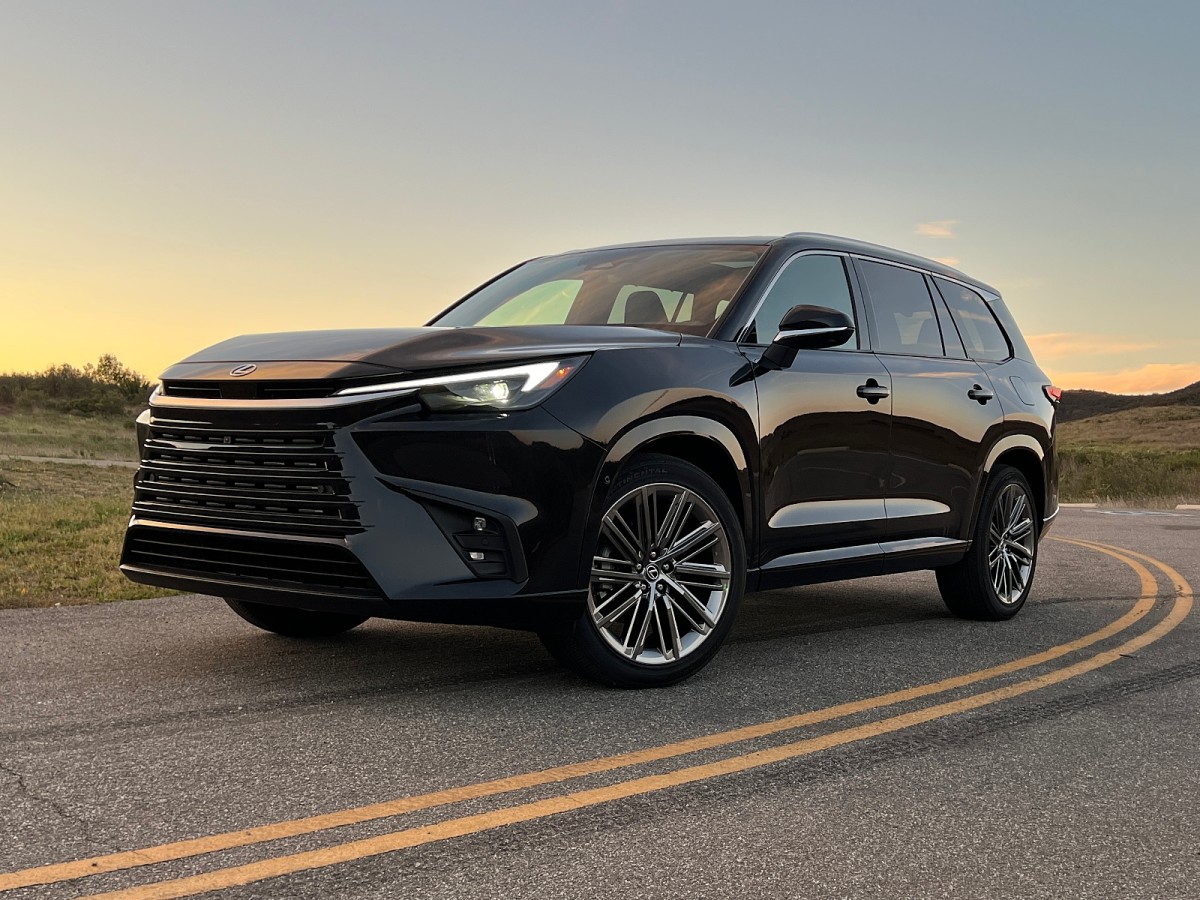
The 2024 Lexus TX was based on the Toyota Grand Highlander, yet it distinguished itself as a luxury SUV. Its upscale appearance was evident, especially with the Luxury trim that featured striking 22-inch silver wheels, enhancing its presence significantly. The TX's styling was more subdued compared to other Lexus models, offering a conservative look that might appeal to those previously put off by the brand's design. The TX lineup included the TX 350, TX 500h F Sport Performance, and TX 550h+ plug-in hybrid, with prices ranging from $55,050 to $69,350, though the TX 550h+ was not yet available. The TX 350, likely the most popular version, came with a turbocharged four-cylinder engine and options for FWD or AWD. Our test model, equipped with FWD and Luxury trim, had a base price of $60,950, and with additional packages, the MSRP reached $67,869. The interior, while luxurious, felt a bit dark despite the panoramic sunroof, but overall, it met the expectations of a Lexus badge.
The 2025 Hyundai Ioniq 5 maintained its distinctive retro-inspired design, reminiscent of the 1986-1991 Lancia Delta, with unique features like "Parametric Pixel" headlights and a high rear spoiler. The XRT trim stood out with red tow hooks and black plastic bumper cladding, featuring a subtle "digital camouflage" pattern. The XRT also introduced exclusive colors and new wheel designs, with 18-inch rally-style wheels being a highlight. The interior saw minor changes, retaining its open and modern feel, with a revised center console for improved functionality. The XRT trim leaned towards a rugged aesthetic with its dark interior and all-weather floor mats. The Ioniq 5's interior dimensions remained unchanged, offering ample space and comfort, while the transition to the North American Charging System (NACS) allowed access to Tesla's Supercharger network, enhancing its practicality for EV owners.








The 2024 Lexus TX 350 was equipped with a turbocharged 2.4-liter four-cylinder engine, producing 275 horsepower and 317 pound-feet of torque. Despite initial skepticism about its suitability for a midsize, three-row luxury SUV, it performed adequately in typical driving situations with up to four passengers. The engine's grating note and hints of torque steer with FWD were minor irritations. Lexus claimed a 0-60 mph time of eight seconds for the TX 350, or 7.8 seconds with AWD, though it felt quicker due to its torque delivery. The EPA rated the TX 350 FWD at 23 mpg combined, a slight improvement over the previous RX L model. During testing, it averaged 20.4 mpg. AWD, available for an additional $1,600, offered slightly quicker acceleration and improved traction in adverse conditions. The TX 350's suspension provided a balanced ride, with commendable body motion control and accurate steering. The interior remained quiet on highways, though the brake pedal felt too soft in the pre-production test vehicle.
The 2025 Hyundai Ioniq 5 XRT featured a Terrain Mode button on the steering wheel, offering Snow, Mud, and Sand modes that adjusted throttle mapping, wheel slip, power distribution, and regenerative braking. The XRT handled off-road conditions well, with its AWD system providing confidence and control. On-road performance was expected to be similar to the Limited trim, with potential for increased road noise from the all-terrain tires. The Ioniq 5's battery capacity increased for 2025, extending its range to 318 miles in RWD configuration, while AWD models offered slightly reduced ranges. Power output varied by powertrain, with RWD models producing up to 225 horsepower and AWD models delivering 320 horsepower and 446 pound-feet of torque. Despite its weight, the Ioniq 5's instant electric torque ensured an engaging driving experience.
The 2024 Lexus TX addressed previous shortcomings in Lexus's three-row SUVs. It offered a more spacious and comfortable third-row seat compared to the RX L, GX, and LX models. The TX 350 Luxury trim included premium features like semi-aniline leather upholstery, heated and ventilated front seats, and a heated steering wheel. The second-row bench seat was standard, with optional captain's chairs available. While the front seats lacked a massage function, they provided a supportive driving position. The second-row seat, though less welcoming, offered amenities like triple-zone climate control and USB charging ports. The third-row seat accommodated adults comfortably, with ample leg support and visibility. Cargo space measured 20.2 cubic feet behind the third row, expanding to 57.4 cubic feet with the third row folded, and 97 cubic feet with the second row down. The TX featured numerous storage compartments, though some lacked lining, potentially causing noise.
The 2025 Hyundai Ioniq 5 addressed previous complaints by adding a rear windshield wiper and revising the center console for improved functionality. Heated front seats were standard, with a heated steering wheel available from the SEL trim. The Limited trim offered front seat ventilation and driver's seat memory, though heated rear seats were unavailable. Interior dimensions remained unchanged, with generous headroom and legroom. Cargo space measured 26.3 cubic feet with the rear seats up, expanding to 58.5 cubic feet with them folded, plus an additional .85 cubic feet in the frunk. The Ioniq 5's headroom was comparable to the Ford Mustang Mach-E, while its cargo space surpassed the Genesis GV60. The transition to the NACS charging system allowed access to Tesla's Supercharger network, enhancing its practicality for EV owners.
The 2024 Lexus TX featured an optional Technology Package, including a 12.3-inch digital instrumentation panel, head-up display, digital rearview mirror, surround-view camera, and semi-autonomous parking assist. However, the package replaced marked steering wheel controls with unmarked dual-purpose ones, requiring drivers to reference the head-up display, which was often invisible with polarized sunglasses. The Lexus Interface infotainment system, with its 14-inch touchscreen, offered wireless Apple CarPlay and Android Auto, along with a digital assistant with natural voice recognition. The TX included free 10-year subscriptions to Service Connect and Safety Connect, providing features like automatic collision notification and emergency calling. The optional 21-speaker Mark Levinson PurePlay surround-sound system delivered impressive audio quality.
The 2025 Hyundai Ioniq 5 retained its dual 12.3-inch screens for infotainment and instrumentation, with improved functionality and faster processing speeds. Wireless Apple CarPlay and Android Auto became standard, enhancing connectivity. The Bose Premium Audio system, previously limited to the Limited trim, was now available on the XRT trim. The SE and SEL trims featured a six-speaker sound system, with standard navigation, dynamic voice recognition, and Bluetooth connectivity. The Ioniq 5 included a head-up display on the Limited trim and a wireless charging pad starting at the SEL trim. The USB-C ports offered flexible functionality, allowing users to choose between charging and data transmission.
The 2024 Lexus TX came equipped with the Lexus Safety System+ 3.0, featuring adaptive cruise control, forward-collision warning, automatic emergency braking, lane-departure warning, lane-keeping assist, and more. Proactive Drive Assist, part of LSS+ 3.0, provided braking and steering assistance, though it was not entirely transparent in operation. The TX also included blind-spot monitoring, rear cross-traffic alert, and a safe exit assist system. Optional features included parking sensors with automatic braking and traffic jam assist, which offered hands-free driving at low speeds on approved highways. Overall, LSS+ 3.0 was smooth and effective, though it occasionally slowed too dramatically when other vehicles cut in.
The 2025 Hyundai Ioniq 5 maintained its high safety standards, earning a Top Safety Pick+ award from the IIHS and a five-star rating from the NHTSA. New standard safety features included an enhanced driver attention system with haptic steering wheel feedback and forward attention warning. Reverse and forward parking-distance warnings were added, while the XRT trim received a surround-view monitor and blind-spot view monitor. Highway Driving Assist 1 and 2 were available, with HDA 2 offering lane-changing capability and machine learning to adapt to the driver's style.
CarGurus highlights

According to CarGurus experts, the overall rating for the 2024 Lexus TX is 7.2 out of 10, while the 2025 Hyundai Ioniq 5 scores 8.7 out of 10. Based on these ratings, the 2025 Hyundai Ioniq 5 is the recommended choice, offering a more compelling package with its distinctive design, advanced technology, and impressive electric range.
Choose the 2025 Hyundai Ioniq 5 if:
- You want a distinctive and modern design with unique styling elements.
- You seek an electric vehicle with impressive range and access to Tesla's Supercharger network.
- You appreciate advanced technology and connectivity features, including wireless smartphone integration.


Choose the 2024 Lexus TX if:
- You prioritize a luxurious interior with premium materials and features.
- You need a spacious three-row SUV with ample cargo capacity.
- You value a quiet and comfortable ride with balanced handling.


CarGurus highlights
According to CarGurus experts, the overall rating for the 2024 Lexus TX is 7.2 out of 10, while the 2025 Hyundai Ioniq 5 scores 8.7 out of 10. Based on these ratings, the 2025 Hyundai Ioniq 5 is the recommended choice, offering a more compelling package with its distinctive design, advanced technology, and impressive electric range.
Choose the 2025 Hyundai Ioniq 5 if:
Shop Now- You want a distinctive and modern design with unique styling elements.
- You seek an electric vehicle with impressive range and access to Tesla's Supercharger network.
- You appreciate advanced technology and connectivity features, including wireless smartphone integration.
Choose the 2024 Lexus TX if:
Shop Now- You prioritize a luxurious interior with premium materials and features.
- You need a spacious three-row SUV with ample cargo capacity.
- You value a quiet and comfortable ride with balanced handling.

By: CarGurus + AI
At CarGurus, our team of experienced automotive writers remain at the heart of our content operation, conducting hands-on car tests and writing insightful guides that are backed by years of industry experience. To complement this, we are harnessing AI to make our content offering more diverse and more helpful to shoppers than ever. To achieve this, our AI systems are based exclusively on CarGurus content, ratings and data, so that what we produce is both unique to CarGurus, and uniquely helpful to car shoppers.

