2024 Hyundai Kona vs 2025 Toyota Sienna
Overview | |
MSRP$24,250 | MSRP$39,485 |
Listings1660 | Listings1345 |
Ratings & Reviews | |
User Reviews | User Reviews |
Expert reviews8.3 out of 10 | Expert reviews6.3 out of 10 |
Pros
Cons
| Pros
Cons
|
2024 Hyundai Kona Reviews SummaryThe previous-generation Hyundai Kona debuted for 2018 and got an electric counterpart when the Kona EV hit the market the following year. Hyundai's subcompact SUV got a refresh for 2022, which also saw the addition of the hot-hatch Kona N to the stable. Now, the Kona kicks off a whole new generation, with a new look, new tech, and, naturally, a new price tag to match. In a crowded segment, do the new features match—or perhaps even exceed—the added cost? | |
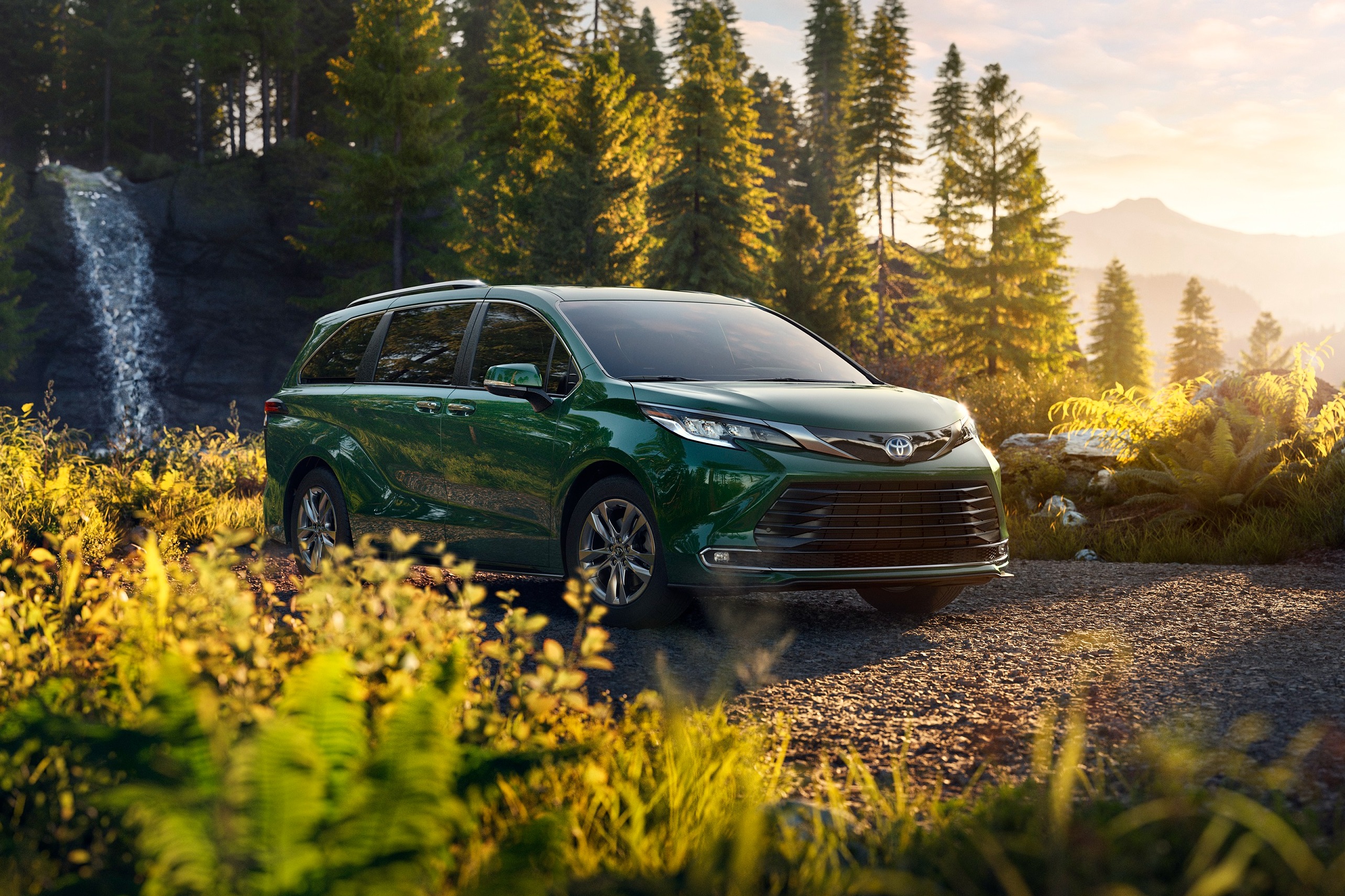
2025 Toyota Sienna Reviews SummaryIn addition to promising 35 to 36 mpg in combined driving, the 2025 Sienna distinguishes itself in several ways. First, it offers an available all-wheel-drive system for extra traction. Second, a Woodland Edition trim level provides half an inch of extra ground clearance for light off-roading capability. Third, while its maximum cargo capacity measurement falls short of rivals, you never need to remove the second-row seats to use it. Verdict: Saving money on gas, making life simpler, and the option of AWD ruggedness are all good things in a minivan, and they make the Toyota Sienna worth considering if you’re also looking at cars such as the Chrysler Pacifica, Honda Odyssey, and Kia Carnival. | |
No video found | |
Popular Features & Specs | |
Engine2.0L 147 hp I4 | Engine2.5L 245 hp I4 Hybrid |
DrivetrainFWD | DrivetrainFWD |
Seating Capacity5 | Seating Capacity8 |
Horsepower147 hp @ 6200 rpm | Horsepower |
EV Battery Capacity | EV Battery Capacity1.9 kWh |
MPG City29 | MPG City36 |
MPG Highway34 | MPG Highway36 |
Engine | |
Engine Name2.0L 147 hp I4 | Engine Name2.5L 245 hp I4 Hybrid |
Torque132 lb-ft @ 4500 rpm | Torque |
Horsepower147 hp @ 6200 rpm | Horsepower |
DrivetrainFWD | DrivetrainFWD |
Fuel Economy | |
EV Battery Capacity | EV Battery Capacity1.9 kWh |
MPG City29 | MPG City36 |
MPG Highway34 | MPG Highway36 |
Interior | |
Seating Capacity5 | Seating Capacity8 |
Key Features | |
Navigation SystemStandard | Navigation System |
Safety | |
Front Crash Overall4 | Front Crash Overall4 |
Side Crash Overall5 | Side Crash Overall5 |
Dimensions & Capacity | |
Cargo Space25.5 cu ft | Cargo Space33.5 cu ft |
Curb Weight3005 lbs | Curb Weight4610 lbs |
Height62.2 in | Height68.5 in |
Length171.3 in | Length203.7 in |
Width71.9 in | Width78.5 in |
Wheelbase104.7 in | Wheelbase120.5 in |
Maximum Payload1085 lbs | Maximum Payload1560 lbs |
Number of doors4 | Number of doors4 |
Maximum Towing Capacity | Maximum Towing Capacity3500 lbs |
Overview | ||
MSRP | $24,250 | $39,485 |
Listings | ||
Ratings & Reviews | ||
User reviews | ||
Expert reviews | 8.3 out of 10Read full review | 6.3 out of 10Read full review |
Pros & cons | Pros
Cons
| Pros
Cons
|
Summary | The previous-generation Hyundai Kona debuted for 2018 and got an electric counterpart when the Kona EV hit the market the following year. Hyundai's subcompact SUV got a refresh for 2022, which also saw the addition of the hot-hatch Kona N to the stable. Now, the Kona kicks off a whole new generation, with a new look, new tech, and, naturally, a new price tag to match. In a crowded segment, do the new features match—or perhaps even exceed—the added cost? | In addition to promising 35 to 36 mpg in combined driving, the 2025 Sienna distinguishes itself in several ways. First, it offers an available all-wheel-drive system for extra traction. Second, a Woodland Edition trim level provides half an inch of extra ground clearance for light off-roading capability. Third, while its maximum cargo capacity measurement falls short of rivals, you never need to remove the second-row seats to use it. Verdict: Saving money on gas, making life simpler, and the option of AWD ruggedness are all good things in a minivan, and they make the Toyota Sienna worth considering if you’re also looking at cars such as the Chrysler Pacifica, Honda Odyssey, and Kia Carnival. |
Video | No video found | |
Popular Features & Specs | ||
Engine | 2.0L 147 hp I4 | 2.5L 245 hp I4 Hybrid |
Drivetrain | FWD | FWD |
Seating Capacity | 5 | 8 |
Horsepower | 147 hp @ 6200 rpm | |
EV Battery Capacity | 1.9 kWh | |
MPG City | 29 | 36 |
MPG Highway | 34 | 36 |
Engine | ||
Engine Name | 2.0L 147 hp I4 | 2.5L 245 hp I4 Hybrid |
Torque | 132 lb-ft @ 4500 rpm | |
Horsepower | 147 hp @ 6200 rpm | |
Drivetrain | FWD | FWD |
Fuel Economy | ||
EV Battery Capacity | 1.9 kWh | |
MPG City | 29 | 36 |
MPG Highway | 34 | 36 |
Interior | ||
Seating Capacity | 5 | 8 |
Key Features | ||
Navigation System | Standard | |
Safety | ||
Front Crash Overall | 4 | 4 |
Side Crash Overall | 5 | 5 |
Dimensions & Capacity | ||
Cargo Space | 25.5 cu ft | 33.5 cu ft |
Curb Weight | 3005 lbs | 4610 lbs |
Height | 62.2 in | 68.5 in |
Length | 171.3 in | 203.7 in |
Width | 71.9 in | 78.5 in |
Wheelbase | 104.7 in | 120.5 in |
Maximum Payload | 1085 lbs | 1560 lbs |
Number of doors | 4 | 4 |
Maximum Towing Capacity | 3500 lbs | |
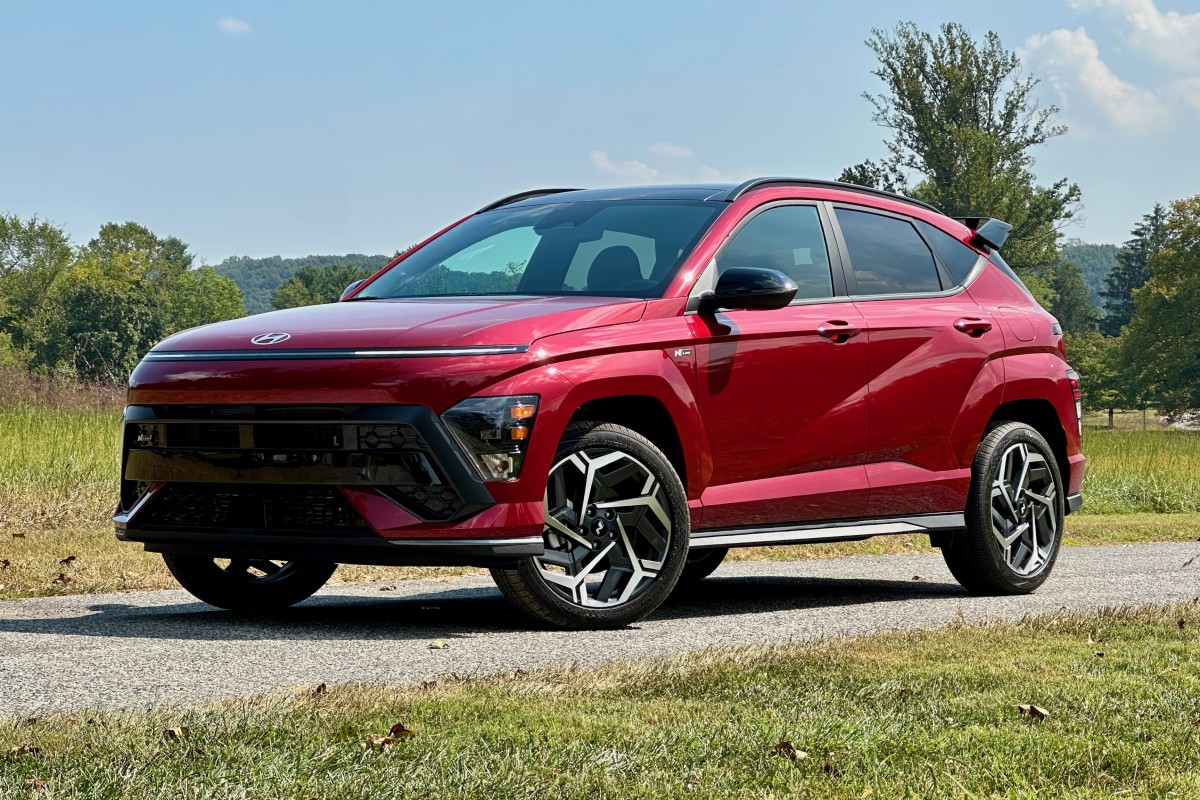
Hyundai's 2024 Kona was crafted with an electric vehicle (EV) design ethos, evident in its sleek, modern appearance. The front grille mirrored the Ioniq 5's design, featuring a single-piece look that signaled its electric powertrain roots. The Kona adopted the "seamless horizon" styling, with a prominent skinny LED headlight at the front. Despite its increased length, the Kona maintained its recognizable silhouette, with new creased "parametric surface" doors and more pronounced black body cladding on various trims. The rear showcased a single taillight spanning the vehicle's width, and wheel sizes varied from 17 to 19 inches depending on the trim. Inside, the Kona's cabin was updated with a driver-oriented center stack, a relocated gear shift, and a curved display housing driver-information and infotainment screens.
In contrast, the 2025 Toyota Sienna retained its minivan essence, albeit with attempts at a stylish twist. Its trapezoidal grille and upswept body lines gave it a distinctive look, while the narrow taillights and rear fenders added a touch of flair. The Sienna's Platinum trim introduced new flower-petal wheel designs. Despite these efforts, the Sienna remained a minivan at heart, prioritizing practicality over style. The interior updates included a new woodgrain finish, though opinions on its aesthetics varied. The Sienna's design aimed to balance functionality with a hint of sophistication, catering to families seeking a spacious and versatile vehicle.


The 2024 Hyundai Kona retained its predecessor's engine lineup, featuring a naturally aspirated 2.0-liter four-cylinder engine for the SE and SEL trims, producing 147 horsepower and 132 lb-ft of torque. The N-Line and Limited trims boasted a turbocharged 1.6-liter four-cylinder engine, delivering 190 horsepower and 195 lb-ft of torque. The previous seven-speed dual-clutch transmission was replaced with an eight-speed automatic transmission for 2024. Paddle shifters were available on the N-Line and Limited trims, with an option for the SEL Convenience Package. The Kona offered front-wheel drive as standard, with all-wheel drive available for an additional $1,500. Opting for AWD slightly reduced fuel economy estimates.
The 2025 Toyota Sienna featured a hybrid powertrain with a 2.5-liter four-cylinder engine and a continuously variable transmission (CVT). The hybrid system produced a net horsepower of 245, providing adequate power for a minivan seating up to eight and towing up to 3,500 pounds. The Sienna's hybrid powertrain prioritized fuel economy, with an EPA rating of 36 mpg in combined driving for the FWD model. However, during testing, the Sienna averaged 26.3 mpg. The Sienna's handling was predictable and secure, though not particularly engaging. The XSE trim offered a sport-tuned suspension for a slightly more dynamic driving experience. The Sienna excelled in providing a smooth and quiet ride, with the CVT occasionally emitting a droning sound during hard acceleration.
The 2024 Hyundai Kona's increased length translated to improved rear-seat legroom, measuring 38.2 inches, and enhanced cargo capacity, expanding to 25.5 cubic feet with the rear seats up and 63.7 cubic feet with them folded down. The Kona Limited featured a power hands-free liftgate for easy access to the cargo area. Inside, the Kona offered practical storage solutions, including a handy shelf on the passenger's side of the dash and a guardrail on the wireless charging pad. The Kona's seating options included cloth seats for SE and SEL trims, a leather/suede combination for N-Line, and H-Tex leatherette for Limited. Ventilated front seats and a heated steering wheel were standard on the Limited trim.
The 2025 Toyota Sienna prioritized form and function, offering power-adjustable, heated, and ventilated front seats wrapped in perforated leather. The Platinum trim's second-row captain's chairs with ottoman-style leg rests were popular among passengers. The Sienna's third-row seat accommodated adults comfortably, and the sliding side doors facilitated easy loading and unloading. The Sienna provided 33.5 cubic feet of cargo space behind the third-row seat, expanding to 75.2 cubic feet with the third-row seats stowed. Maximum cargo capacity reached 101 cubic feet, though the Sienna's second-row seats were not removable, limiting its cargo versatility compared to rivals.
The 2024 Hyundai Kona introduced several technological enhancements, including a standard 12.3-inch infotainment system touchscreen display across the lineup. Wireless Apple CarPlay and Android Auto were initially available only on lower trims, with an over-the-air update promised for higher trims. The Kona featured wireless device charging, a Wi-Fi hotspot, and a Bose stereo system. Dual 12.3-inch screens created a panoramic view in the curved housing, available with the Convenience Package and included with N-Line and Limited trims. Hyundai's Bluelink connected services were standard, with a subscription included for the vehicle's life.
The 2025 Toyota Sienna's higher-spec models featured a 12.3-inch digital instrumentation panel and a 12.3-inch touchscreen display for the Toyota Audio Multimedia (TAM) infotainment system. The Platinum trim included a four-zone automatic climate control system, a 10-inch head-up display, and a camera-based digital rearview mirror. The TAM system offered access to five connected services plans, with varying complimentary subscription periods. The Drive Connect plan included a digital assistant that responded to conversational commands. The Sienna Platinum featured a 12-speaker JBL premium audio system, though the sound quality was criticized for excessive bass. The four-zone climate control system and digital rearview camera were appreciated for their functionality.
The 2024 Hyundai Kona came equipped with a comprehensive suite of advanced driver-assistance safety features. Standard features included Safe Exit Warning, blind-spot collision avoidance, and rear cross-traffic collision avoidance. High-beam assist was standard, while adaptive cruise control was available on N-Line and Limited trims. The Limited trim also featured Surround View Monitor and blind-spot view monitor. Hyundai's Highway Driving Assist suite impressed with its smooth lane-keep assist and intuitive operation.
The 2025 Toyota Sienna featured Toyota Safety Sense (TSS) 2.0, which included forward collision warning with automatic emergency braking, pedestrian detection, lane departure warning, lane-keeping assist, lane-centering assist, and adaptive cruise control. The Sienna also had automatic high-beam headlights, blind-spot monitoring, and rear cross-traffic alert. The Sienna's TSS 2.0 provided a more straightforward and less intrusive experience compared to TSS 3.0. The Sienna added a new rear-seat reminder technology for 2025, enhancing safety for families. The National Highway Traffic Safety Administration (NHTSA) awarded the Sienna a five-star overall rating, though it received lower scores in frontal crash tests.
CarGurus highlights
According to CarGurus experts, the overall rating for 2024 Hyundai Kona is 8.3 out of 10, while the 2025 Toyota Sienna scores 6.3 out of 10. Based on these ratings, the 2024 Hyundai Kona is the recommended choice, offering a more modern design, advanced technology, and a comprehensive suite of safety features.
Choose the 2024 Hyundai Kona if:
- You prioritize a modern, electric vehicle-inspired design with advanced technology features.
- You seek a compact SUV with improved rear-seat legroom and cargo capacity.
- You value a comprehensive suite of standard safety features and driver-assistance technologies.


Choose the 2025 Toyota Sienna if:
- You need a spacious minivan with versatile seating and cargo solutions for family use.
- You appreciate a straightforward and less intrusive advanced driver-assistance system.
- You desire a minivan with a hybrid powertrain for improved fuel economy.


CarGurus highlights
According to CarGurus experts, the overall rating for 2024 Hyundai Kona is 8.3 out of 10, while the 2025 Toyota Sienna scores 6.3 out of 10. Based on these ratings, the 2024 Hyundai Kona is the recommended choice, offering a more modern design, advanced technology, and a comprehensive suite of safety features.
Choose the 2024 Hyundai Kona if:
Shop Now- You prioritize a modern, electric vehicle-inspired design with advanced technology features.
- You seek a compact SUV with improved rear-seat legroom and cargo capacity.
- You value a comprehensive suite of standard safety features and driver-assistance technologies.
Choose the 2025 Toyota Sienna if:
Shop Now- You need a spacious minivan with versatile seating and cargo solutions for family use.
- You appreciate a straightforward and less intrusive advanced driver-assistance system.
- You desire a minivan with a hybrid powertrain for improved fuel economy.

By: CarGurus + AI
At CarGurus, our team of experienced automotive writers remain at the heart of our content operation, conducting hands-on car tests and writing insightful guides that are backed by years of industry experience. To complement this, we are harnessing AI to make our content offering more diverse and more helpful to shoppers than ever. To achieve this, our AI systems are based exclusively on CarGurus content, ratings and data, so that what we produce is both unique to CarGurus, and uniquely helpful to car shoppers.

