2024 Hyundai Kona vs 2024 Volkswagen Tiguan
Overview | |
MSRP$24,250 | MSRP$28,880 |
Listings1660 | Listings2479 |
Ratings & Reviews | |
User Reviews | User Reviews |
Expert reviews8.3 out of 10 | Expert reviews7.5 out of 10 |
Pros
Cons
| Pros
Cons
|
2024 Hyundai Kona Reviews SummaryThe previous-generation Hyundai Kona debuted for 2018 and got an electric counterpart when the Kona EV hit the market the following year. Hyundai's subcompact SUV got a refresh for 2022, which also saw the addition of the hot-hatch Kona N to the stable. Now, the Kona kicks off a whole new generation, with a new look, new tech, and, naturally, a new price tag to match. In a crowded segment, do the new features match—or perhaps even exceed—the added cost? | |
2024 Volkswagen Tiguan Reviews SummaryVerdict: We weren’t enamored of the driving experience in the Tiguan, and we wish Volkswagen would offer a hybrid or plug-in hybrid option. But the automaker backs the vehicle’s premium looks with true value in areas we think are more likely to matter to most shoppers, including an attractive warranty and impressive standard safety features. | |
No video found | |
Popular Features & Specs | |
Engine2.0L 147 hp I4 | Engine2.0L 184 hp I4 |
DrivetrainFWD | DrivetrainFWD |
Seating Capacity5 | Seating Capacity7 |
Horsepower147 hp @ 6200 rpm | Horsepower184 hp @ 4400 rpm |
MPG City29 | MPG City24 |
MPG Highway34 | MPG Highway31 |
Engine | |
Engine Name2.0L 147 hp I4 | Engine Name2.0L 184 hp I4 |
Torque132 lb-ft @ 4500 rpm | Torque221 lb-ft @ 1600 rpm |
Horsepower147 hp @ 6200 rpm | Horsepower184 hp @ 4400 rpm |
DrivetrainFWD | DrivetrainFWD |
Fuel Economy | |
MPG City29 | MPG City24 |
MPG Highway34 | MPG Highway31 |
Interior | |
Seating Capacity5 | Seating Capacity7 |
Key Features | |
Navigation SystemStandard | Navigation System |
Safety | |
Front Crash Overall4 | Front Crash Overall4 |
Side Crash Overall5 | Side Crash Overall5 |
Dimensions & Capacity | |
Cargo Space25.5 cu ft | Cargo Space12.0 cu ft |
Curb Weight3005 lbs | Curb Weight3732 lbs |
Height62.2 in | Height66.4 in |
Length171.3 in | Length186.1 in |
Width71.9 in | Width82.6 in |
Wheelbase104.7 in | Wheelbase109.9 in |
Maximum Payload1085 lbs | Maximum Payload1301 lbs |
Number of doors4 | Number of doors4 |
Maximum Towing Capacity | Maximum Towing Capacity1500 lbs |
Overview | ||
MSRP | $24,250 | $28,880 |
Listings | ||
Ratings & Reviews | ||
User reviews | ||
Expert reviews | 8.3 out of 10Read full review | 7.5 out of 10Read full review |
Pros & cons | Pros
Cons
| Pros
Cons
|
Summary | The previous-generation Hyundai Kona debuted for 2018 and got an electric counterpart when the Kona EV hit the market the following year. Hyundai's subcompact SUV got a refresh for 2022, which also saw the addition of the hot-hatch Kona N to the stable. Now, the Kona kicks off a whole new generation, with a new look, new tech, and, naturally, a new price tag to match. In a crowded segment, do the new features match—or perhaps even exceed—the added cost? | Verdict: We weren’t enamored of the driving experience in the Tiguan, and we wish Volkswagen would offer a hybrid or plug-in hybrid option. But the automaker backs the vehicle’s premium looks with true value in areas we think are more likely to matter to most shoppers, including an attractive warranty and impressive standard safety features. |
Video | No video found | |
Popular Features & Specs | ||
Engine | 2.0L 147 hp I4 | 2.0L 184 hp I4 |
Drivetrain | FWD | FWD |
Seating Capacity | 5 | 7 |
Horsepower | 147 hp @ 6200 rpm | 184 hp @ 4400 rpm |
MPG City | 29 | 24 |
MPG Highway | 34 | 31 |
Engine | ||
Engine Name | 2.0L 147 hp I4 | 2.0L 184 hp I4 |
Torque | 132 lb-ft @ 4500 rpm | 221 lb-ft @ 1600 rpm |
Horsepower | 147 hp @ 6200 rpm | 184 hp @ 4400 rpm |
Drivetrain | FWD | FWD |
Fuel Economy | ||
MPG City | 29 | 24 |
MPG Highway | 34 | 31 |
Interior | ||
Seating Capacity | 5 | 7 |
Key Features | ||
Navigation System | Standard | |
Safety | ||
Front Crash Overall | 4 | 4 |
Side Crash Overall | 5 | 5 |
Dimensions & Capacity | ||
Cargo Space | 25.5 cu ft | 12.0 cu ft |
Curb Weight | 3005 lbs | 3732 lbs |
Height | 62.2 in | 66.4 in |
Length | 171.3 in | 186.1 in |
Width | 71.9 in | 82.6 in |
Wheelbase | 104.7 in | 109.9 in |
Maximum Payload | 1085 lbs | 1301 lbs |
Number of doors | 4 | 4 |
Maximum Towing Capacity | 1500 lbs | |
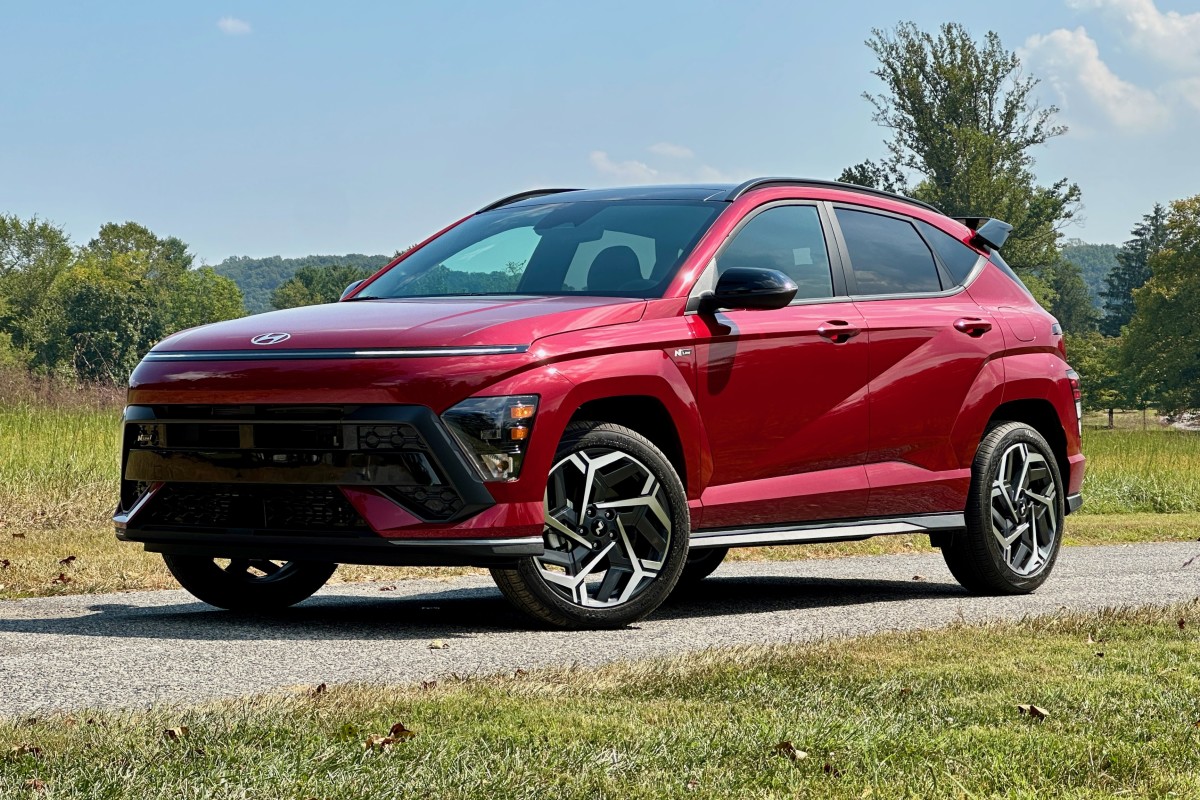
The 2024 Hyundai Kona was designed with an electric vehicle aesthetic in mind, evident in its sleek, grille-less front that mirrors the Ioniq 5. The front end featured a single-piece LED headlight, contributing to its modern, seamless horizon styling. Despite its increased length, the Kona maintained its recognizable silhouette, with new creased door surfaces and more pronounced black body cladding on the SE, SEL, and Limited trims. The N-Line trim stood out with body-colored wheel arches. Standard LED lighting and varying wheel sizes across trims added to its contemporary appeal. Inside, the Kona's cabin was updated with a driver-oriented center stack, a relocated gear shift, and a curved display housing both driver-information and infotainment screens, enhancing the overall modern feel.
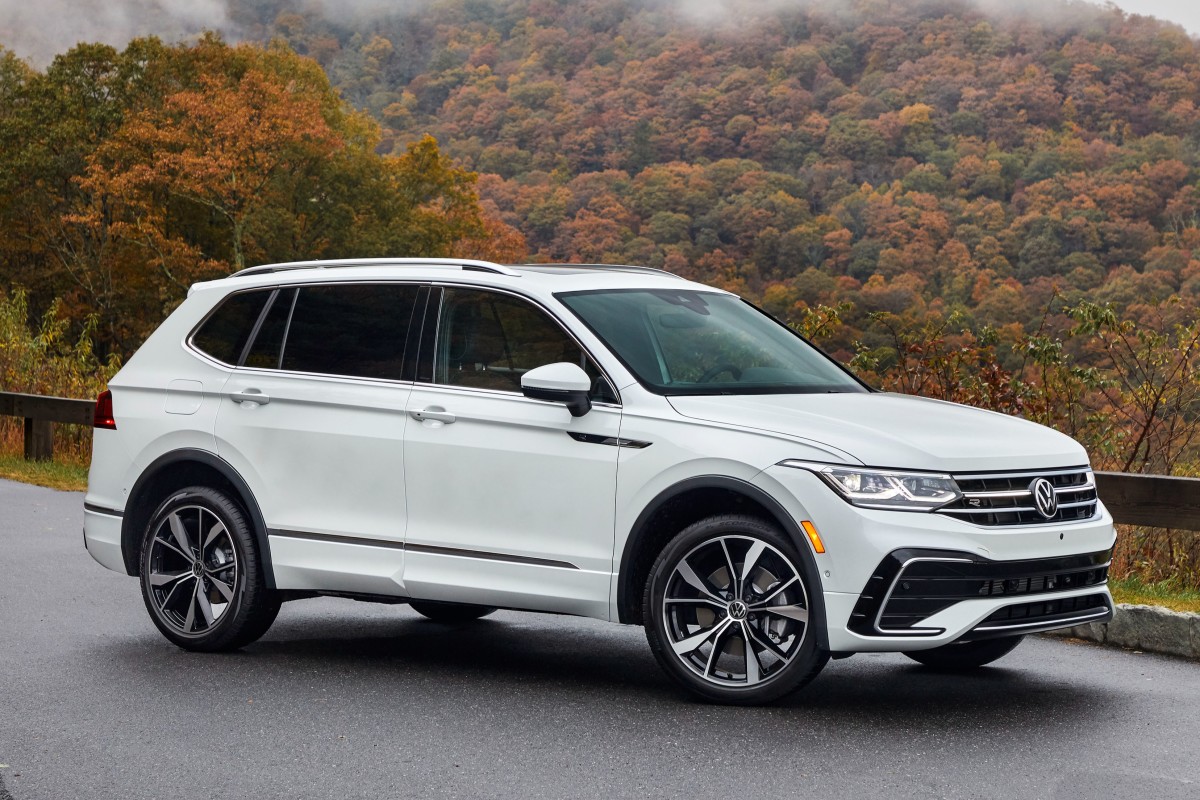
The 2024 Volkswagen Tiguan exuded a premium European design, with standard LED headlights and taillights, and an illuminated grille light line on the SEL R-Line trim. The exterior was marked by silver roof rails on the SEL R-Line, while lower trims featured black rails. The model name was prominently displayed at the rear, accompanied by the classic Volkswagen badge. The base Tiguan S was limited to grayscale colors, with more vibrant options like Atlantic Blue and Kings Red Metallic available on higher trims, albeit with specific interior color restrictions. The Tiguan's interior offered heated front seats and cloth upholstery on the base trim, with higher trims adding features like leatherette upholstery, dual-zone climate control, and a panoramic sunroof. The SEL R-Line boasted real leather, front-seat ventilation, and additional power adjustability for the front passenger seat.


The 2024 Hyundai Kona retained its predecessor's engine lineup, featuring a naturally aspirated 2.0-liter four-cylinder engine for the SE and SEL trims, producing 147 horsepower and 132 lb-ft of torque, paired with a CVT. The N-Line and Limited trims were powered by a turbocharged 1.6-liter four-cylinder engine, delivering 190 horsepower and 195 lb-ft of torque, now coupled with an eight-speed automatic transmission. Paddle shifters were standard on the N-Line and Limited trims, with an option for the SEL Convenience Package. During a test drive, the turbo engine's pickup was noted as slightly slow, but the Kona's steering and handling were praised. Front-wheel drive was standard, with all-wheel drive available for an additional $1,500, affecting fuel economy slightly.
The 2024 Volkswagen Tiguan came standard with a turbocharged 2.0-liter four-cylinder engine, generating 184 horsepower and 221 lb-ft of torque, paired with an eight-speed automatic transmission. Front-wheel drive was standard, with Volkswagen's 4Motion all-wheel drive available for an extra $1,500 on lower trims and standard on the SEL R-Line. The AWD option included a larger fuel tank, accommodating the system's impact on fuel economy. The Tiguan's power delivery was inconsistent, with a touchy gas pedal and mismatched brake pedal. Steering was light but provided good visibility and handling. The ride was comfortable, though seating surfaces drew some complaints.
The 2024 Hyundai Kona's increased length was most noticeable in the rear seat and cargo area. Rear-seat legroom expanded to 38.2 inches, and headroom increased to 38.3 inches with the sunroof. Cargo capacity grew significantly to 25.5 cubic feet with the rear seats up and 63.7 cubic feet with them folded down. A power hands-free liftgate was standard on the Limited trim. Inside, a handy shelf on the passenger's side of the dash provided additional storage, and a guardrail kept phones secure on the wireless charging pad. Seating options included cloth for SE and SEL trims, a leather/suede combination for N-Line, and H-Tex leatherette for Limited. Ventilated front seats and a heated steering wheel were standard on the Limited trim.
The 2024 Volkswagen Tiguan offered a two-row configuration for AWD models, providing 37.6 cubic feet of cargo space with all seats in place, or 73.4 with the rear seats folded down. The three-row configuration, available on FWD models, reduced cargo space but maintained passenger space. The Tiguan provided ample headroom and legroom for front and second-row passengers, though the third row was significantly tighter. Despite this, the Tiguan was one of the few compact crossovers to offer a third row. The interior featured firm seats, with the SEL R-Line offering real leather upholstery and additional power adjustability for the front passenger seat.
The 2024 Hyundai Kona introduced several technological upgrades, including a standard 12.3-inch infotainment touchscreen display. Wireless Apple CarPlay and Android Auto were available on lower trims, with an OTA update promised for higher trims. N-Line and Limited trims featured wireless device charging and a new Wi-Fi hotspot. The upgraded stereo system was provided by Bose, and every Kona included USB-C ports for front and rear passengers. Dual 12.3-inch screens were optional with the Convenience Package and standard on N-Line and Limited trims. Hyundai's Bluelink connected services were standard across the lineup.
The 2024 Volkswagen Tiguan featured haptic touch slider buttons for climate control, which were responsive and easy to use. The infotainment system relied on monochromatic graphics, accessed through an 8-inch center touchscreen with wireless Apple CarPlay and Android Auto. The base Tiguan S had a 6.5-inch touchscreen and fewer USB-C ports. Volkswagen's Digital Cockpit System was standard, with the SEL R-Line offering a fully configurable 10.25-inch Digital Cockpit Pro screen. The nine-speaker Fender Premium Audio System was a highlight on the SEL R-Line.
The 2024 Hyundai Kona came equipped with standard advanced driver-assistance safety features, including Safe Exit Warning, blind-spot collision avoidance, and rear cross-traffic collision avoidance. High-beam assist was standard, with adaptive cruise control available on N-Line and Limited trims. The Limited trim also featured Surround View Monitor and blind-spot view monitor. Hyundai's Highway Driving Assist suite provided Level 2 semi-autonomous driving features, with smooth lane-keep assist and a clear inventory of driver-assistance features.
The 2024 Volkswagen Tiguan earned a 2022 Top Safety Pick+ award from the IIHS, and its safety offering improved for 2024 with the standard IQ.DRIVE suite. This included adaptive cruise control, active blind-spot monitoring, Lane Assist, Travel Assist, and Emergency Assist. Additional standard features included rain-sensing wipers, rear cross-traffic alert, and forward collision warning with pedestrian detection. Park Distance Control was standard on the SE R-Line Black trim, though its Maneuver Braking feature was found to be intrusive.
CarGurus highlights
According to CarGurus experts, the overall rating for the 2024 Hyundai Kona is 8.3 out of 10, while the 2024 Volkswagen Tiguan scores 7.5 out of 10. Based on these ratings, the Hyundai Kona is the recommended choice, offering a more modern design, advanced technology, and comprehensive safety features.
Choose the 2024 Hyundai Kona if:
- You prioritize a modern, electric vehicle-inspired design with advanced technology features.
- You need a compact SUV with ample cargo space and comfortable rear seating.
- You value comprehensive safety features and semi-autonomous driving capabilities.


Choose the 2024 Volkswagen Tiguan if:
- You prefer a premium European design with a spacious interior and optional third-row seating.
- You want a compact crossover with a robust safety package and advanced driver-assistance features.
- You appreciate a comfortable ride with good visibility and handling.


CarGurus highlights
According to CarGurus experts, the overall rating for the 2024 Hyundai Kona is 8.3 out of 10, while the 2024 Volkswagen Tiguan scores 7.5 out of 10. Based on these ratings, the Hyundai Kona is the recommended choice, offering a more modern design, advanced technology, and comprehensive safety features.
Choose the 2024 Hyundai Kona if:
Shop Now- You prioritize a modern, electric vehicle-inspired design with advanced technology features.
- You need a compact SUV with ample cargo space and comfortable rear seating.
- You value comprehensive safety features and semi-autonomous driving capabilities.
Choose the 2024 Volkswagen Tiguan if:
Shop Now- You prefer a premium European design with a spacious interior and optional third-row seating.
- You want a compact crossover with a robust safety package and advanced driver-assistance features.
- You appreciate a comfortable ride with good visibility and handling.

By: CarGurus + AI
At CarGurus, our team of experienced automotive writers remain at the heart of our content operation, conducting hands-on car tests and writing insightful guides that are backed by years of industry experience. To complement this, we are harnessing AI to make our content offering more diverse and more helpful to shoppers than ever. To achieve this, our AI systems are based exclusively on CarGurus content, ratings and data, so that what we produce is both unique to CarGurus, and uniquely helpful to car shoppers.

