2024 Genesis GV80 vs 2025 Hyundai Kona

Overview | |
MSRP$57,700 | MSRP$24,550 |
Listings119 | Listings141 |
Ratings & Reviews | |
User Reviews | User Reviews |
Expert reviews7.7 out of 10 | Expert reviews8.0 out of 10 |
Pros
Cons
| Pros
Cons
|
2024 Genesis GV80 Reviews SummaryGenesis introduced the GV80 in 2021, and the crossover SUV is getting a minor refresh in 2025. Still, the 2024 GV80 remains a good choice unless you want to wait for the fancier styling, more high-tech interior, or new supercharged GV80 Coupe coming next year. Otherwise, today’s GV80 is pretty much the same as tomorrow’s GV80, and in some respects, it is the more elegant and traditional choice. Verdict: Based on our evaluation of the 2024 Genesis GV80, seat comfort is not what it should be. Also, to use Apple CarPlay or Android Auto, you need a USB cable. This Genesis is thirsty, too. But otherwise, we have few complaints about this stylish, safe, and mostly rewarding midsize luxury SUV. | |
2025 Hyundai Kona Reviews SummaryThat there are no major changes beyond a couple of new trim levels for the 2025 Hyundai Kona is neither a surprise nor a bad thing. Not a surprise because this second-generation model only made its debut one year ago, making it too soon to expect any major updates. And not a bad thing because, frankly, this second-generation Kona was already a great subcompact SUV. Time does not stand still, however, particularly when it comes to crossovers, so it’s time to find out how the Kona performs one year on, and whether it continues to deliver value in an increasingly busy part of the market. | |
No video found | |
Popular Features & Specs | |
Engine2.5L 300 hp I4 | Engine |
Drive TrainAWD | Drive Train |
Seating Capacity5 | Seating Capacity5 |
Horsepower300 hp @ 5800 rpm | Horsepower |
MPG City20 | MPG City |
MPG Highway24 | MPG Highway |
Engine | |
Engine Name2.5L 300 hp I4 | Engine Name2.0L 147 hp I4 |
Torque311 lb-ft @ 1650 rpm | Torque132 lb-ft @ 4500 rpm |
Horsepower300 hp @ 5800 rpm | Horsepower147 hp @ 6200 rpm |
DrivetrainAWD | DrivetrainFWD |
Fuel Economy | |
MPG City20 | MPG City |
MPG Highway24 | MPG Highway |
Interior | |
Seating Capacity5 | Seating Capacity5 |
Key Features | |
Navigation SystemStandard | Navigation SystemStandard |
Safety | |
Front Crash Overall4 | Front Crash Overall4 |
Side Crash Overall | Side Crash Overall5 |
Dimensions & Capacity | |
Cargo Space34.9 cu ft | Cargo Space25.5 cu ft |
Curb Weight4742 lbs | Curb Weight3005 lbs |
Height67.5 in | Height62.2 in |
Length194.7 in | Length171.3 in |
Width77.8 in | Width71.9 in |
Wheelbase116.3 in | Wheelbase104.7 in |
Maximum Payload1188 lbs | Maximum Payload1085 lbs |
Number of doors4 | Number of doors4 |
Maximum Towing Capacity6000 lbs | Maximum Towing Capacity |
Overview | ||
MSRP | $57,700 | $24,550 |
Listings | ||
Ratings & Reviews | ||
User reviews | ||
Expert reviews | 7.7 out of 10Read full review | 8.0 out of 10Read full review |
Pros & cons | Pros
Cons
| Pros
Cons
|
Summary | Genesis introduced the GV80 in 2021, and the crossover SUV is getting a minor refresh in 2025. Still, the 2024 GV80 remains a good choice unless you want to wait for the fancier styling, more high-tech interior, or new supercharged GV80 Coupe coming next year. Otherwise, today’s GV80 is pretty much the same as tomorrow’s GV80, and in some respects, it is the more elegant and traditional choice. Verdict: Based on our evaluation of the 2024 Genesis GV80, seat comfort is not what it should be. Also, to use Apple CarPlay or Android Auto, you need a USB cable. This Genesis is thirsty, too. But otherwise, we have few complaints about this stylish, safe, and mostly rewarding midsize luxury SUV. | That there are no major changes beyond a couple of new trim levels for the 2025 Hyundai Kona is neither a surprise nor a bad thing. Not a surprise because this second-generation model only made its debut one year ago, making it too soon to expect any major updates. And not a bad thing because, frankly, this second-generation Kona was already a great subcompact SUV. Time does not stand still, however, particularly when it comes to crossovers, so it’s time to find out how the Kona performs one year on, and whether it continues to deliver value in an increasingly busy part of the market. |
Video | No video found | |
Popular Features & Specs | ||
Engine | 2.5L 300 hp I4 | |
Drive Train | AWD | |
Seating Capacity | 5 | 5 |
Horsepower | 300 hp @ 5800 rpm | |
MPG City | 20 | |
MPG Highway | 24 | |
Engine | ||
Engine Name | 2.5L 300 hp I4 | 2.0L 147 hp I4 |
Torque | 311 lb-ft @ 1650 rpm | 132 lb-ft @ 4500 rpm |
Horsepower | 300 hp @ 5800 rpm | 147 hp @ 6200 rpm |
Drivetrain | AWD | FWD |
Fuel Economy | ||
MPG City | 20 | |
MPG Highway | 24 | |
Interior | ||
Seating Capacity | 5 | 5 |
Key Features | ||
Navigation System | Standard | Standard |
Safety | ||
Front Crash Overall | 4 | 4 |
Side Crash Overall | 5 | |
Dimensions & Capacity | ||
Cargo Space | 34.9 cu ft | 25.5 cu ft |
Curb Weight | 4742 lbs | 3005 lbs |
Height | 67.5 in | 62.2 in |
Length | 194.7 in | 171.3 in |
Width | 77.8 in | 71.9 in |
Wheelbase | 116.3 in | 104.7 in |
Maximum Payload | 1188 lbs | 1085 lbs |
Number of doors | 4 | 4 |
Maximum Towing Capacity | 6000 lbs | |
The 2024 Genesis GV80 presented a choice between two engines: a turbocharged 2.5-liter four-cylinder and a twin-turbocharged 3.5-liter V6. Buyers could select from Standard, Advanced, Prestige, or Prestige Signature trims, with prices ranging from $57,700 to $81,750, plus a $1,350 destination charge. The test vehicle, a GV80 3.5T in the top-tier Prestige Signature trim, featured an optional Matterhorn White Matte paint, bringing the MSRP to $84,600. The Prestige Signature trim offered exclusive exterior colors and a stylish 22-inch wheel design, though the dark paint obscured the wheel details. Inside, the Ultramarine Blue over Dune interior exuded luxury with diamond-stitched Nappa leather, a suede headliner, and a wide touchscreen display. Despite its opulence, the recommendation leaned towards the regular Prestige trim for a more balanced appeal.
The 2025 Hyundai Kona, while visually unchanged from the 2024 model, maintained a fresh appearance with its flush grille and ultra-slim LED light bars. The Kona's design, though not classically handsome, was futuristic and satisfactory from most angles. The 2025 model was notably larger, offering more interior space and a more assertive road presence. The new N Line S trim, along with the N Line, featured sportier design elements. The Kona's interior remained unchanged, with a solid construction and ample tech. The 64-color ambient lighting became standard on higher trims, enhancing the cabin's ambiance. The Kona's practicality was evident in its cargo capacity and comfortable seating, making it a versatile choice for families.

The 2024 Genesis GV80 offered two engine options: a 2.5-liter turbocharged four-cylinder with 300 horsepower and 311 lb-ft of torque, and a 3.5-liter twin-turbo V6 producing 375 hp and 391 lb-ft of torque. The latter provided a more satisfying performance but was less fuel-efficient, with an observed 17.2 mpg compared to the EPA's 20 mpg estimate. Both engines were paired with an eight-speed automatic transmission and standard all-wheel drive. The GV80 featured five driving modes and could tow up to 6,000 pounds. The 3.5T model included upgraded brakes and adaptive suspension, offering a rewarding driving experience with swift acceleration and commendable grip. The steering, though unremarkable, was comfortable for long drives.
The 2025 Hyundai Kona offered two gas-powered engine options. The SE, SEL, and SEL Convenience trims featured a 2.0-liter naturally aspirated four-cylinder engine with 147 horsepower and 132 lb-ft of torque, paired with a CVT for fuel efficiency. The N Line S, N Line, and Limited trims had a turbocharged 1.6-liter four-cylinder engine with 190 horsepower and 195 lb-ft of torque, coupled with an eight-speed automatic transmission. The turbo engine provided a broader torque band, though it felt flat at low revs. All-wheel drive was available across the lineup, enhancing the Kona's handling with a multi-link rear suspension. The Kona prioritized competence over excitement, offering a balanced ride for everyday driving.
The 2024 Genesis GV80 3.5T Advanced was the only trim with a third-row seat, while the Prestige Signature trim seated four with second-row captain's chairs. The interior featured premium materials, heated and ventilated seats, and a panoramic roof. However, the seats were uncomfortable for long trips, and rear legroom was limited. The GV80 offered 34.9 cubic feet of cargo space, expandable to 84 cubic feet with the rear seats folded. The Prestige Signature's rear console limited cargo loading.
The 2025 Hyundai Kona provided 25.5 cubic feet of cargo space, expandable to 63.7 cubic feet with the rear seats folded. Rear legroom was adequate at 38.2 inches, and the front seats offered a generous range of movement. The Kona's interior featured various storage compartments and a sense of space, aided by the relocated drive selector. Upholstery options varied by trim, with heated and ventilated seats available on higher trims. The climate control system ranged from single-zone air conditioning to dual-zone automatic control with rear vents.
The 2024 Genesis GV80 featured a 14.5-inch touchscreen infotainment display, controlled via a center console dial. The Prestige trims included a 12.3-inch digital instrument display with a 3D appearance. Standard features included navigation, satellite radio, and wired smartphone integration. The GV80 introduced a Wi-Fi hotspot and wireless charging, with the Prestige Signature adding second-row charging. The infotainment system was user-friendly, and the digital key system allowed smartphone access. Most trims had a Lexicon sound system, with a head-up display on Prestige trims.
The 2025 Hyundai Kona offered a 12.3-inch touchscreen infotainment display with wireless smartphone integration. Higher trims included wireless charging and a digital key. The SEL Convenience trim and above featured a 12.3-inch digital instrument cluster. The N Line and Limited trims offered a Bose audio system, while lower trims had a six-speaker setup. Built-in navigation was available on select trims, with smartphone pairing as an alternative. Hyundai's Bluelink connectivity enabled over-the-air updates.
The 2024 Genesis GV80 came equipped with advanced safety features, including a Blind-Spot View Monitor, Remote Smart Parking Assist, and Highway Driving Assist. The latter combined adaptive cruise control with lane-centering and lane-change assist. The Blind-Spot View Monitor displayed video feeds in the digital instrument panel, enhancing lane-change safety. The GV80 received a Top Safety Pick+ rating from the IIHS and a five-star overall rating from the NHTSA, though frontal-impact ratings were four stars.
The 2025 Hyundai Kona impressed with its standard safety features, including Forward Collision-Avoidance Assist, Lane Keeping Assist, and Blind-Spot Collision Warning. Higher trims added Highway Driving Assist and enhanced collision-avoidance features. The Limited trim included parking assistance technologies. All Konas featured six airbags, electronic stability control, and a tire pressure monitoring system. The Kona earned a Top Safety Pick+ rating from the IIHS.
CarGurus highlights
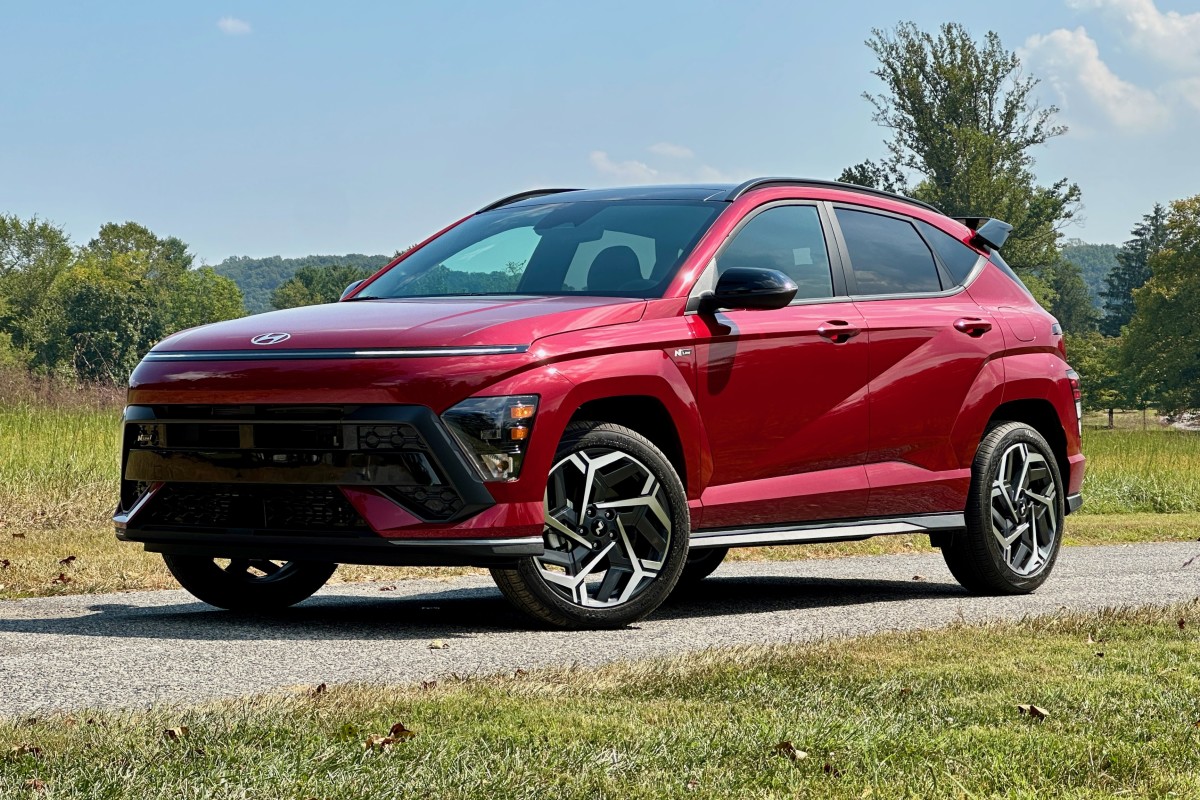
According to CarGurus experts, the overall rating for the 2024 Genesis GV80 is 7.7 out of 10, while the 2025 Hyundai Kona scores 8.0 out of 10. Based on these ratings, the 2025 Hyundai Kona is the recommended choice, offering a better balance of practicality, technology, and safety features at a more accessible price point.
Choose the 2024 Genesis GV80 if:
- You prioritize luxury and premium interior materials.
- You need a vehicle with strong towing capacity and robust performance.
- Advanced safety features and high safety ratings are important to you.


Choose the 2025 Hyundai Kona if:
- You seek a practical and spacious subcompact SUV with ample cargo capacity.
- You value modern technology features, including wireless smartphone integration.
- Safety features and a Top Safety Pick+ rating are priorities for you.


CarGurus highlights
According to CarGurus experts, the overall rating for the 2024 Genesis GV80 is 7.7 out of 10, while the 2025 Hyundai Kona scores 8.0 out of 10. Based on these ratings, the 2025 Hyundai Kona is the recommended choice, offering a better balance of practicality, technology, and safety features at a more accessible price point.
Choose the 2024 Genesis GV80 if:
Shop Now- You prioritize luxury and premium interior materials.
- You need a vehicle with strong towing capacity and robust performance.
- Advanced safety features and high safety ratings are important to you.
Choose the 2025 Hyundai Kona if:
Shop Now- You seek a practical and spacious subcompact SUV with ample cargo capacity.
- You value modern technology features, including wireless smartphone integration.
- Safety features and a Top Safety Pick+ rating are priorities for you.

By: CarGurus + AI
At CarGurus, our team of experienced automotive writers remain at the heart of our content operation, conducting hands-on car tests and writing insightful guides that are backed by years of industry experience. To complement this, we are harnessing AI to make our content offering more diverse and more helpful to shoppers than ever. To achieve this, our AI systems are based exclusively on CarGurus content, ratings and data, so that what we produce is both unique to CarGurus, and uniquely helpful to car shoppers.

