2021 Volkswagen Atlas vs 2021 Toyota Highlander Hybrid

Overview | |
MSRP$31,545 | MSRP$38,735 |
Listings152 | Listings54 |
Ratings & Reviews | |
User Reviews | User Reviews |
Expert reviews6.5 out of 10 | Expert reviews6.7 out of 10 |
Pros
Cons
| Pros
Cons
|
2021 Volkswagen Atlas Reviews SummaryIntroduced for the 2018 model year, the Atlas is Volkswagen's latest attempt to win over American buyers. Built in Chattanooga, Tennessee, the VW Atlas competes in the three-row crossover SUV segment against well-established nameplates like the Ford Explorer, Honda Pilot, and Toyota Highlander. Changes for 2021 are limited to exterior styling tweaks and a reshuffled option list. VW also offers the two-row Atlas Cross Sport. | |
2021 Toyota Highlander Hybrid Reviews SummaryThere comes a time in everyone’s life when practicality rules. Usually, it arrives shortly before or after having children. In many ways, the 2021 Toyota Highlander is purpose-built to provide that practicality—especially in hybrid form. Redesigned for the 2020 model year, the 2021 Highlander adds a sporty XSE trim level (V6 models only), improved headlights on lower trim levels, and an upgraded Toyota Safety Sense 2.5+ collection of safety features. These changes can only make the Highlander a more appealing choice in a highly competitive segment. | |
No video found | |
Popular Features & Specs | |
Engine2.0L 235 hp I4 | Engine2.5L 243 hp I4 Hybrid |
Drive TrainFWD | Drive TrainFWD |
Seating Capacity7 | Seating Capacity8 |
EV Battery Capacity | EV Battery Capacity1.9 kWh |
MPG City21 | MPG City36 |
MPG Highway24 | MPG Highway35 |
Engine | |
Engine Name2.0L 235 hp I4 | Engine Name2.5L 243 hp I4 Hybrid |
DrivetrainFWD | DrivetrainFWD |
Fuel Economy | |
EV Battery Capacity | EV Battery Capacity1.9 kWh |
MPG City21 | MPG City36 |
MPG Highway24 | MPG Highway35 |
Interior | |
Seating Capacity7 | Seating Capacity8 |
Safety | |
Front Crash Overall4 | Front Crash Overall4 |
Side Crash Overall5 | Side Crash Overall5 |
Dimensions & Capacity | |
Cargo Space20.6 cu ft | Cargo Space16.0 cu ft |
Curb Weight4248 lbs | Curb Weight4330 lbs |
Height70.1 in | Height68.1 in |
Length200.7 in | Length194.9 in |
Width78.4 in | Width76.0 in |
Wheelbase117.3 in | Wheelbase112.2 in |
Maximum Payload1080 lbs | Maximum Payload1495 lbs |
Number of doors4 | Number of doors4 |
Maximum Towing Capacity2000 lbs | Maximum Towing Capacity3500 lbs |
Overview | ||
MSRP | $31,545 | $38,735 |
Listings | ||
Ratings & Reviews | ||
User reviews | ||
Expert reviews | 6.5 out of 10Read full review | 6.7 out of 10Read full review |
Pros & cons | Pros
Cons
| Pros
Cons
|
Summary | Introduced for the 2018 model year, the Atlas is Volkswagen's latest attempt to win over American buyers. Built in Chattanooga, Tennessee, the VW Atlas competes in the three-row crossover SUV segment against well-established nameplates like the Ford Explorer, Honda Pilot, and Toyota Highlander. Changes for 2021 are limited to exterior styling tweaks and a reshuffled option list. VW also offers the two-row Atlas Cross Sport. | There comes a time in everyone’s life when practicality rules. Usually, it arrives shortly before or after having children. In many ways, the 2021 Toyota Highlander is purpose-built to provide that practicality—especially in hybrid form. Redesigned for the 2020 model year, the 2021 Highlander adds a sporty XSE trim level (V6 models only), improved headlights on lower trim levels, and an upgraded Toyota Safety Sense 2.5+ collection of safety features. These changes can only make the Highlander a more appealing choice in a highly competitive segment. |
Video | No video found | |
Popular Features & Specs | ||
Engine | 2.0L 235 hp I4 | 2.5L 243 hp I4 Hybrid |
Drive Train | FWD | FWD |
Seating Capacity | 7 | 8 |
EV Battery Capacity | 1.9 kWh | |
MPG City | 21 | 36 |
MPG Highway | 24 | 35 |
Engine | ||
Engine Name | 2.0L 235 hp I4 | 2.5L 243 hp I4 Hybrid |
Drivetrain | FWD | FWD |
Fuel Economy | ||
EV Battery Capacity | 1.9 kWh | |
MPG City | 21 | 36 |
MPG Highway | 24 | 35 |
Interior | ||
Seating Capacity | 7 | 8 |
Safety | ||
Front Crash Overall | 4 | 4 |
Side Crash Overall | 5 | 5 |
Dimensions & Capacity | ||
Cargo Space | 20.6 cu ft | 16.0 cu ft |
Curb Weight | 4248 lbs | 4330 lbs |
Height | 70.1 in | 68.1 in |
Length | 200.7 in | 194.9 in |
Width | 78.4 in | 76.0 in |
Wheelbase | 117.3 in | 112.2 in |
Maximum Payload | 1080 lbs | 1495 lbs |
Number of doors | 4 | 4 |
Maximum Towing Capacity | 2000 lbs | 3500 lbs |
The 2021 Volkswagen Atlas underwent a styling refresh, featuring new front and rear bumpers, standard LED headlights and taillights, and a redesigned grille shared with the Atlas Cross Sport model. These updates added 2.4 inches to its length, giving the Atlas a more extroverted appearance compared to the previous model. The R-Line trim package enhanced its sporty look with unique bumpers and side skirts. Despite these cosmetic changes, the Atlas retained its MQB platform, offering a minimalist interior design with a standard seven-seat configuration. However, the material quality, especially in the mid-level SE with Technology trim, was below average, with cheap-feeling plastics and faux wood and metal trim.
In contrast, the 2021 Toyota Highlander Hybrid presented a distinctive design with a blunt, bulbous nose and black windshield pillars creating a floating roof effect. The styling was balanced by swollen haunches, though the flared quarter panels could overwhelm the design. The Highlander Hybrid was available in LE, XLE, Limited, and Platinum trims, with a hybrid powertrain option. The Limited trim offered a 12.3-inch touchscreen infotainment system and a range of features, though the interior had some drawbacks, such as a loud instrument-panel shroud and reflections on the screen. The cabin featured a two-tone look with leather upholstery in higher trims, but the mix of illumination colors at night made the gauges appear busy.


The 2021 Volkswagen Atlas offered two engine options: a 2.0-liter turbocharged inline-four producing 235 horsepower and 258 pound-feet of torque, and a 3.6-liter VR6 engine with 276 horsepower and 266 pound-feet of torque. Both engines were paired with an eight-speed automatic transmission, with front-wheel drive standard and optional 4Motion all-wheel drive. The driving experience with the base engine and AWD was underwhelming, with rough shifts and poor ride quality. The Atlas had a towing capacity of 5,000 pounds with the VR6 engine, but only 2,000 pounds with the four-cylinder. Fuel economy was unimpressive, with the four-cylinder rated at 22 mpg combined and the VR6 at 19 mpg combined.
The 2021 Toyota Highlander Hybrid switched to a 2.5-liter four-cylinder engine, delivering 243 horsepower and achieving an EPA rating of 36 mpg combined. The hybrid system used an "E-CVT" to mimic an automatic transmission, with front-wheel drive standard and optional AWD. While the Highlander Hybrid offered improved fuel efficiency, it lacked driving excitement. The power was adequate but sounded strained during acceleration, and the steering was lifeless. The regenerative brakes were an improvement, but the ride was soft with unwanted body movement. On smooth roads, the handling was capable, but on uneven surfaces, it became sloppy. The Highlander Hybrid excelled in urban environments with its electric motor torque and quiet freeway cruising.
The 2021 Volkswagen Atlas provided average passenger and cargo space for its segment, with 96.8 cubic feet behind the front seats and 20.6 cubic feet with all seats up. It offered more third-row legroom than most competitors, but at the expense of second-row comfort. The interior featured logically laid-out controls and up to five USB ports, with an optional wireless charging pad. The Atlas had a tall driving position, but forward visibility was limited. Parking sensors and active park assist were available on higher trims.
The 2021 Toyota Highlander Hybrid Limited offered comfortable accommodations for the driver and front passenger, with power-adjustable seats and leather upholstery. The second-row bench seat increased seating capacity to eight, but the narrow cabin made it uncomfortable for three adults. The third-row seat was low and cramped, with limited legroom. Cargo space measured 16 cubic feet behind the third row, expanding to 84.3 cubic feet with seats folded. Storage was adequate, but the wireless charger blocked access to the center storage area. The Highlander lacked storage wells for securing items in the cargo area.
The 2021 Volkswagen Atlas came with Bluetooth and smartphone compatibility, with a 6.5-inch infotainment touchscreen on the base trim and an 8-inch screen on higher trims. The Digital Cockpit was available on upper trims, offering a 10.3-inch digital display. The Atlas was set to receive the MIBIII infotainment system later in the year, enhancing voice recognition and navigation. The SE with Technology trim had an 8-inch screen, but the display was plain and text-heavy. A 12-speaker Fender audio system was available on higher trims, and a 4G LTE WiFi hotspot was new for 2021.
The 2021 Toyota Highlander Hybrid featured Bluetooth, Apple CarPlay, Android Auto, and Amazon Alexa connectivity. The standard infotainment system included a trial subscription to satellite radio and WiFi Connect service. The test vehicle had a 12.3-inch touchscreen with an 11-speaker JBL audio system and navigation. The infotainment controls were user-friendly, with large knobs and shortcut buttons. The JBL sound system offered 1,200 watts of power but had mixed audio quality. The Highlander included Driver Easy Speak technology and a video rearview mirror for improved visibility.
The 2021 Volkswagen Atlas received top ratings in IIHS crash tests, except for a "marginal" rating for child-seat anchors and mixed headlight ratings. The NHTSA gave the 2020 model a five-star overall rating. Standard safety features included automatic emergency braking and blind-spot monitoring, with adaptive cruise control and lane-keep assist available on higher trims. The Atlas was set to receive more advanced driver aids later in the year, including Travel Assist and Emergency Assist.
The 2021 Toyota Highlander Hybrid came with Toyota Safety Sense 2.5+, which included intersection support and emergency steering assistance. Blind-spot monitoring and rear cross-traffic alert were standard on the LE trim and above. The Highlander received a "Top Safety Pick" rating from the IIHS for 2020, and the NHTSA awarded it a five-star overall rating. The adaptive cruise control and lane-centering assistance had some quirks, but the safety systems were generally effective.
CarGurus highlights
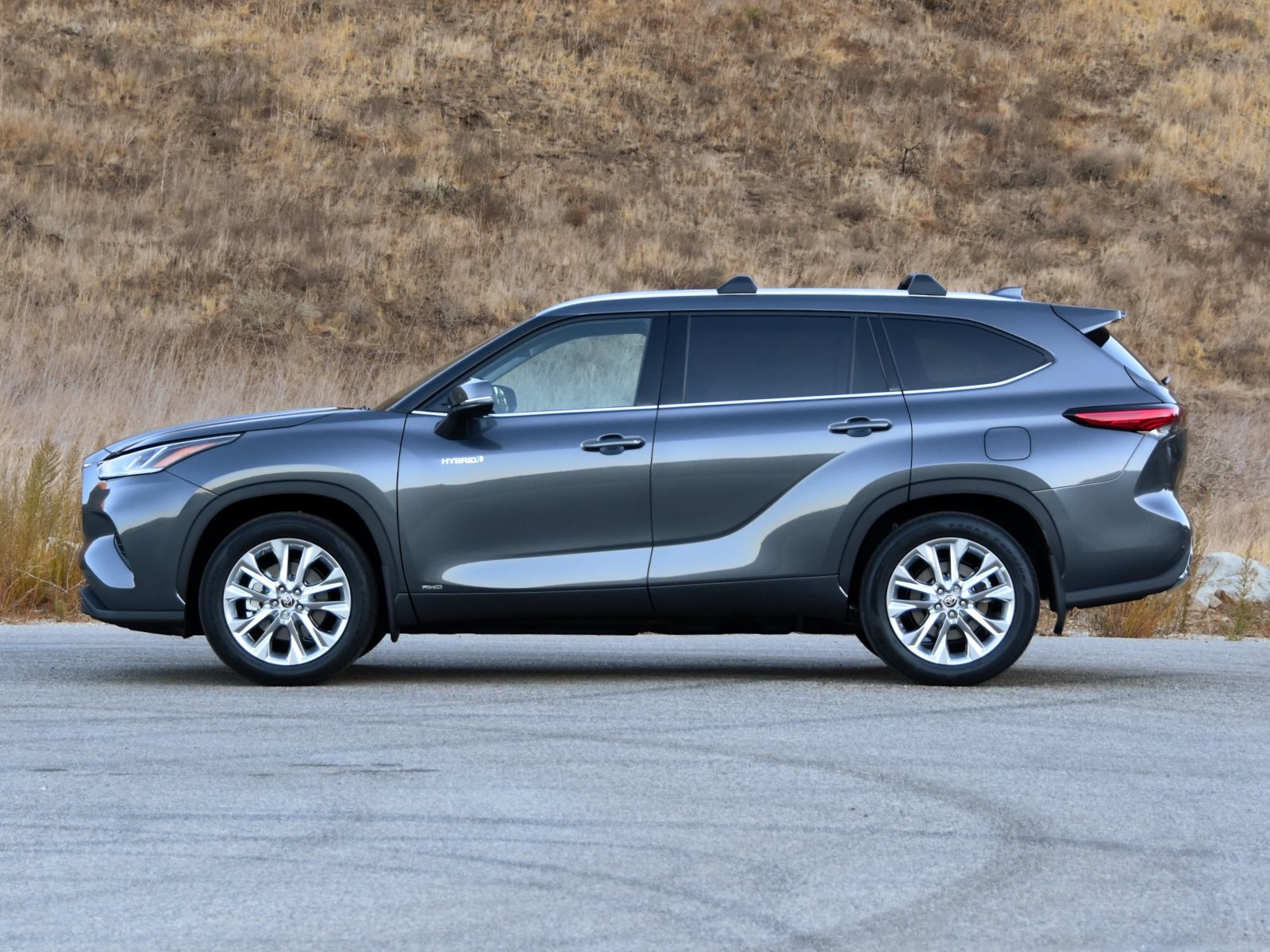
According to CarGurus experts, the overall rating for the 2021 Volkswagen Atlas is 6.5 out of 10, while the 2021 Toyota Highlander Hybrid scores 6.7 out of 10. Based on these ratings, the Toyota Highlander Hybrid is the recommended choice for its superior fuel efficiency, comfort, and safety features.
Choose the 2021 Volkswagen Atlas if:
- You need more third-row legroom for passengers.
- You prefer a sportier exterior design with the R-Line trim.
- You require a higher towing capacity with the VR6 engine.


Choose the 2021 Toyota Highlander Hybrid if:
- You prioritize fuel efficiency with a hybrid powertrain.
- You want a more comfortable and upscale interior in higher trims.
- You value advanced safety features with Toyota Safety Sense 2.5+.


CarGurus highlights
According to CarGurus experts, the overall rating for the 2021 Volkswagen Atlas is 6.5 out of 10, while the 2021 Toyota Highlander Hybrid scores 6.7 out of 10. Based on these ratings, the Toyota Highlander Hybrid is the recommended choice for its superior fuel efficiency, comfort, and safety features.
Choose the 2021 Volkswagen Atlas if:
Shop Now- You need more third-row legroom for passengers.
- You prefer a sportier exterior design with the R-Line trim.
- You require a higher towing capacity with the VR6 engine.
Choose the 2021 Toyota Highlander Hybrid if:
Shop Now- You prioritize fuel efficiency with a hybrid powertrain.
- You want a more comfortable and upscale interior in higher trims.
- You value advanced safety features with Toyota Safety Sense 2.5+.

By: CarGurus + AI
At CarGurus, our team of experienced automotive writers remain at the heart of our content operation, conducting hands-on car tests and writing insightful guides that are backed by years of industry experience. To complement this, we are harnessing AI to make our content offering more diverse and more helpful to shoppers than ever. To achieve this, our AI systems are based exclusively on CarGurus content, ratings and data, so that what we produce is both unique to CarGurus, and uniquely helpful to car shoppers.

