2021 Hyundai Tucson vs 2021 Lexus NX Hybrid
Overview | |
MSRP$23,700 | MSRP$40,160 |
Listings197 | Listings13 |
Ratings & Reviews | |
User Reviews | User Reviews |
Expert reviews7.7 out of 10 | Expert reviews6.2 out of 10 |
Pros
Cons
| Pros
Cons
|
2021 Hyundai Tucson Reviews SummaryIt’s no secret that small SUVs are among the most popular new-car segments. You see them everywhere on the road today. Automakers put a lot of pressure on themselves to continually offer the latest and greatest. But that also means even the not-so-new are still terrific vehicles and provide a great value. Case in point: the 2021 Hyundai Tucson. The current generation of this compact SUV was introduced for the 2016 model year, and this 2021 edition represents the final model year before a new generation is ushered in. So why go with the older model? Because Hyundai has loaded it up with plenty of tech and safety features and it is offered at a competitive price. | |
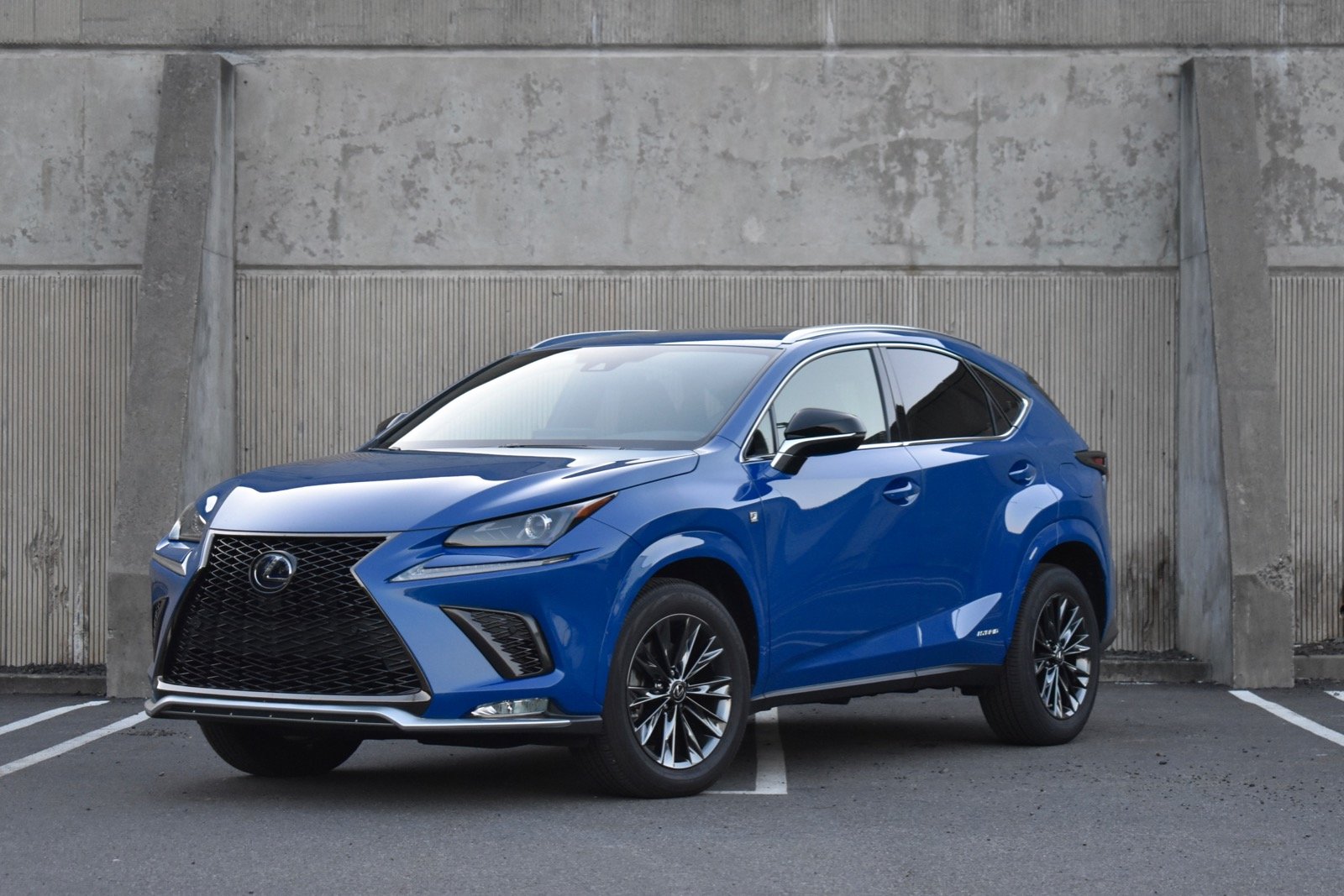
2021 Lexus NX Hybrid Reviews SummaryThe 2021 Lexus NX compact SUV is showing its age. It’s not an inherently bad vehicle, but with a design that dates back to the 2015 model year, it’s struggling to keep pace with fresher competition—including the Acura RDX, Audi Q5, BMW X3, Infiniti QX50, Lincoln Corsair, Mercedes-Benz GLC, and Volvo XC60—and can’t justify its positioning as a premium product. Lexus offers the gasoline-only NX 300 and the NX 300h hybrid, but we’ll focus on the latter for this review. The big news for the 2021 Lexus NX 300h is a new F Sport Black Line special edition, which adds sportier F Sport styling features that normally aren’t available on the hybrid. It also comes with a matching two-piece set of Zero Halliburton luggage. Other changes include additional standard driver aids and "low-profile" windshield wipers. We tested the Black Line for this review, but with production limited to 1,000 units, it will likely be sold out by the time you read this. However, it’s mechanically similar to the regular-production NX 300h hybrid trim levels—base and Luxury. | |
No video found | No video found |
Popular Features & Specs | |
Engine2.0L 161 hp I4 | Engine2.5L 194 hp I4 Hybrid |
Drive TrainFWD | Drive TrainAWD |
Seating Capacity5 | Seating Capacity5 |
Horsepower161 hp @ 6200 rpm | Horsepower194 hp @ 5700 rpm |
MPG City23 | MPG City33 |
MPG Highway28 | MPG Highway30 |
Engine | |
Engine Name2.0L 161 hp I4 | Engine Name2.5L 194 hp I4 Hybrid |
Torque150 lb-ft @ 4700 rpm | Torque |
Horsepower161 hp @ 6200 rpm | Horsepower194 hp @ 5700 rpm |
DrivetrainFWD | DrivetrainAWD |
Fuel Economy | |
MPG City23 | MPG City33 |
MPG Highway28 | MPG Highway30 |
Interior | |
Seating Capacity5 | Seating Capacity5 |
Safety | |
Front Crash Overall5 | Front Crash Overall4 |
Side Crash Overall5 | Side Crash Overall5 |
Dimensions & Capacity | |
Cargo Space31.0 cu ft | Cargo Space16.8 cu ft |
Curb Weight3309 lbs | Curb Weight4180 lbs |
Height64.8 in | Height64.8 in |
Length176.4 in | Length182.3 in |
Width72.8 in | Width83.9 in |
Wheelbase105.1 in | Wheelbase104.7 in |
Maximum Payload1146 lbs | Maximum Payload895 lbs |
Number of doors4 | Number of doors4 |
Maximum Towing Capacity1500 lbs | Maximum Towing Capacity1500 lbs |
Overview | ||
MSRP | $23,700 | $40,160 |
Listings | ||
Ratings & Reviews | ||
User reviews | ||
Expert reviews | 7.7 out of 10Read full review | 6.2 out of 10Read full review |
Pros & cons | Pros
Cons
| Pros
Cons
|
Summary | It’s no secret that small SUVs are among the most popular new-car segments. You see them everywhere on the road today. Automakers put a lot of pressure on themselves to continually offer the latest and greatest. But that also means even the not-so-new are still terrific vehicles and provide a great value. Case in point: the 2021 Hyundai Tucson. The current generation of this compact SUV was introduced for the 2016 model year, and this 2021 edition represents the final model year before a new generation is ushered in. So why go with the older model? Because Hyundai has loaded it up with plenty of tech and safety features and it is offered at a competitive price. | The 2021 Lexus NX compact SUV is showing its age. It’s not an inherently bad vehicle, but with a design that dates back to the 2015 model year, it’s struggling to keep pace with fresher competition—including the Acura RDX, Audi Q5, BMW X3, Infiniti QX50, Lincoln Corsair, Mercedes-Benz GLC, and Volvo XC60—and can’t justify its positioning as a premium product. Lexus offers the gasoline-only NX 300 and the NX 300h hybrid, but we’ll focus on the latter for this review. The big news for the 2021 Lexus NX 300h is a new F Sport Black Line special edition, which adds sportier F Sport styling features that normally aren’t available on the hybrid. It also comes with a matching two-piece set of Zero Halliburton luggage. Other changes include additional standard driver aids and "low-profile" windshield wipers. We tested the Black Line for this review, but with production limited to 1,000 units, it will likely be sold out by the time you read this. However, it’s mechanically similar to the regular-production NX 300h hybrid trim levels—base and Luxury. |
Video | No video found | No video found |
Popular Features & Specs | ||
Engine | 2.0L 161 hp I4 | 2.5L 194 hp I4 Hybrid |
Drive Train | FWD | AWD |
Seating Capacity | 5 | 5 |
Horsepower | 161 hp @ 6200 rpm | 194 hp @ 5700 rpm |
MPG City | 23 | 33 |
MPG Highway | 28 | 30 |
Engine | ||
Engine Name | 2.0L 161 hp I4 | 2.5L 194 hp I4 Hybrid |
Torque | 150 lb-ft @ 4700 rpm | |
Horsepower | 161 hp @ 6200 rpm | 194 hp @ 5700 rpm |
Drivetrain | FWD | AWD |
Fuel Economy | ||
MPG City | 23 | 33 |
MPG Highway | 28 | 30 |
Interior | ||
Seating Capacity | 5 | 5 |
Safety | ||
Front Crash Overall | 5 | 4 |
Side Crash Overall | 5 | 5 |
Dimensions & Capacity | ||
Cargo Space | 31.0 cu ft | 16.8 cu ft |
Curb Weight | 3309 lbs | 4180 lbs |
Height | 64.8 in | 64.8 in |
Length | 176.4 in | 182.3 in |
Width | 72.8 in | 83.9 in |
Wheelbase | 105.1 in | 104.7 in |
Maximum Payload | 1146 lbs | 895 lbs |
Number of doors | 4 | 4 |
Maximum Towing Capacity | 1500 lbs | 1500 lbs |
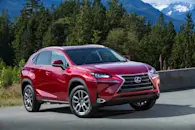
The 2021 Hyundai Tucson featured a more conventional design compared to its futuristic successor. Its upright layout provided a commanding view of the road, while the interior boasted a modern and attractive dash design. Tech features were seamlessly integrated, making buttons and dials easy to locate. The Tucson offered various trims, each adding more features, from the base SE with 17-inch alloy wheels and a 7-inch touchscreen to the Ultimate trim with an 8-inch touchscreen, panoramic sunroof, and heated and ventilated seats.
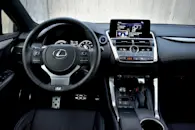
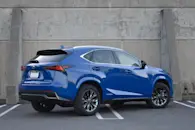
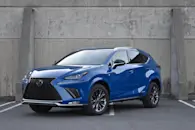
In contrast, the 2021 Lexus NX Hybrid had a sharp, streamlined profile with a scowling face, maintaining a familiar yet distinct look. The NX shared its platform with the previous-generation Toyota RAV4, which made it feel a step behind in engineering. The F Sport Black Line model added sporty elements like a larger mesh grille and dark-finish wheels. Inside, the design felt radical at debut but became familiar over time. The interior featured an F Sport heated steering wheel and NuLuxe upholstery, though material quality seemed more mainstream than luxury.





The 2021 Hyundai Tucson offered two engine options: a 2.0-liter four-cylinder with 161 horsepower and a 2.4-liter engine producing 181 horsepower. Both engines came with a six-speed automatic transmission and standard front-wheel drive, with all-wheel drive as an option. The base engine felt underwhelming, especially at highway speeds, while the 2.4-liter engine provided a livelier experience. The Tucson delivered a comfortable ride, balancing softness and athleticism. Towing capacity ranged from 1,500 pounds with the base engine to 2,000 pounds with the 2.4-liter engine.
The 2021 Lexus NX Hybrid featured a 2.5-liter four-cylinder engine paired with an electric motor, producing a total of 194 horsepower. It came standard with all-wheel drive. Despite its sporty appearance, the NX Hybrid was more focused on fuel efficiency than performance, with a 0-60 mph time of 9.1 seconds. The sport-tuned suspension in the Black Line package improved handling, but the steering felt numb. Drive modes like Eco and Sport offered minimal impact on performance, with Eco mode further dulling acceleration.
The 2021 Hyundai Tucson provided 31 cubic feet of cargo space behind the rear seats, expanding to 61.9 cubic feet with seats folded. While slightly below average for its segment, it offered adequate space for various needs. The front seats were comfortable and supportive, with ample headroom and legroom. Rear seats were less spacious but still accommodating for adults. The Tucson featured numerous storage compartments and a hands-free power liftgate in higher trims.
The 2021 Lexus NX Hybrid had limited front and rear headroom, with rear legroom being the worst in its class. Despite this, the front seats were comfortable, offering excellent support and 10-way power adjustment. The sloping roofline and thick rear pillars hindered visibility, though large mirrors helped. Cargo space was limited to 16.8 cubic feet with seats up and 53.7 cubic feet with seats down. A power-folding second row and power liftgate were available but not standard.
The 2021 Hyundai Tucson came with a 7-inch touchscreen infotainment system, supporting Apple CarPlay and Android Auto. The Ultimate trim offered an 8-inch touchscreen, with navigation and wireless charging available. The system was user-friendly, with logical menus and hard buttons for convenience.
The 2021 Lexus NX Hybrid's infotainment system was a weak point, featuring an 8-inch display with an optional 10.3-inch upgrade. It included Bluetooth, Apple CarPlay, Android Auto, and a WiFi hotspot. However, the Remote Touch Interface touchpad was difficult to use while driving. Analog controls were available for climate and audio, but the system felt dated, with graphics reminiscent of the 1990s. The base audio system was subpar, with a 14-speaker Mark Levinson system available on higher trims.
The 2021 Hyundai Tucson offered standard driver-assistance features like automatic emergency braking and lane-keeping assist. Upper trims added adaptive cruise control and a 360-degree parking monitor. It earned a five-star rating from NHTSA and a "Top Safety Pick" from IIHS.
The 2021 Lexus NX Hybrid received a “Top Safety Pick+” from IIHS and a five-star overall rating from NHTSA. It included the Lexus Safety System+ 2.0, with features like adaptive cruise control and lane-departure warning. Blind-spot monitoring and rear cross-traffic alert were newly standard. However, it lacked a 360-degree camera system.
CarGurus highlights

According to CarGurus experts, the overall rating for the 2021 Hyundai Tucson was 7.7 out of 10, while the 2021 Lexus NX Hybrid scored 6.2 out of 10. Based on these ratings, the Hyundai Tucson is the recommended choice for its higher overall score and better value proposition.
Choose the 2021 Hyundai Tucson if:
- You prefer a more affordable compact SUV with a comfortable ride.
- You value user-friendly technology with easy-to-use infotainment.
- You want a vehicle with strong safety ratings and features.


Choose the 2021 Lexus NX Hybrid if:
- You seek a luxury crossover with a focus on fuel efficiency.
- You appreciate sporty styling and agile handling.
- You desire a comprehensive suite of standard safety features.


CarGurus highlights
According to CarGurus experts, the overall rating for the 2021 Hyundai Tucson was 7.7 out of 10, while the 2021 Lexus NX Hybrid scored 6.2 out of 10. Based on these ratings, the Hyundai Tucson is the recommended choice for its higher overall score and better value proposition.
Choose the 2021 Hyundai Tucson if:
Shop Now- You prefer a more affordable compact SUV with a comfortable ride.
- You value user-friendly technology with easy-to-use infotainment.
- You want a vehicle with strong safety ratings and features.
Choose the 2021 Lexus NX Hybrid if:
Shop Now- You seek a luxury crossover with a focus on fuel efficiency.
- You appreciate sporty styling and agile handling.
- You desire a comprehensive suite of standard safety features.

By: CarGurus + AI
At CarGurus, our team of experienced automotive writers remain at the heart of our content operation, conducting hands-on car tests and writing insightful guides that are backed by years of industry experience. To complement this, we are harnessing AI to make our content offering more diverse and more helpful to shoppers than ever. To achieve this, our AI systems are based exclusively on CarGurus content, ratings and data, so that what we produce is both unique to CarGurus, and uniquely helpful to car shoppers.

