The Nissan GT-R is a big, brutal machine that gives buyers a lot of bang for their buck. Introduced to the U.S. in 2009, it arrived at a time when only exotic supercars could hit 60 mph in just over three seconds. Instead, here was a menacing-looking Nissan coupe that could do the same for about a tenth of the price.
While the GT-R was a standalone model, it was a successor to the three generations of Skyline GT-R models that Nissan sold in non-U.S. markets from 1989 to 2002. The single generation of the GT-R was sold here between the 2009 and 2024 model years. Power and aerodynamics improved over that time, but any GT-R will feel much the same to drive. Even today, the awe-inspiring performance and rarity of these largely hand-built sports cars are impressive. That, along with its comparative rarity, means the GT-R is a collectible car that still commands high prices.
Our buying guide looks at how the Nissan GT-R evolved over the course of its single model generation, with details of what to look out for and the best and worst versions to buy.
Nissan GT-R Buying Guide: Cost, Reliability, and the Best Years to Buy
Frequently Asked Questions
Which Nissan GT-R years are the best?
A GT-R from the 2012 model year onward is a better choice than earlier models since these versions feature key transmission and software improvements. Prices are high, but depreciation is minimal.
Which Nissan GT-R years are the worst?
The first several model years of the GT-R are the worst for reliability. Transmission failures were common and owners sued Nissan in a class-action lawsuit, in which Nissan agreed to compensate for repairs. Without evidence of a transmission replacement and a software update, buyers could be on the hook for $20,000 or more in potential replacement costs.
Is a used Nissan GT-R a good deal?
We couldn’t exactly describe the GT-R as a good deal, because prices are high considering its age. The GT-R is a collectible car, though, and even 15-year-old vehicles with 60,000 or more miles command $80,000. As a long-term investment, then, a GT-R can be a solid choice.
Pros and Cons
Pros:
- Powerful engine
- Fun to drive
- Standard all-wheel drive
Cons:
- Irritating transmission
- Outdated technology
- Poor value for money
Nissan GT-R Generations
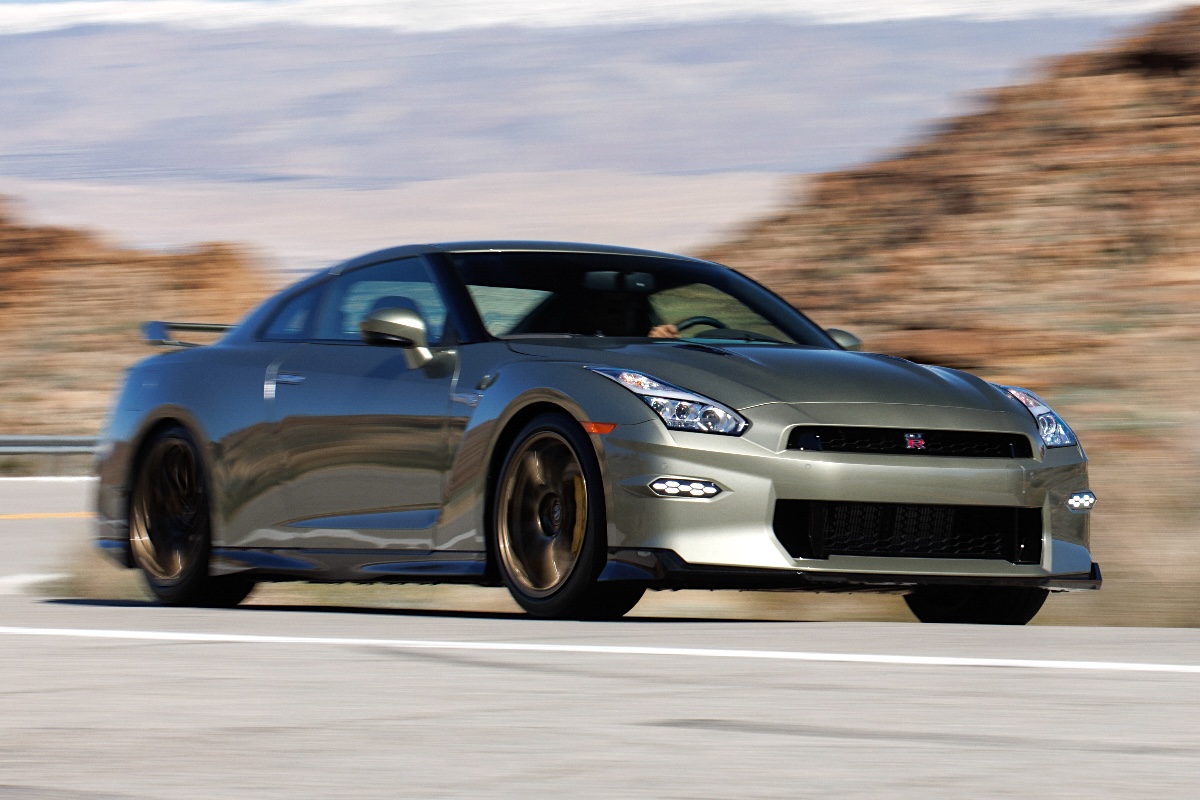
Nissan GT-R First Generation (2009-2024)
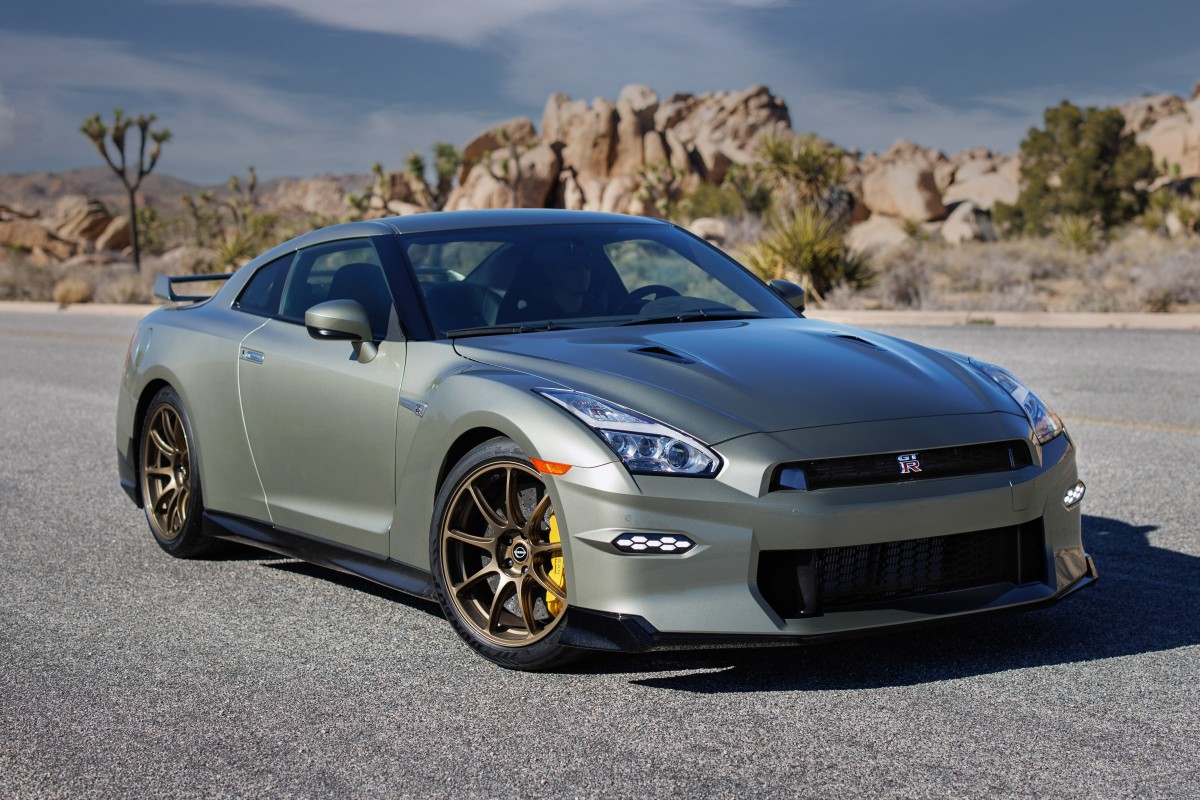
The GT-R is the king of all Nissan models, developed entirely on its own chassis by a dedicated group of racing engineers. There is no other Nissan, not even the Z, that approaches its stupendous levels of technology and performance. Compared to the Japanese-market Skyline GT-R that it replaced, the 2009 GT-R was massive in both weight and body size. It is a large coupe with wide, swelling fenders, a long hood, a large trunk that can fit two golf bags, while its kinked roofline leaves just enough space for two small people in the back. It weighed around 3,900 pounds and utilized a twin-turbo 3.8-liter V6, all-wheel drive, and a six-speed dual-clutch automatic transmission.
Nothing, however, was conventional about these parts. The V6 made 480 horsepower and 434 pound-feet of torque, though most enthusiasts agree this was purposely understated. The engine used plasma coating for the cylinder walls and the all-wheel drive (AWD) system (known as ATTESA-ETS) could mechanically vary torque on either side of the rear axle—something Porsche has still never done on the 911. With adaptive dampers, one of the most brutal launch controls ever invented, and superb aerodynamics, the GT-R was impeccable on the track. The performance and handling were a match for any number of other supercars that retailed for double, triple, or quadruple its $70,000 price.
Driven like a road car, the GT-R was a fine grand tourer, capable of transporting two adults in complete comfort over long distances. The interior, while austere, featured digital graphics designed by Polyphony Digital, the video game producer behind the Gran Turismo series (which, in turn, helped the GT-R gain popularity in the U.S. for more than a decade before it arrived).
Fuel economy was adequate, too, with EPA-estimated ratings of 15 mpg city, 21 mpg highway, and 18 mpg combined. Leather upholstery and all the usual power amenities were standard. Safety features included dual front, side, and curtain airbags along with seat belt pre-tensioners and load limiters for driver and passenger. Stability control, a GT-R hallmark in its precise operation, was standard. Two trims, GT-R and GT-R Premium, were available. The Premium added heated front seats, an 11-speaker Bose stereo, and black wheels. A standalone Cold Weather Package swapped the Bridgestone summer tires for all-season Dunlop tires and a revised antifreeze ratio.
For 2010, following a class-action lawsuit, Nissan updated the transmission control module. The engine received a 5-hp increase, while the brake lines for the 15-inch front discs were more rigid. For 2011, the base model was dropped. Automatic headlights, speed-sensitive wipers, Bluetooth, DVD, XM traffic and weather for the navigation, and a USB/iPod port were added, along with tweaks to the suspension.
In the 2012 model year, power output was boosted to 530 hp and torque increased to 448 lb-ft, thanks to changes in boost pressure, valve timing, and the air intake diameter. Larger grille slots gave improved cooling and efficiency, which also improved fuel economy to 16 mpg city and 23 mpg highway. The xenon headlights were swapped for LEDs. Carbon-fiber trim was added to the cabin, while a Black Edition trim featured red and black Recaro seats. More engine tuning led to a rating of 545 hp and 463 lb-ft for the 2013 model year. A rear-view camera was newly standard.
A Track Edition, limited to 150 cars, was available for 2014. It featured only two seats, a retuned suspension, improved throttle response at high revs, and special aero parts such as a front spoiler with carbon ducting. Red semi-aniline leather was a new option as part of the Premium Interior Package. The GT-R NISMO debuted for 2015 with 600 hp, an aggressive body kit, and a price of about $170,000. Many other suspension and chassis upgrades were part of the deal. A 45th Anniversary Gold Edition came out for 2016 with Silica Brass paint inspired by the 2001 Skyline GT-R M-Spec.
An exterior refresh for 2017 brought Nissan's "V-motion" grille, a new hood, a new front bumper, and a new rear bumper that included side vents. The engine now made 565 hp and 467 lb-ft of torque. A new base trim, GT-R Pure, was added for 2018 along with Apple CarPlay. There were no major changes until 2020, when the Pure trim was dropped and a 50th Anniversary Edition was launched with three two-tone paint options and a gray interior. The NISMO brought new turbos, lower weight, and other minor performance improvements.
There were no changes until 2024, the final model year, which introduced the T-spec trim with carbon ceramic brakes from the NISMO, wider front fenders, gold Rays wheels, two classic GT-R paint options, and Mori Green leather. The bumper and grille also received another refresh with new shapes and auxiliary lighting.
Base prices for the 2024 GT-R ranged from $120,000 to more than $220,000. CarGurus pricing data shows that the GT-R is one of the few cars that is barely affected by depreciation. Prices for the earliest models, even with almost 100,000 miles on the odometer, start at about $70,000, while late, low-mileage cars go for well over $200,000.
Related Topics