Traveling with a pet feels natural. For most owners, the dog comes along without a second thought — a quick trip to the trail, a run to the vet, a long weekend somewhere new. But the inside of a moving vehicle introduces risks that everyday life doesn't, and a lot of pet owners underestimate them.
Motion, impact force, temperature, and stress all behave differently inside a car. An unrestrained dog in a 30mph collision doesn't just get hurt — it becomes a projectile that can injure everyone else in the vehicle. A parked car on a mild day can hit dangerous temperatures in under fifteen minutes. And a cat that slips under the brake pedal doesn't need to be aggressive to cause an accident.
None of this means traveling with a pet is difficult or dangerous. It means it's worth doing properly. Here's everything you need to know.
- Why Pet Car Safety Is Non-Negotiable
- How to Prepare Before You Start the Engine
- What to Do During the Drive
- Managing Temperature Risks: The Danger Most Owners Underestimate
- How to Handle Travel Anxiety
- Preparing for Emergencies on the Road
- When You Plan Ahead, Everyone Travels Safer
- Additional Resources
Pet Car Safety: Quick Hits
- An unrestrained pet in a crash can become a projectile — and can seriously injure you as well as itself.
- The front seat is off-limits: airbags are designed for adult humans, not animals.
- Not all restraints are equal. Look for crash-tested harnesses or hard-sided crates rated for vehicle use.
- Never leave a pet in a parked car. Interior temperatures can become dangerous within minutes, even on mild days.
- Distraction is a real risk: a dog in your lap or a cat under the pedals can cause an accident just as easily as a phone.
- Anxiety is manageable — gradual exposure, familiar items, and positive reinforcement all help.
- Pack for emergencies. Know where the nearest vet is before you need one.
Why Pet Car Safety Is Non-Negotiable
Most drivers who think about road safety don't think about their pet as part of the equation. That's the first problem — because in a collision or even a hard stop, your pet is subject to the same physics as everything else in the vehicle.
What Happens in a Sudden Stop or Collision
An unrestrained pet continues traveling at whatever speed the vehicle was doing until something stops it. At moderate speeds, that means the dashboard, the seat in front, a window, or another passenger. The forces involved can cause broken bones, head trauma, internal injuries, and spinal damage — and that's at relatively low speeds.
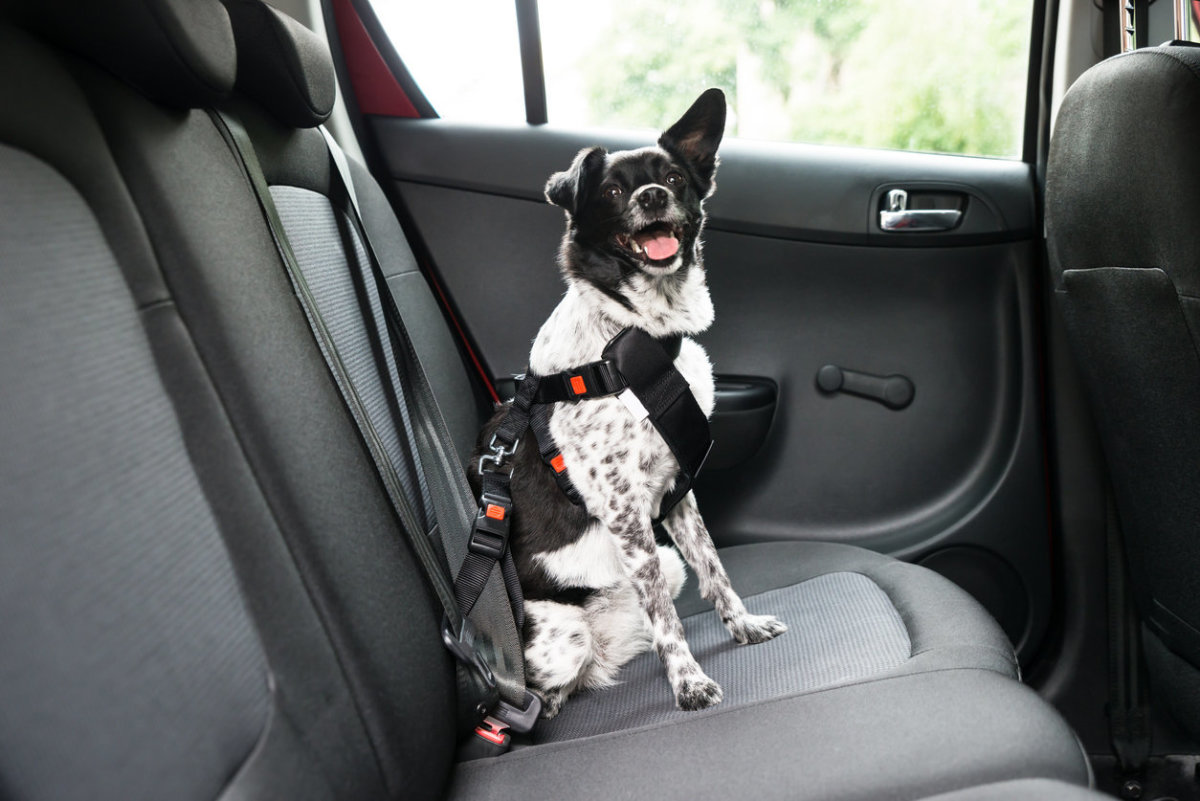
A crash-tested harness or properly secured crate distributes impact force more safely and prevents uncontrolled movement. It is one of the simplest precautions a pet owner can take, and one of the most consequential.

How Loose Pets Distract Drivers
A pet doesn't need to be aggressive or anxious to create a distraction. A dog settling into the front seat, a cat dropping onto the floor, or a sudden bark at a passing cyclist can divide attention at exactly the wrong moment.
Common distraction risks include blocking mirrors or sightlines, interfering with the steering wheel or pedals, jumping into the driver's lap, and triggering sudden braking or swerving. Securing a pet in the back seat or cargo area removes most of this unpredictability before it becomes a problem.
Why the Front Seat Is Dangerous for Pets
Airbags deploy with enough force to seriously injure or kill a pet. They are designed for adult human bodies — a dog or cat in the front seat during a collision is in exactly the wrong place. Always secure pets in the rear of the vehicle. The back seat works well for smaller animals in harnesses or carriers; the cargo area of a station wagon or SUV is ideal for larger dogs with a fitted barrier.
How to Prepare Before You Start the Engine
The decisions you make before a trip matter as much as anything you do during it. Getting the right restraint, helping your pet get comfortable with the car, and packing sensibly will make every journey — short or long — significantly safer and less stressful.
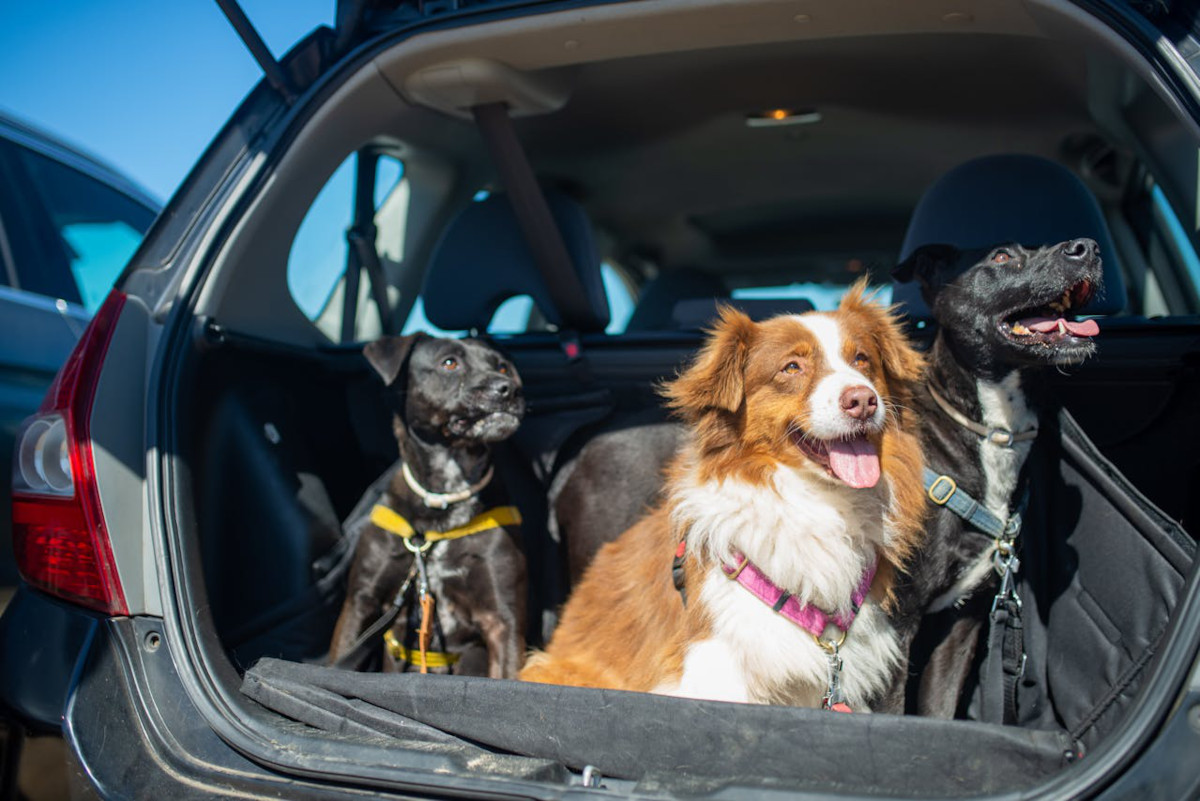
Choosing the Right Restraint System
There is a meaningful difference between a restraint that stops a pet wandering around the car and one that provides real crash protection. If safety is the goal, the equipment needs to be designed for it.
The most reliable options are crash-tested harnesses that attach directly to seatbelts, hard-sided crates secured to the vehicle with a seatbelt or anchor points, reinforced soft carriers rated for vehicle use, and vehicle barriers that separate pets from the passenger area on larger vehicles.
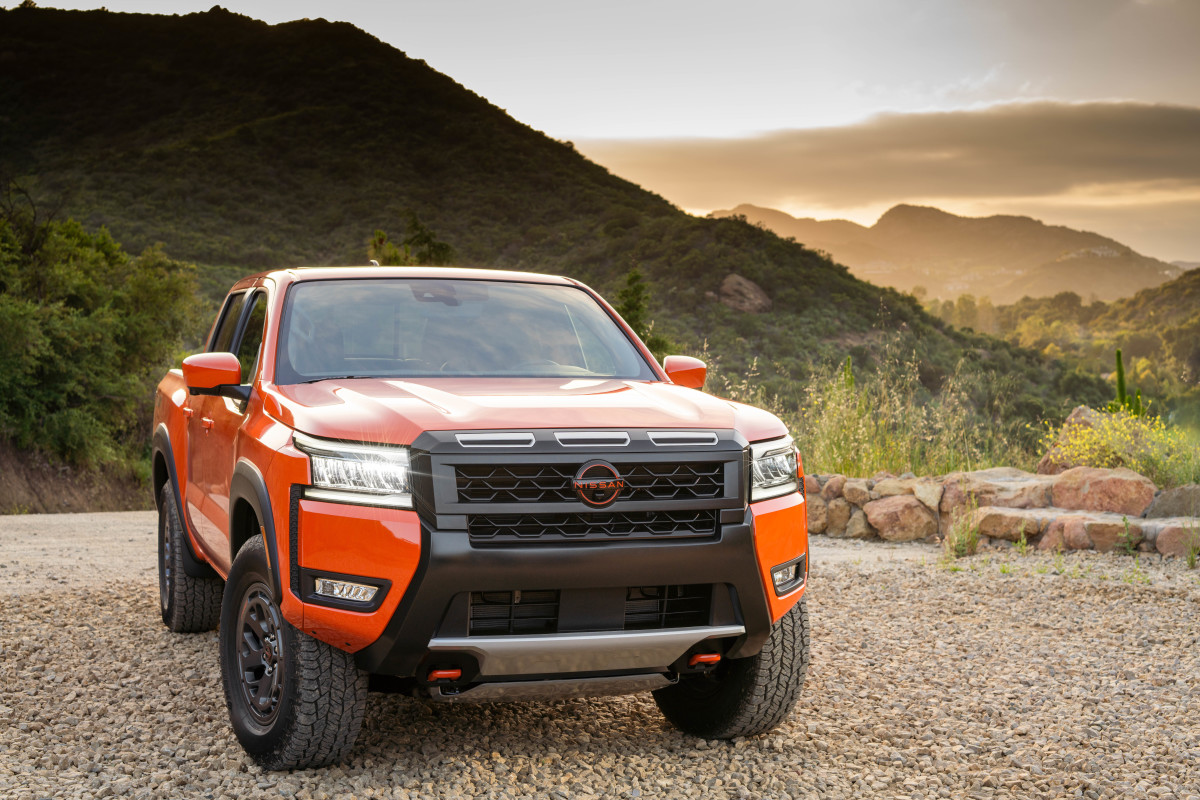
Whatever you choose, make sure it fits correctly — snug enough to prevent sliding, with no restriction on breathing — and confirm it's rated specifically for vehicle use. Improvised solutions, like clipping a standard leash to a seatbelt, offer no crash protection and can actually increase injury risk. And while the open bed of a pickup truck might look convenient, placing a pet there — loose or even tethered — is both dangerous and illegal in some states. Even convertibles can be suitable for pet travel with the right setup; the restraint system is what makes the difference, not the car.
Helping Your Pet Get Comfortable in the Car
A pet that only rides in the car for vet visits will likely associate it with stress—and an anxious animal is harder to manage on the road. Building familiarity before any significant trip pays off.
Start by letting your pet explore the parked car at their own pace. Progress to short drives with no particular destination. Pair car trips with genuinely enjoyable experiences—a favorite park, a friend's house—rather than only necessary ones. Calm praise and rewards reinforce the idea that the car is a safe place. The more predictable the experience becomes, the more settled your pet will be when the journey actually matters.
Packing a Pet Travel Kit
A basic kit takes minutes to assemble and removes a lot of potential stress from any journey. It should include fresh water and a portable bowl, a secure leash and collar or harness, waste disposal supplies, familiar bedding or a favorite toy, any required medications, vaccination and microchip documentation, and cleaning supplies for accidents. For longer trips, add a basic pet first aid kit—gauze, antiseptic wipes, and emergency vet contacts—and a recent photo of your pet in case you're ever separated.

What to Do During the Drive
Once you're moving, consistency matters. Short trips invite a relaxed approach—the pet is calm, nothing seems wrong, the restraint feels like unnecessary fuss. That reasoning is how most preventable incidents happen. Risk doesn't scale down with journey length.
Keep Your Pet Secured for the Entire Journey
A restraint only works if it stays in place. Check that harnesses haven't shifted position, confirm crates are still secured, and re-fasten everything properly after rest stops—not loosely, not 'good enough.' The safest habit is to treat every journey the same way, regardless of how short or routine it seems.
Maintain a Controlled Interior Environment
Pets respond to sound, movement, and airflow, and a chaotic interior increases anxiety and unpredictability. Keep your pet in the back seat or cargo area rather than allowing them to roam. Avoid letting them lean out of windows—it exposes them to flying debris and creates sudden risks if you have to brake hard. Keep music at a reasonable level and avoid sharp, abrupt changes that might startle an anxious animal.
Take Structured Breaks on Longer Trips
On any drive lasting more than a couple of hours, plan stops every two to three hours. Offer fresh water, allow a leashed bathroom break, and check the restraint system before getting back on the road. Keep your pet secured during fuel stops—a busy forecourt is not the place for an animal to be loose. Regular, predictable breaks reduce stress and keep the journey manageable for everyone.

Managing Temperature Risks: The Danger Most Owners Underestimate
Vehicles heat and cool faster than most people realize, and the consequences for a pet left inside can be severe. This is one of the most preventable risks in pet travel, and one of the most common causes of serious harm.
Protecting Your Pet From Heat
Never leave a pet alone in a parked car. The guidance here is not 'be careful on hot days'—it is never, regardless of conditions. Interior temperatures can rise to dangerous levels within minutes even on mild, overcast days, and cracked windows make only a marginal difference.
Before loading your pet, pre-cool the vehicle. Provide fresh water regularly throughout the journey. If you notice heavy panting, excessive drooling, vomiting, weakness, or disorientation—the warning signs of heat distress—get your pet out of the heat immediately and seek veterinary care. Heatstroke in animals is a medical emergency.
Further reading: Pet Safety in Vehicles | Travel Safely With Your Pet
Cold Weather Considerations
Cold presents its own risks, particularly for small, elderly, or short-haired animals. Warm the car before your pet gets in. Provide insulating bedding. Avoid extended stops without heating. Watch for shivering or lethargy, which can indicate that the temperature has dropped below your pet's comfort threshold. Stable interior temperature is the goal in all seasons, not just summer.
How to Handle Travel Anxiety
Even a well-secured, well-prepared pet can find car travel stressful. Recognising the signs early—and knowing how to respond—keeps anxiety from escalating into something harder to manage.
Signs Your Pet Is Stressed
Persistent panting, whining or barking, trembling, excessive drooling, restlessness, and attempts to escape a harness or carrier are all indicators that your pet is not coping well. These behaviors aren't just uncomfortable for the animal, they can create distraction and unpredictability that affects driving safety too.
Ways to Reduce Anxiety
Familiar items help, such as bedding or a toy that smells of home provides comfort in an unfamiliar environment. A calm, even tone while driving signals to your pet that there is nothing to worry about. Gradually increasing the duration of car trips over time, rather than jumping straight to long journeys, allows anxious animals to build positive associations at their own pace.
Avoid overstimulating your pet before departure. If anxiety is persistent or severe, a conversation with your veterinarian is worth having—there are effective options that go beyond behavioral training.
Preparing for Emergencies on the Road
Careful preparation reduces risk significantly, but it doesn't eliminate it. Knowing what to do when something goes wrong is the final piece of a well-planned trip.
Before any long journey, assemble an emergency kit that includes basic pet first aid supplies (gauze, antiseptic wipes, a digital thermometer), emergency veterinary contact numbers, a recent photo of your pet, a backup leash and collar, and copies of medical and vaccination records. If you're traveling through unfamiliar areas, identify veterinary clinics along your route before you leave—not after you need one.
When You Plan Ahead, Everyone Travels Safer
A properly restrained pet is calmer. A calmer pet is less distracting. A less distracted driver is safer. These things follow from each other, and they all start with the same decision: to treat pet car safety as a priority.
The steps in this guide are not complicated, they just require a modest investment of time and equipment upfront, and a consistent habit of applying them on every trip.
Looking for a car that works well for you and your pet? Browse listings on CarGurus—search by body style and features to find the right fit, at a fair price.
Additional Resources
Pet travel safety
Travel Safely With Your Pet
Traveling With Pets
10 Tips to Keep Your Pet Safe During Travel
Tips for Traveling with Your Pet
Pet Safety in Vehicles
Carrying Pets Safely
Unrestrained Pets Create Distractions
Travel Training for You and Your Pets
Tips & Tricks for Traveling With Your Pets
First aid and emergencies
How to Make a Pet First Aid Kit (and Actually Use It)
First Aid Tips for Pet Parents
How to Perform Pet CPR
Emergency Preparedness for Pets and Animals
Anxiety and behavior
Anxiety in Dogs: Signs, Symptoms, Treatment
How to Relieve Dog Car Anxiety and Fear of Car Rides