Planning a family road trip involves a lot of moving parts, but choosing the right vehicle can make the difference between a stressful slog and a memorable adventure. The best family cars for road trips are designed to prioritize passenger comfort, ample cargo space, and everyday usability over long distances. Whether you are navigating interstate highways or winding scenic routes, having a cabin that keeps everyone relaxed, entertained, and comfortable is essential for a successful journey.
Today’s market offers a variety of compelling options tailored to different travel needs, from traditional minivans with unbeatable interior flexibility to high-tech electric vehicles that make charging stops predictable and convenient. In this guide, we highlight standout models that excel at eating up the miles, including spacious haulers like the Chrysler Pacifica and Cadillac Escalade ESV, as well as highly efficient alternatives like the Toyota Sienna and Hyundai Ioniq 5. By focusing on the features that matter most—like quiet rides, intuitive technology, and generous legroom—you can find a vehicle that perfectly suits your family's next getaway.
CarGurus expert rating: 7.5 out of 10
CarGurus user rating: 4.7 out of 5
Percentage of Good and Great Deals available on CarGurus: 35.8%
Overall CarGurus rating: 4.5 out of 5
Pros
Cons
Great ride quality
Advanced safety features are not standard
Spacious
Poor fuel economy
Impressive technology
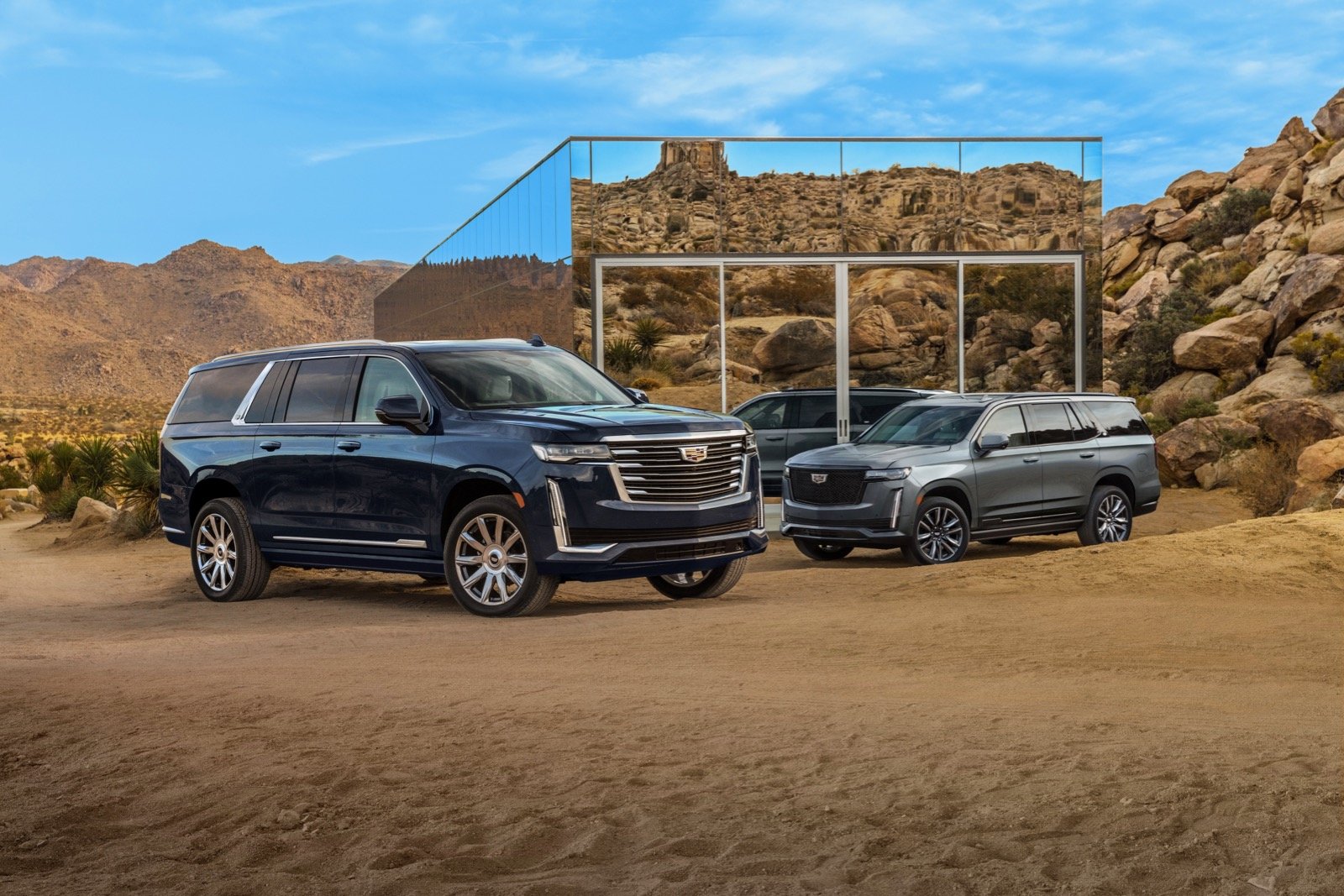
For family road trips where space and comfort matter most, the Escalade ESV’s extended body pays off in an easy-to-use way: you can keep all three rows in place and still have real luggage room. Cargo space measures 42.9 cubic feet behind the third row, 81.5 cubic feet behind the second row, and a huge 126.6 cubic feet with the first row folded—handy for everything from suitcases and coolers to sports gear. Standard features like heated first- and second-row seats, tri-zone climate control, a hands-free power liftgate, and available adaptive air suspension help keep long days behind the wheel calmer for both driver and passengers, though the review notes the liftgate system can be finicky and the power-folding third row can occasionally hang up if the second row isn’t positioned just right.
The Escalade ESV is also a tech-forward road-trip machine, thanks to its dramatic curved 38-inch OLED display (three screens under one sweeping panel), lots of connectivity (wireless Apple CarPlay/Android Auto, wireless charging, and seven USB ports), and a standard 19-speaker AKG audio system with an available 36-speaker upgrade. Power comes from either a 6.2-liter V8 making 420 hp and 460 lb-ft of torque or an available 3.0-liter turbodiesel with 277 hp and 460 lb-ft of torque, paired with a 10-speed automatic; the V8 is strong, but fuel economy is still a reality check on long highway slogs. Safety tech like automatic emergency braking and park assist is standard, while higher-end assists are available, and NHTSA gives the Escalade ESV a four-star overall rating, with a lower rollover score that’s typical of large, tall SUVs.
The CarGurus Verdict:"The Cadillac Escalade isn't just a luxury family hauler. It's one of the most high-tech SUVs you can buy today. In its Escalade ESV format, the model offers buyers more cargo room but keeps passenger space nearly the same. Though it's longer and heavier, the Escalade ESV has a secret: it's actually better to drive than its little brother." - Eileen Falkenberg-Hull
CarGurus expert rating: 6.8 out of 10
CarGurus user rating: 4.4 out of 5
Percentage of Good and Great Deals available on CarGurus: 37.7%
Overall CarGurus rating: 4.5 out of 5
Pros
Cons
Stow 'n Go seating offers unmatched cargo flexibility
New front-end styling is polarizing
Confidence-inspiring V6 power
Real-world fuel economy trails EPA estimates
Good third-row legroom
Tech feels outdated
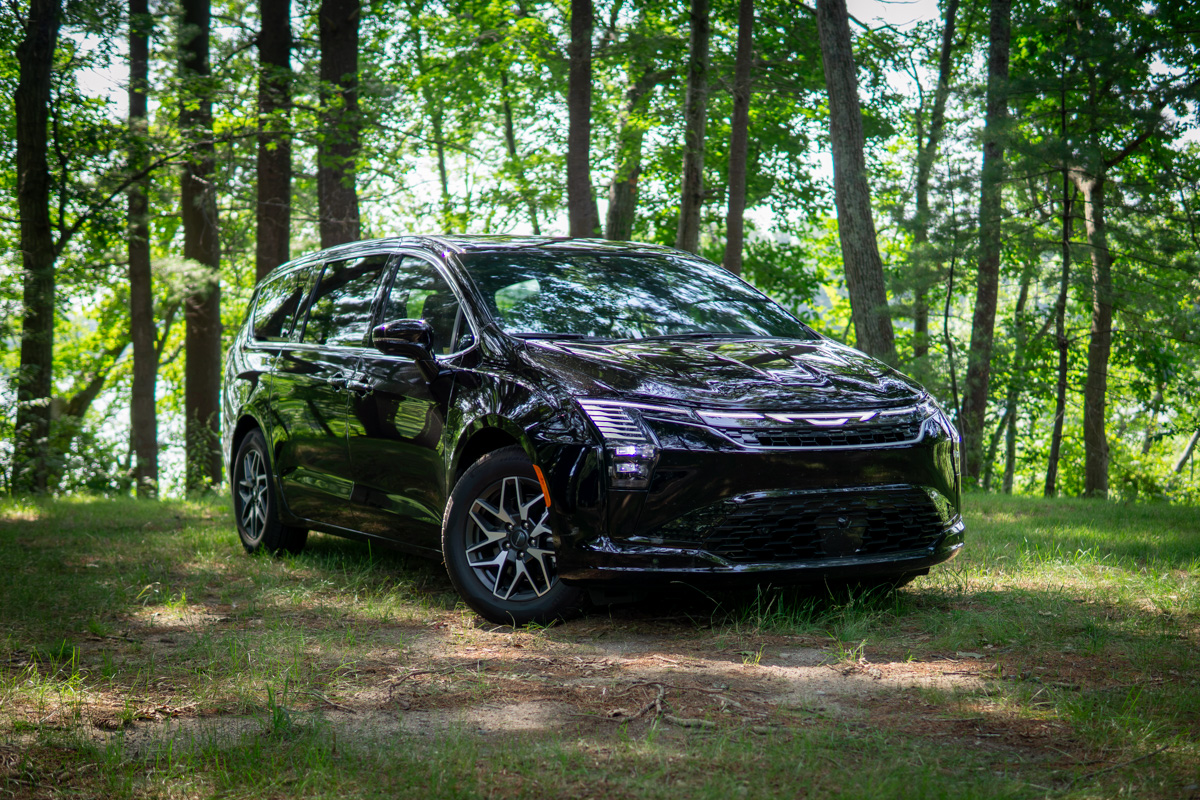
For family road trips, the Pacifica’s biggest advantage is how easily it adapts to changing passenger-and-cargo needs mid-journey. Chrysler’s Stow ’n Go seating makes it quick to switch from people-hauling to luggage-hauling without wrestling with heavy seats, and the third row has the legroom to keep bigger kids (and even adults) comfortable over long highway stretches.
A recent refresh gives the Pacifica a new face, though the look may not be for everyone, and the minivan’s core strengths and weak spots carry over. The V6 provides confident power for merging and passing with a full load, but shoppers planning long interstate days should keep in mind that real-world fuel economy can fall short of EPA estimates. The tech also feels dated compared with newer rivals, which is worth considering if you rely on a modern interface for navigation, media, and keeping everyone connected on the go.
The CarGurus Verdict:"A lackluster refresh gives the Chrysler Pacifica a new face, but the minivan’s strengths and weaknesses remain unchanged." - Matt Smith
CarGurus expert rating: 6.3 out of 10
CarGurus user rating: 4.6 out of 5
Percentage of Good and Great Deals available on CarGurus: 33.7%
Overall CarGurus rating: 4.5 out of 5
Pros
Cons
Enjoyable to drive
Hybrid powertrain unavailable
Comfortable seats
Outdated technology
Plenty of cargo space
Poor value for money
For road trips, the Honda Odyssey still nails the minivan basics: space, comfort, and easy miles. It seats up to eight and offers up to 140.7 cubic feet of cargo room, and the second-row Magic Slide setup is genuinely useful for family travel—whether you want a pass-through to the third row, easier reach to a rear-facing car seat, or a center “jump” seat when you need maximum people capacity. Up front, the Odyssey’s controls are refreshingly straightforward, with lots of physical knobs and buttons that are easy to operate without taking your eyes off the road.
On the highway, the Odyssey’s 3.5-liter V6 (280 hp, 262 lb-ft of torque) and 10-speed automatic make merging and passing feel effortless, and its ride/handling balance is unusually natural for a family hauler. EPA fuel economy is 22 mpg combined, though there’s no hybrid option and no AWD for families who prioritize efficiency or all-weather traction. Tech updates for 2025 add wireless Apple CarPlay/Android Auto and more USB-C charging, but the infotainment still feels dated, and the new Fire TV rear entertainment system can be more frustrating than helpful if you don’t have the right cable or setup. Safety equipment is strong on paper thanks to standard Honda Sensing, but shoppers should note the Odyssey’s “Poor” result in a newer IIHS crash-test evaluation.
The CarGurus Verdict:"The 2025 Odyssey doesn’t offer a hybrid powertrain or an all-wheel-drive (AWD) option. The updated tech merely meets minimum standards and expectations. And in a new crash-test evaluation, Honda’s minivan earns a rare low rating. Certainly, the Odyssey remains comfortable, exceptionally practical, and enjoyable to drive. But it needs a redesign, and soon." - Christian Wardlaw
CarGurus expert rating: 8 out of 10
CarGurus user rating: 4.9 out of 5
Percentage of Good and Great Deals available on CarGurus: 38.5%
Overall CarGurus rating: 4.5 out of 5
Pros
Cons
Appealing styling
Less cargo space than gasoline crossovers
Easy-to-use technology
Extra-fast charging
For family road trips, the Hyundai Ioniq 5 hits a sweet spot between roomy seating and easy everyday usability. The cabin is spacious up front, and the second row has 39.4 inches of legroom, which helps when you’re loading up kids (or grown-ups) for long highway stints. Cargo room is 26.3 cubic feet behind the rear seats and 58.5 cubic feet with the second row folded, plus a small 0.85-cubic-foot front trunk for items you’d rather keep separate. The tradeoff is that it trails many gas-powered compact crossovers in max cargo volume, and the steep rear hatch angle can limit bulky gear.
It’s also a road-trip-friendly EV because charging stops can be short and predictable. With its 800-volt architecture, the Ioniq 5 can charge from 10% to 80% in about 20 minutes on a fast charger (up to 250 kW) with a CCS adapter, and it includes a NACS adapter for Tesla Superchargers, though those typically top out at 150 kW (about 30 minutes for the same 10%–80% window on the larger battery). Power ranges from a 168-hp single-motor setup in the base Standard Range trim to a 320-hp, 446-lb-ft dual-motor AWD system that’s quick and confidence-inspiring for passing and merging. Standard wireless Apple CarPlay and Android Auto, available head-up display, and an easy-to-navigate infotainment layout help reduce day-to-day friction, while a long list of standard driver assists—including adaptive cruise control and Highway Driving Assist—adds peace of mind when the miles pile up.
The CarGurus Verdict:"Five years into its run, the Ioniq 5 is still the electric vehicle we would recommend to most EV buyers. A drive around Hyundai’s factory in Savannah, Georgia, only reinforced our position." - Kirk Bell
CarGurus expert rating: 7.3 out of 10
CarGurus user rating: 4.6 out of 5
Percentage of Good and Great Deals available on CarGurus: 35.9%
Overall CarGurus rating: 4.5 out of 5
Pros
Cons
Ample storage cubbies and compartments
Polarizing design
Great safety ratings
Poor fuel economy
Excellent value
Cramped third row
For family road trips, the 2026 Hyundai Santa Fe leans hard into everyday usability, with a cabin layout that prioritizes real storage where you need it most—cubbies, compartments, and places to stash the small stuff that accumulates on long drives. That practical, function-first approach pairs well with the Santa Fe’s strong safety reputation, which matters when you’re logging highway miles with kids or friends on board.
The tradeoffs are worth weighing for travel duty: the Santa Fe’s styling can be polarizing, and its fuel economy may be a concern if you’re planning frequent, long-distance vacations. Also, while the available third row can add flexibility in a pinch, it’s not the best fit for adults on extended drives—making this a better pick for families who mostly use two rows and want the occasional extra seat for shorter hops.
The CarGurus Verdict:"Form follows function with the 2026 Hyundai Santa Fe." - Christian Wardlaw
CarGurus expert rating: 6.3 out of 10
CarGurus user rating: 4.5 out of 5
Percentage of Good and Great Deals available on CarGurus: 31.6%
Overall CarGurus rating: 4.4 out of 5
Pros
Cons
Great ride quality
Irritating transmission
Quiet cabin
Poor real-world fuel economy
Easy-to-use technology
Less outright load space than rivals
For a family road-trip vehicle, the Sienna leans hard into the stuff that matters mile after mile: a quiet cabin, a smooth “marshmallow on wheels” ride, and simple day-to-day usability. Every Sienna comes with a hybrid powertrain (245 hp) and a CVT; around town the electric assist helps it feel responsive enough with a few passengers onboard, and on the highway it settles into an impressively hushed cruise. Put your foot down to merge or pass, though, and the CVT’s droning can get old fast. If your road trips include winter weather or gravel access roads to cabins and campgrounds, the available AWD system is a practical bonus, and the Woodland Edition’s extra half-inch of ground clearance adds a little cushion for light off-pavement duty.
Inside, there’s real minivan advantage for long drives: available second-row captain’s chairs that slide and recline (with ottoman-style leg rests on Platinum), an adult-friendly third row, and easy in-and-out access thanks to sliding doors. Cargo space is useful for vacation packing, with 33.5 cubic feet behind the third row and 75.2 cubic feet behind the second row (maximum cargo capacity is 101 cubic feet), and you don’t have to remove second-row seats to start using that room—handy when you’re juggling people and luggage in one stop. Tech is another road-trip win in upper trims, including 12.3-inch displays, an excellent “Hey, Toyota” voice assistant with the right subscriptions active, available rear-seat entertainment, and a digital rearview mirror that can help when the cabin is loaded to the roof. On safety, the Sienna’s Toyota Safety Sense 2.0 suite generally behaves naturally, and there’s new rear-seat reminder tech for 2025, though it’s worth noting the NHTSA frontal-impact rating includes a three-star driver-protection score.
The CarGurus Verdict:"Saving money on gas, making life simpler, and the option of AWD ruggedness are all good things in a minivan, and they make the Toyota Sienna worth considering if you’re also looking at cars such as the Chrysler Pacifica, Honda Odyssey, and Kia Carnival." - Christian Wardlaw
CarGurus expert rating: 8.3 out of 10
CarGurus user rating: out of 5
Percentage of Good and Great Deals available on CarGurus: 32.4%
Overall CarGurus rating: 3.8 out of 5
Pros
Cons
Excellent fuel economy
Not as spacious as segment leaders
Powerful engine
Engine sounds unrefined at times
Comfortable interior
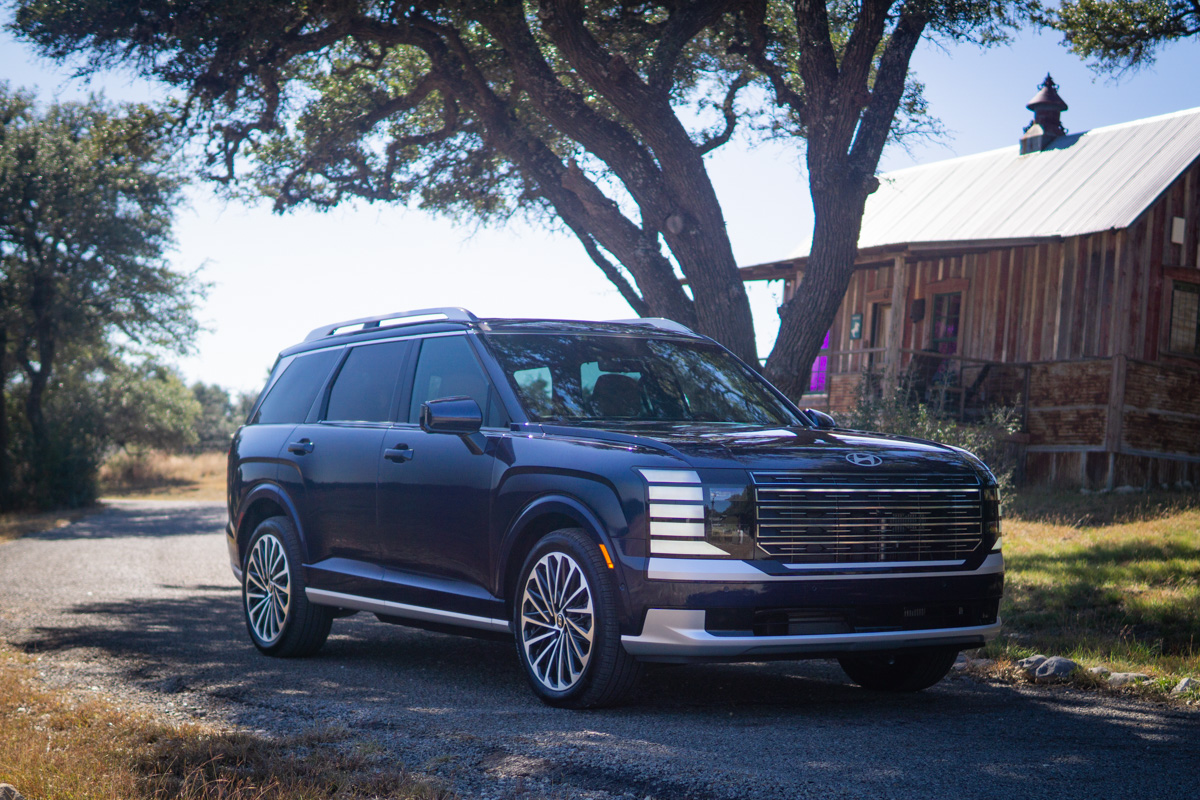
For road-trip duty, the 2026 Hyundai Palisade Hybrid fixes one of the biggest pain points of three-row family SUVs: fuel stops. Hyundai says this hybrid can travel more than 600 miles on a tank, and its combination of strong efficiency and a quiet cabin makes long highway slogs feel easier on both driver and passengers. Power is plentiful for merging and passing thanks to a 329-hp hybrid setup with 339 lb-ft of torque, though the turbo four-cylinder can sound a bit unrefined when you lean on it hard.
Inside, the Palisade Hybrid leans into family-friendly comfort and convenience. Every trim gets three-zone climate control with second-row controls and six 100-watt USB-C outlets (two per row), which is exactly the kind of everyday usability that matters when kids (and adults) are trying to keep devices charged on long drives. Cargo space tops out at 86.7 cubic feet, and while it’s not the roomiest in the class, the cabin is thoughtfully laid out with useful cubbies, plus standard 12.3-inch screens with wireless Apple CarPlay and Android Auto; higher trims add upgrades like a Bose audio system and even an available built-in dashcam for extra peace of mind on the road.
The CarGurus Verdict:"Simply put, Hyundai currently sells the best mass-market three-row crossover SUV in the United States. The 2026 Hyundai Palisade looks good, drives well, and feels special–and it will keep you away from the gas station, too." -Matt Smith
CarGurus expert rating: 6.8 out of 10
CarGurus user rating: out of 5
Percentage of Good and Great Deals available on CarGurus: 37.3%
Overall CarGurus rating: 3.7 out of 5
Pros
Cons
Comfortable
Polarizing design
Plenty of cargo space
Flimsy cargo floor covering
Excellent value for money
The 2027 Kia Telluride Hybrid makes its road-trip case with one extraordinary number: over 600 miles of range on a single tank, thanks to a hybrid powertrain that pairs a turbocharged 2.5-liter four-cylinder with electric motors for 329 horsepower and an EPA-estimated 35 mpg combined in front-drive form. That's the kind of range that turns a two-stop road trip into a one-stop one, and the transition between gas and electric power is so smooth as to be essentially imperceptible — no drama, no noise, just quiet, effortless progress. The cabin itself is a genuine long-haul asset: Kia's acoustic engineering keeps wind and road noise impressively subdued, and the panoramic sunroof floods all three rows with light on the kind of clear-sky driving days that make road trips worth taking.
For passengers, the Telluride Hybrid is genuinely well thought-out for extended time on the road. The SX Prestige trim's optional Executive package adds power-adjustable second-row captain's chairs that CarGurus compared to domestic business-class airline seats — high praise for a family SUV. Dual wireless chargers, multiple USB-C outlets spread across all three rows, and a 14-speaker Meridian audio system mean that arguments over charging cables and aux cord privileges are largely off the table. Up to 89.3 cubic feet of cargo capacity handles luggage for a full family without resorting to a roof rack, and standard highway driving assist takes some of the fatigue out of long interstate stretches. Crash-test results were pending at time of review — worth monitoring before purchase — but as a road-trip platform, the Telluride Hybrid is as complete a package as the three-row family segment has to offer right now.
The CarGurus Verdict:"If the first-generation Telluride set the bar for value and family-friendly practicality, the second generation raises it. The latest Telluride adds a compelling hybrid option and a more upscale feel while keeping prices in check." -Matt Smith
CarGurus expert rating: 8 out of 10
CarGurus user rating: out of 5
Percentage of Good and Great Deals available on CarGurus: 35.3%
Overall CarGurus rating: 3.7 out of 5
Pros
Cons
Great handling
Potentially polarizing design
Impressive electric range
Awkward touchscreen controls
Plenty of cargo space
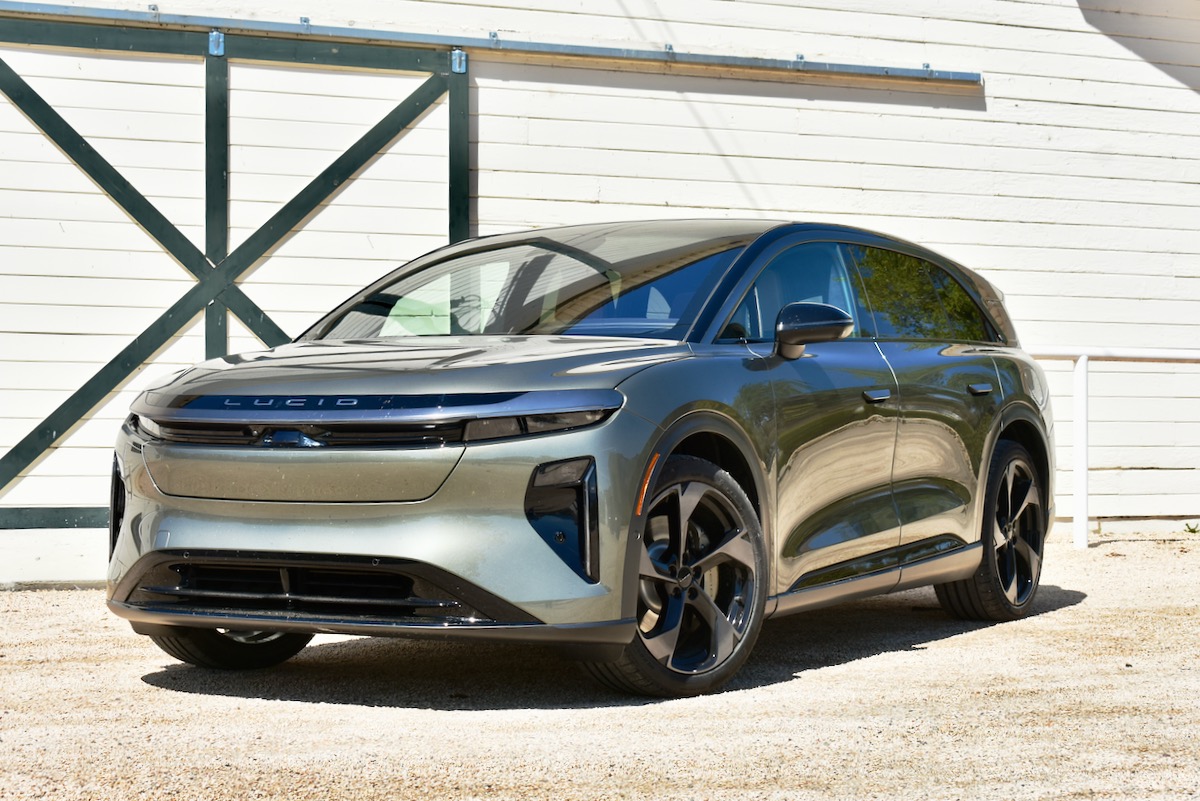
For a road-trip family EV, the Lucid Gravity leans hard into efficiency and long-distance comfort. The launch model is the Gravity Grand Touring, pairing a dual-motor AWD setup with a 123-kWh battery pack for 828 hp and 909 lb-ft of torque—strong passing power even when the cabin is full and the cargo area is loaded. More important for trip planning, Lucid estimates up to 450 miles of range in two-row models with the smallest wheel setup, and the Gravity comes standard with a NACS port for access to Tesla Superchargers; Lucid also claims it can add up to 200 miles in under 12 minutes at peak DC fast-charging speeds (where available).
Space and flexibility are where the Gravity earns its keep for road trips, offered in two-row five-seat and three-row seven-seat configurations. Three-row models have 21.3 cubic feet behind the last row, 56.2 cubic feet behind the second row, and 106.2 cubic feet with all rear seats folded, plus an 8.1-cubic-foot frunk that’s wide enough to double as a bench—handy at scenic stops. Standard driver assists include adaptive cruise control and automatic emergency braking, with available upgrades like a surround-view camera system and a hands-free highway driving feature, but the family-friendly story comes with a couple of caveats: some sightlines can be blocked by the forward roof pillars, and the mostly touchscreen-based controls can be fiddly when you’re trying to adjust settings on the move.
The CarGurus Verdict:"The Gravity takes a very different approach to the electric SUV mission brief—and it’s all the better for it." - Stephen Edelstein
What makes a car good for family road trips?
A great road-trip car prioritizes passenger comfort, ample cargo space, and a smooth ride. Features like multi-zone climate control, abundant USB charging ports, supportive seating, and advanced driver-assistance systems (like adaptive cruise control) help reduce fatigue for both the driver and passengers over long distances.
Are minivans still the best option for road trips?
For many families, yes. Minivans like the Chrysler Pacifica, Honda Odyssey, and Toyota Sienna offer unmatched interior space, easy access via sliding doors, and flexible seating configurations. They typically provide more cargo room behind the third row than comparable three-row SUVs, making them incredibly practical for hauling luggage and gear.
Can I take a family road trip in an electric vehicle (EV)?
Absolutely. Modern EVs like the Hyundai Ioniq 5 and Lucid Gravity are excellent for road trips thanks to their quiet cabins, long driving ranges, and fast-charging capabilities. With a bit of route planning to utilize DC fast chargers, you can easily incorporate charging stops into your natural rest and meal breaks.
Is a hybrid vehicle worth it for long drives?
Hybrids are highly beneficial for road trips because they significantly reduce fuel costs and the frequency of gas station stops. Vehicles like the Toyota Sienna (which is hybrid-only) and the Hyundai Palisade Hybrid offer excellent fuel economy without sacrificing the space and power needed for highway cruising.
How important is cargo space when choosing a road-trip car?
It is crucial. You need enough room not just for suitcases, but for coolers, strollers, and other travel gear without encroaching on passenger legroom. When evaluating cargo space, look at the cubic feet available behind the rearmost seats you plan to use, as this represents your actual usable luggage capacity during the trip.
What Makes CarGurus Best Cars Guides Different?
Most car-shopping websites publish lists of the best cars across a variety of categories, with recommendations generally driven by editorial expertise. Here's what makes ours different: In addition to the insights and verdicts of our team of car-testing experts, our best cars guides take into account other factors that we know matter to buyers-real owner experiences and current market value.
Our expert reviewers are among this country's most trusted automotive journalists, also writing for publications including US News and World Report, Edmunds, Digital Trends, J.D. Power, and Car & Driver. They put each car through real-world testing and create detailed reviews of performance in a range of categories, from practicality and driving manners to cost-effectiveness and safety.
We also analyze hundreds of thousands of used car listings on CarGurus.com to track which models consistently offer the highest percentage of best deals relative to how many are listed for sale. Then we factor in reviews from owners-people who actually live with these cars every day. Our proprietary Best Cars algorithm then creates a final Overall CarGurus rating combining expert scores, user reviews, and the percentage of listings that have earned the Good or Great Deal rating. This multi-pronged approach reveals not just which cars excel on paper, but which ones deliver satisfaction and value when you're ready to buy.
The CarGurus market data used in this guide was last updated in October 2026. Values were accurate at time of publication and should be used as a guide only.
Sometimes our content pages are the result of a team effort. As with all CarGurus editorial, you can expect high levels of automotive insight and expertise delivered in a style that is approachable and free from jargon.
The content above is for informational purposes only and should be independently verified. Please see our Terms of Use for more details.