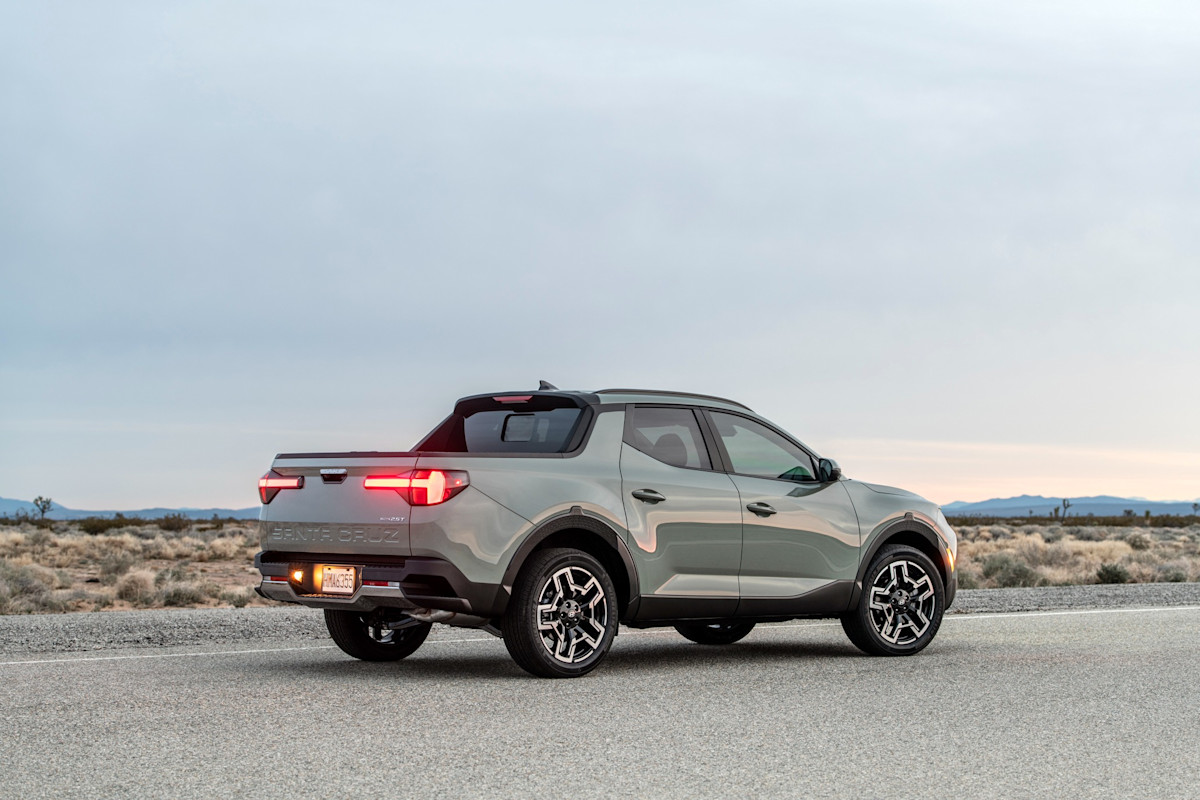
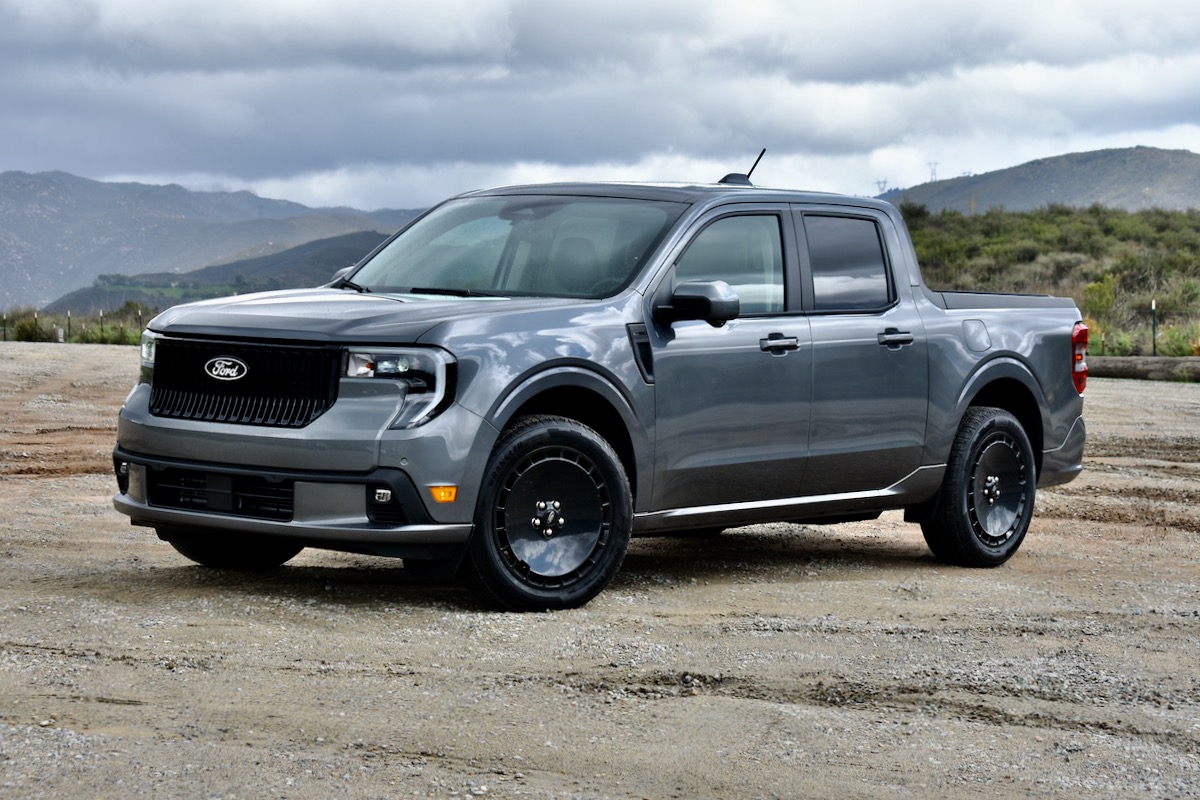
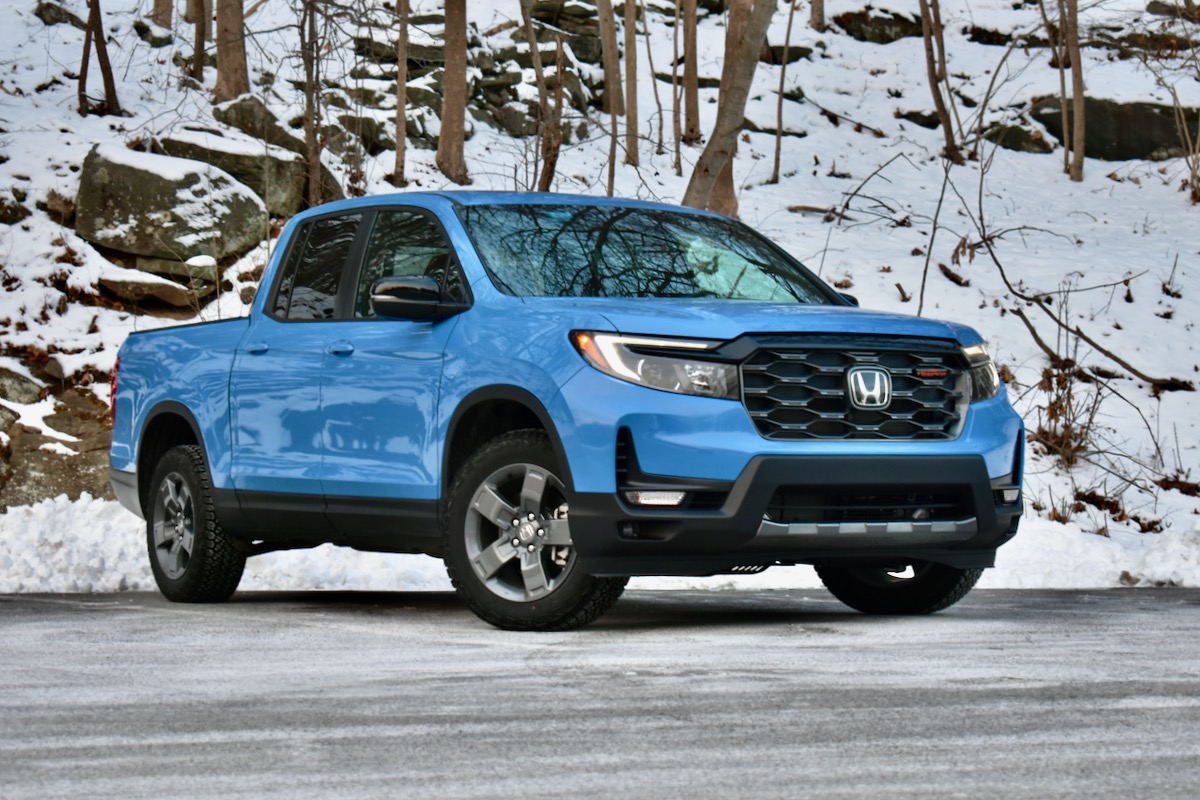
The Hyundai Santa Cruz is a small, unibody pickup truck that looks and feels more like an SUV. Its primary competitors are the Ford Maverick and the Honda Ridgeline.
2026 Hyundai Santa Cruz Pricing, Specs, and Release Date
- What’s New for the 2026 Hyundai Santa Cruz
- Design
- Powertrain
- Interior
- Technology
- Safety
- Pricing and Release Date
- Further Research

What’s New for the 2026 Hyundai Santa Cruz
The Santa Cruz carries over with minimal changes for 2026. The 2.5T model’s eight-speed dual-clutch automatic transmission is replaced with a regular eight-speed automatic, the XRT model now gets driving mode settings for mud, snow, and sand, and the dark green interior is no longer available.
Design
From the front, the Santa Cruz is easily mistaken for one of Hyundai’s crossover SUVs, with a familiar blocky grille softened by the hood's rounded edges. The crossover resemblance continues along the sides, at least until the stubby open bed in place of a closed-off cargo area. This is no accident, because the Santa Cruz shares a platform and design with the Tucson compact crossover. The Santa Cruz name, debossed on the tailgate, sits right above a chunky rear bumper with built-in textured footrests.
Powertrain
The Santa Cruz comes standard with a 2.5-liter four-cylinder engine rated at 191 horsepower and 181 pound-feet of torque. A turbocharged four-cylinder rated at 281 hp and 311 lb-ft is also available. A regular eight-speed automatic transmission is standard, intended to improve responsiveness compared to the old dual-clutch automatic. With the base engine and front-wheel drive (FWD), the Santa Cruz is rated at 25 mpg combined, and with all-wheel drive (AWD), that drops to 24 mpg. The turbo engine is available exclusively with AWD and is rated for a rather miserable 20 mpg combined.
Interior
Though the Santa Cruz shares its basic dimensions with the Tucson and the front row mimics the crossover’s comfort and spaciousness, it’s a different story in the second row. The Santa Cruz loses nearly five inches of rear legroom compared to its crossover counterpart, with the space instead allocated to the pickup bed. The Santa Cruz comes standard with cloth upholstery and a manually adjustable driver’s seat, though it doesn’t cost much to upgrade to the mid-range trim, which adds synthetic leather upholstery, a power-adjustable driver’s seat, and heated front seats. Genuine leather upholstery, a heated steering wheel, and ventilated front seats are available on higher trim levels. The pickup bed is 52.1 inches at its longest point and 53.9 inches wide. There is also hidden storage beneath the rear seats and under the pickup floor.
Technology
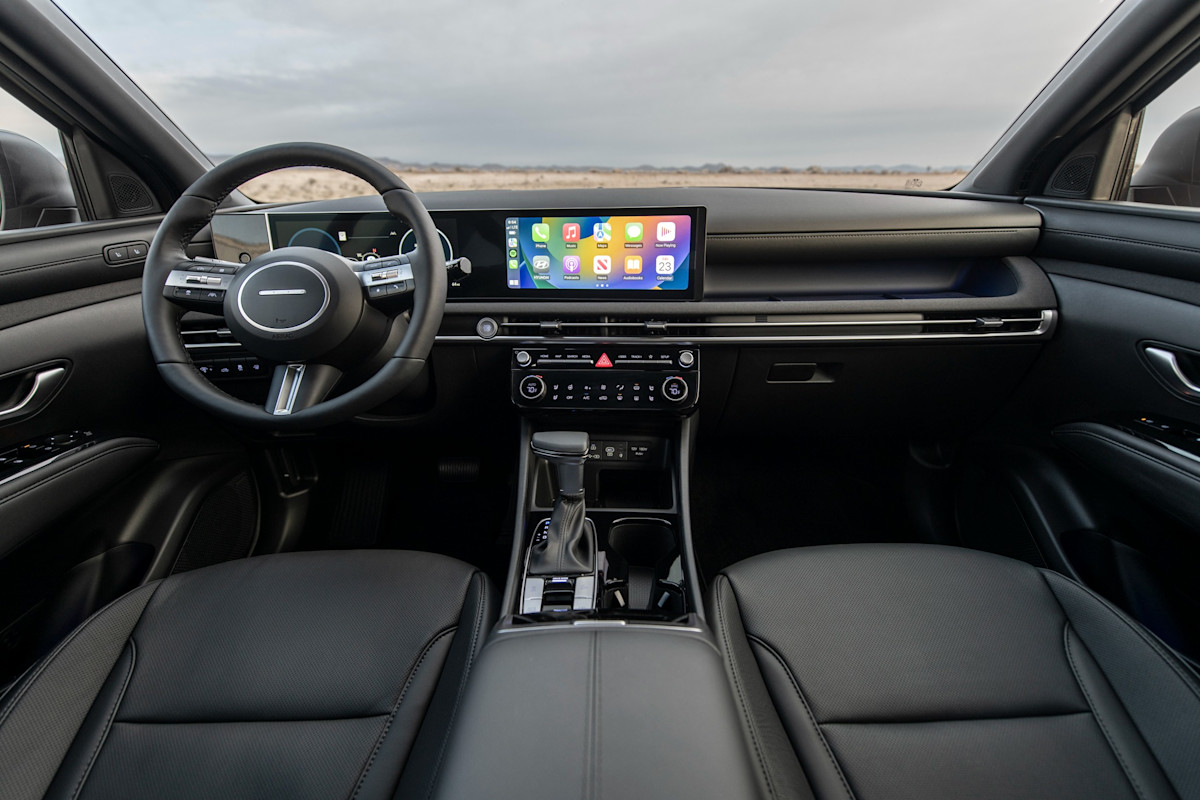
The Hyundai Santa Cruz comes with a 12.3-inch touchscreen infotainment display and a 4.2-inch digital instrument cluster. In higher trims, buyers will find a 12.3-inch digital instrument cluster alongside the touchscreen, creating a more modern-looking display layout. The interface uses some physical and capacitive controls along with the touch functions. Wireless Apple CarPlay and Android Auto are standard, and options include wireless charging and a Bose audio system.