2027 Mercedes-Benz GLC Reviews, Pricing & Specs
Pros & cons
What we like
High-quality cabin
Diverse powertrain options
Engaging-to-drive AMG 53
What to consider
Not the most practical
High prices
Some annoying touch controls
Expert review
The Mercedes-Benz GLC looks and feels more special than other compact luxury SUVs. That goes double for the new 2027 AMG GLC 53.
The GLC 53 replaces the previous pair of four-cylinder-powered AMG models. Its sweet twin-turbo inline-six engine and a menu of chassis enhancements add up to a zesty and surprisingly engaging driving experience. It also enhances the GLC’s already good looks and boasts the same high-quality cabin that strikes a balance between new-school tech and old-world luxury.
Verdict: The GLC is more expensive than rivals and certainly isn’t the most practical choice, but the value of its most appealing attributes—its interior, the way its technology works, and the way it drives—is hard to quantify on a spreadsheet.
out of 10 expert review
Look & feel
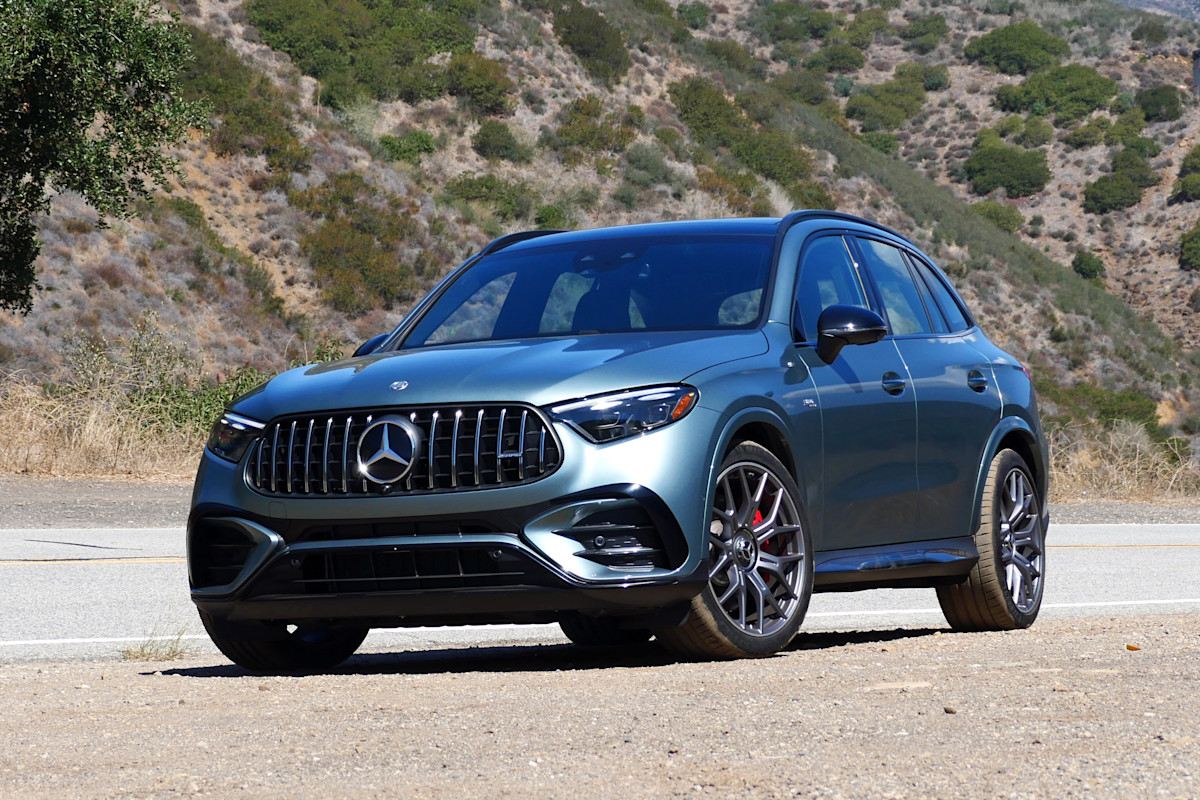
The GLC has not yet been touched by Mercedes’ most recent styling flourishes (see the revised 2027 GLE), or, to put it another way, the brand’s garish new ugly stick. The 2027 GLC is sleek, curvaceous, and, depending on the exact version, luxurious or sporty.
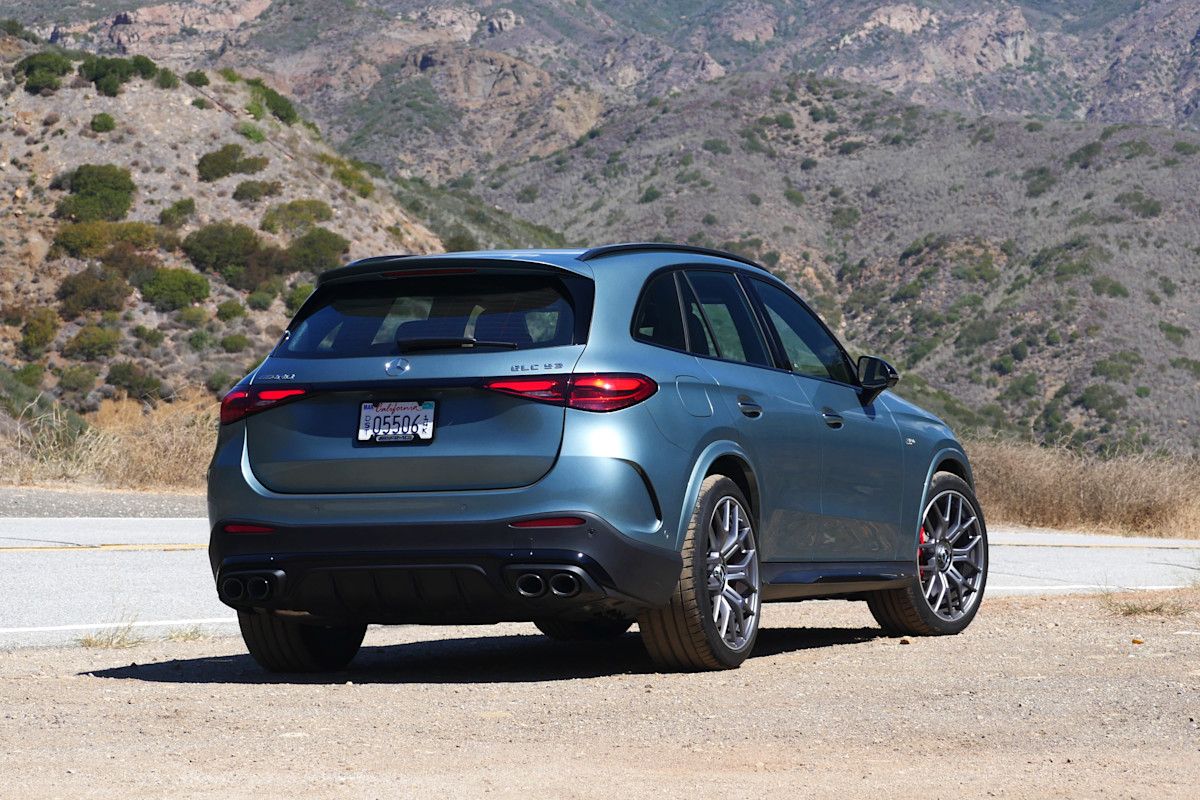
The new AMG GLC 53 photographed here falls into the latter category—it looks low, athletic and just plain cool. Besides its optional 21-inch AMG forged wheels and Night Package glossy black trim, the GLC 53 stands out from other GLC models with its grille (note the chrome-trimmed vertical slats) and rear lower bumper area that features a diffuser and four round tailpipes. Curiously, it does not include tinted rear windows, which could be why this sporty SUV looks a bit like a racy hot hatchback from afar. Not a bad thing.
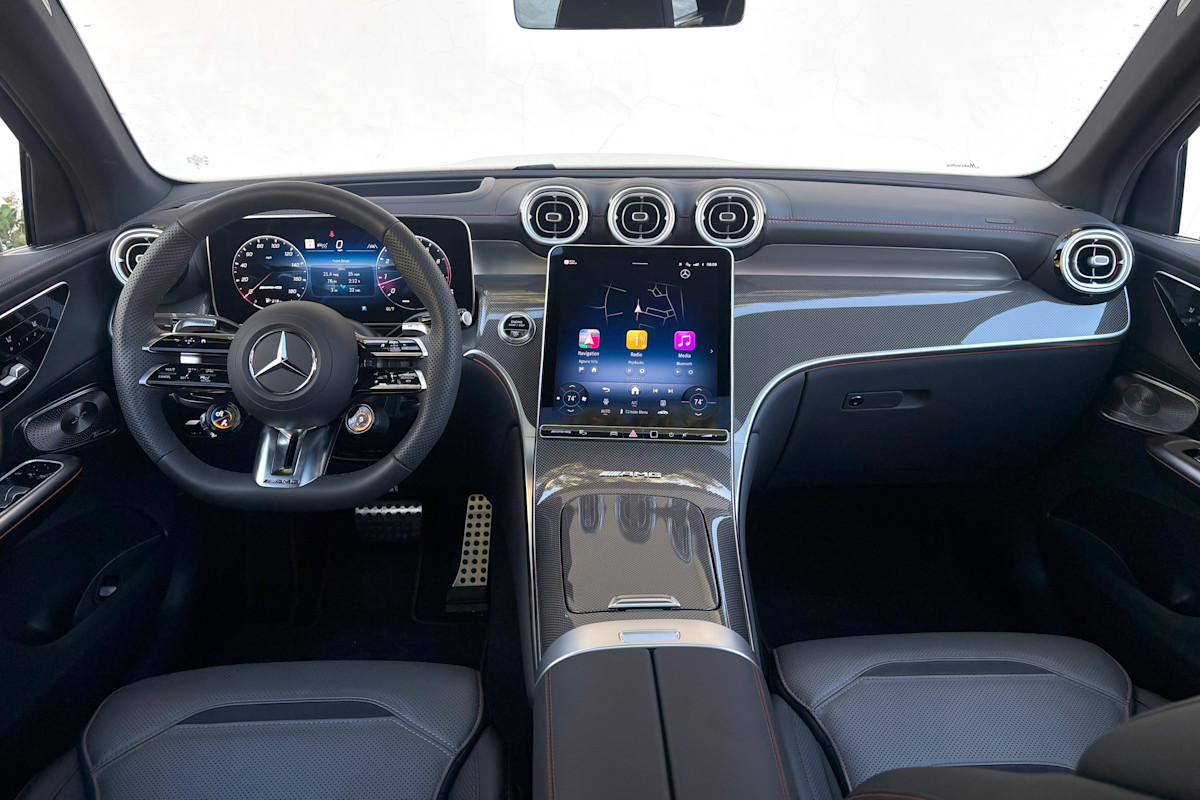
Inside, the look and feel of the GLC also differ depending on the trim level and options. Multiple leather and MB-Tex simulated leather hues go beyond the usual black and beige choices with an icy gray, a warm brown, and a flashy red.
A dash-spanning swath of trim can provide a more traditional, old-school luxurious feel with several wood options, while metal, carbon fiber and other, more technical materials create a cooler, modern vibe. Whatever the case, these trim selections make the GLC's interior look more premium than the screen-dominated cabins of the Audi Q5 or the all-electric GLC (despite the name, a totally different vehicle).
Furthermore, regardless of trim or options, the GLC cabin boasts high-quality materials throughout, including smart, textured plastics and solid switchgear. The rotary air vents look and feel expensive.
Performance
There are three 2027 Mercedes GLC models, each with a different powertrain. The GLC 300 is the most common choice and has a 2.0-liter turbocharged inline-four with 255 horsepower and 295 pound-feet of torque fed through a nine-speed automatic transmission to either rear-wheel drive (RWD) or the available 4Matic all-wheel drive (AWD) system. EPA-estimated fuel economy is 27 mpg combined with RWD and 26 mpg with 4Matic.
The GLC 350e is a plug-in hybrid with a total output of 313 hp and 406 lb-ft of torque, as well as standard AWD. It can travel an estimated 54 miles on electric power alone, although an EPA fuel-economy rating in hybrid mode was not available at the time of writing.
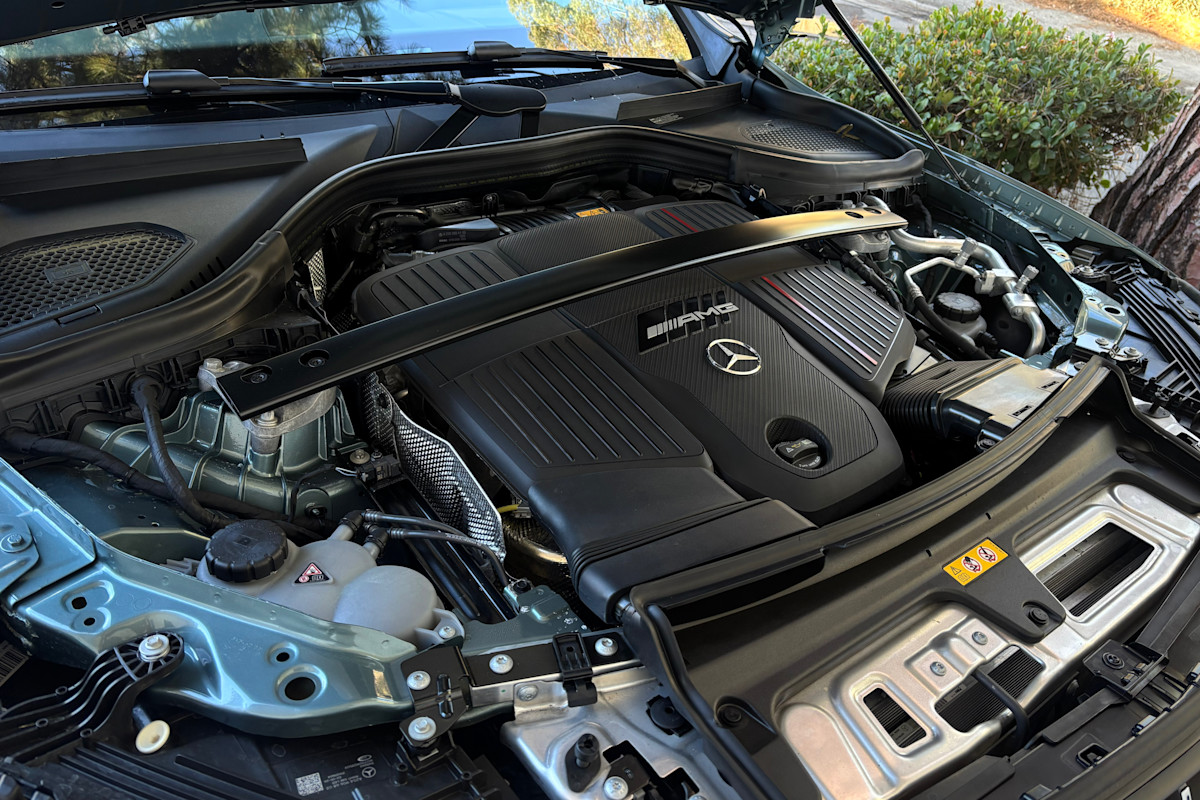
The AMG GLC 53 is new for 2027 and effectively replaces two AMG models—the GLC 43 and GLC 63 S. The GLC 53 features an also-new 3.0-liter turbocharged inline-six-cylinder engine with an electric supercharger and a mild-hybrid system that produces 443 horsepower and 443 pound-feet of torque. Mercedes says it can go from 0–60 mph in four seconds versus six seconds for the GLC 300 4Matic.
The latter is a perfectly competitive time; the GLC 300 feels quick and should provide the oomph expected from a luxury model. It’s also smooth in normal operation with a nice little snarl under acceleration.
The GLC 53 is a genuine upgrade, and not just in terms of sheer thrust. The new inline-six sounds sensational with a crisp, metallic whir. The engine and throttle response are even better; the GLC 53 always feels alive when the driver's foot touches the throttle without feeling over-eager or jumpy. And that’s in Comfort mode—it gets a little sharper in the two Sport modes.
The 53 also turned in shockingly good fuel economy. In 75 miles of mixed driving, it matched the EPA’s estimate of 22 mpg combined despite some rather vigorous mountain-road driving. Most impressive, though, was its 29.8 mpg on the route’s 40-mile highway portion. The EPA’s highway estimate is only 26 mpg.
Not that fuel economy is the GLC 53’s defining driving attribute. That would be how connected and engaging it feels from behind the wheel thanks to various chassis enhancements that include a small degree of rear-wheel steering. Drivers can sense its athleticism the second they pull out of a parking spot, let alone bombing along a back road, and there’s no missing the difference between it and non-AMG GLC models that are softer and less responsive.
Its ride quality is also far better than expected. There was never any bobbing on choppy pavement, nor impact harshness over run-of-the-mill bumps. That’s despite the test vehicle having 22-inch wheels (21s are standard). That said, the ride is akin to a sports sedan and certainly not plush. It’s not quiet, either, as the Michelin Pilot Sport tires generate a lot of road noise.
Form & function
The GLC’s driver's seat is very comfortable—firm yet highly supportive during longer drives. It also features adjustable thigh support, together with plenty of reach from the telescoping steering wheel. Even a 6-foot-3-inch driver found a good position.
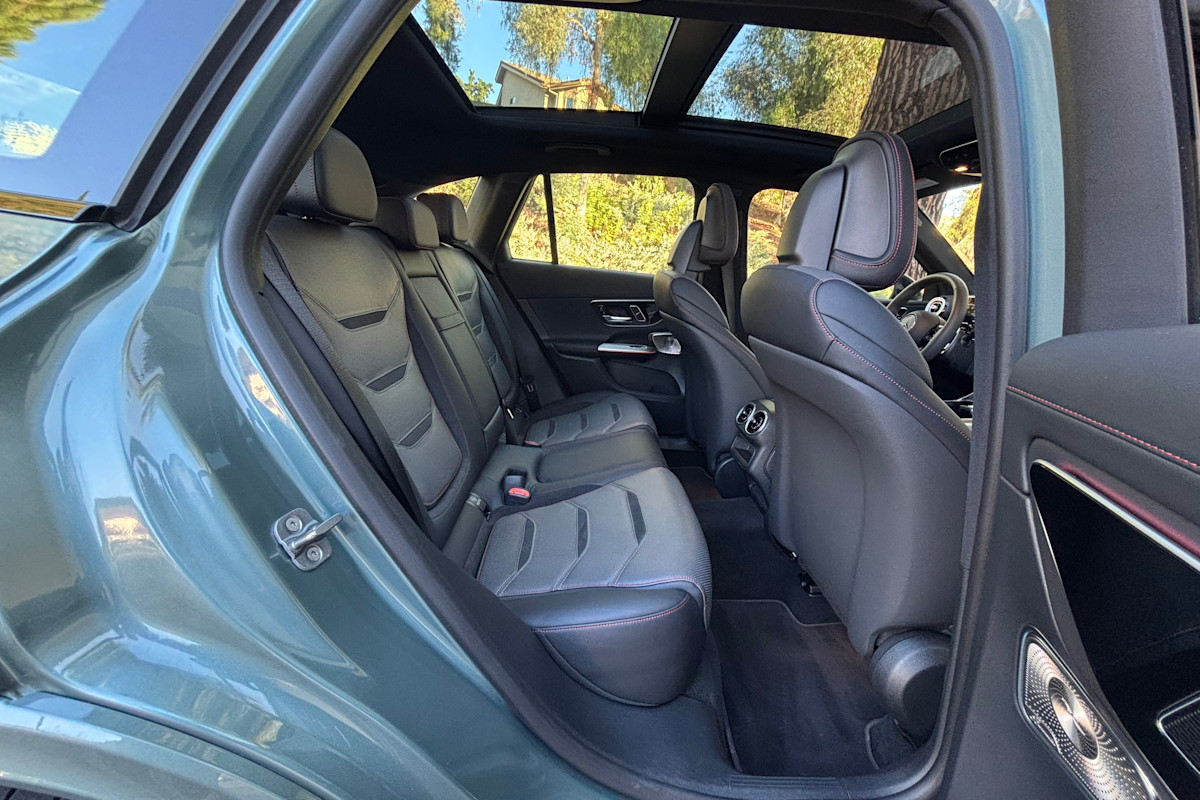
Rear-seat legroom shrinks with someone that tall up front, but the knees of a passenger of equal height would only just be grazing the seat back. Indeed, the legroom difference between the GLC and the larger GLE SUV is negligible. Fitting a forward-facing child seat was easy, though fitting a rear-facing one may require the front passenger to scoot up their seat to a degree that’ll reduce comfort. The rear seatback doesn’t recline, either.
In terms of features, there are lovely, easily directed air vents in the rear, but no separate climate controls. Cupholders reside in the doors as well as in a pop-out unit in the fold-down armrest that also includes a device holder. Smaller metal water bottles are secured well, but anything bigger may be an issue.
Up front, there is a versatile bin located under a beautifully finished sliding lid that seems destined to remain hidden in its open position under the dash. The bin can be an open space, or a pair of cupholders can rotate into place. They are different sizes, though; one can hold a large metal water bottle, the other cannot. When in use, they also make it hard to access the wireless phone charger that’s tucked under the dash, and this quasi-hidden location makes it harder to grab mobile devices when leaving the car and increases the likelihood that the car will have to politely remind drivers that they’ve left their phone behind.
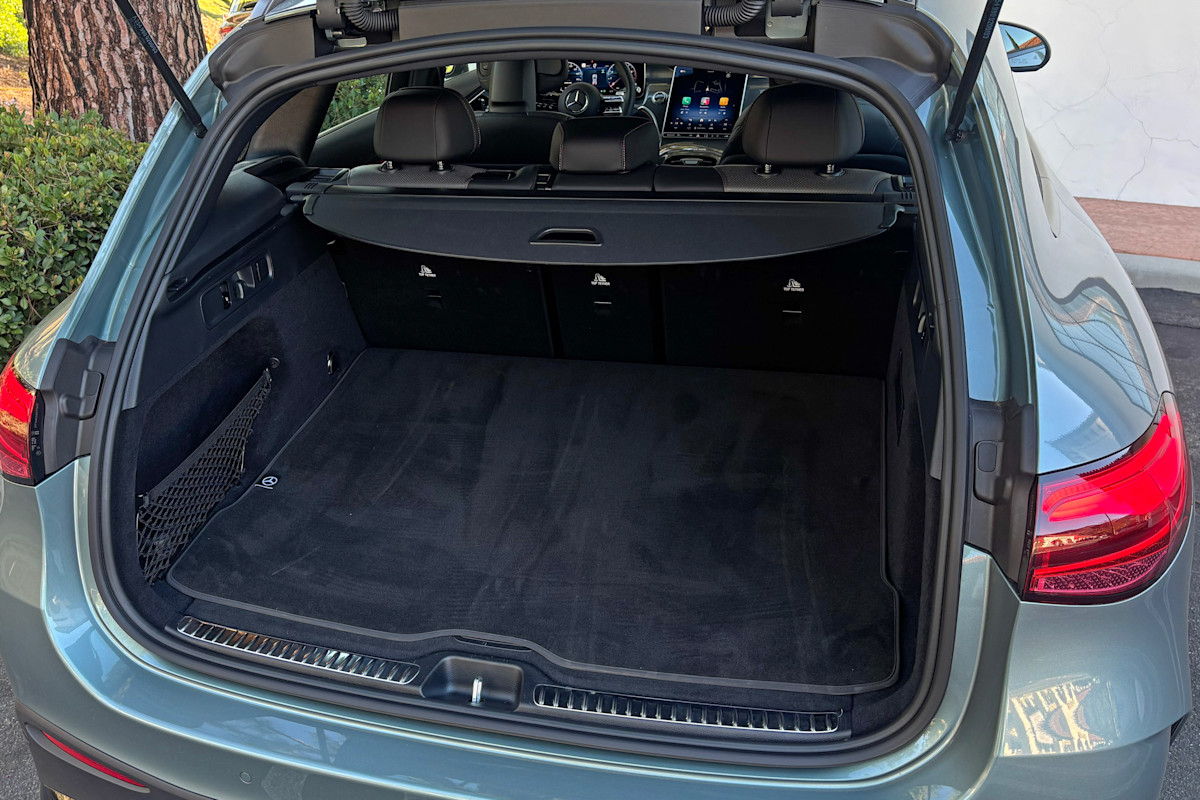
In terms of cargo capacity, it’s best to ignore the official spec of 21.9 cubic feet of volume behind the back seat. Mercedes doesn’t measure in the same way as most other brands do, resulting in an apples-to-oranges figure. Testing with actual luggage, the GLC holds an average amount of stuff for the segment. The BMW X3 and Volvo XC60 hold more; the Audi Q5 and Genesis GV70 less.
Technology
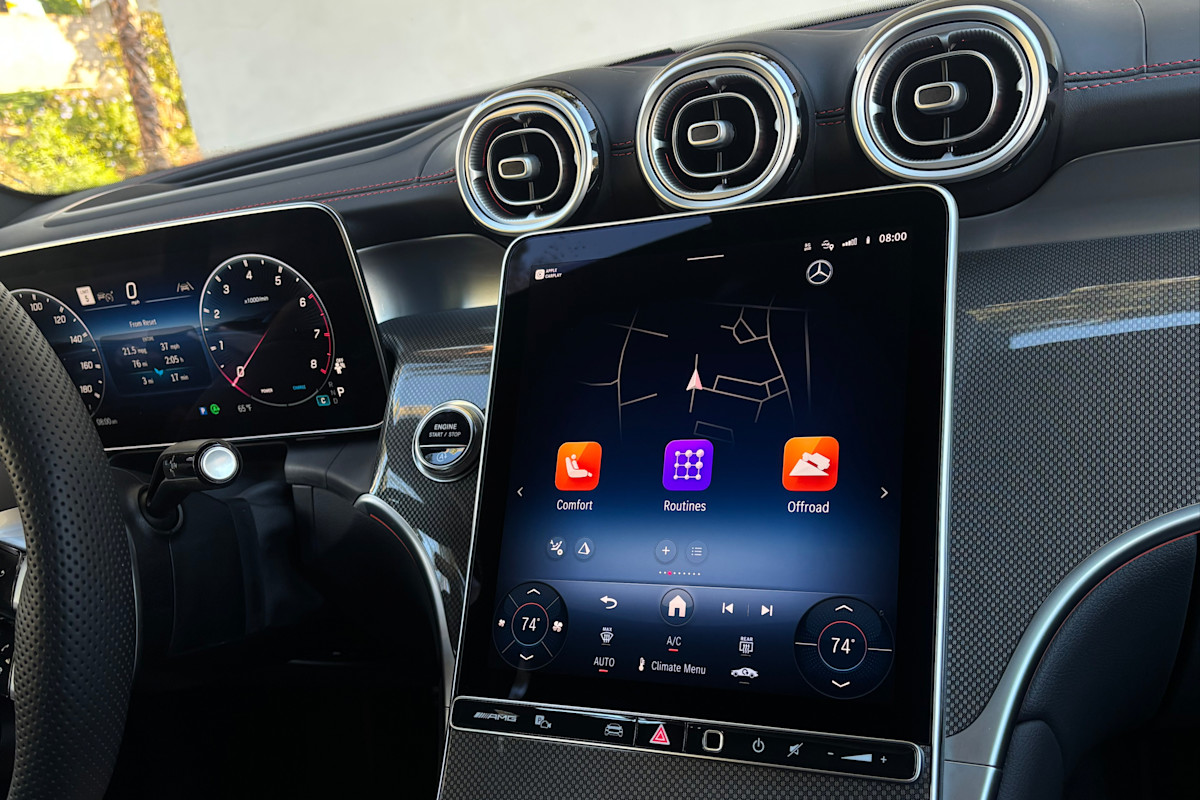
Despite having some lovely switchgear (stalks, window switches), the GLC has too many touch-sensitive controls. The sliders on the steering wheel that control stereo volume and cruise control speed are infuriatingly imprecise, which is why the larger 2027 GLE wisely did away with them in favor of toggle controls. There’s another volume touch slider on the center console that’s no better, and the climate controls are baked into the bottom portion of the touchscreen. While the latter are easy to decipher at a glance (and regrettably now commonplace), they’re still not as good as physical controls.
As for the rest of the touchscreen, it is a portrait-oriented unit that can offer different home-screen layouts. The choices are a carousel-like menu that displays only three large icons at a time or Mercedes’ “zero layer” format that perpetually shows the navigation system map with driver-selectable tiles on the bottom, which can be expanded for quick access to the likes of phone contacts or favourite radio stations. It works well and is easy to use once drivers are acclimated.
A shortcut icon for Apple CarPlay or Android Auto permanently resides in the screen’s upper left corner for easier access. Once open, the portrait-oriented screen provides more visual real estate than is typical.
The GLC 53 test vehicle came with a Burmester 3D Surround Sound System as part of the $3,900 Pinnacle trim package. It’s extremely good. Vocals are incredibly crisp, even at modest volumes, and bass levels are clean and unmuddied.
Other tech features in the Pinnacle trim are navigation, access to a variety of integrated entertainment apps, and a head-up display that projects little arrows on the windshield in the direction of upcoming turns. Noise-insulating glass and 64-color ambient lighting are part of the package, too.
Safety
The availability of the Mercedes GLC’s driver-assistance features is a bit unusual. Forward-collision warning and automatic emergency braking, blind-spot monitors, adaptive cruise control, a driver-attention monitor, and a surround-view camera system are all standard.
However, lane-centering steering assist and lane-keep assist are grouped into the Driver Assistance package along with additional and/or enhanced driver-assistance features such as steering intervention for the blind-spot monitors, evasive steering assist, a speed-limit display in the instrument panel, and automated adaptive cruise control speed changes based on speed-limit signs.
Most of these systems work very well. One exception was the lane-centering assist, which was inconsistent in its ability to keep the vehicle in the center of its lane, especially around corners. It was hard to trust it, which is surprising considering Mercedes’ lane-centering is usually very good.
By contrast, the systems associated with speed-limit-sign detection worked as intended but were just incredibly annoying. Having a speed limit sign constantly blink in the head-up display when exceeding the speed limit got old very quickly. When using adaptive cruise control, having the car suddenly drop anchor and slow down when a slower speed limit sign is detected is surprising and frustrating, even if it might save a speeding ticket. Thankfully, they could be turned off. The sensitivity of other systems can also be adjusted to the driver's tastes.
Safety ratings from the Insurance Institute for Highway Safety (IIHS) and National Highway Traffic Safety Administration were not available at the time of writing. However, the IIHS named the similar 2026 GLC a Top Safety Pick, one step below the highest Top Safety Pick+ rating.
Cost-effectiveness
Pricing starts at $53,850 (including the destination charge) for the base 2027 GLC 300 with RWD. There are plenty of options that’ll elevate that price quickly, though. The same goes for the AMG GLC 53 that starts at $71,350. Our test vehicle cost $86,490.
A loaded BMW X3 M50 xDrive or Audi SQ5 (both with AWD) would each be about $10,000 less than our test car, but they don’t offer quite as many features, their interiors aren’t as luxuriously finished, and neither can match the GLC 53’s overall performance. In other words, it’s an imperfect comparison.
Things are closer when comparing the GLC 300 to the BMW and Audi base models. They are priced similarly to the Mercedes but also come standard with AWD and some other value-enhancing features (the BMW is also considerably more efficient). Other competitors, such as the Genesis GV70 and the Volvo XC60, undercut all of the above.
The GLC can look like a poor value when considering its price versus the feature content and interior space buyers get for their money. However, it’s hard to quantify the likes of interior design and quality, driving feel (especially the GLC 53), and Mercedes’ brand perception.

What owners say
Trims & specs
Base MSRP $63,500 | Seating 5 |
Engine N/A | Cargo Capacity 20.1 cu ft |
Combined MPG N/A | Drivetrain N/A |
Base MSRP $54,400 | Seating 5 |
Engine N/A | Cargo Capacity 21.9 cu ft |
Combined MPG N/A | Drivetrain N/A |
Base MSRP $54,400 | Seating 5 |
Engine N/A | Cargo Capacity 21.9 cu ft |
Combined MPG N/A | Drivetrain N/A |
Base MSRP $69,900 | Seating 5 |
Engine N/A | Cargo Capacity N/A |
Combined MPG N/A | Drivetrain N/A |


