2026 Nissan Pathfinder Reviews, Pricing & Specs
Write a review$37,500 to $51,790
Original MSRP
7
of 10
expert review
avg user rating
(0 reviews)
Pros
Very spacious and easy to access all rows
Useful and easy infotainment
Impressive materials on upper trims
Cons
Sluggish powertrain
Mediocre efficiency
Rock Creek trim is all bark and no bite
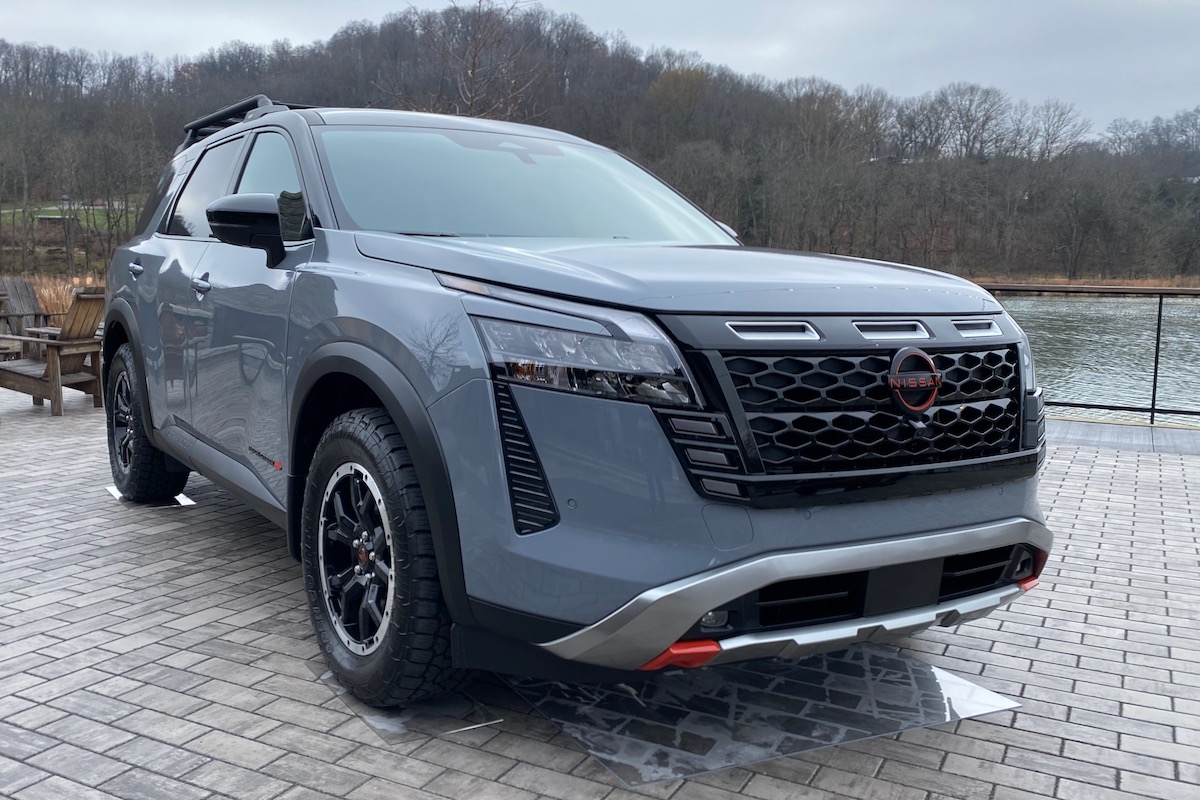
A refresh brings styling and tech improvements to Nissan's midsize three-row crossover.
Nissan's largest crossover, the Pathfinder, seats up to eight people while offering a car-like ride and control at a medium price point. In our testing of midsize three-row crossovers, the Pathfinder comes out in the middle of the pack in terms of performance, technology, and driving enjoyment. For 2026, Nissan refreshed this fifth-generation Pathfinder, which had been largely unchanged since its debut for the 2021 model year. The 2026 Pathfinder offers more convenience features, a larger touchscreen, and a few new styling touches.
Verdict: The Pathfinder is a good choice for value, interior quality, and space, but rivals from Toyota, Hyundai, and Kia push the dials even further at a similar price.
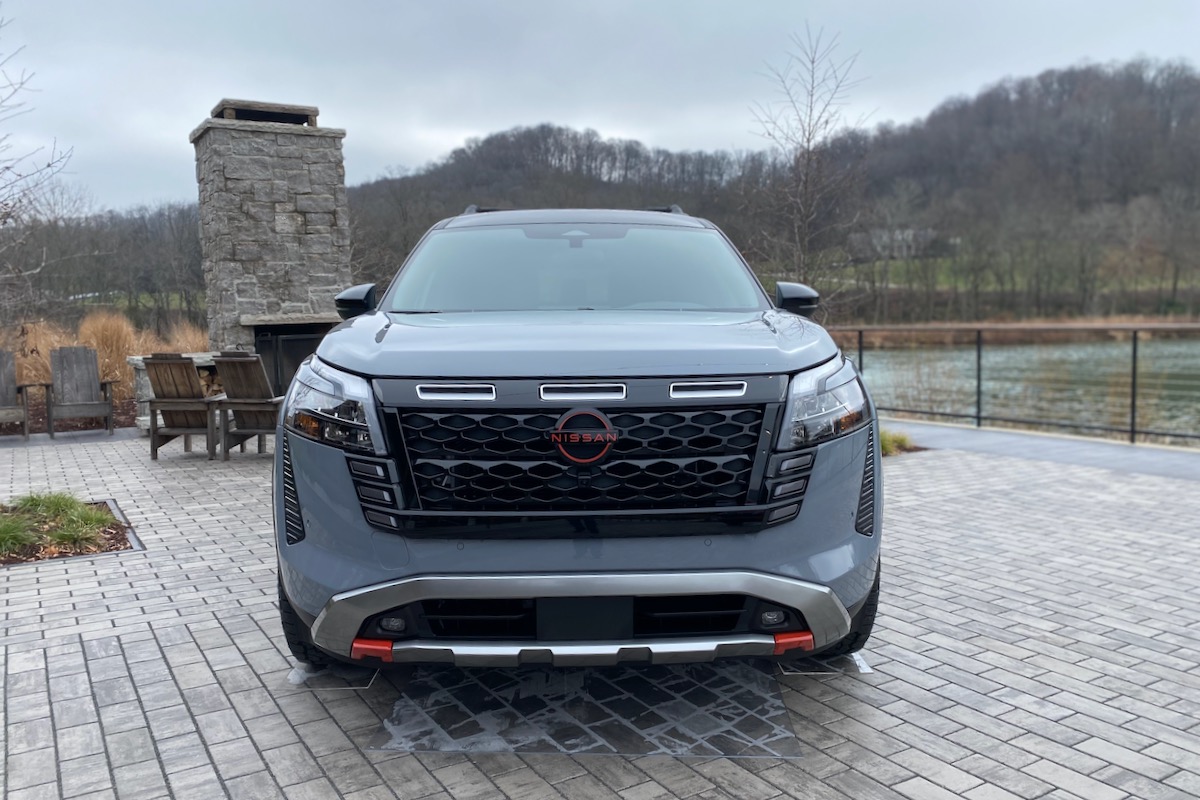
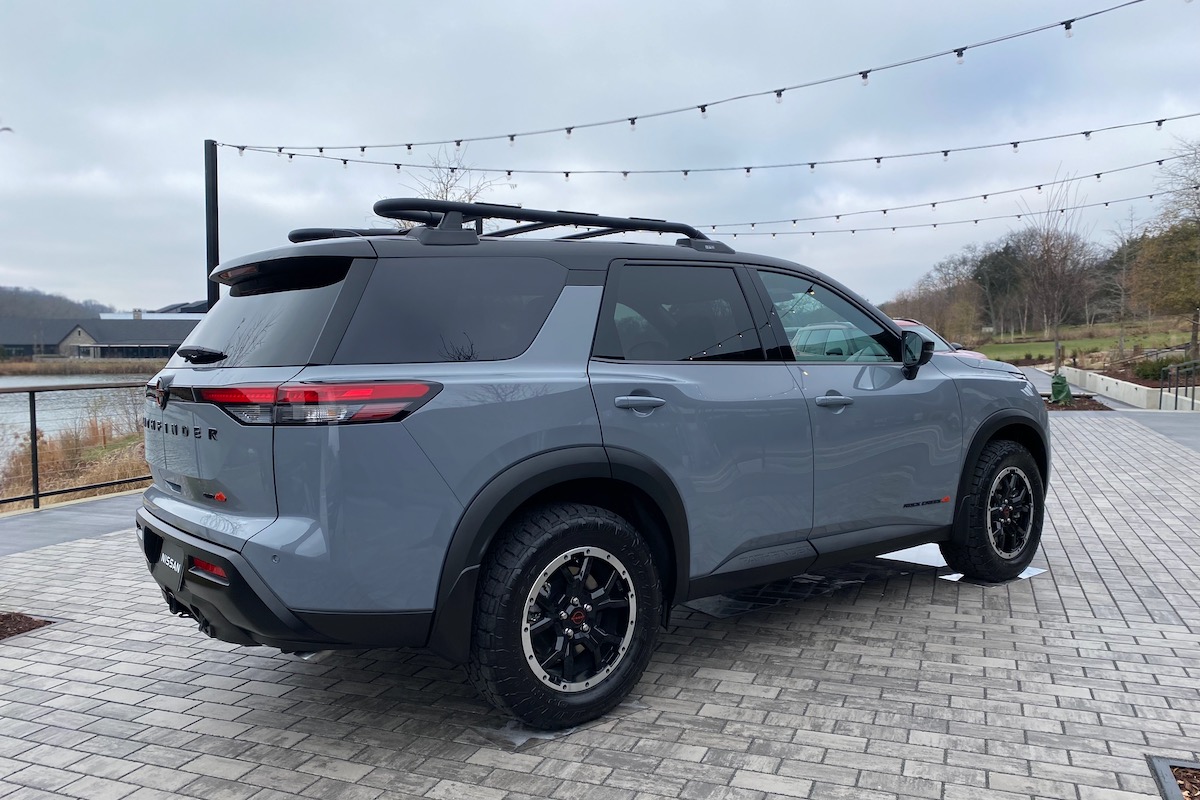
The Pathfinder is a blend of smooth and chunky elements, from the contours of its front and rear fenders with wraparound lights to the upright, truck-like design of the dashboard. The 2026 model has a restyled front bumper with faux vertical air intakes on the corners below the headlights. While functional on performance vehicles that require extra brake cooling, on the Pathfinder they function only to show off the extra creases and depth of the lower fascia. The grille loses the thick chrome outline and instead, on certain trims, has a single thin chrome line that intersects the Nissan badge. Additional short chrome bars are fitted below the headlights to appear as extra lights, though oddly, they aren't actual grille lights like those on Nissan's smaller Murano. At the rear, Nissan removed the vertical creases below the outer taillights. New wheel designs, a new Baltic Teal paint color, and satin-colored badges (instead of chrome) are the only other exterior changes.
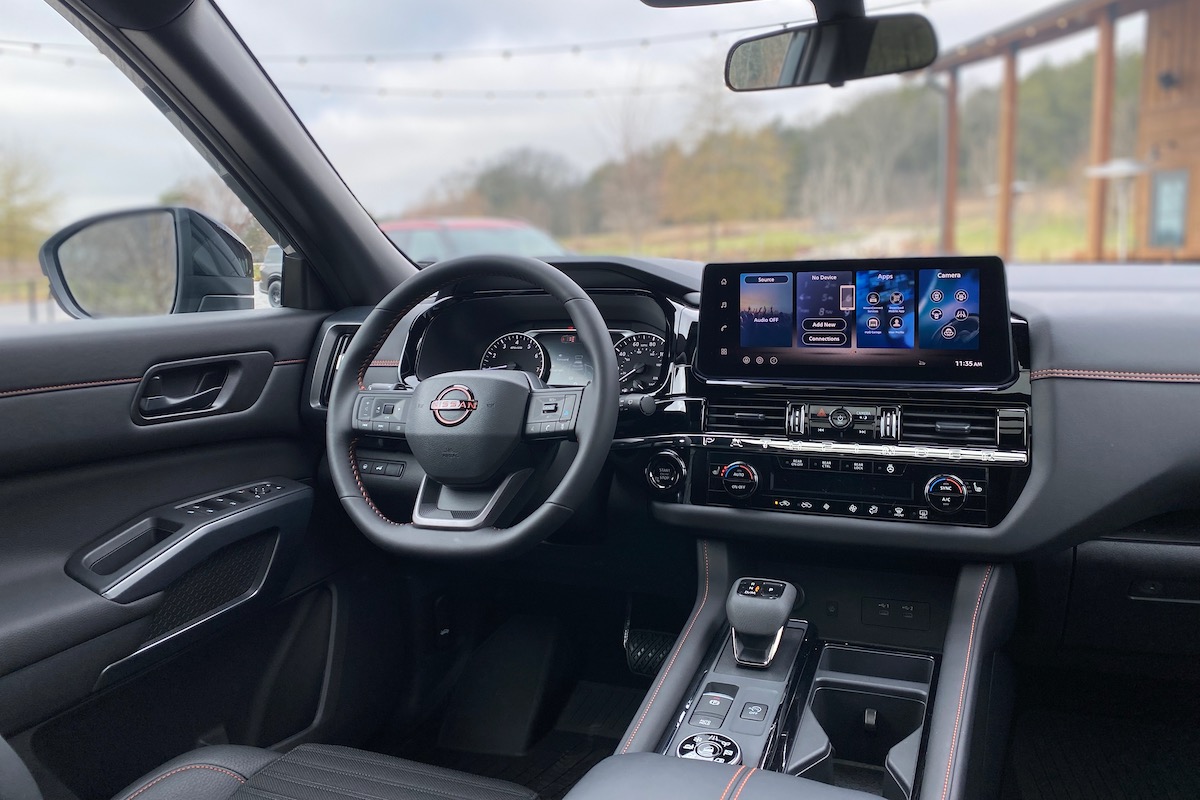
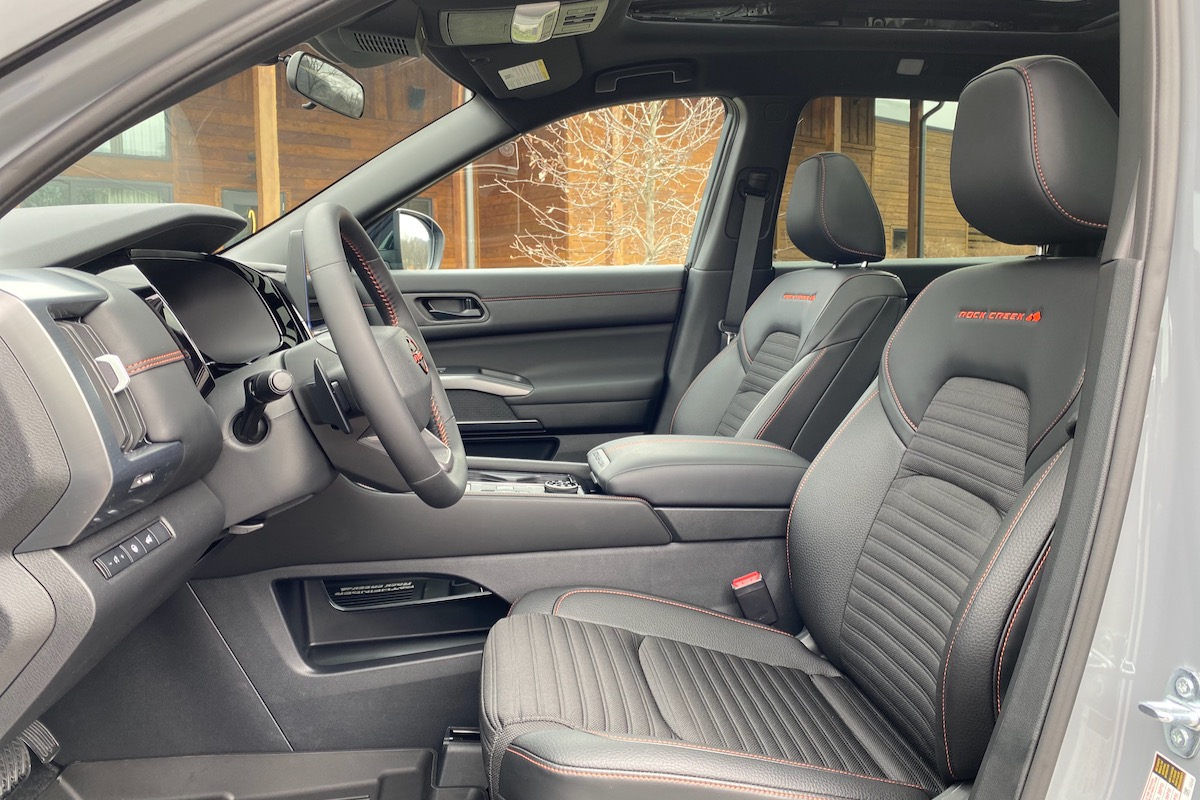
The interior changes are more noticeable. A standard 12.3-inch touchscreen replaces a 9-inch unit, with the volume, seek, camera, and display-brightness buttons moved from the screen's bezel to between the air vents. The start/stop button moves one row down from the air vents to the left of the climate controls. A wider silver strip above the climate controls spells out "Pathfinder". The steering wheel trades the circular hub for a polygonal shape and fills in the lower spoke with plastic, a design we don’t think looks as good as the old wheel. The center console armrest no longer has "Pathfinder" as a black plastic accent on its edge (or "Rock Creek" embroidery on the fabric on that trim level). Overall, the interior is simple, made with good materials for the price, and comes off as both modern and classic enough to age well. The semi-aniline leather on the Platinum trim level with diamond stitching is an extra touch that brings the Pathfinder nearer to Infiniti levels of luxury.
Unlike its sister, the Infiniti QX60, the 2026 Pathfinder has not switched to a turbocharged inline-four. The naturally-aspirated 3.5-liter V6 continues with 284 horsepower and 259 pound-feet of torque (or 295 hp and 270 lb-ft in the Rock Creek with premium fuel). Front-wheel drive (FWD) is standard on every trim except the Rock Creek, which comes with the all-wheel drive (AWD) system that's optional on the other four trims. AWD models can tow up to 6,000 pounds.
With a nine-speed automatic transmission, the Pathfinder accelerates lazily, regardless of the drive mode you choose, and sounds labored. It's on par with the Honda Pilot, Kia Telluride, Hyundai Palisade, and Dodge Durango—all of which have lackluster V6 engines—and the turbo-fours in the Buick Enclave, Chevrolet Traverse, and GMC Acadia. Bottom line—keep your expectations low for power and performance when shopping in this segment.
But without the option for turbocharging or a hybrid, both power and efficiency suffer compared to upper trims of the Toyota Highlander and Grand Highlander, Ford Explorer, Mazda CX-90, and Hyundai Palisade. Fuel economy reaches an EPA-estimated 21 mpg city, 27 mpg highway, and 23 mpg combined on the S, SV, and SL whether you choose FWD or AWD (Platinum models get slightly lower highway and combined mpg). The Rock Creek is estimated at 20 mpg city, 23 mpg highway, and 21 mpg combined.
We tested the Rock Creek during a brief media evaluation in Tennessee, and it’s a trim we would wholeheartedly avoid. The Toyo Open Country A/T III tires look gnarly—and they would doubtless work wonders off-road—yet the Rock Creek still can't make it over rocks or creeks. There are no skid plates, suspension retuning or lift, special dampers, limited-slip or torque-vectoring axles, or unique driving modes. And these all-terrain tires are loud. They feel like aftermarket tires that an owner might throw on without doing much research, not factory tires specified and tuned by an automaker to work in concert with the vehicle's dynamics. Grip suffers, the humming noise never abates, and fuel economy worsens. Of the many off-road "lite" trims we've tested from competitors, such as the Pilot Trailsport, Palidade XRT, and Explorer Timberline, no tires are so detrimental to the driving experience as the Rock Creek’s Toyos.
On all trims, the suspension is soft and allows more lean and mid-corner wheel motions than other competitors. This adds to the Pathfinder's bulk and detracts from its light and accurate steering. It's happiest when pointed in a straight line, where the soft ride comes into its own and the vehicle's size fades. Nissan has tuned the smaller Rogue and the Altima and Sentra sedans with a superior balance of ride and handling, which is what the next-gen Pathfinder truly needs.
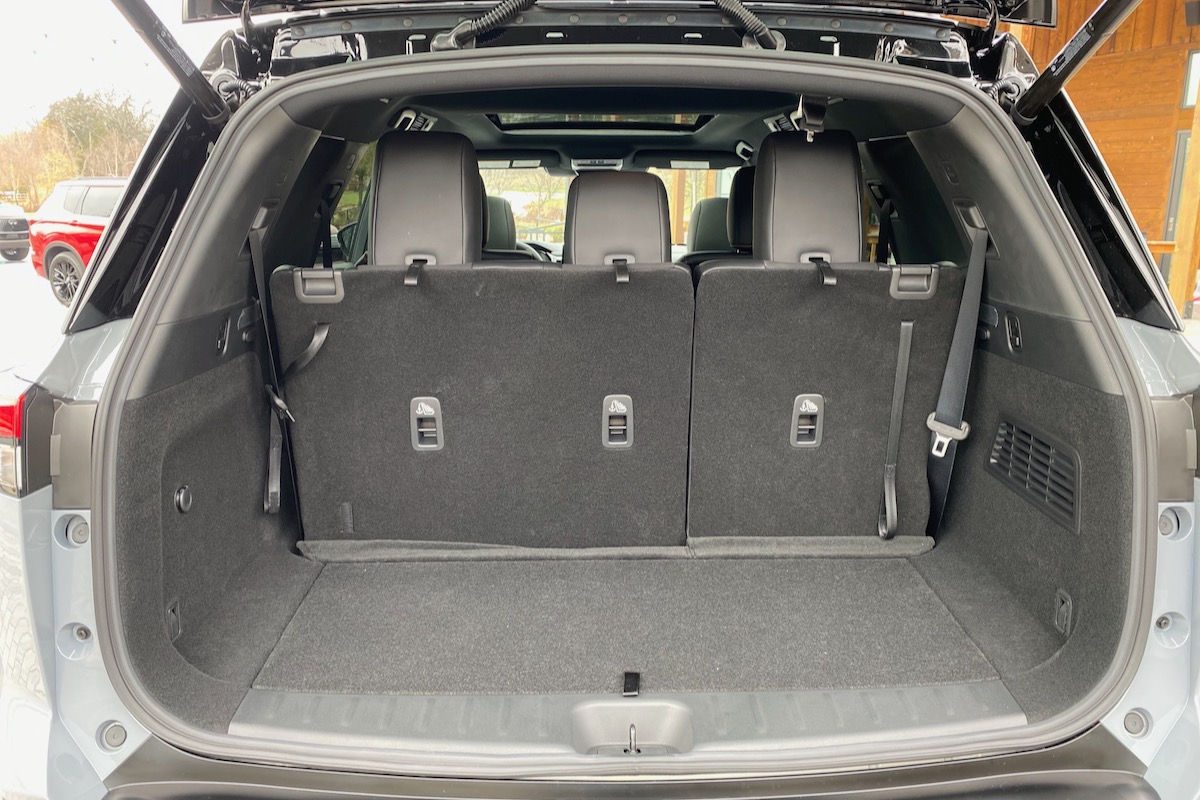
Nissan's "Latch and Glide" second-row seats make the Pathfinder very usable for families with young children. They're designed to fold and slide forward with an installed car seat. Headroom and legroom are generous in the first and second rows. The third row, with three across, is tight for anyone over five feet tall and average for this class. The longer Toyota Grand Highlander and GMC Acadia offer more space in the back row.
The Pathfinder seats eight or seven passengers depending on the trim. Captain's chairs, which eliminate one seat from the second row, are optional on upper trims but not available on the S or SV. With those captain's chairs, a removable console is standard on the Rock Creek and optional on SL and Platinum (which also offer heated seats as an option or standard). An eight-way power driver's seat is standard on all but the base S, but a power-adjustable front passenger seat is available only on the Platinum. The base S has 10 cupholders while all other trims have 12. Four USB-C ports are standard, including two in the second row, while the SL and Platinum add a fifth port for the third row. The Platinum also adds a 120-volt AC power outlet in the second row. Three-zone climate control is standard.
There’s 16.6 cubic feet of cargo space behind the third row, 45 cubic feet behind the second row, and 80.5 cubic feet with the second and third rows folded. A roof rack and power liftgate are standard on all trims except the S, while the Platinum comes with motion activation and position memory. The Rock Creek has a thick tubular roof rack that can support up to 220 pounds. Visibility is good in all directions, the mirrors are large enough to offer sufficient coverage, and the many analog controls make operating the Pathfinder very easy in daily driving.
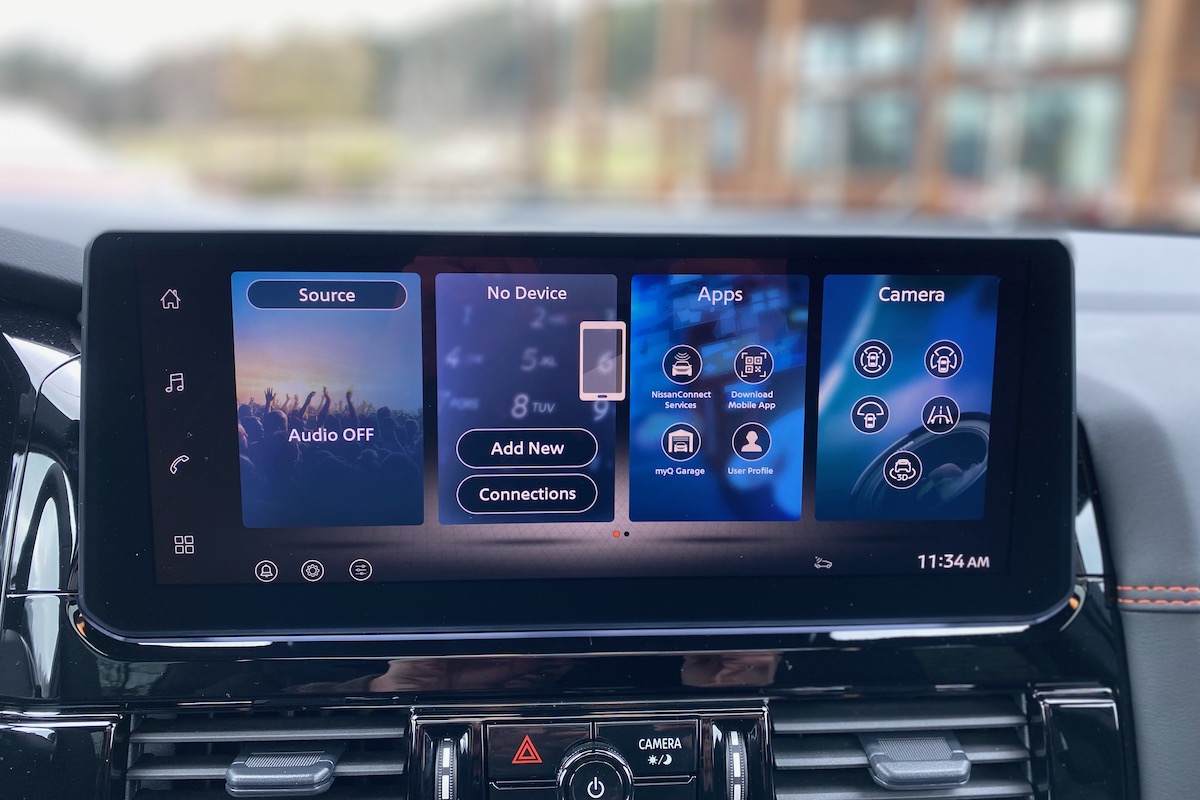
Every Pathfinder gets Nissan's latest infotainment software on a wider 12.3-inch touchscreen with wireless Apple CarPlay and Android Auto, though factory navigation is no longer offered. The new system is easier to use, organize, and faster to respond than the previous version. SiriusXM satellite radio and NissanConnect remote services with in-car 5G Wi-FI come standard. Notable upgrades on upper trims include the first production debut of Qi2, a next-generation wireless device chargers. It charges at up to 15 watts and uses a magnet to keep phones locked in place above the tray, which also aids cooling. This requires an iPhone with a built-in magnet (MagSafe) or any Qi-compatible phone inside a magnetic case or with a magnetic ring accessory.
Upper trims also gain Invisible Hood View, which uses the front and side cameras to render an image beneath the vehicle, and a wider front camera, called Front Wide View, that has a 180-degree field of view. The SL trim level gains the digital instrument panel that was formerly available only on the Platinum. A 7-inch color center display and analog gauges are standard on S, SV, and Rock Creek trims. Both setups are clear, easy to read, full of useful vehicle information, and make it simple to adjust everyday settings. A head-up display is available only on the Platinum, which also gets a 13-speaker Bose audio system (other models have a basic six-speaker system).
Beyond the federally-mandated complement of airbags, the Pathfinder comes with second-row side-impact airbags, curtain airbags that deploy to all three rows, and front knee airbags. The Platinum also comes with a front-center side airbag in the driver's seat that prevents driver and passenger from colliding in side crashes. This is another uncommon and very good feature.
Standard driver aids include forward collision warning, automatic emergency braking with pedestrian detection, rear emergency braking, blind spot monitoring, lane departure warning, and junction assist (forward cross-traffic alert). Active assists for the lane-keeping and blind-spot systems (Intelligent Blind Spot Intervention and Intelligent Lane Intervention) are standard on SV and above trims. Traffic sign recognition is included on the SL and Platinum, and the ProPilot Assist highway driving aid is available on all but the base S trim level. However, this is version 1.0 of ProPilot Assist, without hands-free capability.
The 2026 Pathfinder earned five out of five stars in tests conducted by the National Highway Traffic Safety Administration (NHTSA) but only four of five stars in the frontal crash test. Only two crash tests from the Insurance Institute for Highway Safety (IIHS) have been conducted on this current-generation Pathfinder—the side impact and small overlap front. The Nissan received the top "Good" rating in both.

User reviews for 2026 Nissan Pathfinder
Write a review2026 Nissan Pathfinder Pricing
Trims & specs
Air Conditioning
Automatic climate control front air conditioning · Dual front air conditioning zones · Automatic climate control rear air conditioning · Single rear air conditioning zones · Second and third row rear heat vents
Airbags
Dual front airbags · Dual front knee airbags · Passenger airbag deactivation: occupant sensing deactivation · Rear side airbags · Rear side curtain airbags
Audio System
Antenna Type: diversity · Voice recognition audio system · USB auxiliary audio input · Pandora internet radio · AM/FM radio · Satellite Radio: SiriusXM · Total Number of Speakers: 6
Brakes
ABS: 4-wheel · Braking assist: hill start assist · Electronic parking brake: auto off · Front brake diameter: 13.8 · Front brake width: 1.18 · Front brakes: ventilated disc · Rear brake diameter: 13.0 · Rear brake width: .63 · Rear brakes: ventilated disc
Comfort Features
Center console trim: leatherette · Dash Trim: Leatherette · Door trim: leatherette · Floor Material: carpet · Steering wheel trim: urethane
Convenience Features
Assist handle: front · Center console: dual level · Cupholders: front, rear and third row · Easy entry: manual rear seat · Multi-function remote: keyless entry with panic alarm · One-touch windows: 2 · Power outlet(s): 12V front · Power steering: speed-proportional · Power windows: lockout button · Reading lights: front · Steering wheel: tilt and telescopic · Steering wheel mounted controls: multi-function screen controls · Storage: in-floor · Vanity mirrors: dual
Driver Seat
Manual adjustments: 6
Drivetrain
Axle ratio: 4.34
Engine
Alternator: 150 amps · Battery: maintenance-free
Exterior Features
Door handle color: body-color · Fender lip moldings: black · Front bumper color: body-color · Grille color: black · Mirror color: black · Rear bumper color: black · Rear spoiler: roofline spoiler · Rear spoiler color: body-color · Rear trunk/liftgate: liftgate · Rocker panel color: black · Window trim: chrome
Headrests
Front headrests: adjustable · Number of front headrests: 2 · Number of rear headrests: 3 · Number of third row headrests: 3
In Car Entertainment
Connected in-car apps: Google search · Infotainment: NissanConnect · Infotainment screen size: 12.3 in. · Smartphone integration: wireless Android Auto
Instrumentation
Fuel economy display: MPG · Instrument cluster screen size: 7 in. · Warnings and reminders: coolant temperature warning
Lights
Daytime running lights: LED · Headlights: wiper activated · Tail and brake lights: LED
Mirrors
Exterior mirrors: power · Inside rearview mirror: manual day/night
Passenger Seat
Manual Adjustments: 6
Rear Seats
Type: 60-40 split bench
Safety
Automatic emergency braking: rear · Camera system: rearview · Child seat anchors: LATCH system · Cross Traffic Alert: rear · Crumple zones: front · Parking sensors: rear · Pre-Collision Warning System: audible warning · Pre-collision warning system: pedestrian detection · Rearview monitor: in dash
Seatbelts
Emergency locking retractors: front, rear, third, and fourth row · Front seatbelts: 3-point · Seatbelt force limiters: front · Seatbelt pretensioners: front · Seatbelt warning sensor: driver and passenger · Second row seatbelts: 3-point · Third row seatbelts: 3-point
Seats
Driver seat manual adjustments: reclining · Front seat type: bucket · Passenger seat manual adjustments: reclining · Rear headrests: adjustable · Rear seat folding: split · Rear seat manual adjustments: reclining · Third row headrests: adjustable · Third row manual adjustments: reclining · Third row seat folding: split · Upholstery: cloth
Security
Power door locks: anti-lockout
Spare Tire
Mount Location: underbody · Size: temporary
Spare Wheel
Rim Type: steel
Stability and Traction
Traction control: with trailer stability control
Steering
Steering ratio: 15.7 · Turns lock-to-lock: 2.8
Suspension
Front Arm Type: lower control arms · Front Shock Type: twin-tube gas shock absorbers · Front Spring Type: coil springs · Front Stabilizer Bar: diameter 29 mm · Front Suspension Classification: independent · Front Suspension Type: MacPherson struts · Rear Shock Type: twin-tube gas shock absorbers · Rear Spring Type: coil springs · Rear Suspension Classification: independent · Rear Suspension Type: multi-link · Rear stabilizer bar: diameter 29 mm
Telematics
Driver assistance app: roadside assistance · Electronic messaging assistance: with voice recognition · Phone: voice activated · Phone wireless data link: Bluetooth · Smart device app compatibility: NissanConnect · Smart device app function: lock operation · Wifi: hotspot
Third Row Seat
Type: 40-60 split bench
Tires
Type: all season
Tires and Rims
Wheels: painted aluminum
Towing and Hauling
Trailer wiring: 7-pin
Windows
Front wipers: variable intermittent · Liftgate window: fixed · Power windows: with safety reverse · Rear wiper: with washer
Air Conditioning
Automatic climate control front air conditioning · Dual front air conditioning zones · Automatic climate control rear air conditioning · Single rear air conditioning zones · Second and third row rear heat vents
Airbags
Dual front airbags · Dual front knee airbags · Passenger airbag deactivation: occupant sensing deactivation · Front side airbags · Front side curtain airbags
Audio System
Antenna Type: diversity · Voice recognition audio system · Bluetooth auxiliary audio input · Pandora internet radio · Touch screen display radio · Satellite Radio: SiriusXM · Total Number of Speakers: 6
Brakes
ABS: 4-wheel · Braking assist: hill start assist · Electronic parking brake: auto off · Front brake diameter: 13.8 · Front brake width: 1.18 · Front brakes: ventilated disc · Rear brake diameter: 13.0 · Rear brake width: .63 · Rear brakes: ventilated disc
Comfort Features
Center console trim: leatherette · Dash Trim: Leatherette · Door trim: leatherette · Floor Material: carpet · Steering wheel trim: urethane
Convenience Features
Assist handle: front · Center console: front console with armrest and storage · Cupholders: front, rear and third row · Easy entry: manual rear seat · Multi-function remote: keyless entry with panic alarm · One-touch windows: 2 · Power outlet(s): USB-C front · Power steering: speed-proportional · Power windows: lockout button · Reading lights: front · Steering wheel: tilt and telescopic · Steering wheel mounted controls: cruise controls · Storage: in dash · Vanity mirrors: dual
Driver Seat
Manual adjustments: 6
Drivetrain
4WD Type: on demand · Axle ratio: 4.34
Engine
Alternator: 150 amps · Battery: maintenance-free
Exterior Features
Door handle color: body-color · Fender lip moldings: black · Front bumper color: body-color · Grille color: black · Mirror color: black · Rear bumper color: black · Rear spoiler: roofline spoiler · Rear spoiler color: body-color · Rear trunk/liftgate: liftgate · Rocker panel color: black · Window trim: chrome
Headrests
Front headrests: adjustable · Number of front headrests: 2 · Number of rear headrests: 3 · Number of third row headrests: 3
In Car Entertainment
Connected in-car apps: Google POIs · Infotainment: NissanConnect · Infotainment screen size: 12.3 in. · Smartphone integration: wireless Android Auto
Instrumentation
Fuel economy display: MPG · Instrument cluster screen size: 7 in. · Warnings and reminders: low washer fluid
Lights
Daytime running lights: LED · Headlights: automatic high beam dimmer · Tail and brake lights: LED
Mirrors
Exterior mirrors: power · Inside rearview mirror: manual day/night
Passenger Seat
Manual Adjustments: 6
Rear Seats
Type: 60-40 split bench
Safety
Automatic emergency braking: front · Camera system: rearview · Child seat anchors: LATCH system · Cross Traffic Alert: rear · Crumple zones: rear · Parking sensors: rear · Pre-Collision Warning System: visual warning · Pre-collision warning system: pedestrian detection · Rearview monitor: in dash
Seatbelts
Emergency locking retractors: front, rear, third, and fourth row · Front seatbelts: 3-point · Seatbelt force limiters: front and rear · Seatbelt pretensioners: front · Seatbelt warning sensor: driver and passenger · Second row seatbelts: 3-point · Third row seatbelts: 3-point
Seats
Driver seat manual adjustments: height · Front seat type: bucket · Passenger seat manual adjustments: height · Rear headrests: adjustable · Rear seat folding: flat · Rear seat manual adjustments: reclining · Third row headrests: adjustable · Third row manual adjustments: reclining · Third row seat folding: fold flat into floor · Upholstery: cloth
Security
Power door locks: anti-lockout
Spare Tire
Mount Location: underbody · Size: temporary
Spare Wheel
Rim Type: steel
Stability and Traction
Traction control: with trailer stability control
Steering
Steering ratio: 15.7 · Turns lock-to-lock: 2.8
Suspension
Front Arm Type: lower control arms · Front Shock Type: twin-tube gas shock absorbers · Front Spring Type: coil springs · Front Stabilizer Bar: diameter 29 mm · Front Suspension Classification: independent · Front Suspension Type: MacPherson struts · Rear Shock Type: twin-tube gas shock absorbers · Rear Spring Type: coil springs · Rear Suspension Classification: independent · Rear Suspension Type: multi-link · Rear stabilizer bar: diameter 29 mm
Telematics
Driver assistance app: roadside assistance · Electronic messaging assistance: with voice recognition · Phone: voice activated · Phone wireless data link: Bluetooth · Smart device app compatibility: NissanConnect · Smart device app function: security event/collision alert · Wifi: hotspot
Third Row Seat
Type: 40-60 split bench
Tires
Type: all season
Tires and Rims
Wheels: painted aluminum
Towing and Hauling
Trailer wiring: 7-pin
Windows
Front wipers: speed sensitive · Liftgate window: fixed · Power windows: with safety reverse · Rear wiper: intermittent
Air Conditioning
Automatic climate control front air conditioning · Dual front air conditioning zones · Automatic climate control rear air conditioning · Single rear air conditioning zones · Second and third row rear heat vents
Airbags
Dual front airbags · Dual front knee airbags · Passenger airbag deactivation: occupant sensing deactivation · Front side airbags · Front side curtain airbags
Audio System
Antenna Type: diversity · Voice recognition audio system · USB auxiliary audio input · Pandora internet radio · Touch screen display radio · Satellite Radio: SiriusXM · Total Number of Speakers: 6
Brakes
ABS: 4-wheel · Braking assist: hill start assist · Electronic parking brake: auto off · Front brake diameter: 13.8 · Front brake width: 1.18 · Front brakes: ventilated disc · Rear brake diameter: 13.0 · Rear brake width: .63 · Rear brakes: ventilated disc
Comfort Features
Armrests: rear center with cupholders · Center console trim: leatherette · Dash Trim: Leatherette · Door trim: leatherette · Floor Material: carpet · Steering wheel trim: leatherette
Convenience Features
Adaptive stop and go cruise control: semi-automatic · Assist handle: front · Autonomous lane guidance: lane centering · Center console: front console with armrest and storage · Cruise control: adaptive · Cupholders: rear · Easy entry: manual rear seat · Memorized settings: liftgate · Multi-function remote: proximity entry system · One-touch windows: 2 · Power outlet(s): USB-C rear · Power steering: electric · Power windows: lockout button · Reading lights: front · Steering wheel: tilt and telescopic · Steering wheel mounted controls: phone · Storage: grocery bag holder · Vanity mirrors: dual illuminating
Driver Seat
Adjustable lumbar support: power · Power adjustments: 10
Drivetrain
Axle ratio: 4.34
Engine
Alternator: 150 amps · Battery: maintenance-free
Exterior Features
Door handle color: body-color · Fender lip moldings: black · Front bumper color: body-color · Grille color: black · Mirror color: black · Rear bumper color: black · Rear spoiler: roofline spoiler · Rear spoiler color: body-color · Rear trunk/liftgate: liftgate · Rocker panel color: black · Window trim: chrome
Headrests
Front headrests: adjustable · Number of front headrests: 2 · Number of rear headrests: 3 · Number of third row headrests: 3
In Car Entertainment
Connected in-car apps: Google search · Infotainment: NissanConnect · Infotainment screen size: 12.3 in. · Smartphone integration: wireless Android Auto
Instrumentation
Fuel economy display: range · Instrument cluster screen size: 7 in. · Warnings and reminders: lamp failure
Lights
Daytime running lights: LED · Headlights: wiper activated · Tail and brake lights: LED
Mirrors
Exterior mirrors: heated · Inside rearview mirror: manual day/night
Passenger Seat
Manual Adjustments: 6
Rear Seats
Type: 60-40 split bench
Roof
Roof rails: black
Safety
Automatic emergency braking: front pedestrian · Camera system: rearview · Child seat anchors: LATCH system · Cross Traffic Alert: rear · Crumple zones: rear · Parking sensors: front · Pre-Collision Warning System: visual warning · Pre-collision warning system: pedestrian detection · Rearview monitor: in dash
Seatbelts
Emergency locking retractors: front and rear · Front seatbelts: 3-point · Seatbelt force limiters: front and rear · Seatbelt pretensioners: front · Seatbelt warning sensor: driver and passenger · Second row seatbelts: 3-point · Third row seatbelts: 3-point
Seats
Driver seat power adjustments: height · Front seat type: bucket · Passenger seat manual adjustments: height · Rear headrests: adjustable · Rear seat folding: flat · Rear seat manual adjustments: reclining · Third row headrests: adjustable · Third row manual adjustments: reclining · Third row seat folding: fold flat into floor · Upholstery: cloth
Security
Power door locks: anti-lockout
Spare Tire
Mount Location: underbody · Size: temporary
Spare Wheel
Rim Type: steel
Stability and Traction
Traction control: with trailer stability control
Steering
Steering ratio: 15.7 · Turns lock-to-lock: 2.8
Suspension
Front Arm Type: lower control arms · Front Shock Type: twin-tube gas shock absorbers · Front Spring Type: coil springs · Front Stabilizer Bar: diameter 29 mm · Front Suspension Classification: independent · Front Suspension Type: MacPherson struts · Rear Shock Type: twin-tube gas shock absorbers · Rear Spring Type: coil springs · Rear Suspension Classification: independent · Rear Suspension Type: multi-link · Rear stabilizer bar: diameter 29 mm
Telematics
Driver assistance app: roadside assistance · Electronic messaging assistance: with voice recognition · Phone: voice activated · Phone wireless data link: Bluetooth · Smart device app compatibility: NissanConnect · Smart device app function: maintenance status · Wifi: hotspot
Third Row Seat
Type: 40-60 split bench
Tires
Type: all season
Tires and Rims
Wheels: painted aluminum
Towing and Hauling
Trailer wiring: 7-pin
Windows
Front wipers: variable intermittent · Liftgate window: fixed · Power windows: with safety reverse · Rear wiper: with washer
Air Conditioning
Automatic climate control front air conditioning · Dual front air conditioning zones · Automatic climate control rear air conditioning · Single rear air conditioning zones · Second and third row rear heat vents
Airbags
Dual front airbags · Dual front knee airbags · Passenger airbag deactivation: occupant sensing deactivation · Front side airbags · Third row side curtain airbags
Audio System
Antenna Type: diversity · Voice recognition audio system · USB auxiliary audio input · Pandora internet radio · Touch screen display radio · Satellite Radio: SiriusXM · Total Number of Speakers: 6
Brakes
ABS: 4-wheel · Braking assist: hill start assist · Electronic parking brake: auto off · Front brake diameter: 13.8 · Front brake width: 1.18 · Front brakes: ventilated disc · Rear brake diameter: 13.0 · Rear brake width: .63 · Rear brakes: ventilated disc
Comfort Features
Armrests: rear center with cupholders · Center console trim: leatherette · Dash Trim: Leatherette · Door trim: leatherette · Floor Material: carpet · Steering wheel trim: leatherette
Convenience Features
Adaptive stop and go cruise control: semi-automatic · Assist handle: rear · Autonomous lane guidance: lane centering · Center console: front console with armrest and storage · Cruise control: adaptive · Cupholders: front, rear and third row · Easy entry: manual rear seat · Memorized settings: liftgate · Multi-function remote: keyless entry with panic alarm · One-touch windows: 2 · Power outlet(s): 12V front · Power steering: speed-proportional · Power windows: lockout button · Reading lights: front · Steering wheel: tilt and telescopic · Steering wheel mounted controls: phone · Storage: in-floor · Vanity mirrors: dual illuminating
Driver Seat
Adjustable lumbar support: power · Power adjustments: 10
Drivetrain
4WD Type: on demand · Axle ratio: 4.34
Engine
Alternator: 150 amps · Battery: maintenance-free
Exterior Features
Door handle color: body-color · Fender lip moldings: black · Front bumper color: body-color · Grille color: black · Mirror color: black · Rear bumper color: black · Rear spoiler: roofline spoiler · Rear spoiler color: body-color · Rear trunk/liftgate: power operated · Rocker panel color: black · Window trim: chrome
Headrests
Front headrests: adjustable · Number of front headrests: 2 · Number of rear headrests: 3 · Number of third row headrests: 3
In Car Entertainment
Connected in-car apps: Google search · Infotainment: NissanConnect · Infotainment screen size: 12.3 in. · Smartphone integration: wireless Android Auto
Instrumentation
Fuel economy display: range · Instrument cluster screen size: 7 in. · Warnings and reminders: coolant temperature warning
Lights
Daytime running lights: LED · Headlights: automatic high beam dimmer · Tail and brake lights: LED
Mirrors
Exterior mirrors: power · Inside rearview mirror: manual day/night
Passenger Seat
Manual Adjustments: 6
Rear Seats
Type: 60-40 split bench
Roof
Roof rails: black
Safety
Automatic emergency braking: front pedestrian · Camera system: rearview · Child seat anchors: LATCH system · Cross Traffic Alert: rear · Crumple zones: front · Parking sensors: rear · Pre-Collision Warning System: audible warning · Pre-collision warning system: pedestrian detection · Rearview monitor: in dash
Seatbelts
Emergency locking retractors: front, rear, third, and fourth row · Front seatbelts: 3-point · Seatbelt force limiters: front · Seatbelt pretensioners: front and rear · Seatbelt warning sensor: driver and passenger · Second row seatbelts: 3-point · Third row seatbelts: 3-point
Seats
Driver seat power adjustments: reclining · Front seat type: bucket · Passenger seat manual adjustments: reclining · Rear headrests: adjustable · Rear seat folding: flat · Rear seat manual adjustments: reclining · Third row headrests: adjustable · Third row manual adjustments: reclining · Third row seat folding: split · Upholstery: cloth
Security
Power door locks: anti-lockout
Spare Tire
Mount Location: underbody · Size: temporary
Spare Wheel
Rim Type: steel
Stability and Traction
Traction control: with trailer stability control
Steering
Steering ratio: 15.7 · Turns lock-to-lock: 2.8
Suspension
Front Arm Type: lower control arms · Front Shock Type: twin-tube gas shock absorbers · Front Spring Type: coil springs · Front Stabilizer Bar: diameter 29 mm · Front Suspension Classification: independent · Front Suspension Type: MacPherson struts · Rear Shock Type: twin-tube gas shock absorbers · Rear Spring Type: coil springs · Rear Suspension Classification: independent · Rear Suspension Type: multi-link · Rear stabilizer bar: diameter 29 mm
Telematics
Driver assistance app: roadside assistance · Electronic messaging assistance: with voice recognition · Phone: voice activated · Phone wireless data link: Bluetooth · Smart device app compatibility: NissanConnect · Smart device app function: engine start · Wifi: hotspot
Third Row Seat
Type: 40-60 split bench
Tires
Type: all season
Tires and Rims
Wheels: painted aluminum
Towing and Hauling
Trailer wiring: 7-pin
Windows
Front wipers: variable intermittent · Liftgate window: fixed · Power windows: with safety reverse · Rear wiper: intermittent
Air Conditioning
Automatic climate control front air conditioning · Dual front air conditioning zones · Automatic climate control rear air conditioning · Single rear air conditioning zones · Second and third row rear heat vents
Airbags
Dual front airbags · Dual front knee airbags · Passenger airbag deactivation: occupant sensing deactivation · Rear side airbags · Third row side curtain airbags
Audio System
Antenna Type: mast · Voice recognition audio system · USB auxiliary audio input · Pandora internet radio · AM/FM radio · Satellite Radio: SiriusXM · Total Number of Speakers: 6
Brakes
ABS: 4-wheel · Braking assist: hill start assist · Electronic parking brake: auto off · Front brake diameter: 13.8 · Front brake width: 1.18 · Front brakes: ventilated disc · Rear brake diameter: 13.0 · Rear brake width: .63 · Rear brakes: ventilated disc
Comfort Features
Armrests: rear center with cupholders · Center console trim: leatherette · Dash Trim: Leatherette · Door trim: leatherette · Floor Material: carpet · Steering wheel trim: leatherette
Convenience Features
Adaptive stop and go cruise control: semi-automatic · Assist handle: front · Autonomous lane guidance: lane centering · Cargo area power outlet: 12V · Center console: dual level · Cruise control: adaptive · Cupholders: front, rear and third row · Dimming rearview mirror: auto-dimming · Easy entry: manual rear seat · Memorized settings: liftgate · Multi-function remote: trunk release · One-touch windows: 2 · Power outlet(s): 12V front · Power steering: speed-proportional · Power windows: lockout button · Reading lights: rear · Steering wheel: tilt and telescopic · Steering wheel mounted controls: paddle shifter · Storage: in dash · Universal garage door opener: Homelink · Vanity mirrors: dual illuminating
Driver Seat
Adjustable lumbar support: power · Power adjustments: 10
Drivetrain
Axle ratio: 4.34
Engine
Alternator: 150 amps · Battery: maintenance-free
Exterior Features
Door handle color: body-color · Fender lip moldings: black · Front bumper color: body-color · Grille color: black · Mirror color: black · Rear bumper color: gray · Rear spoiler: roofline spoiler · Rear spoiler color: body-color · Rear trunk/liftgate: power operated · Rocker panel color: black · Window trim: chrome
Headrests
Front headrests: adjustable · Number of front headrests: 2 · Number of rear headrests: 3 · Number of third row headrests: 3
In Car Entertainment
Connected in-car apps: Google Assistant · Infotainment: NissanConnect · Infotainment screen size: 12.3 in. · Smartphone integration: wireless Apple CarPlay
Instrumentation
Fuel economy display: range · Instrument cluster screen size: 12.3 in. · Warnings and reminders: maintenance reminder
Lights
Daytime running lights: LED · Headlights: wiper activated · Tail and brake lights: LED
Mirrors
Exterior mirrors: manual folding
Passenger Seat
Manual Adjustments: 6
Rear Seats
Type: 60-40 split bench
Roof
Roof rails: black
Safety
Automatic emergency braking: front pedestrian · Camera system: surround view · Child seat anchors: LATCH system · Cross Traffic Alert: rear · Crumple zones: rear · Parking sensors: rear · Pre-Collision Warning System: visual warning · Pre-collision warning system: pedestrian detection · Rearview monitor: in dash
Seatbelts
Emergency locking retractors: front and rear · Front seatbelts: 3-point · Seatbelt force limiters: front · Seatbelt pretensioners: front · Seatbelt warning sensor: driver and passenger · Second row seatbelts: 3-point · Third row seatbelts: 3-point
Seats
Driver seat power adjustments: height · Front seat type: bucket · Passenger seat manual adjustments: height · Rear headrests: adjustable · Rear seat folding: split · Rear seat manual adjustments: reclining · Third row headrests: adjustable · Third row manual adjustments: reclining · Third row seat folding: split · Upholstery: leatherette
Security
Power door locks: anti-lockout
Spare Tire
Mount Location: underbody · Size: temporary
Spare Wheel
Rim Type: steel
Stability and Traction
Traction control: with trailer stability control
Steering
Steering ratio: 15.7 · Turns lock-to-lock: 2.8
Suspension
Front Arm Type: lower control arms · Front Shock Type: twin-tube gas shock absorbers · Front Spring Type: coil springs · Front Stabilizer Bar: diameter 29 mm · Front Suspension Classification: independent · Front Suspension Type: MacPherson struts · Rear Shock Type: twin-tube gas shock absorbers · Rear Spring Type: coil springs · Rear Suspension Classification: independent · Rear Suspension Type: multi-link · Rear stabilizer bar: diameter 29 mm
Telematics
Driver assistance app: roadside assistance · Electronic messaging assistance: with read function · Phone: voice activated · Phone wireless data link: Bluetooth · Smart device app compatibility: NissanConnect · Smart device app function: vehicle location · Wifi: hotspot
Third Row Seat
Type: 40-60 split bench
Tires
Type: all season
Tires and Rims
Wheels: aluminum with painted accents
Towing and Hauling
Trailer wiring: 7-pin
Windows
Front wipers: variable intermittent · Liftgate window: fixed · Power windows: with safety reverse · Rear wiper: with washer
Air Conditioning
Automatic climate control front air conditioning · Dual front air conditioning zones · Rear air conditioning: with independent controls · Single rear air conditioning zones · Second and third row rear heat vents
Airbags
Dual front airbags · Dual front knee airbags · Passenger airbag deactivation: occupant sensing deactivation · Front side airbags · Third row side curtain airbags
Audio System
Antenna Type: diversity · Voice recognition audio system · Bluetooth auxiliary audio input · Pandora internet radio · AM/FM radio · Satellite Radio: SiriusXM · Total Number of Speakers: 6
Brakes
ABS: 4-wheel · Braking assist: hill start assist · Electronic parking brake: auto off · Front brake diameter: 13.8 · Front brake width: 1.18 · Front brakes: ventilated disc · Rear brake diameter: 13.0 · Rear brake width: .63 · Rear brakes: ventilated disc
Comfort Features
Armrests: rear center with cupholders · Center console trim: leatherette · Dash Trim: Leatherette · Door trim: leatherette · Floor Material: carpet · Steering wheel trim: leatherette
Convenience Features
Adaptive stop and go cruise control: semi-automatic · Assist handle: rear · Autonomous lane guidance: lane centering · Cargo area power outlet: 12V · Center console: front console with armrest and storage · Cruise control: adaptive · Cupholders: rear · Dimming rearview mirror: auto-dimming · Easy entry: manual rear seat · Memorized settings: liftgate · Multi-function remote: proximity entry system · One-touch windows: 2 · Power outlet(s): USB-C front · Power steering: speed-proportional · Power windows: lockout button · Reading lights: rear · Steering wheel: tilt and telescopic · Steering wheel mounted controls: paddle shifter · Storage: grocery bag holder · Universal garage door opener: Homelink · Vanity mirrors: dual illuminating
Driver Seat
Adjustable lumbar support: power · Power adjustments: 10
Drivetrain
4WD Type: on demand · Axle ratio: 4.34
Engine
Alternator: 150 amps · Battery: maintenance-free
Exterior Features
Door handle color: body-color · Fender lip moldings: black · Front bumper color: body-color · Grille color: black · Mirror color: black · Rear bumper color: gray · Rear spoiler: roofline spoiler · Rear spoiler color: body-color · Rear trunk/liftgate: power operated · Rocker panel color: black · Window trim: chrome
Headrests
Front headrests: adjustable · Number of front headrests: 2 · Number of rear headrests: 3 · Number of third row headrests: 3
In Car Entertainment
Connected in-car apps: Google search · Infotainment: NissanConnect · Infotainment screen size: 12.3 in. · Smartphone integration: wireless Android Auto
Instrumentation
Fuel economy display: range · Instrument cluster screen size: 12.3 in. · Warnings and reminders: lamp failure
Lights
Daytime running lights: LED · Headlights: wiper activated · Tail and brake lights: LED
Mirrors
Exterior mirrors: integrated turn signals
Passenger Seat
Manual Adjustments: 6
Rear Seats
Type: 60-40 split bench
Roof
Roof rails: black
Safety
Automatic emergency braking: front pedestrian · Camera system: surround view · Child seat anchors: LATCH system · Cross Traffic Alert: rear · Crumple zones: front · Parking sensors: front · Pre-Collision Warning System: audible warning · Pre-collision warning system: pedestrian detection · Rearview monitor: in dash
Seatbelts
Emergency locking retractors: front and rear · Front seatbelts: 3-point · Seatbelt force limiters: front and rear · Seatbelt pretensioners: front and rear · Seatbelt warning sensor: driver and passenger · Second row seatbelts: 3-point · Third row seatbelts: 3-point
Seats
Driver seat power adjustments: reclining · Front seat type: bucket · Passenger seat manual adjustments: reclining · Rear headrests: adjustable · Rear seat folding: flat · Rear seat manual adjustments: reclining · Third row headrests: adjustable · Third row manual adjustments: reclining · Third row seat folding: fold flat into floor · Upholstery: leatherette
Security
Power door locks: anti-lockout
Spare Tire
Mount Location: underbody · Size: temporary
Spare Wheel
Rim Type: steel
Stability and Traction
Traction control: with trailer stability control
Steering
Steering ratio: 15.7 · Turns lock-to-lock: 2.8
Suspension
Front Arm Type: lower control arms · Front Shock Type: twin-tube gas shock absorbers · Front Spring Type: coil springs · Front Stabilizer Bar: diameter 29 mm · Front Suspension Classification: independent · Front Suspension Type: MacPherson struts · Rear Shock Type: twin-tube gas shock absorbers · Rear Spring Type: coil springs · Rear Suspension Classification: independent · Rear Suspension Type: multi-link · Rear stabilizer bar: diameter 29 mm
Telematics
Driver assistance app: roadside assistance · Electronic messaging assistance: with read function · Phone: voice activated · Phone wireless data link: Bluetooth · Smart device app compatibility: NissanConnect · Smart device app function: vehicle location · Wifi: hotspot
Third Row Seat
Type: 40-60 split bench
Tires
Type: all season
Tires and Rims
Wheels: aluminum with painted accents
Towing and Hauling
Trailer wiring: 7-pin
Windows
Front wipers: variable intermittent · Liftgate window: fixed · Power windows: with safety reverse · Rear wiper: with washer
Air Conditioning
Automatic climate control front air conditioning · Dual front air conditioning zones · Automatic climate control rear air conditioning · Single rear air conditioning zones · Second and third row rear heat vents
Airbags
Dual front airbags · Dual front knee airbags · Passenger airbag deactivation: occupant sensing deactivation · Front side airbags · Rear side curtain airbags
Audio System
Antenna Type: mast · Voice recognition audio system · USB auxiliary audio input · Pandora internet radio · AM/FM radio · Satellite Radio: SiriusXM · Total Number of Speakers: 6
Brakes
ABS: 4-wheel · Braking assist: hill start assist · Electronic parking brake: auto off · Front brake diameter: 13.8 · Front brake width: 1.18 · Front brakes: ventilated disc · Rear brake diameter: 13.0 · Rear brake width: .63 · Rear brakes: ventilated disc
Comfort Features
Armrests: rear center with cupholders · Center console trim: leatherette · Dash Trim: Leatherette · Door trim: leatherette · Floor Material: carpet · Steering wheel trim: leatherette
Convenience Features
Adaptive stop and go cruise control: semi-automatic · Assist handle: front · Autonomous lane guidance: lane centering · Center console: front console with armrest and storage · Cruise control: adaptive · Cupholders: rear · Easy entry: manual rear seat · Memorized settings: liftgate · Multi-function remote: keyless entry with panic alarm · One-touch windows: 2 · Power outlet(s): USB-C front · Power steering: electric · Power windows: lockout button · Reading lights: rear · Steering wheel: tilt and telescopic · Steering wheel mounted controls: paddle shifter · Storage: grocery bag holder · Vanity mirrors: dual illuminating
Driver Seat
Adjustable lumbar support: power · Power adjustments: 10
Drivetrain
4WD Type: on demand · Axle ratio: 4.34
Engine
Alternator: 150 amps · Battery: maintenance-free
Exterior Features
Door handle color: body-color · Fender lip moldings: black · Front bumper color: black · Grille color: black · Mirror color: black · Rear bumper color: black · Rear spoiler: roofline spoiler · Rear spoiler color: body-color · Rear trunk/liftgate: liftgate · Rocker panel color: black · Window trim: black
Headrests
Front headrests: adjustable · Number of front headrests: 2 · Number of rear headrests: 3 · Number of third row headrests: 3
In Car Entertainment
Connected in-car apps: Google search · Infotainment: NissanConnect · Infotainment screen size: 12.3 in. · Smartphone integration: wireless Android Auto
Instrumentation
Fuel economy display: range · Instrument cluster screen size: 7 in. · Warnings and reminders: turn off headlights
Lights
Daytime running lights: LED · Front fog lights: LED · Headlights: wiper activated · Tail and brake lights: LED
Mirrors
Exterior mirrors: integrated turn signals · Inside rearview mirror: manual day/night
Passenger Seat
Manual Adjustments: 6
Rear Seats
Type: 60-40 split bench
Roof
Roof rack color: black · Roof rails: black
Safety
Automatic emergency braking: front pedestrian · Camera system: surround view · Child seat anchors: LATCH system · Cross Traffic Alert: rear · Crumple zones: rear · Parking sensors: rear · Pre-Collision Warning System: visual warning · Pre-collision warning system: pedestrian detection · Rearview monitor: in dash
Seatbelts
Emergency locking retractors: front · Front seatbelts: 3-point · Seatbelt force limiters: front and rear · Seatbelt pretensioners: front and rear · Seatbelt warning sensor: driver and passenger · Second row seatbelts: 3-point · Third row seatbelts: 3-point
Seats
Driver seat power adjustments: height · Front seat type: bucket · Passenger seat manual adjustments: reclining · Rear headrests: adjustable · Rear seat folding: flat · Rear seat manual adjustments: reclining · Third row headrests: adjustable · Third row manual adjustments: reclining · Third row seat folding: fold flat into floor · Upholstery: contrast stitching · Upholstery accents: cloth
Security
Power door locks: anti-lockout
Spare Tire
Mount Location: underbody · Size: temporary
Spare Wheel
Rim Type: steel
Stability and Traction
Traction control: with trailer stability control
Steering
Steering ratio: 15.7 · Turns lock-to-lock: 2.8
Suspension
Front Arm Type: lower control arms · Front Shock Type: twin-tube gas shock absorbers · Front Spring Type: coil springs · Front Stabilizer Bar: diameter 29 mm · Front Suspension Classification: independent · Front Suspension Type: MacPherson struts · Rear Shock Type: twin-tube gas shock absorbers · Rear Spring Type: coil springs · Rear Suspension Classification: independent · Rear Suspension Type: multi-link · Rear stabilizer bar: diameter 29 mm
Telematics
Driver assistance app: roadside assistance · Electronic messaging assistance: with voice recognition · Phone: voice activated · Phone wireless data link: Bluetooth · Smart device app compatibility: NissanConnect · Smart device app function: maintenance status · Wifi: hotspot
Third Row Seat
Type: 40-60 split bench
Tires
Type: all terrain
Tires and Rims
Wheels: aluminum with painted accents
Towing and Hauling
Trailer hitch: Class III · Trailer wiring: 7-pin
Windows
Front wipers: speed sensitive · Liftgate window: fixed · Power windows: with safety reverse · Rear wiper: with washer
Air Conditioning
Automatic climate control front air conditioning · Dual front air conditioning zones · Rear air conditioning: with independent controls · Single rear air conditioning zones · Second and third row rear heat vents
Airbags
Dual front airbags · Dual front knee airbags · Passenger airbag deactivation: occupant sensing deactivation · Front side airbags · Front side curtain airbags
Audio System
Antenna Type: mast · Voice recognition audio system · USB auxiliary audio input · Pandora internet radio · Premium Brand: Bose · Touch screen display radio · Satellite Radio: SiriusXM · 2 subwoofers · Total Number of Speakers: 11
Brakes
ABS: 4-wheel · Braking assist: hill start assist · Electronic parking brake: auto off · Front brake diameter: 13.8 · Front brake width: 1.18 · Front brakes: ventilated disc · Rear brake diameter: 13.0 · Rear brake width: .63 · Rear brakes: ventilated disc
Comfort Features
Armrests: rear center with cupholders · Center console trim: leatherette · Dash Trim: Leatherette · Door sill trim: stainless steel · Door trim: leatherette · Floor Material: carpet · Steering wheel trim: leatherette
Convenience Features
Adaptive stop and go cruise control: semi-automatic · Assist handle: rear · Autonomous lane guidance: lane centering · Cargo area power outlet: 12V · Center console: dual level · Cruise control: adaptive · Cupholders: rear · Dimming rearview mirror: auto-dimming · Easy entry: manual rear seat · Memorized settings: 2 driver · Multi-function remote: vehicle and key memory · One-touch windows: 2 · Power outlet(s): USB-C front · Power steering: electric · Power windows: lockout button · Reading lights: rear · Rear power outlet: 115V · Steering wheel: power tilt and telescopic · Steering wheel mounted controls: voice recognition controls · Storage: in-floor · Sunshade: side window · Universal garage door opener: Homelink · Vanity mirrors: dual illuminating
Driver Seat
Adjustable lumbar support: power · Power adjustments: 10
Drivetrain
Axle ratio: 4.34
Engine
Alternator: 150 amps · Battery: maintenance-free
Exterior Features
Body side moldings: chrome · Door handle color: body-color · Fender lip moldings: black · Front bumper color: body-color · Grille color: black · Mirror color: black · Rear bumper color: gray · Rear spoiler: roofline spoiler · Rear spoiler color: body-color · Rear trunk/liftgate: sensor-activated · Rocker panel color: black · Window trim: chrome
Headrests
Front headrests: adjustable · Number of front headrests: 2 · Number of rear headrests: 3 · Number of third row headrests: 3
In Car Entertainment
Connected in-car apps: Google POIs · Infotainment: NissanConnect · Infotainment screen size: 12.3 in. · Smartphone integration: wireless Android Auto
Instrumentation
Fuel economy display: MPG · Instrument cluster screen size: 12.3 in. · Warnings and reminders: low oil pressure
Lights
Daytime running lights: LED · Headlights: automatic high beam dimmer · Tail and brake lights: LED
Mirrors
Exterior mirrors: heated
Passenger Seat
Adjustable lumbar support: power · Power adjustments: 10
Rear Seats
Type: 60-40 split bench
Roof
Moonroof: one-touch open/close · Moonroof / Sunroof: power sunshade · Roof rails: black
Safety
Automatic emergency braking: front · Camera system: surround view · Child seat anchors: LATCH system · Cross Traffic Alert: rear · Crumple zones: front · Parking sensors: front · Pre-Collision Warning System: audible warning · Pre-collision warning system: pedestrian detection · Rearview monitor: in dash
Seatbelts
Emergency locking retractors: front, rear, third, and fourth row · Front seatbelts: 3-point · Seatbelt force limiters: front and rear · Seatbelt pretensioners: front and rear · Seatbelt warning sensor: driver and passenger · Second row seatbelts: 3-point · Third row seatbelts: 3-point
Seats
Driver seat power adjustments: height · Front seat type: bucket · Passenger seat power adjustments: height · Rear headrests: adjustable · Rear seat folding: flat · Rear seat manual adjustments: reclining · Third row headrests: adjustable · Third row manual adjustments: reclining · Third row seat folding: fold flat into floor · Upholstery: semi-aniline leather
Security
Power door locks: anti-lockout
Spare Tire
Mount Location: underbody · Size: temporary
Spare Wheel
Rim Type: steel
Stability and Traction
Traction control: with trailer stability control
Steering
Steering ratio: 15.7 · Turns lock-to-lock: 2.8
Suspension
Front Arm Type: lower control arms · Front Shock Type: twin-tube gas shock absorbers · Front Spring Type: coil springs · Front Stabilizer Bar: diameter 29 mm · Front Suspension Classification: independent · Front Suspension Type: MacPherson struts · Rear Shock Type: twin-tube gas shock absorbers · Rear Spring Type: coil springs · Rear Suspension Classification: independent · Rear Suspension Type: multi-link · Rear stabilizer bar: diameter 29 mm
Telematics
Driver assistance app: roadside assistance · Electronic messaging assistance: with voice recognition · Phone: voice activated · Phone wireless data link: Bluetooth · Smart device app compatibility: NissanConnect · Smart device app function: engine start · Wifi: hotspot
Third Row Seat
Type: 40-60 split bench
Tires
Type: all season
Tires and Rims
Wheels: aluminum with painted accents
Towing and Hauling
Trailer hitch: Class III · Trailer wiring: 7-pin
Windows
Front wipers: variable intermittent · Liftgate window: fixed · Power windows: with safety reverse · Rear wiper: intermittent
Air Conditioning
Automatic climate control front air conditioning · Dual front air conditioning zones · Automatic climate control rear air conditioning · Single rear air conditioning zones · Second and third row rear heat vents
Airbags
Dual front airbags · Dual front knee airbags · Passenger airbag deactivation: occupant sensing deactivation · Front side airbags · Front side curtain airbags
Audio System
Antenna Type: diversity · Voice recognition audio system · Bluetooth auxiliary audio input · Pandora internet radio · Premium Brand: Bose · Touch screen display radio · Satellite Radio: SiriusXM · 2 subwoofers · Total Number of Speakers: 11
Brakes
ABS: 4-wheel · Braking assist: hill start assist · Electronic parking brake: auto off · Front brake diameter: 13.8 · Front brake width: 1.18 · Front brakes: ventilated disc · Rear brake diameter: 13.0 · Rear brake width: .63 · Rear brakes: ventilated disc
Comfort Features
Armrests: rear center with cupholders · Center console trim: leatherette · Dash Trim: Leatherette · Door sill trim: stainless steel · Door trim: leatherette · Floor Material: carpet · Steering wheel trim: leatherette
Convenience Features
Adaptive stop and go cruise control: semi-automatic · Assist handle: rear · Autonomous lane guidance: lane centering · Cargo area power outlet: 12V · Center console: dual level · Cruise control: adaptive · Cupholders: rear · Dimming rearview mirror: auto-dimming · Easy entry: manual rear seat · Memorized settings: side mirrors · Multi-function remote: vehicle and key memory · One-touch windows: 2 · Power outlet(s): USB-C third row · Power steering: electric · Power windows: lockout button · Reading lights: rear · Rear power outlet: 115V · Steering wheel: power tilt and telescopic · Steering wheel mounted controls: voice recognition controls · Storage: door pockets · Sunshade: side window · Universal garage door opener: Homelink · Vanity mirrors: dual illuminating
Driver Seat
Adjustable lumbar support: power · Power adjustments: 10
Drivetrain
4WD Type: on demand · Axle ratio: 4.34
Engine
Alternator: 150 amps · Battery: maintenance-free
Exterior Features
Body side moldings: chrome · Door handle color: body-color · Fender lip moldings: black · Front bumper color: body-color · Grille color: black · Mirror color: black · Rear bumper color: gray · Rear spoiler: roofline spoiler · Rear spoiler color: body-color · Rear trunk/liftgate: liftgate · Rocker panel color: black · Window trim: chrome
Headrests
Front headrests: adjustable · Number of front headrests: 2 · Number of rear headrests: 3 · Number of third row headrests: 3
In Car Entertainment
Connected in-car apps: Google POIs · Infotainment: NissanConnect · Infotainment screen size: 12.3 in. · Smartphone integration: wireless Android Auto
Instrumentation
Fuel economy display: MPG · Instrument cluster screen size: 12.3 in. · Warnings and reminders: maintenance reminder
Lights
Daytime running lights: LED · Headlights: automatic high beam dimmer · Tail and brake lights: LED
Mirrors
Exterior mirrors: power folding
Passenger Seat
Adjustable lumbar support: power · Power adjustments: 10
Rear Seats
Type: 60-40 split bench
Roof
Moonroof: anti-trapping feature · Moonroof / Sunroof: power sunshade · Roof rails: black
Safety
Automatic emergency braking: rear · Camera system: surround view · Child seat anchors: LATCH system · Cross Traffic Alert: rear · Crumple zones: front · Parking sensors: front · Pre-Collision Warning System: audible warning · Pre-collision warning system: pedestrian detection · Rearview monitor: in dash
Seatbelts
Emergency locking retractors: front, rear, third, and fourth row · Front seatbelts: 3-point · Seatbelt force limiters: front · Seatbelt pretensioners: front · Seatbelt warning sensor: driver and passenger · Second row seatbelts: 3-point · Third row seatbelts: 3-point
Seats
Driver seat power adjustments: height · Front seat type: bucket · Passenger seat power adjustments: height · Rear headrests: adjustable · Rear seat folding: split · Rear seat manual adjustments: reclining · Third row headrests: adjustable · Third row manual adjustments: reclining · Third row seat folding: split · Upholstery: semi-aniline leather
Security
Power door locks: anti-lockout
Spare Tire
Mount Location: underbody · Size: temporary
Spare Wheel
Rim Type: steel
Stability and Traction
Traction control: with trailer stability control
Steering
Steering ratio: 15.7 · Turns lock-to-lock: 2.8
Suspension
Front Arm Type: lower control arms · Front Shock Type: twin-tube gas shock absorbers · Front Spring Type: coil springs · Front Stabilizer Bar: diameter 29 mm · Front Suspension Classification: independent · Front Suspension Type: MacPherson struts · Rear Shock Type: twin-tube gas shock absorbers · Rear Spring Type: coil springs · Rear Suspension Classification: independent · Rear Suspension Type: multi-link · Rear stabilizer bar: diameter 29 mm
Telematics
Driver assistance app: roadside assistance · Electronic messaging assistance: with read function · Phone: voice activated · Phone wireless data link: Bluetooth · Smart device app compatibility: NissanConnect · Smart device app function: security event/collision alert · Wifi: hotspot
Third Row Seat
Type: 40-60 split bench
Tires
Type: all season
Tires and Rims
Wheels: aluminum with painted accents
Towing and Hauling
Trailer hitch: Class III · Trailer wiring: 7-pin
Windows
Front wipers: variable intermittent · Liftgate window: fixed · Power windows: with safety reverse · Rear wiper: intermittent

