2026 Lexus TX Hybrid Reviews, Pricing & Specs

Pros & cons
What we like
Fuel-efficient
Spacious
Impressive handling
What to consider
Poor ergonomic design
Unintuitive technology
Questionable value
Expert review
This Lexus is designed and engineered for suburban family life.
The 2026 Lexus TX is a three-row luxury SUV with nearly as much room inside as a Lincoln Navigator. It's based on the Toyota Grand Highlander, and available as the TX 350 (turbocharged gas), the TX 500h (turbo hybrid), and the TX 550h+ (V6 plug-in hybrid). Changes for the 2026 model year are minor, and include expanded availability of Matador Red paint and a standard panoramic sunroof in the TX plug-in hybrid.
Verdict: We liked the TX 550h+ but the controls are infuriating and the value equation is questionable.
out of 10 expert review
Look & feel
For 2026, the base non-hybrid TX 350 is available in Standard, Premium, Luxury, and F Sport Handling trim levels. The TX 500h is only available in F Sport Performance spec, and the TX 550h+ comes in Luxury trim only. Prices range from $58,290 to $82,160, including the $1,550 destination charge.
This review is about the TX 550h+ Luxury. Our test vehicle had the Convenience Package, the Technology Package, a 120-volt/1,500-watt power outlet, and several dealer-installed accessories, bringing the manufacturer’s suggested retail price (MSRP) to $87,409 with destination.
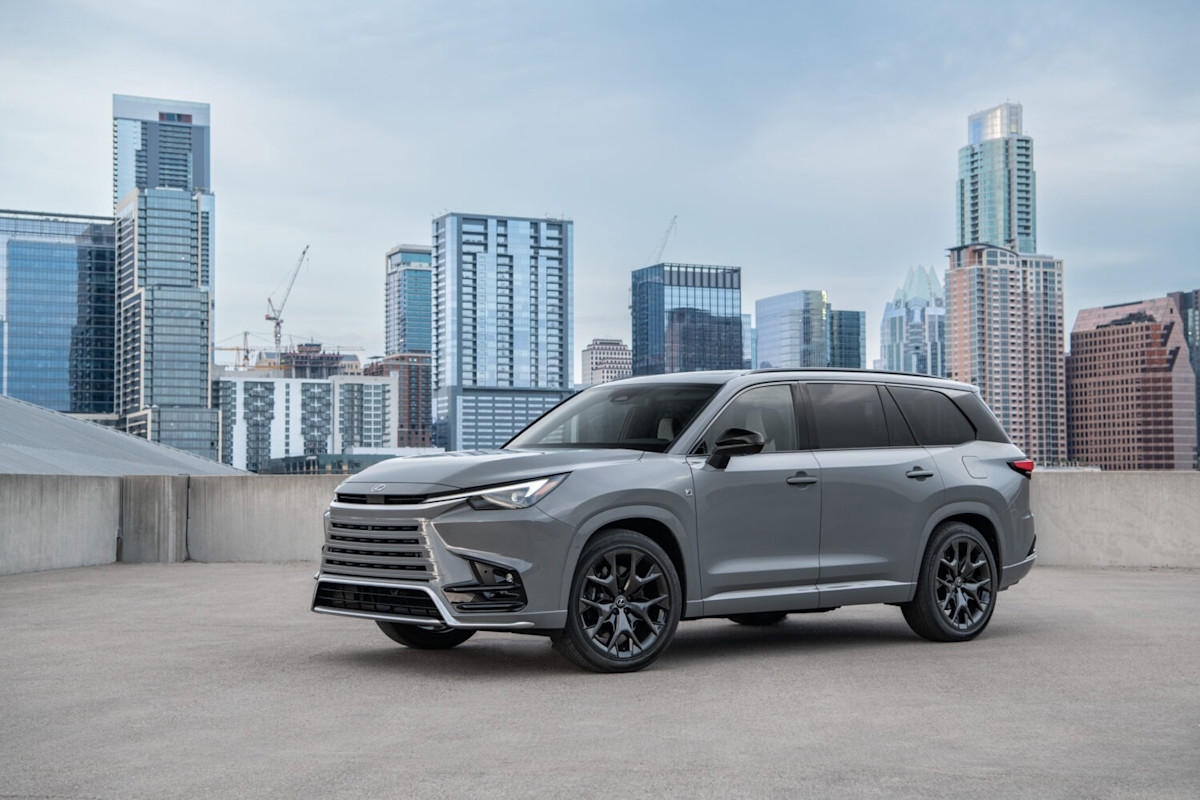
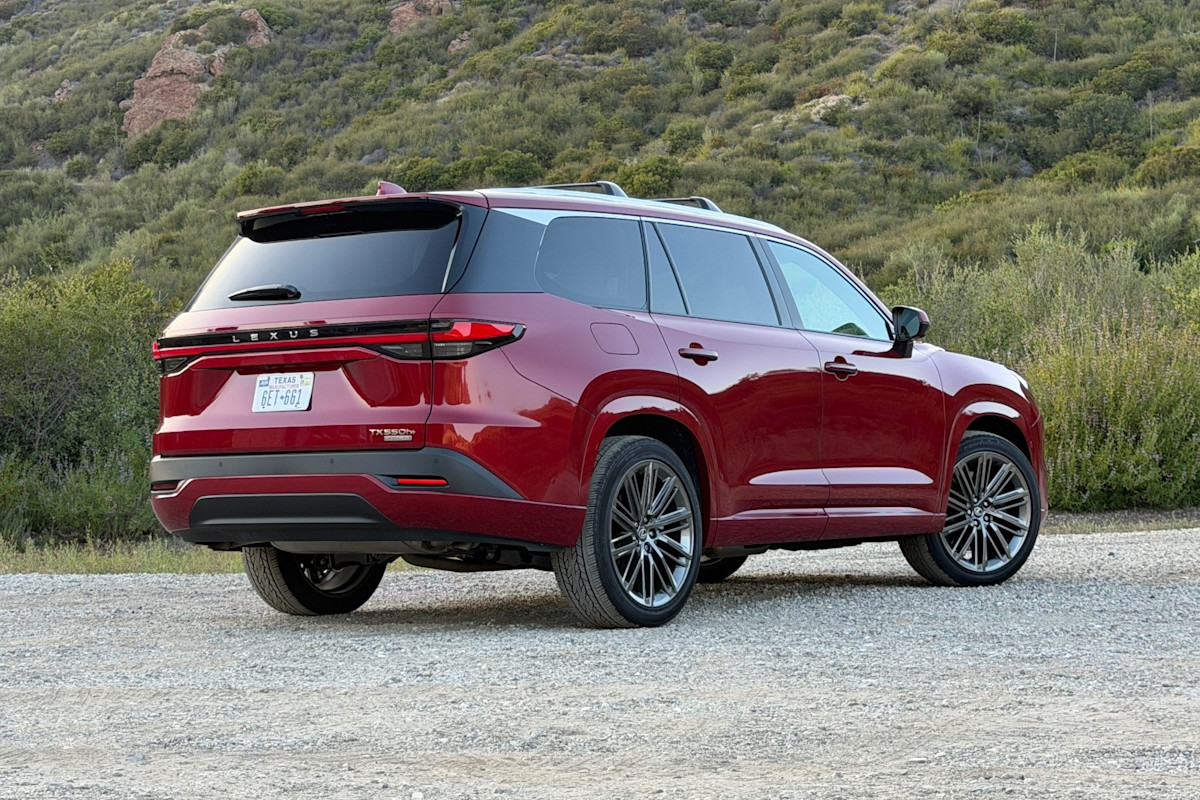
Except for its angry, spindle-grilled face, the Lexus TX has appealing styling, especially when fitted with the 22-inch multispoke wheels on our test vehicle. They’re polished instead of black, which means it's possible to see their intricate design. This year’s new Matador Red paint looks terrific, too, and is a darker and more elegant hue perfectly in keeping with this SUV’s luxury mission.
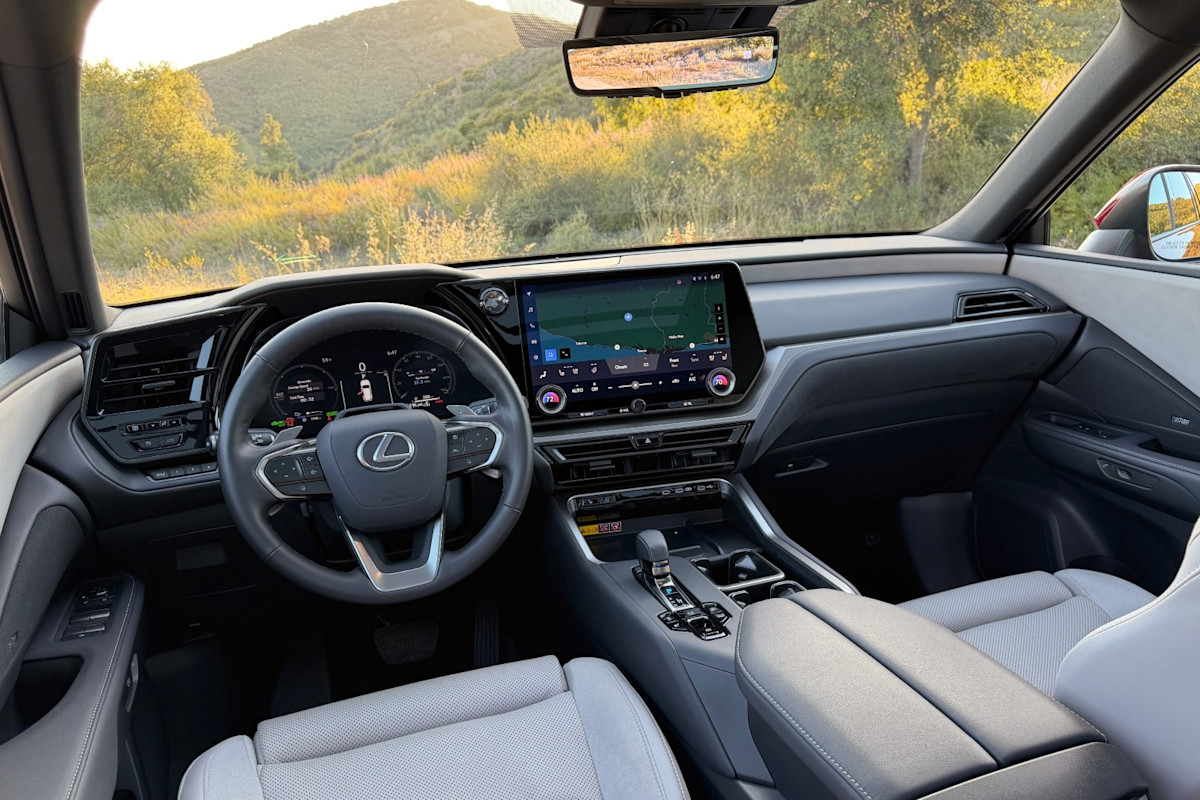
Inside, the test vehicle had the Birch semi-aniline leather, a light gray providing rich contrast against the otherwise black interior for a premium look and sumptuous feel. A panoramic sunroof is newly standard on the TX 550h+, and the natural light really made the cabin color pop.
Unfortunately, there's too much evidence of the underlying Toyota Grand Highlander on which the TX is based. This is mostly confined to the plastic on the lower third of the interior, but the test vehicle’s center console also flexed too much under pressure, the glovebox door felt cheap and flimsy, and all four doors had trouble closing without a slam. We expect more refinement and a greater sense of solidity at the TX 550h+ Luxury’s price point.
Performance
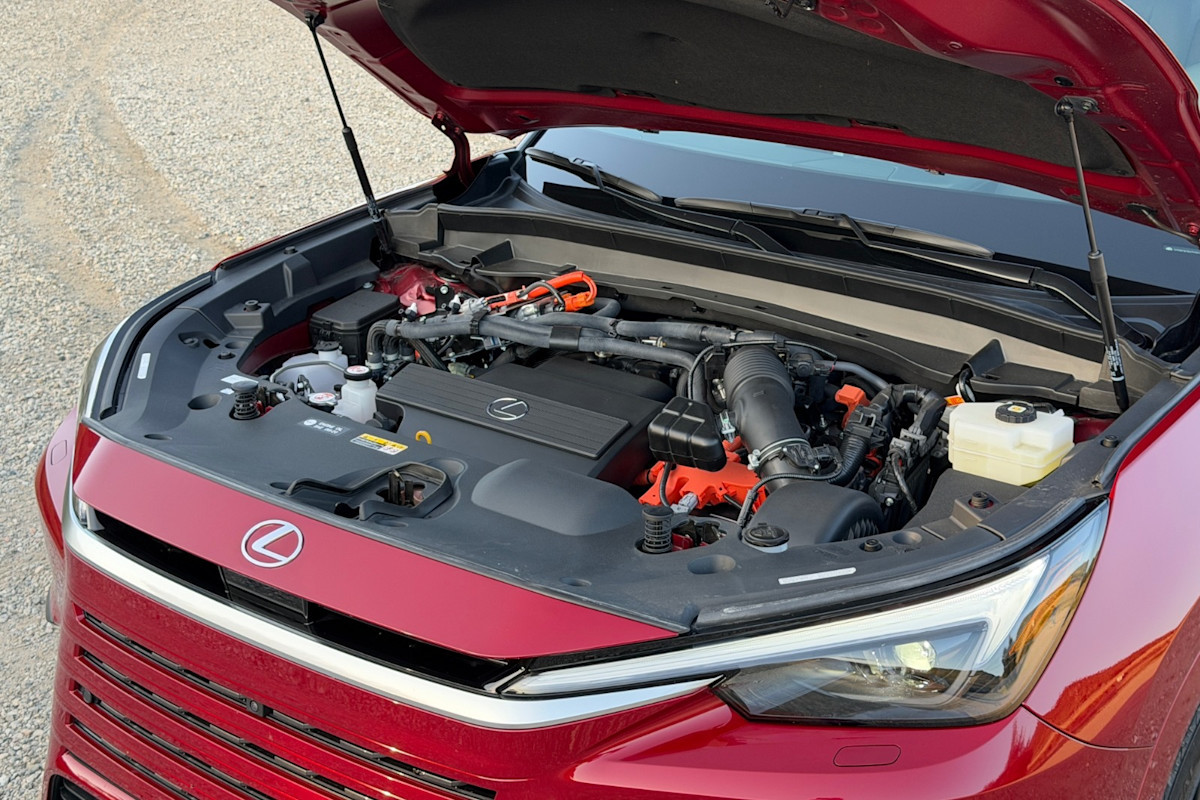
Lexus builds the TX 550h+ model’s plug-in hybrid powertrain around a 3.5-liter V6 engine, which is great, but it’s paired with a hybrid system that mimics a continuously variable transmission (CVT), which is not. These components pair with a Direct4 two-motor all-wheel-drive (AWD) system and an 18.1-kilowatt-hour lithium-ion battery pack for a combined total of 404 horsepower. That’s enough oomph to get this hefty three-row SUV to 60 mph in less than six seconds, according to Lexus.
Speed isn’t the reason most people buy a plug-in hybrid. Efficiency is. The TX 550h+ is EPA-rated at 33 miles of electric driving range and 29 mpg in combined city and highway driving when used as a traditional gas-electric hybrid.
With a fully charged battery, we headed out on our 30-mile Southern California fuel-economy driving loop, which has limited elevation change and splits the city and highway driving 50:50. Upon departure, the trip computer said we had 36 miles of range. After completing the loop, two miles remained. That’s close enough to the official rating to notch a success for the Lexus.
Separately, the TX averaged 28.3 mpg on this loop when driven solely as a hybrid. And on our vehicle evaluation route, it still returned 23.9 mpg despite climbing two mountain passes, and enthusiastic driving on the twisty roads of the Santa Monica Mountains.
According to Lexus, the TX 550h+ recharges in about three hours using a 240-volt Level 2 AC home charger. The company doesn’t provide a number when using a 120-volt household outlet, but we found it could fully recharge in about 12 hours.
We burned very little gas during typical driving in suburban Los Angeles, and plugging in each night guaranteed all the electric range we needed for local trips. The benefit of a plug-in hybrid is that it can travel on electricity most of the time, but when drivers need to go farther, they simply need to find a gas station.
The extra weight of the Direct4 motors and battery pack—snuggled low in a Toyota New Global Architecture-K (TNGA-K) platform already engineered to provide driving dynamism—likely also contributed to the unexpected athleticism.
We’re not saying the TX 550h+ is fun to drive because in many modern vehicles, dynamic competence doesn’t necessarily translate into driving enjoyment. That said, the soft but predictable TX 550h+ made remarkably quick work of Mulholland Highway, despite the modest grip limit of its all-season tires. The steering is fluid and precise, if not quick and communicative. The brakes displayed no hint of heating or fade, and the pedal response remained consistent and predictable. Vertical body motions are evident, but not excessive, and body roll in curves and corners isn’t a significant issue.
On freeways, it’s not quite as isolated from noise as drivers might expect, but most of the time, the only obvious intrusion is a drone under hard acceleration. It’s relatively muted when merging onto highways, but gets old fast when climbing mountain grades. The plug-in hybrid system at least supplies plenty of punch, and the suspension soaks up most road surface irregularities.
Despite the TX’s size, it’s easy to place the corners and to park. We squeezed it into SoCal’s undersized spaces with little trouble, and the huge exterior mirrors help with outward visibility. However, the reversing camera’s fisheye effect distorts the surroundings and it can seem like other cars are reversing simultaneously, or that pedestrians are suddenly a lot closer to the back of the TX.
Form & function
The plug-in-hybrid version of the TX comes only in Luxury trim, so it's loaded with features such as supple premium leather, a heated steering wheel, heated and ventilated front seats with a range of power adjustments, and heated and ventilated second-row captain’s chairs. Those individual second-row seats, and a two-person third-row seat, limit passenger capacity to six, but we think this model deserves the option of a second-row bench to better serve families of five.
Up front, the driver and passenger enjoy comfortable seats offering plenty of leg support. However, they lack the massage function we'd expect at this price. Storage space is generous, and Lexus even hides a bin underneath the wireless charging pad.
Second-row passengers sit high with a good view, there's plenty of legroom and footroom, and both captain’s chairs recline and have adjustable inboard armrests for added comfort. A rear climate control panel is standard, and our test vehicle had a removable second-row center console with cupholders.
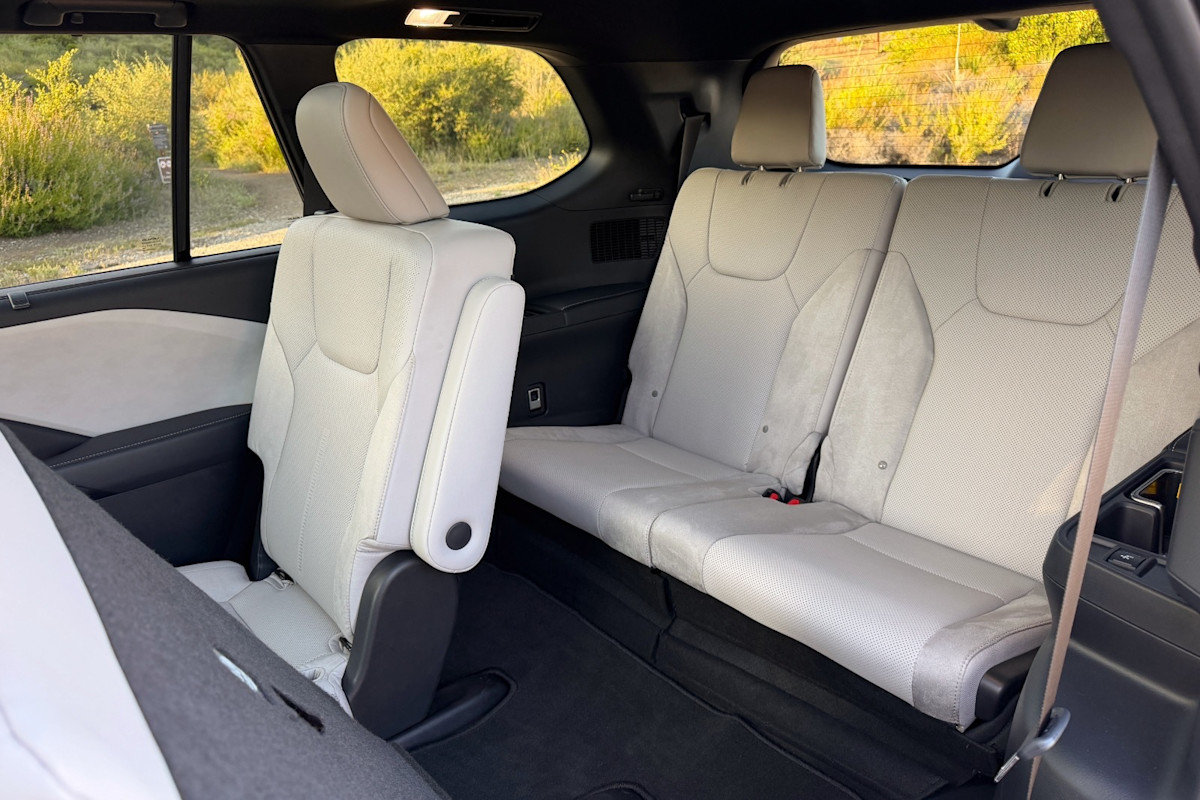
Entering the third-row seat is easier thanks to a power second-row seat release and a wide, flat step for secure footing. With the second-row seats scooched forward but still comfortable for a six-foot adult, another six-footer fits into the third-row without any trouble. Not only that, but the third-row seat is mounted high enough off the floor to provide some leg support, and the view out is excellent, making it an agreeable place to ride for longer distances. The backrest is Nebraska-flat, though, and lacks support.
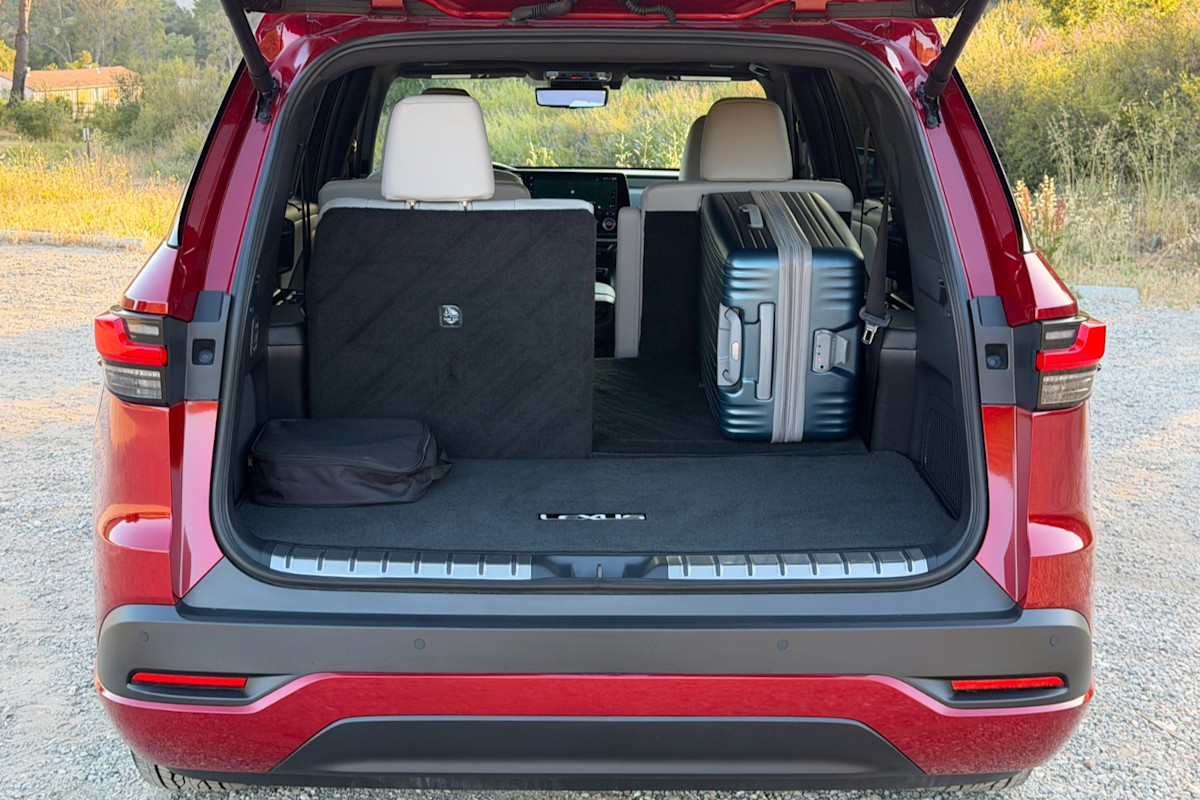
Lexus says the TX 550h+ offers up to 97 cubic feet of cargo space behind the front seats, which is about two Mazda Miata trunks shy of a Lincoln Navigator. The maximum volume behind the second-row seats is generous, too, at 57.4 cubic feet, and the TX holds 20.2 cubic feet of cargo behind its third row.
Technology
A 12.3-inch digital instrument cluster is standard. A plastic panel covers it, perhaps to mimic the appearance of a seamless single display that also incorporates the 14-inch touchscreen infotainment screen to the right. Unfortunately, that plastic cover gathers dust that's really obvious when the sun shines directly on it. Coupled with glare and reflections, that can make it hard to read the instrumentation.
Not that it’s easy to start with. Despite the digital display’s competitive size, it seems crammed full of tiny markings, making it hard to find functions at a glance. Changing the displayed data requires the use of unmarked, dual-function steering wheel controls.
The head-up display helps a lot in this regard, but is inexplicably an option—part of an expensive upgrade package even on this roughly $80,000 SUV.
Lexus provides large dials to adjust the cabin temperature and a small stereo volume knob. It's possible to adjust the volume separately using buttons on the steering wheel, but there’s no way to tune the radio up or down a few stations without touching the screen or issuing a voice command, and there are blank spaces on either side of the volume knob where tuning buttons could go.
The Lexus Interface infotainment system includes wireless Apple CarPlay, wireless Android Auto, SiriusXM satellite radio, and generous complimentary subscriptions to connected services such as Drive Connect, which provides access to a cloud-based navigation system and a conversational digital voice assistant. The latter performed well, but once the three-year free trial runs out, it might not be worth paying for considering Siri and Google Assistant perform the same function.
A 21-speaker Mark Levinson audio system is standard in the TX 550h+ Luxury and meets audio quality expectations for this price and segment. Aside from the aforementioned head-up display, other optional tech upgrades include digital key capability, a camera-based digital rear-view mirror, and a surround-view camera system.
Safety
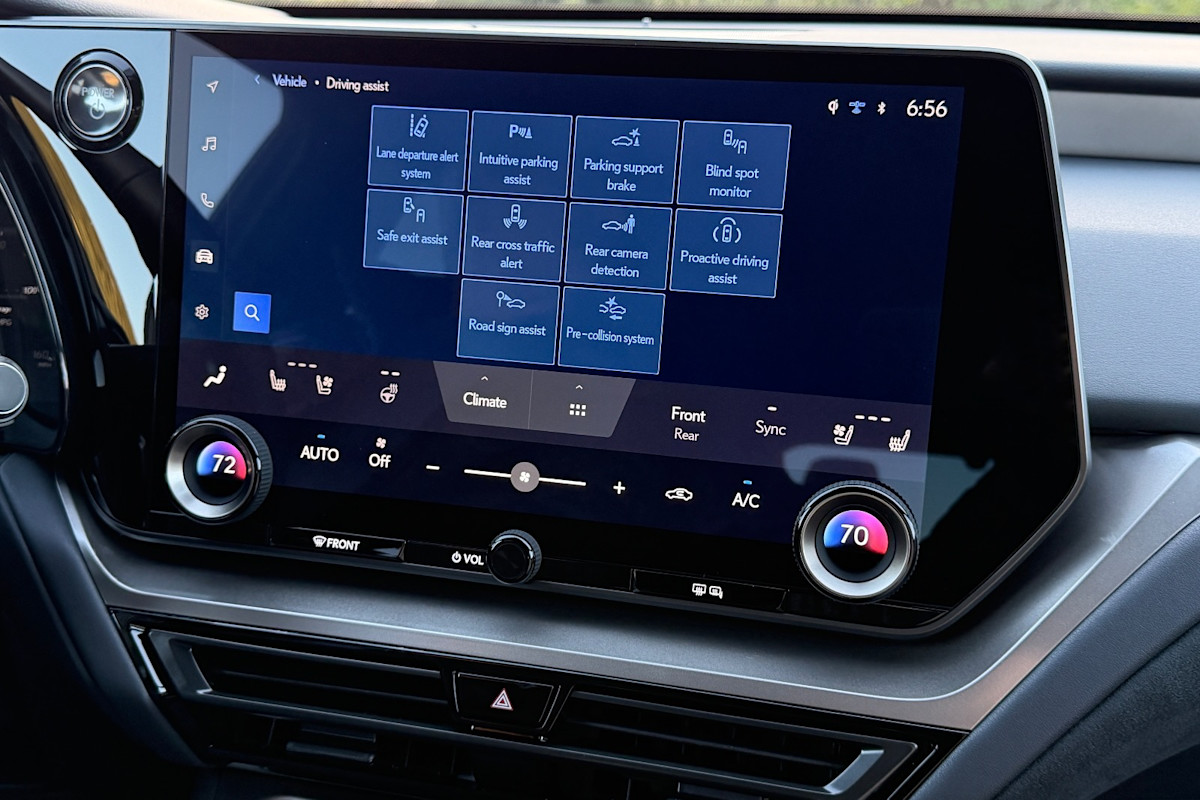
The standard Lexus Safety System+ 3.0 (LSS+ 3.0) includes: adaptive cruise control, forward-collision warning, pedestrian detection, automatic emergency braking, lane-departure warning, lane-keep assist, lane-centering assist, traffic-sign assist, high-beam assist, and Proactive Driving Assist, which applies braking to maintain a safe following distance and steering to help avoid obstacles.
The TX also has standard blind-spot monitors, rear cross-traffic alert, safe-exit assist, and parking sensors with low-speed automatic braking, but they’re not considered part of LSS+ 3.0. The test vehicle’s optional Convenience Package added front cross-traffic alert and Traffic Jam Assist, which offers hands-free driving capability at speeds under 25 mph.
The driver-assist tech performed capably, but not consistently. Proactive Driving Assist once braked so abruptly that a following driver thought we brake-checked them. When we accidentally blocked the driver-monitoring camera, the car tried to slow to a stop, assuming we’d become incapacitated. And Traffic Jam Assist’s 25 mph threshold is too low for practical use (BMW offers a similar system that works up to 40 mph). During the rest of our time with the TX, things worked well.
Crash-test ratings from the National Highway Traffic Safety Administration (NHTSA) were not available at the time of writing. The Insurance Institute for Highway Safety (IIHS) has so far released a single “Acceptable” rating in the small overlap frontal-impact test.
Cost-effectiveness
The Volvo XC90 is the TX plug-in hybrid’s closest rival, because it’s also available with a third row. Unlike the Lexus, the Volvo is available in three trim levels and offers a lower base price. However, in its top Ultra trim, the XC90 T8 plug-in hybrid and the TX 550h+ are remarkably close in price, power, efficiency, range, and equipment.
The TX offers more passenger and cargo space, but the XC90’s second-row bench means you can seat five without using the third row. The Volvo is also quicker, is an IIHS “Top Safety Pick,” and matches the Lexus’ complimentary scheduled maintenance program.
The BMW X5 xDrive50e and the Mercedes-Benz GLE 450e also have plug-in hybrid powertrains, but without three rows of seats. Both the BMW and the Mercedes have lower base prices than the Lexus, but when they're loaded up to match the TX 550h+ Luxury’s level of equipment, that price advantage evaporates.
The BMW provides 38 miles of electric range, while the Mercedes offers an impressive 49 miles. However, when driven as gas-electric hybrids, the X5 and GLE aren’t as fuel-efficient as the TX. BMW offers complimentary maintenance for three years and 36,000 miles—the length of a typical lease contract. That’s more generous than the two free service visits buyers get with the TX or the XC90.
That makes for an underwhelming value picture, and our frustration with much of the TX’s tech was another demerit. While we found the TX otherwise likeable, those are two big marks against it.

What owners say
Likes : 6cylinder engine is reliable PHEV! That spacious 3rd row Lexus quality, reliability and drive feel Dislikes: Grill Interior is a little too safe
March 27, 2026Trims & specs
Base MSRP N/A | Seating N/A |
Engine N/A | Cargo Capacity N/A |
Combined MPG N/A | Drivetrain N/A |
Base MSRP $70,460 | Seating 6 |
Engine 2.4L 366 hp I4 Hybrid | Cargo Capacity 20.2 cu ft |
Combined MPG 27 | Drivetrain AWD |
Base MSRP N/A | Seating N/A |
Engine N/A | Cargo Capacity N/A |
Combined MPG N/A | Drivetrain N/A |
Base MSRP $73,610 | Seating 6 |
Engine 2.4L 366 hp I4 Hybrid | Cargo Capacity 20.2 cu ft |
Combined MPG 27 | Drivetrain AWD |
Base MSRP N/A | Seating N/A |
Engine N/A | Cargo Capacity N/A |
Combined MPG N/A | Drivetrain N/A |
Base MSRP $80,610 | Seating 6 |
Engine N/A | Cargo Capacity 20.2 cu ft |
Combined MPG N/A | Drivetrain N/A |
Base MSRP N/A | Seating N/A |
Engine N/A | Cargo Capacity N/A |
Combined MPG N/A | Drivetrain N/A |
Base MSRP N/A | Seating N/A |
Engine N/A | Cargo Capacity N/A |
Combined MPG N/A | Drivetrain N/A |


Pricing trends
MSRP range
$70,460 - $80,610
Current avg. market price
$71,667
Trending up by 0.1% this month
July 2026 - October 2026