2026 Lexus RX Hybrid Reviews, Pricing & Specs
Write a review$53,525 to $71,860
Original MSRP
7.5
of 10
expert review
avg user rating
(0 reviews)
Pros
Better EPA fuel economy ratings than rivals
Good power
Comfortable, tech-rich interior
Cons
Overly firm ride
EPA rating is hard to achieve
Not much sport in F Sport Performance
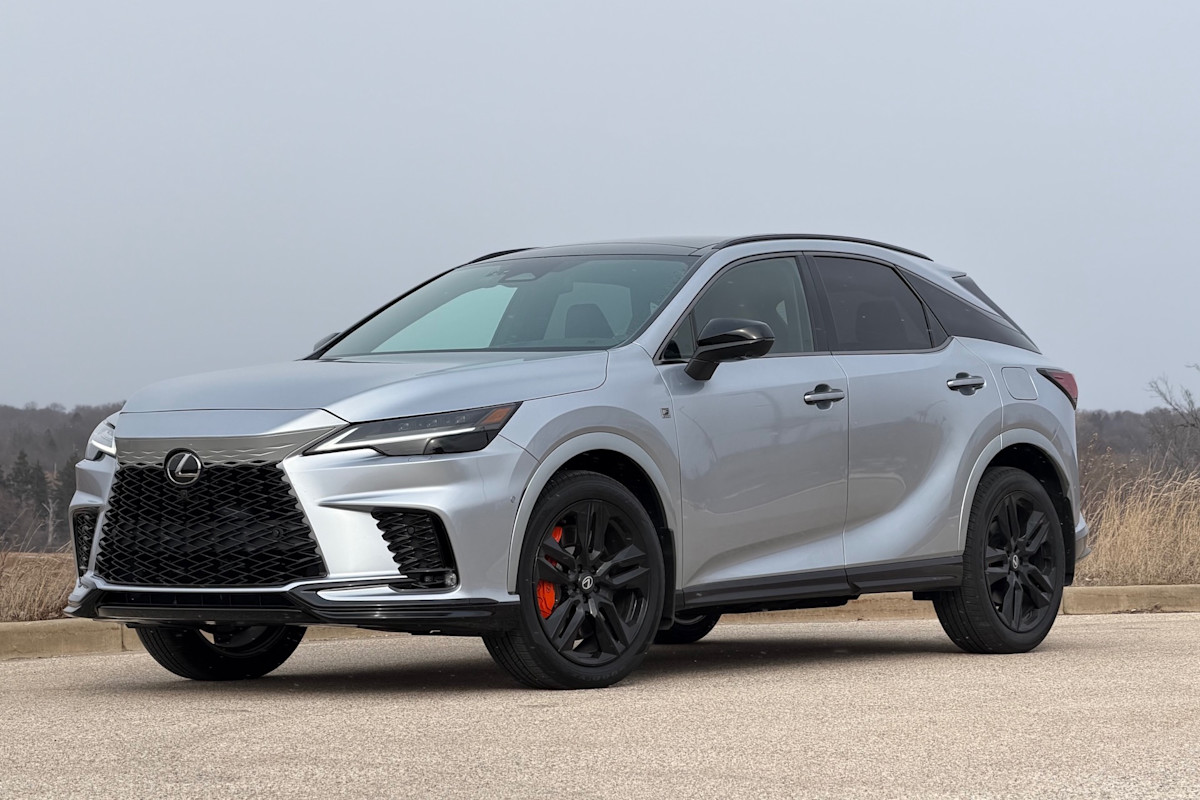
The 2026 Lexus RX 500h F Sport Performance uses hybrid technology to achieve power similar to the turbocharged six-cylinder engines of class leaders, but with only moderately better fuel economy.
Buyers have high expectations of luxury crossovers. They want arresting design, comfortable interiors, the latest technology, and powerful engines. Several automakers employ turbocharged six-cylinder engines to get that power, but Lexus is going a different way with its most potent RX model—the RX 500h F Sport Performance. It still uses a turbocharger, but also employs hybrid technology to boost power and cut acceleration times while improving fuel economy. It’s one of two 2026 Lexus RX Hybrid models, along with the tamer RX 350h.
Verdict: The RX 500h F Sport Performance may be the most powerful RX, but it’s not as powerful or quick as most rivals, and despite the F Sport badge, there isn’t much real “sport” to be had. While it does have good EPA fuel economy ratings, we found them hard to match in the real world.

Lexus aims for high style with the RX 500h F Sport Performance, and perhaps overshoots the target with sometimes excessive flair.
The controversy is all in the nose, where Lexus eschews its “spindle” grille for a large, black, trapezoidal item, flanked by slim headlights up top and air intakes down low. The hood bends down into the grille like a misshapen nose, and the Lexus L logo sits at the top. The whole face borders on over-stylized.
The profile doesn’t try as hard, but it's still stylish. Flat flares surround each wheel, a character line that rises from the back of the front door to the rear wheel gives a sense of motion, and the floating roofline suggests a fastback shape that resolves into a rear spoiler. It sits on 21-inch wheels in black or dark gray, and the rear has a full-width taillight above lower fog lights that sit below housings to echo the front air intakes. Dark trim on the window surrounds and black mirrors adds a sporty look.
Inside, the RX 500h is offered with Dark Graphite or Rioja Red leather. The red adds a decidedly sporty element, as do the perforated leather-wrapped steering wheel and aluminum pedals. The driver sits in front of a pair of digital screens and is surrounded by soft-touch materials.

The RX 500h equals the power of some luxury crossover-SUV rivals but goes about it in a different way. It doesn’t use a turbocharged V6 to crank out its 366 horsepower and 406 pound-feet of torque. Instead, it goes with a four-cylinder engine and a hybrid system to make decent power balanced by good but not great fuel economy.
The engine is a turbocharged 2.4-liter four-cylinder that generates 271 horsepower, and two electric motors account for the remaining 95 hp. The front motor sits between the engine and the six-speed automatic transmission, and the rear motor is part of an eAxle that gives the RX 500h all-wheel drive (AWD). This is a different system than the base RX 350h, which uses a 2.5-liter naturally aspirated four-cylinder engine and does without a conventional geared transmission. It still has AWD, but is rated at just 246 hp and 233 lb-ft of torque.
Go easy from a stop and only the front and rear motors provide the acceleration. Dig deeper into the throttle and the engine joins in, and that tops out with full power from both motors. Sport mode, however, keeps the engine on at all times.
The motors, the engine, and the transmission work well together. The hand-off from electric to gas propulsion is seamless, and the power steps up through the gears thanks to the traditional automatic transmission, rather than arriving in the slushy way of most Toyota/Lexus hybrids (including the F Sport Performance’s RX 350h sibling) which rely on the electric motors and a planetary gearset in lieu of a conventional transmission.
It’s fairly strong, too. Lexus quotes a 5.9-second 0-60 mph time, which feels about right based on our drive. While that’s a good number, it's almost two seconds slower than a BMW X3 M50 xDrive. Steering-wheel shift paddles allow drivers to downshift to tap into more power when desired, and the transmission offers smooth shifts. The power is accompanied by a synthetic whirr, much like the sound of various electric vehicles. It’s more pronounced and deeper in Sport mode, and can be turned off to allow the turbo-four to sing its muffled, slightly coarse tune.
Lexus gives the RX 500h Sport Performance standard adaptive dampers, rear-axle steering, and a firmer suspension than other RX models. The front brakes are also larger, with 15.7-inch rotors and six-piston calipers versus 13.4 inches with two-piston calipers on other models. It’s all set on rather large 21-inch wheels with 235/50R21 Bridgestone Alenza Sport A/S tires.
That equipment makes the RX 500h F Sport Performance firmer but not much sportier. The steering is direct but not overly quick and lacks feel. The all-season tires don’t have much grip, but the rear-axle steering helps to keep the vehicle stable in corners. With 8.1 inches of ground clearance, the SUV leans in turns; the dampers’ Sport setting helps to combat that, but at the cost of rendering the traditionally smooth ride overly firm. The ride gets busy on bumpy roads and sharp ruts pound through.
Lexus provides a Custom mode that allows drivers to choose the suspension, powertrain, steering, and air conditioning settings. We recommend going with the Sport settings for the powertrain and steering but not the dampers, and for a truly sporty experience, buyers will be better served by the BMW X3, the Audi SQ5, or the Mercedes-AMG GLC 43.

The ride may not always be comfortable, but the RX’s interior is. Front-seat occupants get eight-way power-adjustable sport seats with standard heating and cooling and, though thickly bolstered for good support, the seats have enough room for larger frames. The steering wheel is also heated, and a panoramic sunroof comes standard.
The rear seats also have good legroom, even for larger adults, though shoehorning three adults back there will make them rather uncomfortable. The seat cushions sit high enough to make for a comfortable position on long trips.
With the second row up, the RX 500h has a useful 29.6 cubic feet of cargo space. Fold those seats down via power controls in the second row or the cargo area and there are 46.2 cubic feet of space, which is small for the class. The X3, for example, has 67.1 cubic feet of cargo space.

The RX 500h is fitted with a 12.3-inch digital instrument cluster and a 14-inch touchscreen, along with a standard head-up display. The infotainment system includes wireless Apple CarPlay and Android Auto, as well as Lexus Intelligent Assist that allows drivers to use voice commands by saying “Hey Lexus.” Wireless phone charging is also standard.
The touchscreen is tilted toward the driver and it reacts quickly to touch inputs. It’s a far cry from the previous Lexus system that used an awkward, mouse-like controller. However, the steering wheel’s four-way touch-sensitive pads are frustrating, because they control the head-up display information and position, the cruise control settings, and the information displayed in the digital instrument cluster, and figuring out how to get to the desired function is often distracting.
Lexus also provides a useful three-year Drive Connect subscription with Google points of interest and real-time traffic information.

Lexus equips the RX 500h with its Lexus Safety System+ 3.0 suite of active safety features, which includes forward-collision warning, automatic emergency braking with pedestrian detection and intersection assist, adaptive cruise control, lane-keep assist, high-beam assist, traffic-sign recognition, and emergency steering assist. Also standard are front and rear parking sensors, blind-spot monitors, and rear cross-traffic alert. Options include automatic parking, remote automatic parking, a surround-view camera system, and traffic-jam assist, which includes front cross-traffic alert and lane-change assist.
The RX gets generally good crash-test ratings with one exception—it earns a perfect five-star rating from the National Highway Traffic Safety Administration (NHTSA), but it doesn’t fare so well in Insurance Institute for Highway Safety (IIHS) testing. It gets top “Good” ratings in all IIHS tests except for the updated moderate front overlap test, where it scores a “Poor” rating. That keeps it from earning a Top Safety Pick or Top Safety Pick+ award.
The RX comes with the right safety features and they all worked well during our test drive. However, as we mentioned earlier, we wish the touch-sensitive steering-wheel buttons for the cruise control were easier to understand.

The RX 500h F Sport Performance starts at $67,650 including a $1,450 destination charge. That’s quite a lot when it can’t match the similarly priced X3 M50 or Mercedes-AMG GLC 43 for power.
In addition to the aforementioned features, it comes standard with LED headlights and fog lights, dual-zone automatic climate control, a power tilt/telescoping steering column, driver’s seat memory, ambient lighting, roof rails, and a 12-speaker audio system. That, along with the added power, at least helps to justify the RX 500h’s premium over the RX 350h hybrid, which starts at $54,925 with destination.
The main strength of the RX 500h’s hybrid system versus turbocharged six-cylinder rivals is fuel economy. The EPA rates it at 27 mpg city, 28 mpg highway, and 27 mpg combined. In our experience, that requires a light throttle, as we averaged just 18.4 mpg over 120 miles of mixed and sometimes spirited driving.
Nonetheless, it seems like an eight-speed automatic with taller overdrive gears and smaller wheels could give the RX 500h better fuel economy. Maybe Lexus should consider expanding the RX 500h lineup to include non F Sport trims with those smaller wheels to improve both fuel economy and ride quality, without asking customers to trade down to the less-powerful RX 350h.

User reviews for 2026 Lexus RX Hybrid
Write a review2026 Lexus RX Hybrid Pricing
Trims & specs
Air Conditioning
Automatic climate control front air conditioning · Dual front air conditioning zones · Automatic climate control rear air conditioning · Single rear air conditioning zones
Airbags
Passenger seat cushion front airbags · Driver knee airbags · Passenger airbag deactivation: occupant sensing deactivation · Front side airbags · Front side curtain airbags
Audio System
Antenna Type: mast · Voice recognition audio system · Bluetooth auxiliary audio input · AM/FM radio · Satellite Radio: SiriusXM · 1 subwoofer · Total Number of Speakers: 12
Brakes
ABS: 4-wheel · Braking assist: hill start assist · Electronic parking brake: auto off · Front brake diameter: 13.4 · Front brake width: 1.1 · Front brakes: ventilated disc · Rear brake diameter: 13.4 · Rear brake width: 0.71 · Rear brakes: ventilated disc
Comfort Features
Armrests: rear center with cupholders · Door trim: leatherette · Floor Mat Material: carpet · Floor Material: carpet · Floor Mats: front · Shift knob trim: leather · Steering wheel trim: leather
Convenience Features
Adaptive stop and go cruise control: semi-automatic · Assist handle: rear · Autonomous lane guidance: lane centering · Cargo area power outlet: 12V · Cargo cover: retractable · Center console: front console with armrest and storage · Cruise control: adaptive · Cupholders: rear · Dimming rearview mirror: auto-dimming · Multi-function remote: trunk release · One-touch windows: 4 · Power outlet(s): USB front · Power steering: electric · Power windows: lockout button · Reading lights: rear · Steering wheel: power tilt and telescopic · Steering wheel mounted controls: audio · Storage: front seatback · Sunshade: side window · Universal garage door opener: Homelink · Vanity mirrors: dual illuminating
Driver Seat
Adjustable lumbar support: power · Power adjustments: 8
Drivetrain
4WD Type: on demand · Axle ratio: 3.64
Engine
Electric Motor Battery Type: nickel-metal hydride · Hybrid Gas Engine HP: 185 · Hybrid Gas Engine HP@RPM: 6000 · Hybrid Gas Engine Torque: 178 · Hybrid gas Engine Torque@RPM: 4300
Exterior Features
Door handle color: body-color · Fender lip moldings: body-color · Front bumper color: body-color · Grille color: chrome · Mirror color: body-color with chrome accents · Rear bumper color: body-color · Rear spoiler: roofline spoiler · Rear spoiler color: body-color · Rear trunk/liftgate: liftgate · Rocker panel color: black · Window trim: chrome
Headrests
Front headrests: adjustable · Number of front headrests: 2 · Number of rear headrests: 3
Hybrid
Starter Type: motor/generator
In Car Entertainment
Connected in-car apps: Google POIs · Infotainment: Lexus Interface · Infotainment screen size: 9.8 in. · Smartphone integration: wireless Android Auto
Instrumentation
Fuel economy display: MPG · Instrument cluster screen size: 12.3 in. · Warnings and reminders: coolant temperature warning
Lights
Daytime running lights: LED · Exterior entry lights: security approach lamps · Front fog lights: LED · Headlights: LED · Tail and brake lights: LED
Mirrors
Exterior mirrors: power folding
Passenger Seat
Adjustable lumbar support: power · Power adjustments: 8
Rear Seats
Type: 40-20-40 split bench
Safety
Automatic emergency braking: front pedestrian · Camera system: rearview · Child seat anchors: LATCH system · Cross Traffic Alert: rear · Crumple zones: front · Impact sensor: post-collision safety system · Parking sensors: front · Pre-Collision Warning System: vibrating steering wheel · Pre-collision warning system: pedestrian detection · Rear pre-collision warning system: pedestrian detection · Rearview monitor: in dash
Seatbelts
Emergency locking retractors: front · Front seatbelts: 3-point · Seatbelt force limiters: front and rear · Seatbelt pretensioners: front · Seatbelt warning sensor: driver and passenger · Second row seatbelts: 3-point
Seats
Driver seat power adjustments: reclining · Front seat type: bucket · Passenger seat power adjustments: reclining · Rear headrests: adjustable · Rear seat folding: split · Rear seat manual adjustments: reclining · Upholstery: leatherette
Security
Power door locks: anti-lockout
Spare Tire
Mount Location: inside · Size: temporary
Spare Wheel
Rim Type: steel
Stability and Traction
Traction control: with trailer stability control
Steering
Turns lock-to-lock: 2.8
Suspension
Front Arm Type: lower control arms · Front Shock Type: gas shock absorbers · Front Spring Type: coil springs · Front Suspension Classification: independent · Front Suspension Type: MacPherson struts · Rear Shock Type: gas shock absorbers · Rear Spring Type: coil springs · Rear Suspension Classification: independent · Rear Suspension Type: multi-link · Stabilizer bar(s): front
Telematics
Driver assistance app: roadside assistance · Electronic messaging assistance: with voice recognition · Navigation system: over-the-air map updates (OTA) · Phone: voice activated · Phone wireless data link: Bluetooth · Smart device app function: lock operation · Wifi: hotspot
Tires
Type: all season
Tires and Rims
Wheel type: aluminum alloy
Wheels
Wheel spokes: 5
Windows
Front wipers: variable intermittent · Laminated glass: acoustic front side · Liftgate window: fixed · Power windows: with safety reverse · Rear wiper: auto-on in reverse
Air Conditioning
Automatic climate control front air conditioning · Dual front air conditioning zones · Automatic climate control rear air conditioning · Single rear air conditioning zones
Airbags
Dual front airbags · Driver knee airbags · Passenger airbag deactivation: occupant sensing deactivation · Front side airbags · Rear side curtain airbags
Audio System
Antenna Type: diversity · Voice recognition audio system · Bluetooth auxiliary audio input · AM/FM radio · Satellite Radio: SiriusXM · 1 subwoofer · Total Number of Speakers: 12
Brakes
ABS: 4-wheel · Braking assist: hill start assist · Electronic parking brake: auto off · Front brake diameter: 13.4 · Front brake width: 1.1 · Front brakes: ventilated disc · Rear brake diameter: 13.4 · Rear brake width: 0.71 · Rear brakes: ventilated disc
Comfort Features
Armrests: rear center folding with storage · Center console trim: wood · Door trim: leatherette · Floor Mat Material: carpet · Floor Material: carpet · Floor Mats: front · Shift knob trim: leather · Steering wheel trim: leather
Convenience Features
Adaptive stop and go cruise control: semi-automatic · Assist handle: rear · Autonomous lane guidance: lane centering · Cargo area power outlet: 12V · Cargo cover: retractable · Center console: with lighting · Cruise control: adaptive · Cupholders: rear · Dimming rearview mirror: auto-dimming · Easy entry: power steering wheel · Memorized settings: 3 driver · Multi-function remote: proximity entry system · One-touch windows: 4 · Power outlet(s): USB-C front · Power steering: speed-proportional · Power windows: lockout button · Reading lights: front · Steering wheel: power tilt and telescopic · Steering wheel mounted controls: phone · Storage: accessory hook · Sunshade: side window · Universal garage door opener: Homelink · Vanity mirrors: dual illuminating
Driver Seat
Adjustable lumbar support: power · Power adjustments: 8
Drivetrain
4WD Type: on demand · Axle ratio: 3.64
Engine
Electric Motor Battery Type: nickel-metal hydride · Hybrid Gas Engine HP: 185 · Hybrid Gas Engine HP@RPM: 6000 · Hybrid Gas Engine Torque: 178 · Hybrid gas Engine Torque@RPM: 4300
Exterior Features
Door handle color: body-color · Fender lip moldings: body-color · Front bumper color: body-color · Grille color: chrome · Mirror color: body-color with chrome accents · Rear bumper color: body-color · Rear spoiler: roofline spoiler · Rear spoiler color: body-color · Rear trunk/liftgate: power operated · Rocker panel color: black · Window trim: chrome
Headrests
Front headrests: adjustable · Number of front headrests: 2 · Number of rear headrests: 3
Hybrid
Starter Type: motor/generator
In Car Entertainment
Connected in-car apps: Google search · Infotainment: Lexus Interface · Infotainment screen size: 9.8 in. · Smartphone integration: wireless Apple CarPlay
Instrumentation
Fuel economy display: range · Instrument cluster screen size: 12.3 in. · Warnings and reminders: low battery
Lights
Daytime running lights: LED · Exterior entry lights: security approach lamps · Front fog lights: LED · Headlights: wiper activated · Tail and brake lights: LED
Mirrors
Exterior mirrors: reverse gear tilt
Passenger Seat
Adjustable lumbar support: power · Power adjustments: 8
Rear Seats
Type: 40-20-40 split bench
Roof
Moonroof: tilt/slide · Roof rails: aluminum
Safety
Automatic emergency braking: front pedestrian · Camera system: rearview · Child seat anchors: LATCH system · Cross Traffic Alert: rear · Crumple zones: front · Impact sensor: post-collision safety system · Parking sensors: rear · Pre-Collision Warning System: audible warning · Pre-collision warning system: pedestrian detection · Rear pre-collision warning system: pedestrian detection · Rearview monitor: in dash
Seatbelts
Emergency locking retractors: front and rear · Front seatbelts: 3-point · Seatbelt force limiters: front and rear · Seatbelt pretensioners: front · Seatbelt warning sensor: driver and passenger · Second row seatbelts: 3-point
Seats
Driver seat power adjustments: height · Front seat type: bucket · Passenger seat power adjustments: height · Rear headrests: adjustable · Rear seat folding: split · Rear seat manual adjustments: reclining · Upholstery: leatherette
Security
Power door locks: anti-lockout
Spare Tire
Mount Location: inside · Size: temporary
Spare Wheel
Rim Type: steel
Stability and Traction
Traction control: with trailer stability control
Steering
Turns lock-to-lock: 2.8
Suspension
Front Arm Type: lower control arms · Front Shock Type: gas shock absorbers · Front Spring Type: coil springs · Front Suspension Classification: independent · Front Suspension Type: MacPherson struts · Rear Shock Type: gas shock absorbers · Rear Spring Type: coil springs · Rear Suspension Classification: independent · Rear Suspension Type: multi-link · Stabilizer bar(s): rear
Telematics
Driver assistance app: roadside assistance · Electronic messaging assistance: with voice recognition · Navigation system: with voice recognition · Phone: voice activated · Phone wireless data link: Bluetooth · Smart device app function: maintenance status · Wifi: hotspot
Tires
Type: all season
Tires and Rims
Wheel type: aluminum alloy
Wheels
Wheel spokes: 5
Windows
Front wipers: rain sensing · Laminated glass: acoustic · Liftgate window: fixed · Power windows: with safety reverse · Rear wiper: with washer
Air Conditioning
Automatic climate control front air conditioning · Dual front air conditioning zones · Automatic climate control rear air conditioning · Single rear air conditioning zones
Airbags
Passenger seat cushion front airbags · Driver knee airbags · Passenger airbag deactivation: occupant sensing deactivation · Front side airbags · Rear side curtain airbags
Audio System
Antenna Type: diversity · Voice recognition audio system · USB auxiliary audio input · AM/FM radio · Satellite Radio: SiriusXM · 1 subwoofer · Total Number of Speakers: 12
Brakes
ABS: 4-wheel · Braking assist: hill start assist · Electronic parking brake: auto off · Front brake diameter: 13.4 · Front brake width: 1.1 · Front brakes: ventilated disc · Rear brake diameter: 13.4 · Rear brake width: 0.71 · Rear brakes: ventilated disc
Comfort Features
Armrests: rear center folding with storage · Center console trim: wood · Door trim: leatherette · Floor Mat Material: carpet · Floor Material: carpet · Floor Mats: front · Shift knob trim: leather · Steering wheel trim: wood
Convenience Features
Adaptive stop and go cruise control: semi-automatic · Assist handle: rear · Autonomous lane guidance: lane centering · Cargo area power outlet: 12V · Cargo cover: retractable · Center console: front console with armrest and storage · Cruise control: adaptive · Cupholders: rear · Dimming rearview mirror: auto-dimming · Easy entry: power steering wheel · Memorized settings: 3 driver · Multi-function remote: proximity entry system · One-touch windows: 4 · Power outlet(s): 12V front · Power steering: speed-proportional · Power windows: lockout button · Reading lights: rear · Steering wheel: power tilt and telescopic · Steering wheel mounted controls: paddle shifter · Storage: grocery bag holder · Sunshade: side window · Universal garage door opener: Homelink · Vanity mirrors: dual illuminating
Driver Seat
Adjustable lumbar support: power · Power adjustments: 8
Drivetrain
4WD Type: on demand · Axle ratio: 3.64
Engine
Electric Motor Battery Type: nickel-metal hydride · Hybrid Gas Engine HP: 185 · Hybrid Gas Engine HP@RPM: 6000 · Hybrid Gas Engine Torque: 178 · Hybrid gas Engine Torque@RPM: 4300
Exterior Features
Door handle color: body-color · Fender lip moldings: body-color · Front bumper color: body-color · Grille color: black · Mirror color: black · Rear bumper color: body-color · Rear spoiler: roofline spoiler · Rear spoiler color: body-color · Rear trunk/liftgate: liftgate · Rocker panel color: black · Window trim: chrome
Headrests
Front headrests: adjustable · Number of front headrests: 2 · Number of rear headrests: 3
Hybrid
Starter Type: motor/generator
In Car Entertainment
Connected in-car apps: Google POIs · Infotainment: Lexus Interface · Infotainment screen size: 9.8 in. · Smartphone integration: wireless Android Auto
Instrumentation
Fuel economy display: MPG · Instrument cluster screen size: 12.3 in. · Warnings and reminders: low oil pressure
Lights
Daytime running lights: LED · Exterior entry lights: security approach lamps · Front fog lights: LED · Headlights: Auto on/off · Tail and brake lights: LED
Mirrors
Exterior mirrors: integrated turn signals
Passenger Seat
Adjustable lumbar support: power · Power adjustments: 8
Rear Seats
Type: 40-20-40 split bench
Roof
Moonroof: tilt/slide · Roof rails: black
Safety
Automatic emergency braking: intersection/junction turn · Camera system: rearview · Child seat anchors: LATCH system · Cross Traffic Alert: rear · Crumple zones: front · Impact sensor: post-collision safety system · Parking sensors: front · Pre-Collision Warning System: audible warning · Pre-collision warning system: intersection/junction turn · Rear pre-collision warning system: pedestrian detection · Rearview monitor: in dash
Seatbelts
Emergency locking retractors: front and rear · Front seatbelts: 3-point · Seatbelt force limiters: front and rear · Seatbelt pretensioners: front · Seatbelt warning sensor: driver and passenger · Second row seatbelts: 3-point
Seats
Driver seat power adjustments: reclining · Front seat type: bucket · Passenger seat power adjustments: reclining · Rear headrests: adjustable · Rear seat folding: split · Rear seat manual adjustments: reclining · Upholstery: leatherette
Security
Power door locks: anti-lockout
Spare Tire
Mount Location: inside · Size: temporary
Spare Wheel
Rim Type: steel
Stability and Traction
Traction control: with trailer stability control
Steering
Turns lock-to-lock: 2.8
Suspension
Front Arm Type: lower control arms · Front Shock Type: gas shock absorbers · Front Spring Type: coil springs · Front Suspension Classification: independent · Front Suspension Type: MacPherson struts · Rear Shock Type: gas shock absorbers · Rear Spring Type: coil springs · Rear Suspension Classification: independent · Rear Suspension Type: multi-link · Stabilizer bar(s): rear
Telematics
Driver assistance app: roadside assistance · Electronic messaging assistance: with read function · Navigation system: touch screen display · Phone: voice activated · Phone wireless data link: Bluetooth · Smart device app function: maintenance status · Wifi: hotspot
Tires
Type: all season
Tires and Rims
Wheels: painted aluminum
Wheels
Wheel spokes: 10
Windows
Front wipers: speed sensitive · Laminated glass: acoustic front side · Liftgate window: fixed · Power windows: with safety reverse · Rear wiper: with washer
Air Conditioning
Automatic climate control front air conditioning · Dual front air conditioning zones · Automatic climate control rear air conditioning · Single rear air conditioning zones
Airbags
Dual front airbags · Driver knee airbags · Passenger airbag deactivation: occupant sensing deactivation · Rear side airbags · Rear side curtain airbags
Audio System
Antenna Type: diversity · Voice recognition audio system · Bluetooth auxiliary audio input · Touch screen display radio · Satellite Radio: SiriusXM · 1 subwoofer · Total Number of Speakers: 12
Brakes
ABS: 4-wheel · Braking assist: hill start assist · Electronic parking brake: auto off · Front brake diameter: 13.4 · Front brake width: 1.1 · Front brakes: ventilated disc · Rear brake diameter: 13.4 · Rear brake width: 0.71 · Rear brakes: ventilated disc
Comfort Features
Armrests: rear center folding with storage · Center console trim: wood · Door trim: leather · Floor Mat Material: carpet · Floor Material: carpet · Floor Mats: front · Shift knob trim: leather · Steering wheel trim: leather
Convenience Features
Adaptive stop and go cruise control: semi-automatic · Ambient lighting: color-adjustable · Assist handle: front · Autonomous lane guidance: lane centering · Cargo area power outlet: 12V · Cargo cover: retractable · Center console: front console with armrest and storage · Cruise control: adaptive · Cupholders: rear · Dimming rearview mirror: auto-dimming · Easy entry: power driver seat · Footwell lights: color-adjustable · Memorized settings: side mirrors · Multi-function remote: proximity entry system · One-touch windows: 4 · Power outlet(s): USB front · Power steering: speed-proportional · Power windows: lockout button · Reading lights: rear · Steering wheel: power tilt and telescopic · Steering wheel mounted controls: paddle shifter · Storage: grocery bag holder · Sunshade: side window · Universal garage door opener: Homelink · Vanity mirrors: dual illuminating
Driver Seat
Adjustable lumbar support: power · Power adjustments: 8
Drivetrain
4WD Type: on demand · Axle ratio: 3.64
Engine
Electric Motor Battery Type: nickel-metal hydride · Hybrid Gas Engine HP: 185 · Hybrid Gas Engine HP@RPM: 6000 · Hybrid Gas Engine Torque: 178 · Hybrid gas Engine Torque@RPM: 4300
Exterior Features
Door handle color: body-color · Fender lip moldings: body-color · Front bumper color: body-color · Grille color: chrome · Mirror color: body-color with chrome accents · Rear bumper color: body-color · Rear spoiler: roofline spoiler · Rear spoiler color: body-color · Rear trunk/liftgate: liftgate · Rocker panel color: black · Window trim: chrome
Headrests
Front headrests: adjustable · Number of front headrests: 2 · Number of rear headrests: 3
Hybrid
Starter Type: motor/generator
In Car Entertainment
Connected in-car apps: Google search · Infotainment: Lexus Interface · Infotainment screen size: 14 in. · Smartphone integration: wireless Apple CarPlay
Instrumentation
Fuel economy display: range · Instrument cluster screen size: 12.3 in. · Warnings and reminders: maintenance reminder
Lights
Daytime running lights: LED · Exterior entry lights: security approach lamps · Front fog lights: LED · Headlights: wiper activated · Tail and brake lights: LED
Mirrors
Exterior mirrors: integrated turn signals
Passenger Seat
Adjustable lumbar support: power · Power adjustments: 8
Rear Seats
Type: 40-20-40 split bench
Roof
Moonroof: power glass · Roof rails: aluminum
Safety
Automatic emergency braking: intersection/junction turn · Camera system: rearview · Child seat anchors: LATCH system · Cross Traffic Alert: rear · Crumple zones: rear · Impact sensor: post-collision safety system · Parking sensors: rear · Pre-Collision Warning System: visual warning · Pre-collision warning system: intersection/junction turn · Rear pre-collision warning system: pedestrian detection · Rearview monitor: in dash
Seatbelts
Emergency locking retractors: front and rear · Front seatbelts: 3-point · Seatbelt force limiters: front and rear · Seatbelt pretensioners: front and rear · Seatbelt warning sensor: driver and passenger · Second row seatbelts: 3-point
Seats
Driver seat power adjustments: height · Front seat type: bucket · Passenger seat power adjustments: height · Rear headrests: adjustable · Rear seat folding: split · Rear seat manual adjustments: reclining · Upholstery: perforated
Security
Power door locks: anti-lockout
Spare Tire
Mount Location: inside · Size: temporary
Spare Wheel
Rim Type: steel
Stability and Traction
Traction control: with trailer stability control
Steering
Turns lock-to-lock: 2.8
Suspension
Front Arm Type: lower control arms · Front Shock Type: gas shock absorbers · Front Spring Type: coil springs · Front Suspension Classification: independent · Front Suspension Type: MacPherson struts · Rear Shock Type: gas shock absorbers · Rear Spring Type: coil springs · Rear Suspension Classification: independent · Rear Suspension Type: multi-link · Stabilizer bar(s): rear
Telematics
Driver assistance app: roadside assistance · Electronic messaging assistance: with read function · Navigation system: with voice recognition · Phone: voice activated · Phone wireless data link: Bluetooth · Smart device app function: vehicle location · Wifi: hotspot
Tires
Type: all season
Tires and Rims
Wheel type: aluminum alloy
Wheels
Wheel spokes: multi-spoke
Windows
Front wipers: rain sensing · Laminated glass: acoustic · Liftgate window: fixed · Power windows: with safety reverse · Rear wiper: with washer
Air Conditioning
Automatic climate control front air conditioning · Dual front air conditioning zones · Automatic climate control rear air conditioning · Single rear air conditioning zones
Airbags
Dual front airbags · Driver knee airbags · Passenger airbag deactivation: occupant sensing deactivation · Front side airbags · Front side curtain airbags
Audio System
Antenna Type: diversity · Voice recognition audio system · Bluetooth auxiliary audio input · AM/FM radio · Satellite Radio: SiriusXM · 1 subwoofer · Total Number of Speakers: 12
Brakes
ABS: 4-wheel · Braking assist: hill start assist · Electronic parking brake: auto off · Front brake diameter: 13.4 · Front brake width: 1.1 · Front brakes: ventilated disc · Rear brake diameter: 13.4 · Rear brake width: 0.71 · Rear brakes: ventilated disc
Comfort Features
Armrests: rear center with cupholders · Center console trim: wood · Door trim: leather · Floor Mat Material: carpet · Floor Material: carpet · Floor Mats: front · Shift knob trim: leather · Steering wheel trim: wood
Convenience Features
Adaptive stop and go cruise control: semi-automatic · Ambient lighting: color-adjustable · Assist handle: front · Autonomous lane guidance: lane centering · Cargo area power outlet: 12V · Cargo cover: retractable · Center console: with lighting · Cruise control: adaptive · Cupholders: rear · Dimming rearview mirror: auto-dimming · Easy entry: power driver seat · Footwell lights: color-adjustable · Memorized settings: steering wheel · Multi-function remote: vehicle and key memory · One-touch windows: 4 · Power outlet(s): USB-C rear · Power steering: electric · Power windows: lockout button · Reading lights: front · Steering wheel: power tilt and telescopic · Steering wheel mounted controls: multi-function screen controls · Storage: door pockets · Sunshade: side window · Universal garage door opener: Homelink · Vanity mirrors: dual illuminating
Driver Seat
Adjustable lumbar support: 4-way power · Power adjustments: 10
Drivetrain
4WD Type: on demand · Axle ratio: 3.64
Engine
Electric Motor Battery Type: nickel-metal hydride · Hybrid Gas Engine HP: 185 · Hybrid Gas Engine HP@RPM: 6000 · Hybrid Gas Engine Torque: 178 · Hybrid gas Engine Torque@RPM: 4300
Exterior Features
Door handle color: body-color · Fender lip moldings: body-color · Front bumper color: body-color · Grille color: chrome · Mirror color: body-color with chrome accents · Rear bumper color: body-color · Rear spoiler: roofline spoiler · Rear spoiler color: body-color · Rear trunk/liftgate: power operated · Rocker panel color: black · Window trim: chrome
Headrests
Front headrests: adjustable · Number of front headrests: 2 · Number of rear headrests: 3
Hybrid
Starter Type: motor/generator
In Car Entertainment
Connected in-car apps: Google POIs · Infotainment: Lexus Interface · Infotainment screen size: 14 in. · Smartphone integration: wireless Android Auto
Instrumentation
Fuel economy display: MPG · Instrument cluster screen size: 12.3 in. · Warnings and reminders: maintenance reminder
Lights
Daytime running lights: LED · Exterior entry lights: security approach lamps · Front fog lights: LED · Headlights: cornering · Tail and brake lights: LED
Mirrors
Exterior mirrors: reverse gear tilt
Passenger Seat
Power adjustments: 10
Rear Seats
Type: 40-20-40 split bench
Roof
Moonroof: tilt/slide · Moonroof / Sunroof: power sunshade · Roof rails: aluminum
Safety
Automatic emergency braking: front pedestrian · Camera system: rearview · Child seat anchors: LATCH system · Cross Traffic Alert: rear · Crumple zones: rear · Impact sensor: post-collision safety system · Parking sensors: front · Pre-Collision Warning System: audible warning · Pre-collision warning system: pedestrian detection · Rear pre-collision warning system: pedestrian detection · Rearview monitor: in dash
Seatbelts
Emergency locking retractors: front · Front seatbelts: 3-point · Seatbelt force limiters: front · Seatbelt pretensioners: front · Seatbelt warning sensor: driver and passenger · Second row seatbelts: 3-point
Seats
Driver seat power adjustments: height · Front seat type: bucket · Passenger seat power adjustments: 4-way power lumbar · Rear headrests: adjustable · Rear seat: ventilated · Rear seat folding: power · Upholstery: perforated
Security
Power door locks: anti-lockout
Spare Tire
Mount Location: inside · Size: temporary
Spare Wheel
Rim Type: steel
Stability and Traction
Traction control: with trailer stability control
Steering
Turns lock-to-lock: 2.8
Suspension
Front Arm Type: lower control arms · Front Shock Type: gas shock absorbers · Front Spring Type: coil springs · Front Suspension Classification: independent · Front Suspension Type: MacPherson struts · Rear Shock Type: gas shock absorbers · Rear Spring Type: coil springs · Rear Suspension Classification: independent · Rear Suspension Type: multi-link · Stabilizer bar(s): front
Telematics
Driver assistance app: roadside assistance · Electronic messaging assistance: with voice recognition · Navigation system: touch screen display · Phone: voice activated · Phone wireless data link: Bluetooth · Smart device app function: security event/collision alert · Wifi: hotspot
Tires
Type: all season
Tires and Rims
Wheels: painted aluminum
Wheels
Wheel spokes: multi-spoke
Windows
Front wipers: rain sensing · Laminated glass: acoustic · Liftgate window: fixed · Power windows: with safety reverse · Rear wiper: intermittent
Air Conditioning
Automatic climate control front air conditioning · Dual front air conditioning zones · Automatic climate control rear air conditioning · Single rear air conditioning zones
Airbags
Dual front airbags · Driver knee airbags · Passenger airbag deactivation: occupant sensing deactivation · Rear side airbags · Front side curtain airbags
Audio System
Antenna Type: mast · Voice recognition audio system · USB auxiliary audio input · Touch screen display radio · Satellite Radio: SiriusXM · 1 subwoofer · Total Number of Speakers: 12
Brakes
ABS: 4-wheel · Braking assist: hill start assist · Electronic parking brake: auto off · Front brake diameter: 13.4 · Front brake width: 1.49 · Front brakes: ventilated disc · Rear brake diameter: 13.4 · Rear brake width: 0.71 · Rear brakes: ventilated disc
Comfort Features
Armrests: rear center with cupholders · Center console trim: wood · Door trim: leatherette · Floor Mat Material: carpet · Floor Material: carpet · Floor Mats: front · Shift knob trim: leather · Steering wheel trim: leather
Convenience Features
Adaptive stop and go cruise control: semi-automatic · Assist handle: front · Autonomous lane guidance: lane centering · Cargo area power outlet: 12V · Cargo cover: retractable · Center console: with lighting · Cruise control: adaptive · Cupholders: rear · Dimming rearview mirror: auto-dimming · Easy entry: power steering wheel · Memorized settings: steering wheel · Multi-function remote: proximity entry system · One-touch windows: 4 · Power outlet(s): USB front · Power steering: speed-proportional · Power windows: lockout button · Reading lights: front · Steering wheel: power tilt and telescopic · Steering wheel mounted controls: phone · Storage: grocery bag holder · Sunshade: side window · Universal garage door opener: Homelink · Vanity mirrors: dual illuminating
Driver Seat
Adjustable lumbar support: power · Power adjustments: 8
Drivetrain
4WD Type: on demand · Axle ratio: 3.64
Engine
EV battery capacity: 18.1 kWh · EV on-board charger rating: 6.6 kW · Electric Motor Battery Type: lithium ion · Electric charge cord: autoswitching 110V/240V · Electric motor charger connector: SAE J1772 · Electric motor charging time: 2.5 hours · Electric motor charging time (120V): 12 hours · Electric motor miles per charge: 36 · Hybrid Gas Engine HP: 180 · Hybrid Gas Engine HP@RPM: 6000 · Hybrid Gas Engine Torque: 168 · Hybrid gas Engine Torque@RPM: 3600
Exterior Features
Door handle color: body-color · Fender lip moldings: body-color · Front bumper color: body-color · Grille color: chrome · Mirror color: body-color with chrome accents · Rear bumper color: body-color · Rear spoiler: roofline spoiler · Rear spoiler color: body-color · Rear trunk/liftgate: power operated · Rocker panel color: black · Window trim: chrome
Headrests
Front headrests: adjustable · Number of front headrests: 2 · Number of rear headrests: 3
Hybrid
Starter Type: motor/generator
In Car Entertainment
Connected in-car apps: Google search · Infotainment: Lexus Interface · Infotainment screen size: 14 in. · Smartphone integration: wireless Android Auto
Instrumentation
Fuel economy display: range · Instrument cluster screen size: 12.3 in. · Warnings and reminders: low oil pressure
Lights
Daytime running lights: LED · Exterior entry lights: security approach lamps · Front fog lights: LED · Headlights: Auto on/off · Tail and brake lights: LED
Mirrors
Exterior mirrors: integrated turn signals
Passenger Seat
Adjustable lumbar support: power · Power adjustments: 8
Rear Seats
Type: 40-20-40 split bench
Roof
Moonroof: power glass · Roof rails: aluminum
Safety
Automatic emergency braking: front pedestrian · Camera system: rearview · Child seat anchors: LATCH system · Cross Traffic Alert: rear · Crumple zones: rear · Impact sensor: post-collision safety system · Parking sensors: front · Pre-Collision Warning System: vibrating steering wheel · Pre-collision warning system: pedestrian detection · Rear pre-collision warning system: pedestrian detection · Rearview monitor: in dash
Seatbelts
Emergency locking retractors: front and rear · Front seatbelts: 3-point · Seatbelt force limiters: front and rear · Seatbelt pretensioners: front and rear · Seatbelt warning sensor: driver and passenger · Second row seatbelts: 3-point
Seats
Driver seat power adjustments: reclining · Front seat type: bucket · Passenger seat power adjustments: reclining · Rear headrests: adjustable · Rear seat folding: split · Rear seat manual adjustments: reclining · Upholstery: leatherette
Security
Power door locks: anti-lockout
Spare Tire
Kit: inflator kit
Stability and Traction
Traction control: with trailer stability control
Steering
Turns lock-to-lock: 2.8
Suspension
Front Arm Type: lower control arms · Front Shock Type: gas shock absorbers · Front Spring Type: coil springs · Front Suspension Classification: independent · Front Suspension Type: MacPherson struts · Rear Shock Type: gas shock absorbers · Rear Spring Type: coil springs · Rear Suspension Classification: independent · Rear Suspension Type: multi-link · Stabilizer bar(s): front
Telematics
Driver assistance app: roadside assistance · Electronic messaging assistance: with voice recognition · Navigation system: with voice recognition · Phone: voice activated · Phone wireless data link: Bluetooth · Smart device app function: maintenance scheduling · Wifi: hotspot
Tires
Type: all season
Tires and Rims
Wheels: painted aluminum
Wheels
Wheel spokes: multi-spoke
Windows
Front wipers: rain sensing · Laminated glass: acoustic · Liftgate window: fixed · Power windows: with safety reverse · Rear wiper: auto-on in reverse
Air Conditioning
Automatic climate control front air conditioning · Dual front air conditioning zones · Automatic climate control rear air conditioning · Single rear air conditioning zones
Airbags
Dual front airbags · Driver knee airbags · Passenger airbag deactivation: occupant sensing deactivation · Rear side airbags · Rear side curtain airbags
Audio System
Antenna Type: diversity · Voice recognition audio system · Bluetooth auxiliary audio input · AM/FM radio · Satellite Radio: SiriusXM · 1 subwoofer · Total Number of Speakers: 12
Brakes
ABS: 4-wheel · Braking assist: hill start assist · Electronic parking brake: auto off · Front brake diameter: 15.7 · Front brake width: 1.1 · Front brakes: ventilated disc · Rear brake diameter: 13.4 · Rear brake width: 0.71 · Rear brakes: ventilated disc
Comfort Features
Armrests: rear center folding with storage · Center console trim: aluminium · Door sill trim: scuff plate · Door trim: leather · Floor Mat Material: carpet · Floor Material: carpet · Floor Mats: front · Foot pedal trim: aluminum · Shift knob trim: leather · Steering wheel trim: leather
Convenience Features
Adaptive stop and go cruise control: semi-automatic · Ambient lighting: color-adjustable · Assist handle: rear · Autonomous lane guidance: lane centering · Cargo area power outlet: 12V · Cargo cover: retractable · Center console: with lighting · Cruise control: adaptive · Cupholders: rear · Dimming rearview mirror: auto-dimming · Easy entry: power steering wheel · Footwell lights: color-adjustable · Memorized settings: 3 driver · Multi-function remote: trunk release · One-touch windows: 4 · Power outlet(s): USB front · Power steering: electric · Power windows: lockout button · Reading lights: rear · Steering wheel: power tilt and telescopic · Steering wheel mounted controls: paddle shifter · Storage: grocery bag holder · Sunshade: side window · Universal garage door opener: Homelink · Vanity mirrors: dual illuminating
Driver Seat
Adjustable lumbar support: power · Power adjustments: 8
Drivetrain
4WD Type: on demand · Axle ratio: 3.74
Engine
Electric Motor Battery Type: nickel-metal hydride · Electric Motor HP: 101 · Electric Motor Power Output (Kilowatts): 76 · Electric Motor Torque: 124 · Hybrid Gas Engine HP: 271 · Hybrid Gas Engine HP@RPM: 6000 · Hybrid Gas Engine Torque: 339 · Hybrid gas Engine Torque@RPM: 2000
Exterior Features
Door handle color: body-color · Fender lip moldings: body-color · Front bumper color: body-color · Grille color: black · Mirror color: black · Rear bumper color: body-color · Rear spoiler: roofline spoiler · Rear spoiler color: body-color · Rear trunk/liftgate: liftgate · Rocker panel color: body-color · Window trim: black
Headrests
Front headrests: adjustable · Number of front headrests: 2 · Number of rear headrests: 3
Hybrid
Starter Type: motor/generator
In Car Entertainment
Connected in-car apps: Google POIs · Infotainment: Lexus Interface · Infotainment screen size: 14 in. · Smartphone integration: wireless Apple CarPlay
Instrumentation
Fuel economy display: range · Instrument cluster screen size: 12.3 in. · Warnings and reminders: maintenance reminder
Lights
Daytime running lights: LED · Exterior entry lights: security approach lamps · Front fog lights: LED · Headlights: wiper activated · Tail and brake lights: LED
Mirrors
Exterior mirrors: power
Passenger Seat
Adjustable lumbar support: power · Power adjustments: 8
Rear Seats
Type: 40-20-40 split bench
Roof
Moonroof: tilt/slide · Moonroof / Sunroof: power sunshade · Roof rails: black
Safety
Automatic emergency braking: intersection/junction turn · Camera system: rearview · Child seat anchors: LATCH system · Cross Traffic Alert: rear · Crumple zones: front · Impact sensor: door unlock · Parking sensors: rear · Pre-Collision Warning System: audible warning · Pre-collision warning system: intersection/junction turn · Rear pre-collision warning system: pedestrian detection · Rearview monitor: in dash
Seatbelts
Emergency locking retractors: front and rear · Front seatbelts: 3-point · Seatbelt force limiters: front and rear · Seatbelt pretensioners: front and rear · Seatbelt warning sensor: driver and passenger · Second row seatbelts: 3-point
Seats
Driver seat power adjustments: reclining · Front seat type: sport bucket · Passenger seat power adjustments: reclining · Rear headrests: adjustable · Rear seat folding: split · Rear seat manual adjustments: reclining · Upholstery: leather-trimmed
Security
Power door locks: anti-lockout
Spare Tire
Mount Location: inside · Size: temporary
Spare Wheel
Rim Type: steel
Stability and Traction
Traction control: with trailer stability control
Steering
Turns lock-to-lock: 2.8
Suspension
Driver Adjustable Suspension: ride control · Front Arm Type: lower control arms · Front Shock Type: gas shock absorbers · Front Spring Type: coil springs · Front Suspension Classification: independent · Front Suspension Type: MacPherson struts · Rear Shock Type: gas shock absorbers · Rear Spring Type: coil springs · Rear Suspension Classification: independent · Rear Suspension Type: multi-link · Stabilizer bar(s): rear · Suspension control: electronic
Telematics
Driver assistance app: roadside assistance · Electronic messaging assistance: with read function · Navigation system: touch screen display · Phone: voice activated · Phone wireless data link: Bluetooth · Smart device app function: security event/collision alert · Wifi: hotspot
Tires
Type: summer performance
Tires and Rims
Wheels: painted aluminum
Wheels
Wheel spokes: 10
Windows
Front wipers: variable intermittent · Laminated glass: acoustic front side · Liftgate window: fixed · Power windows: with safety reverse · Rear wiper: intermittent
Air Conditioning
Automatic climate control front air conditioning · Dual front air conditioning zones · Automatic climate control rear air conditioning · Single rear air conditioning zones
Airbags
Passenger seat cushion front airbags · Driver knee airbags · Passenger airbag deactivation: occupant sensing deactivation · Rear side airbags · Front side curtain airbags
Audio System
Antenna Type: mast · Voice recognition audio system · USB auxiliary audio input · AM/FM radio · Satellite Radio: SiriusXM · 1 subwoofer · Total Number of Speakers: 12
Brakes
ABS: 4-wheel · Braking assist: hill start assist · Electronic parking brake: auto off · Front brake diameter: 13.4 · Front brake width: 1.49 · Front brakes: ventilated disc · Rear brake diameter: 13.4 · Rear brake width: 0.71 · Rear brakes: ventilated disc
Comfort Features
Armrests: rear center with cupholders · Center console trim: wood · Door trim: leather · Floor Mat Material: carpet · Floor Material: carpet · Floor Mats: front · Shift knob trim: leather · Steering wheel trim: wood
Convenience Features
Adaptive stop and go cruise control: semi-automatic · Ambient lighting: color-adjustable · Assist handle: front · Autonomous lane guidance: lane centering · Cargo area power outlet: 12V · Cargo cover: retractable · Center console: front console with armrest and storage · Cruise control: adaptive · Cupholders: front · Dimming rearview mirror: auto-dimming · Easy entry: power steering wheel · Footwell lights: color-adjustable · Memorized settings: steering wheel · Multi-function remote: trunk release · One-touch windows: 4 · Power outlet(s): 12V front · Power steering: electric · Power windows: lockout button · Reading lights: rear · Steering wheel: power tilt and telescopic · Steering wheel mounted controls: audio · Storage: sunglasses holder · Sunshade: side window · Universal garage door opener: Homelink · Vanity mirrors: dual illuminating
Driver Seat
Adjustable lumbar support: 4-way power · Power adjustments: 10
Drivetrain
4WD Type: on demand · Axle ratio: 3.64
Engine
EV battery capacity: 18.1 kWh · EV on-board charger rating: 6.6 kW · Electric Motor Battery Type: lithium ion · Electric charge cord: autoswitching 110V/240V · Electric motor charger connector: SAE J1772 · Electric motor charging time: 2.5 hours · Electric motor charging time (120V): 12 hours · Electric motor miles per charge: 36 · Hybrid Gas Engine HP: 180 · Hybrid Gas Engine HP@RPM: 6000 · Hybrid Gas Engine Torque: 168 · Hybrid gas Engine Torque@RPM: 3600
Exterior Features
Door handle color: body-color · Fender lip moldings: body-color · Front bumper color: body-color · Grille color: chrome · Mirror color: body-color with chrome accents · Rear bumper color: body-color · Rear spoiler: roofline spoiler · Rear spoiler color: body-color · Rear trunk/liftgate: liftgate · Rocker panel color: black · Window trim: chrome
Headrests
Front headrests: adjustable · Number of front headrests: 2 · Number of rear headrests: 3
Hybrid
Starter Type: motor/generator
In Car Entertainment
Connected in-car apps: Google POIs · Infotainment: Lexus Interface · Infotainment screen size: 14 in. · Smartphone integration: wireless Apple CarPlay
Instrumentation
Fuel economy display: range · Instrument cluster screen size: 12.3 in. · Warnings and reminders: maintenance reminder
Lights
Daytime running lights: LED · Exterior entry lights: security approach lamps · Front fog lights: LED · Headlights: cornering · Tail and brake lights: LED
Mirrors
Exterior mirrors: power folding
Passenger Seat
Power adjustments: 10
Rear Seats
Type: 40-20-40 split bench
Roof
Moonroof: anti-trapping feature · Moonroof / Sunroof: power sunshade · Roof rails: aluminum
Safety
Automatic emergency braking: front · Camera system: rearview · Child seat anchors: LATCH system · Cross Traffic Alert: rear · Crumple zones: front · Impact sensor: alert system · Parking sensors: front · Pre-Collision Warning System: audible warning · Pre-collision warning system: intersection/junction turn · Rear pre-collision warning system: pedestrian detection · Rearview monitor: in dash
Seatbelts
Emergency locking retractors: front · Front seatbelts: 3-point · Seatbelt force limiters: front and rear · Seatbelt pretensioners: front · Seatbelt warning sensor: driver and passenger · Second row seatbelts: 3-point
Seats
Driver seat power adjustments: reclining · Front seat type: bucket · Passenger seat power adjustments: 4-way power lumbar · Rear headrests: adjustable · Rear seat: power reclining · Rear seat folding: power · Upholstery: semi-aniline leather
Security
Power door locks: anti-lockout
Spare Tire
Kit: tire sealant
Stability and Traction
Traction control: with trailer stability control
Steering
Turns lock-to-lock: 2.8
Suspension
Front Arm Type: lower control arms · Front Shock Type: gas shock absorbers · Front Spring Type: coil springs · Front Suspension Classification: independent · Front Suspension Type: MacPherson struts · Rear Shock Type: gas shock absorbers · Rear Spring Type: coil springs · Rear Suspension Classification: independent · Rear Suspension Type: multi-link · Stabilizer bar(s): front
Telematics
Driver assistance app: roadside assistance · Electronic messaging assistance: with read function · Navigation system: over-the-air map updates (OTA) · Phone: voice activated · Phone wireless data link: Bluetooth · Smart device app function: vehicle location · Wifi: hotspot
Tires
Type: all season
Tires and Rims
Wheels: painted aluminum
Wheels
Wheel spokes: multi-spoke
Windows
Front wipers: rain sensing · Laminated glass: acoustic front side · Liftgate window: fixed · Power windows: with safety reverse · Rear wiper: intermittent

