2025 Cadillac Escalade Reviews, Pricing & Specs
Write a review$88,100 to $120,400
Original MSRP
7.3
of 10
expert review
avg user rating
(0 reviews)
Pros
Stylish design
Impressive technology
Wireless Apple CarPlay/Android Auto
Cons
Poor ride quality
Poor fuel economy
Poor value for money
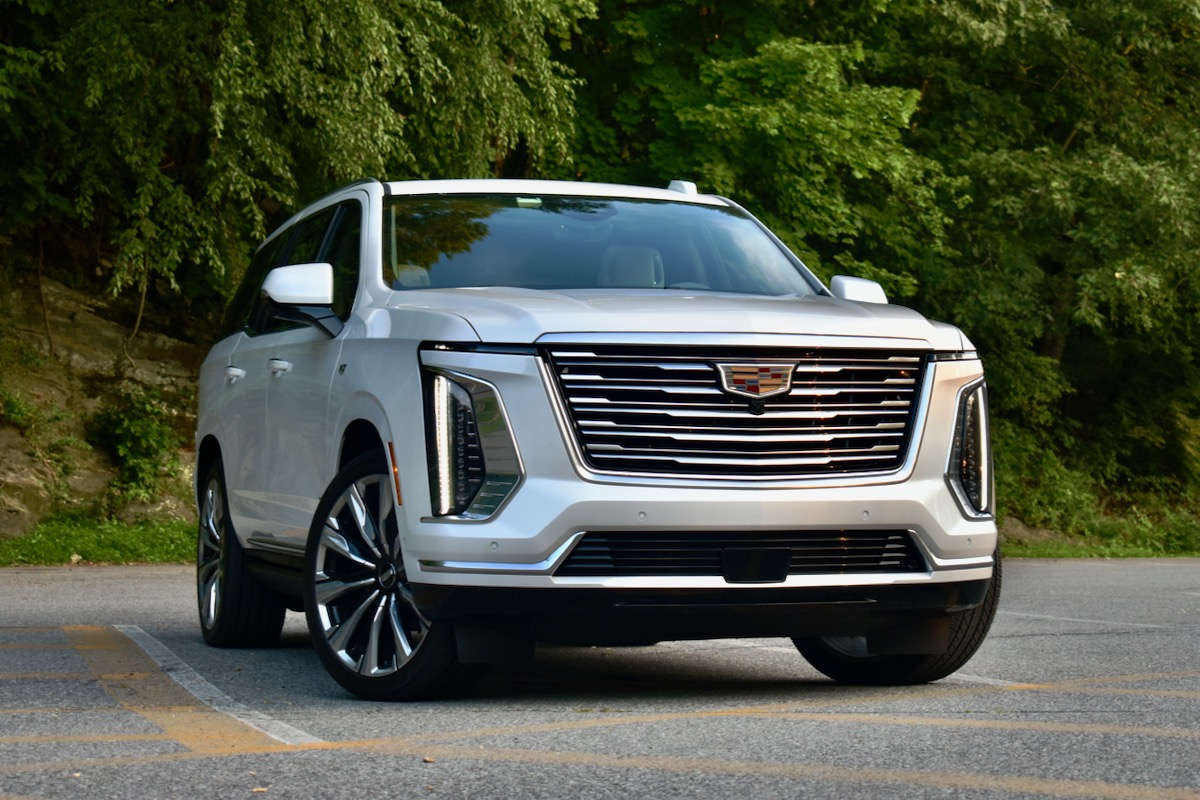
Cadillac’s biggest utility vehicle wraps the ruggedness of an SUV in luxurious trappings.
The 2025 Cadillac Escalade maintains the momentum of one of the most recognizable SUV nameplates. The current-generation Escalade was introduced as a 2021 model, but for 2025 it gets a refresh that includes styling changes and a redesigned dashboard display. The all-electric 2025 Cadillac Escalade IQ joins the lineup as well, but that’s covered in a separate review. This gasoline Escalade competes against full-size luxury SUVs like the BMW X7, Infiniti QX80, Land Rover Range Rover, Lexus LX, Lincoln Navigator, and Mercedes-Benz GLS-Class.
Verdict: If you’re willing to spend extra on a well-optioned example, the Escalade is a credible luxury vehicle. But its platform’s shortcomings can’t be erased.
Aside from the low-volume Celestiq EV, the Escalade is the biggest and most expensive Cadillac you can buy. So, since its first appearance as a 1999 model, the Escalade has more or less taken the place of Fleetwoods and DeVilles as the embodiment of old school Cadillac luxury. And the updated 2025-model-year design definitely sells that, while further distinguishing the Escalade from the Chevrolet Tahoe/Suburban and GMC Yukon/Yukon XL that it shares a body-on-frame platform with.
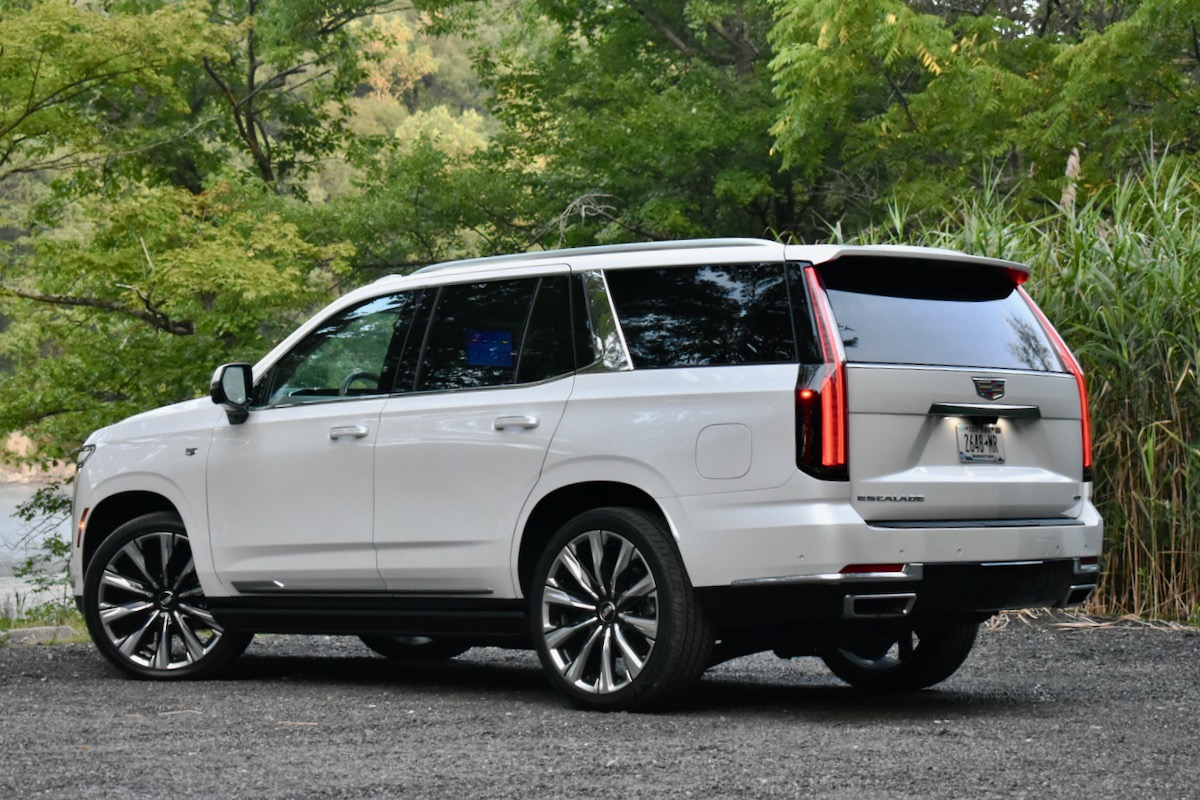
The biggest exterior change is a new front end that brings the gasoline Escalade stylistically closer to the Escalade IQ and other Cadillac EVs. Like those EVs, the headlights are now large vertical bars, with smaller horizontal daytime running lights just below the hood shut line. At the back, the Escalade still features tall, vertical taillights that vaguely recall the tailfins on Cadillacs of old. For 2025, 24-inch wheels are now available for the first time. The massive wheels complement the rest of the vehicle, which seems to have been styled to appear as big as possible.
Cadillac continues to offer standard-wheelbase Escalade and long-wheelbase Escalade ESV body styles, with Luxury, Premium Luxury, Sport, Premium Luxury Platinum, and Sport Platinum trim levels, plus the Cadillac Escalade-V performance model. The Sport models differ primarily in appearance, with darkened exterior trim and mesh grilles instead of shiny trim of other models. For 2025, Premium Luxury Platinum models add an illuminated Cadillac crest and grille surround.
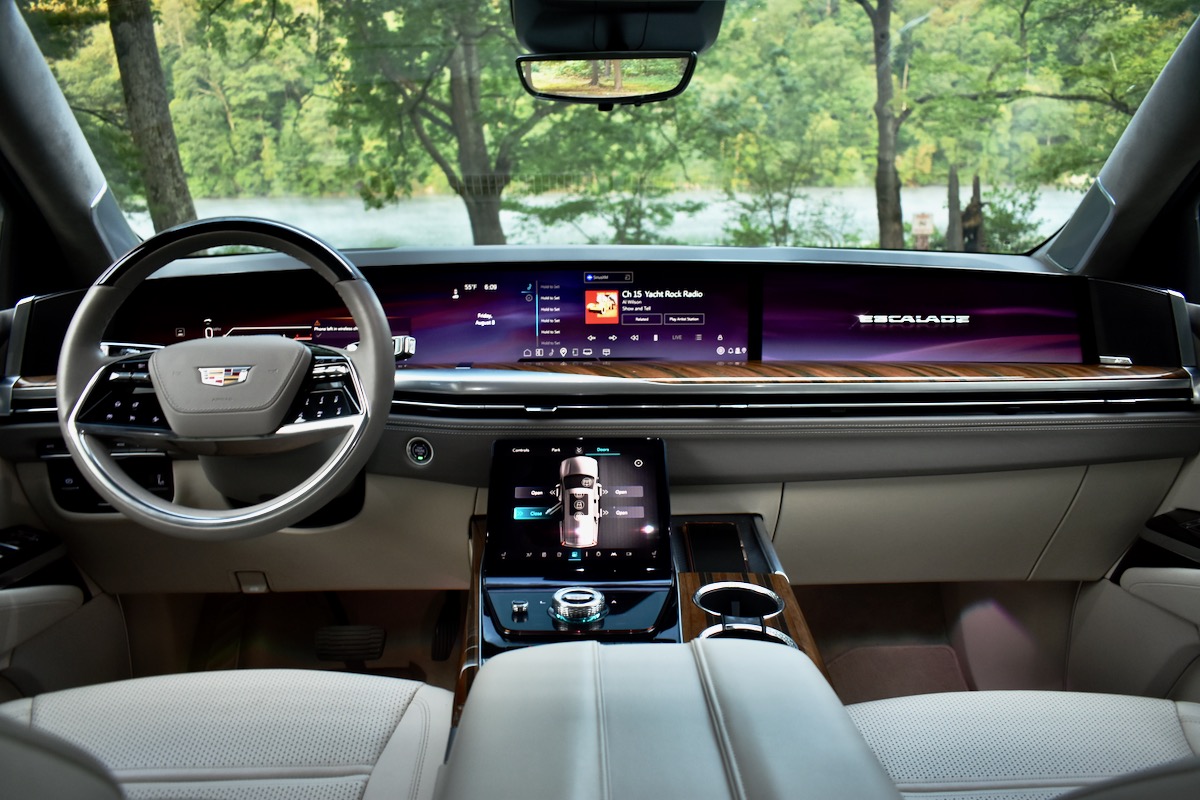
Inside, Cadillac has done a lot of work hiding the fact that the Escalade shares a platform with other GM full-size SUVs. When it launched as a 2021 model, the current-generation Escalade adopted a screen-centric interior design normally seen in high-tech sedans, not truck-like SUVs. Cadillac doubles down on that for 2025, replacing the already-impressive 38-inch OLED curved display with a 55-inch display that now reaches all the way across the dashboard.
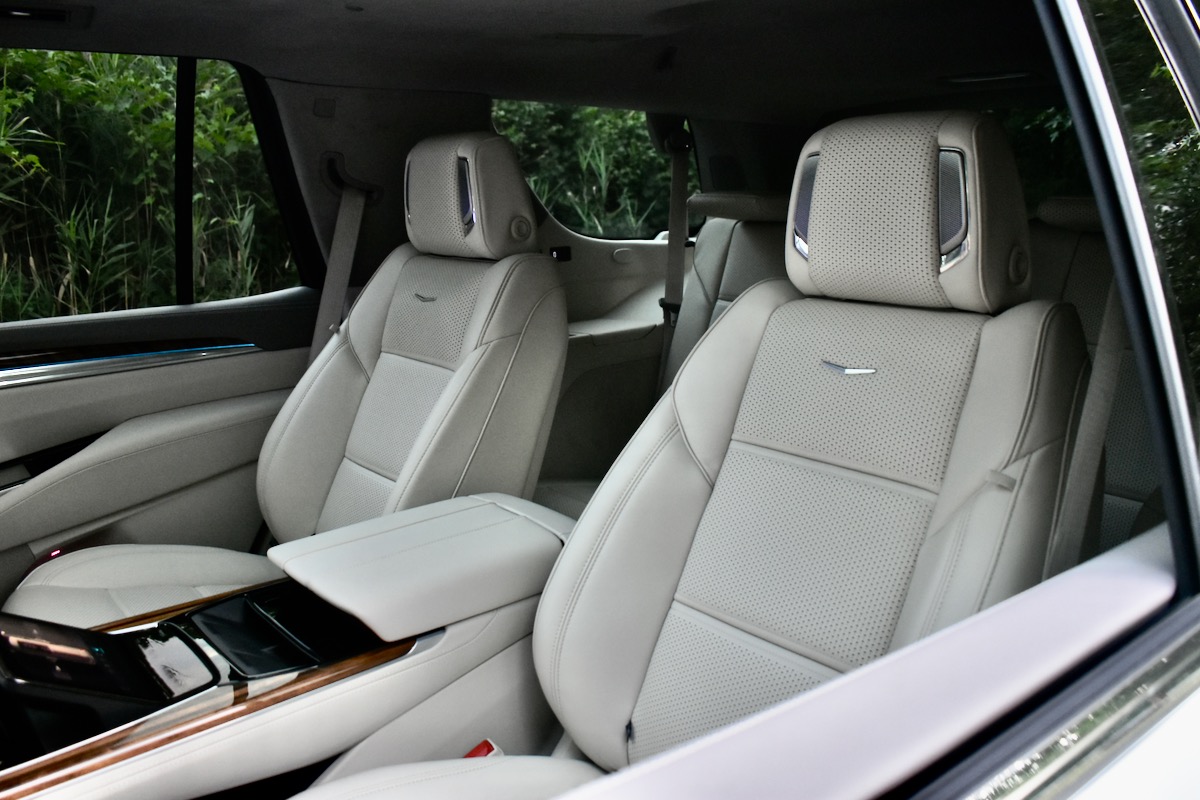
Escalade Luxury base models still come in Uber spec, with Interluxe synthetic leather upholstery. All other trim levels have real leather, though, with semi-aniline leather also available. Like rival Lincoln with its Navigator, Cadillac is also offering curated interior motifs for the Escalade, including Renaissance Red leather with open pore wood trim Jet Black and Sheer Gray leather-and-fabric combinations, and Jet Black leather with carbon fiber trim for the Escalade-V. Our Premium Luxury Platinum test car’s Whisper Beige upholstery and wood trim were impressively finished for a vehicle from a mainstream automaker. It was hard to believe this SUV had anything in common with a Chevy.
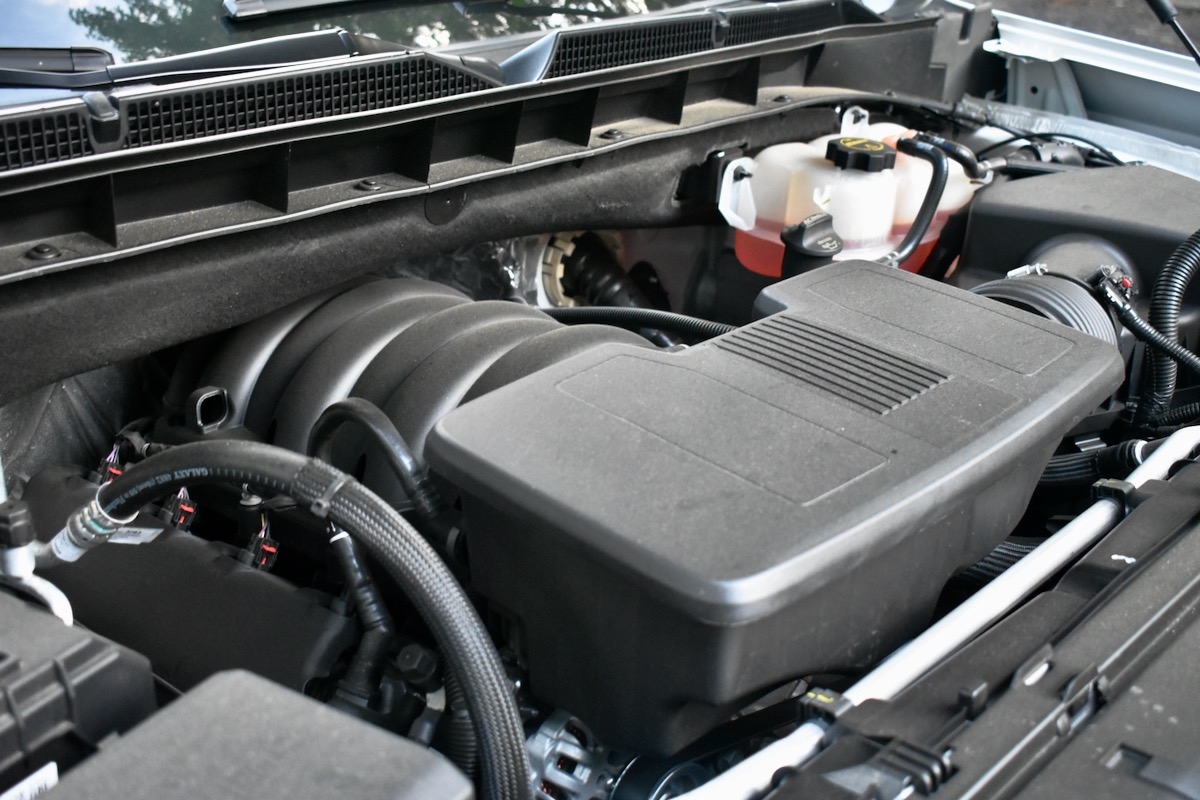
Cadillac dropped the Duramax turbodiesel inline-six engine option for the 2025 model year, leaving only the naturally-aspirated gasoline 6.2-liter V8 engine. While the diesel’s torque will be missed, the V8 is still a solid engine, although its 420 horsepower and 460 pound-feet of torque is less than what you get from the gasoline twin-turbo V6 in the Lincoln Navigator. The Escalade-V continues with a supercharged 6.2-liter V8 producing 682 hp and 653 lb-ft of torque.
All Escalade models have a 10-speed automatic transmission that’s perfectly suited to its task. The double-digit number of gears ensures a balance of low ratios for getting the Escalade’s considerable bulk moving off the line, and high ratios for more efficient (or at least, less-wasteful) highway cruising. The gearbox can shift between these many ratios quickly and smoothly, with no discernible interruption of power flow.
Rear-wheel drive (RWD) is standard, with four-wheel drive (4WD) optional on most models. The Escalade-V gets a model-specific all-wheel drive (AWD) system that’s designed for performance driving rather than the towing-and-hauling focus of the 4WD systems in other models. All but the base Luxury trim level have an electronic rear limited-slip differential for better traction, as well as a two-speed transfer case when equipped with 4WD. Even that won’t allow the Escalade to follow a Range Rover or Lexus LX off the beaten path; with this platform, GM reserves true off-road capability for the GMC Yukon AT4 and Chevy Tahoe Z71.
Magnetic Ride Control damping is also standard on all but the base Luxury grade. This adaptive-damping system uses magnetic damper fluid for quicker adjustments but, even when combined with our test car’s optional air suspension, it couldn’t hide the fact that the Escalade is a heavy vehicle without the structural rigidity of a unibody platform. The Cadillac simply lacks the polish of a Range Rover or Mercedes-Benz GLS-Class, and can’t come close to the on-road handling of a BMW X7. And while its ride quality is impressive for a body-on-frame vehicle, the same can be said of the similarly-constructed Navigator and Infiniti QX80.
V8 power meant the Escalade could at least get up to speed quickly—and sound good while doing it—but when it came time to scrub off some of that speed the brakes didn’t inspire confidence. Cadillac does offer Brembo six-piston front calipers as part of the $6,095 Performance Upgrade Package, which also includes a performance air intake and cat-back exhaust system. It’s an option box we’d definitely check.
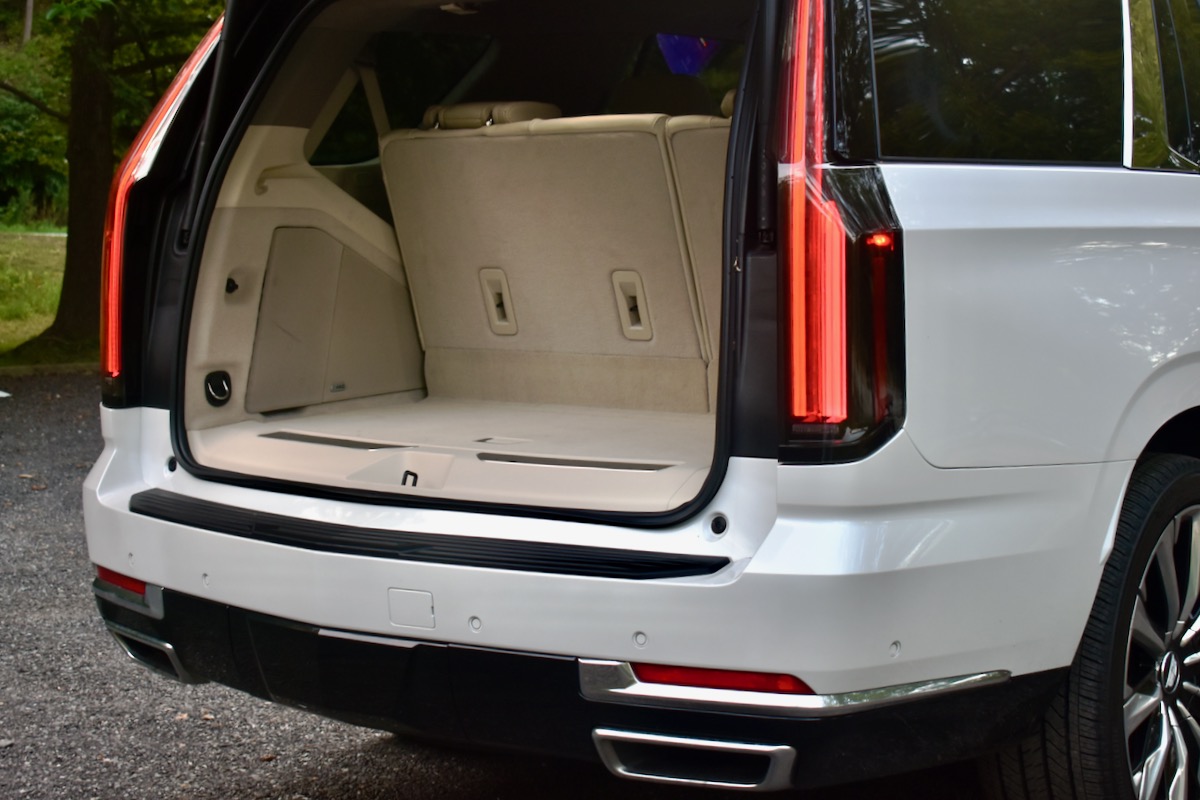
As noted above, the three-row Escalade is available in short-wheelbase and long-wheelbase configurations. The long-wheelbase Cadillac Escalade ESV is 13.2 inches longer between the wheels than the standard Escalade, contributing to a 15.1-inch increase in overall length. That primarily benefits cargo space and third-row legroom, which grows by 1.7 inches in the ESV. Headroom and legroom in the first two rows are the same regardless of body style. Seating for up to eight is available in either case, or seven if you opt for second-row captain’s chairs.
Regardless of length, the Escalade offers plenty of space inside, but so do other full-size SUVs. It has the most first-row headroom in the group, albeit only fractionally more than the BMW X7. Both the Bimmer and Range Rover offer slightly more second-row headroom, and third-row headroom is back-of-the-pack. First-row legroom is also best-in-class, but the Infiniti QX80 comes close, while the Lincoln Navigator offers more second-row and third-row legroom than both the standard-wheelbase Escalade and the ESV.
The standard-length model offers 25.5 cubic feet of cargo space behind the rear seats, 72.9 cubic feet behind the second-row seats, and 121 cubic feet behind the front seats. All three numbers are best-in-segment, and an available power liftgate and power-folding seats makes reconfiguring the interior for hauling passengers or cargo easy. ESV models further stretch cargo space to 41.5 cubic feet behind the third row, 94.1 cubic feet behind the second row, and 142.8 cubic feet behind the first row—more than the stretched Lincoln Navigator L.
A maximum towing capacity of 8,100 pounds for the standard-wheelbase Escalade (ESV models are rated at 8,000 pounds) meets the expectations of the segment. The Cadillac can tow about as much as a Range Rover or Lexus LX, and only a bit less than an Infiniti QX80 (8,500 pounds) or Lincoln Navigator (8,700 pounds). However, Cadillac doesn’t offer the same towing features as Lincoln, which has driver aids for backing up a trailer and aligning with a trailer hitch.
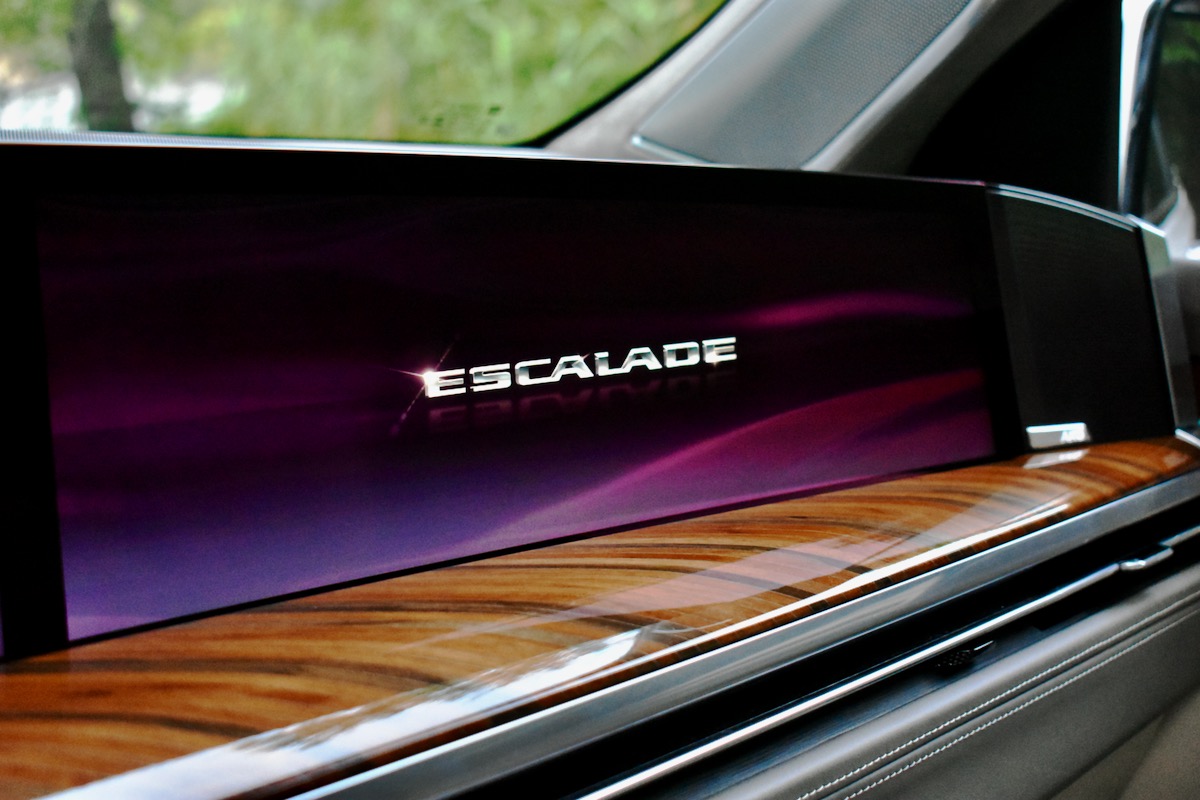
With this model year’s update, the Escalade marries old school truck-like engineering with a high-tech interface that feels like the future. The new 55-inch door-to-door display incorporates a digital instrument cluster, central infotainment touchscreen, and front-passenger touchscreen. Climate controls and other functions are handled by another, tablet-like touchscreen below, along with a rotary dial. A 19-speaker AKG audio system is standard, while a 36-speaker version is available, along with an augmented-reality head-up display and night vision.
All of this tech can seem overwhelming at first, but Cadillac made some sensible choices to aid usability. Unlike most of the brand’s electric models, the Escalade retains standalone wireless Apple CarPlay and Android Auto, as well as a hard button to turn the vehicle on and off (headlights are still controlled via the touchscreen, however). The rows of icons for things like music and phone connectivity on the main screen and seat adjustment and camera views on the supplementary screen below, are also easy to decipher. Cadillac’s voice recognition isn’t as sophisticated as the BMW or Mercedes systems, however.
The smaller control screen is well-positioned, and haptic feedback helps to ensure that you don’t press the wrong icon accidentally, but we’d still prefer actual knobs to the touch-based on-screen sliders. However, swiping to open or close our test car’s power-operated doors was exactly the bit of high-tech theatre a vehicle like this needed. And since you’ll (hopefully) only be doing this while parked, using the screen isn’t as big of a deal as with other functions. Cadillac’s use of a more traditional steering wheel, instead of the Lincoln Navigator’s small squircle, was also a good choice, and didn’t impact the view of the instrument cluster.
Just like the luxury sedans it has effectively replaced in Cadillac’s lineup, the Escalade also offers extensive creature comforts for second-row passengers. The optional ($7,500) Executive Second Row Package includes a pair of 12.6-inch screens and a center console with dual wireless device chargers, its own set of controls for functions like temperature, and storage cubbies. The seats also get upgraded with massage and headrest speakers, bringing the total number of possible sound-system speakers to 40.
Standard driver-assist features include: adaptive cruise control, blind-zone steering assist, automatic emergency braking (front and rear), blind-spot monitoring, rear cross-traffic alert, traffic sign recognition, and a 360-degree camera system. Because this is a GM vehicle, the warnings from these various features are conveyed through a vibrating Safety Alert Seat in addition to the conventional audio and visual methods. Other GM-specific features include teen-driver monitoring and Super Cruise, the automaker’ hands-free driving system.
We’ve tested Super Cruise, which allows for hands-free driving on mapped sections of road, provided the driver keeps their eyes on the road in an Escalade before, and it’s actually gotten better. The system would previously cut out on a specific section of the test route, but that wasn’t an issue this time. However, the handoff to full manual control when approaching a construction zone was pretty abrupt. GM is adding features—including the ability to follow directions from the navigation system—starting with the 2026 Cadillac Vistiq EV, but hasn’t discussed backwards compatibility for 2025 models.
Current crash-test ratings from the Insurance Institute for Highway Safety (IIHS) and National Highway Traffic Safety Administration (NHTSA) weren’t available at the time of publication.
In a market segment known for gas guzzlers, the Escalade lives down to expectations. With RWD, it’s EPA-rated at 17 mpg combined (15 mpg city, 19 mpg highway). Fuel economy drops to 16 mpg combined (14 mpg city, 18 mpg highway) with 4WD, and 13 mpg combined (11 mpg city, 17 mpg highway) for the high-horsepower V-Series model. This was where the diesel—which returned 23 mpg combined with RWD and 22 mpg combined with 4WD—really came into its own.
Cadillac includes a four-year/50,000-mile bumper-to-bumper warranty and six-year/70,000-mile powertrain warranty—fairly generous terms compared to rivals. Other owner benefits include roadside assistance with courtesy transportation, an eight-year basic OnStar telematics subscription, and a three-year connectivity plan for Wi-Fi and in-car apps.
Pricing starts at $90,295 for the RWD Luxury model (all prices include a $1,995 destination charge). It’s a relatively big step up from there to the $99,495 Premium Luxury model, with Sport ($100,095), Premium Luxury Platinum ($119,095), Sport Platinum ($119,595), and Escalade-V models ($164,695) priced above that. Budget an additional $3,000 for 4WD or the long-wheelbase Escalade ESV body style.
Equipped with the Executive Second Row Package, 24-inch wheels, Crystal White Tricoat paint, and a center-console refriferator, our 4WD Premium Luxury Platinum test car had a $132,615 MSRP. While that’s a noticeable premium over the base price, this is where the Escalade makes the most sense. It’s easy to spend similar money on the Cadillac’s rivals, but the Escalade’s well-executed interior will make you feel like you’re getting more for your money. It’s where Cadillac’s full-size SUV stands out.

User reviews for 2025 Cadillac Escalade
Write a review2025 Cadillac Escalade Pricing
Trims & specs
Air Conditioning
Automatic climate control front air conditioning · Dual front air conditioning zones · Automatic climate control rear air conditioning · Single rear air conditioning zones · Second and third row rear heat vents
Airbags
Dual front airbags · Dual front knee airbags · Passenger airbag deactivation: occupant sensing deactivation · Front side airbags · Third row side curtain airbags
Audio System
Antenna Type: diversity · Voice recognition audio system · Bluetooth auxiliary audio input · Pandora internet radio · Premium brand: AKG · AM/FM radio · Satellite Radio: SiriusXM · 1 subwoofer · Surround audio: 5.1 · Total Number of Speakers: 18
Brakes
ABS: 4-wheel · Braking assist: hill start assist · Electronic parking brake: auto off · Front brake diameter: 13.5 · Front brake width: 1.18 · Front brakes: ventilated disc · Rear brake diameter: 13.6 · Rear brake width: 0.79 · Rear brakes: ventilated disc
Comfort Features
Armrests: rear outboard seats · Center console trim: wood · Dash trim: wood · Door sill trim: scuff plate · Door trim: wood · Floor Mat Material: carpet · Floor Material: carpet · Floor Mats: front · Steering wheel trim: leatherette
Convenience Features
Active parking system: fully automated · Adaptive stop and go cruise control: semi-automatic · Ambient lighting: color-adjustable · Assist handle: rear · Autonomous lane guidance: lane changing · Cargo area power outlet: 115V · Center console: front console with armrest and storage · Cruise control: adaptive · Cupholders: front, rear and third row · Dimming rearview mirror: auto-dimming · Memorized settings: 2 driver · Multi-function remote: proximity entry system · One-touch windows: 4 · Power outlet(s): USB-C cargo area · Power steering: electric · Power windows: lockout button · Reading lights: front · Rear power outlet: 115V · Steering wheel: power tilt and telescopic · Steering wheel mounted controls: multi-function screen controls · Storage: sunglasses holder · Universal garage door opener: Homelink · Vanity mirrors: dual illuminating
Driver Seat
Adjustable lumbar support: 4-way power · Power adjustments: 12
Drivetrain
Axle ratio: 3.23 · Limited slip differential: rear
Engine
Alternator: 220 amps · Battery: heavy duty · Oil cooler: auxiliary
Exterior Features
Body side moldings: aluminum · Door handle color: body-color with chrome accents · Exhaust: dual exhaust tips · Exhaust tip color: polished aluminum · Front bumper color: body-color · Grille color: aluminum · Headlamp bezel color: black · Mirror color: body-color · Rear bumper color: body-color · Rear spoiler: roofline spoiler · Rear spoiler color: body-color · Rear trunk/liftgate: liftgate · Rocker panel color: black · Running boards: black · Window trim: aluminum
Headrests
Front headrests: adjustable · Number of front headrests: 2 · Number of rear headrests: 2 · Number of third row headrests: 2
In Car Entertainment
Connected in-car apps: Google POIs · Infotainment: Cadillac Infotainment System · Integrated dashboard screen size: 55 in. · Smartphone integration: wireless Android Auto
Instrumentation
Fuel economy display: range · Warnings and reminders: low battery
Lights
Daytime running lights: LED · Exterior entry lights: puddle lamps · Headlights: Auto on/off · Tail and brake lights: LED
Mirrors
Exterior mirrors: driver side auto-dimming
Passenger Seat
Power adjustments: 12
Rear Seats
Folding: power return · Type: bucket
Roof
Roof rails: chrome
Safety
Automatic emergency braking: front pedestrian · Camera system: surround view · Camera system washer: rear · Child seat anchors: LATCH system · Cross Traffic Alert: rear · Crumple zones: front · Dash camera: front recording · Impact sensor: alert system · Parking sensors: front · Pre-Collision Warning System: vibrating driver seat · Pre-collision warning system: pedestrian detection · Programmable safety key: MyKey · Rear pre-collision warning system: pedestrian detection · Rearview monitor: in dash
Seatbelts
Emergency locking retractors: front and rear · Front seatbelts: 3-point · Seatbelt force limiters: front · Seatbelt pretensioners: front · Seatbelt warning sensor: driver and passenger · Second row seatbelts: 3-point · Third row seatbelts: 3-point
Seats
Driver seat power adjustments: height · Front seat type: bucket · Passenger seat power adjustments: height · Rear headrests: adjustable · Rear seat manual adjustments: reclining · Third row headrests: adjustable · Third row seat folding: flat · Upholstery: leatherette
Security
Power door locks: anti-lockout
Spare Tire
Mount Location: underbody · Size: full-size
Spare Wheel
Rim Type: steel
Stability and Traction
Traction control: with trailer stability control
Suspension
Front Arm Type: upper and lower control arms · Front Shock Type: gas shock absorbers · Front Spring Type: coil springs · Front Suspension Classification: independent · Front Suspension Type: strut · Rear Shock Type: coil over shock · Rear Spring Type: coil springs · Rear Suspension Classification: independent · Rear Suspension Type: multi-link · Stabilizer bar(s): front
Telematics
Driver assistance app: roadside assistance · Electronic messaging assistance: with read function · Navigation system: augmented reality · Phone: voice activated · Phone wireless data link: Bluetooth · Satellite communications: OnStar · Smart device app compatibility: myCadillac with Connected Access · Smart device app function: maintenance scheduling · Wifi: hotspot
Third Row Seat
Type: 40-60 split bench
Tires
Type: all season
Tires and Rims
Wheels: chrome alloy
Towing and Hauling
Trailer wiring: 7-pin
Wheels
Wheel spokes: 14
Windows
Front wipers: variable intermittent · Laminated glass: acoustic · Liftgate window: manual flip-up · Power windows: with safety reverse · Rear wiper: auto-on in reverse
Air Conditioning
Automatic climate control front air conditioning · Dual front air conditioning zones · Rear air conditioning: with independent controls · Single rear air conditioning zones · Second and third row rear heat vents
Airbags
Dual front airbags · Dual front knee airbags · Passenger airbag deactivation: occupant sensing deactivation · Front side airbags · Rear side curtain airbags
Audio System
Antenna Type: diversity · Voice recognition audio system · Auxiliary audio input: jack · Pandora internet radio · Premium brand: AKG · HD radio · Satellite Radio: SiriusXM · 1 subwoofer · Surround audio: 5.1 · Total Number of Speakers: 18
Brakes
ABS: 4-wheel · Braking assist: hill start assist · Electronic parking brake: auto off · Front brake diameter: 13.5 · Front brake width: 1.18 · Front brakes: ventilated disc · Rear brake diameter: 13.6 · Rear brake width: 0.79 · Rear brakes: ventilated disc
Comfort Features
Armrests: rear outboard seats · Center console trim: wood · Dash trim: wood · Door sill trim: scuff plate · Door trim: wood · Floor Mat Material: carpet · Floor Material: carpet · Floor Mats: front · Steering wheel trim: leatherette
Convenience Features
Active parking system: fully automated · Adaptive stop and go cruise control: semi-automatic · Ambient lighting: color-adjustable · Assist handle: rear · Autonomous lane guidance: lane changing · Cargo area power outlet: 115V · Center console: front console with armrest and storage · Cruise control: adaptive · Cupholders: front · Dimming rearview mirror: auto-dimming · Memorized settings: side mirrors · Multi-function remote: vehicle and key memory · One-touch windows: 4 · Power outlet(s): 12V front · Power steering: electric · Power windows: lockout button · Reading lights: front · Rear power outlet: 115V · Steering wheel: power tilt and telescopic · Steering wheel mounted controls: audio · Storage: cargo tie-down anchors and hooks · Universal garage door opener: Homelink · Vanity mirrors: dual illuminating
Driver Seat
Adjustable lumbar support: 4-way power · Power adjustments: 12
Drivetrain
4WD Type: part time w/ on demand setting · Axle ratio: 3.23 · Limited slip differential: rear · Transfer Case: electronic hi-lo gear selection
Engine
Alternator: 220 amps · Battery: maintenance-free · Oil cooler: auxiliary
Exterior Features
Body side moldings: aluminum · Door handle color: body-color with chrome accents · Exhaust: dual exhaust tips · Exhaust tip color: polished aluminum · Front bumper color: body-color · Grille color: aluminum · Headlamp bezel color: black · Mirror color: body-color · Rear bumper color: body-color · Rear spoiler: roofline spoiler · Rear spoiler color: body-color · Rear trunk/liftgate: power operated · Rocker panel color: black · Running boards: black · Window trim: aluminum
Headrests
Front headrests: adjustable · Number of front headrests: 2 · Number of rear headrests: 2 · Number of third row headrests: 2
In Car Entertainment
Connected in-car apps: app marketplace integration · Infotainment: Cadillac Infotainment System · Integrated dashboard screen size: 55 in. · Smartphone integration: wireless Apple CarPlay
Instrumentation
Fuel economy display: range · Warnings and reminders: low battery
Lights
Daytime running lights: LED · Exterior entry lights: security approach lamps · Headlights: auto delay off · Tail and brake lights: LED
Mirrors
Exterior mirrors: power folding
Passenger Seat
Power adjustments: 12
Rear Seats
Folding: power return · Type: bucket
Roof
Roof rails: chrome
Safety
Automatic emergency braking: front pedestrian · Camera system: surround view · Camera system washer: rear · Child seat anchors: LATCH system · Cross Traffic Alert: rear · Crumple zones: front · Dash camera: rear recording · Impact sensor: alert system · Parking sensors: rear · Pre-Collision Warning System: audible warning · Pre-collision warning system: pedestrian detection · Programmable safety key: MyKey · Rear pre-collision warning system: pedestrian detection · Rearview monitor: in dash
Seatbelts
Emergency locking retractors: front and rear · Front seatbelts: 3-point · Seatbelt force limiters: front · Seatbelt pretensioners: front · Seatbelt warning sensor: driver and passenger · Second row seatbelts: 3-point · Third row seatbelts: 3-point
Seats
Driver seat power adjustments: height · Front seat type: bucket · Passenger seat power adjustments: height · Rear headrests: adjustable · Rear seat manual adjustments: reclining · Third row headrests: adjustable · Third row seat folding: flat · Upholstery: leatherette
Security
Power door locks: anti-lockout
Spare Tire
Mount Location: underbody · Size: full-size
Spare Wheel
Rim Type: steel
Stability and Traction
Traction control: with trailer stability control
Suspension
Front Arm Type: upper and lower control arms · Front Shock Type: gas shock absorbers · Front Spring Type: coil springs · Front Suspension Classification: independent · Front Suspension Type: strut · Rear Shock Type: coil over shock · Rear Spring Type: coil springs · Rear Suspension Classification: independent · Rear Suspension Type: multi-link · Stabilizer bar(s): front
Telematics
Driver assistance app: roadside assistance · Electronic messaging assistance: with voice recognition · Navigation system: touch screen display · Phone: voice activated · Phone wireless data link: Bluetooth · Satellite communications: Turn-by-Turn Navigation · Smart device app compatibility: Amazon Alexa · Smart device app function: engine start · Wifi: hotspot
Third Row Seat
Type: 40-60 split bench
Tires
Type: all season
Tires and Rims
Wheels: chrome alloy
Towing and Hauling
Trailer wiring: 7-pin
Wheels
Wheel spokes: 14
Windows
Front wipers: variable intermittent · Laminated glass: acoustic · Liftgate window: manual flip-up · Power windows: with safety reverse · Rear wiper: intermittent
Air Conditioning
Automatic climate control front air conditioning · Dual front air conditioning zones · Automatic climate control rear air conditioning · Single rear air conditioning zones · Second and third row rear heat vents
Airbags
Dual front airbags · Dual front knee airbags · Passenger airbag deactivation: occupant sensing deactivation · Front side airbags · Third row side curtain airbags
Audio System
Antenna Type: diversity · Voice recognition audio system · Bluetooth auxiliary audio input · Pandora internet radio · Premium brand: AKG · Touch screen display radio · Satellite Radio: SiriusXM · 1 subwoofer · Surround audio: 5.1 · Total Number of Speakers: 18
Brakes
ABS: 4-wheel · Braking assist: hill start assist · Electronic parking brake: auto off · Front brake diameter: 13.5 · Front brake width: 1.18 · Front brakes: ventilated disc · Rear brake diameter: 13.6 · Rear brake width: 0.79 · Rear brakes: ventilated disc
Comfort Features
Armrests: rear outboard seats · Center console trim: wood · Dash trim: wood · Door sill trim: illuminated scuff plate · Door trim: wood · Floor Mat Material: carpet · Floor Material: carpet · Floor Mats: front · Steering wheel trim: leatherette
Convenience Features
Active parking system: fully automated · Adaptive stop and go cruise control: semi-automatic · Ambient lighting: color-adjustable · Assist handle: rear · Autonomous lane guidance: lane changing · Cargo area power outlet: 115V · Center console: front console with armrest and storage · Cruise control: adaptive · Cupholders: front, rear and third row · Dimming rearview mirror: auto-dimming · Memorized settings: 2 driver · Multi-function remote: vehicle and key memory · One-touch windows: 4 · Power outlet(s): USB-C front · Power steering: electric · Power windows: lockout button · Reading lights: rear · Rear power outlet: 115V · Rearview mirror: camera-based · Steering wheel: power tilt and telescopic · Steering wheel mounted controls: cruise controls · Storage: sunglasses holder · Universal garage door opener: Homelink · Vanity mirrors: dual illuminating
Driver Seat
Adjustable lumbar support: 4-way power · Power adjustments: 12
Drivetrain
Axle ratio: 3.23 · Limited slip differential: rear
Engine
Alternator: 220 amps · Battery: AGM · Oil cooler: auxiliary
Exterior Features
Body side moldings: aluminum · Door handle color: body-color with chrome accents · Exhaust: dual exhaust tips · Exhaust tip color: polished aluminum · Front bumper color: body-color · Grille color: aluminum · Headlamp bezel color: black · Mirror color: body-color · Rear bumper color: body-color · Rear spoiler: roofline spoiler · Rear spoiler color: body-color · Rear trunk/liftgate: sensor-activated · Rocker panel color: black · Running boards: black · Window trim: aluminum
Headrests
Front headrests: adjustable · Number of front headrests: 2 · Number of rear headrests: 2 · Number of third row headrests: 2
In Car Entertainment
Connected in-car apps: app marketplace integration · Infotainment: Cadillac Infotainment System · Integrated dashboard screen size: 55 in. · Smartphone integration: wireless Android Auto
Instrumentation
Fuel economy display: MPG · Warnings and reminders: maintenance reminder
Lights
Daytime running lights: LED · Exterior entry lights: puddle lamps · Headlights: self-leveling · Tail and brake lights: LED
Mirrors
Exterior mirrors: driver side auto-dimming
Passenger Seat
Power adjustments: 12
Rear Seats
Folding: power return · Type: bucket
Roof
Moonroof: one-touch open/close · Moonroof / Sunroof: power sunshade · Roof rails: chrome
Safety
Automatic emergency braking: front · Blind spot safety: trailer coverage · Camera system: surround view · Camera system washer: rear · Child seat anchors: LATCH system · Cross Traffic Alert: rear · Crumple zones: rear · Dash camera: side recording · Impact sensor: alert system · Parking sensors: front · Pre-Collision Warning System: vibrating driver seat · Pre-collision warning system: intersection/junction cross · Programmable safety key: MyKey · Rear pre-collision warning system: pedestrian detection · Rearview monitor: in dash
Seatbelts
Emergency locking retractors: front · Front seatbelts: 3-point · Seatbelt force limiters: front · Seatbelt pretensioners: front · Seatbelt warning sensor: driver and passenger · Second row seatbelts: 3-point · Third row seatbelts: 3-point
Seats
Driver seat power adjustments: reclining · Front seat type: bucket · Passenger seat power adjustments: reclining · Rear headrests: adjustable · Rear seat manual adjustments: reclining · Third row headrests: adjustable · Third row seat folding: flat · Upholstery: perforated
Security
Power door locks: anti-lockout
Spare Tire
Mount Location: underbody · Size: full-size
Spare Wheel
Rim Type: steel
Stability and Traction
Traction control: with trailer stability control
Suspension
Driver Adjustable Suspension: ride control · Front Arm Type: upper and lower control arms · Front Spring Type: coil springs · Front Suspension Classification: independent · Front Suspension Type: strut · Front shock type: monotube · Rear Shock Type: coil over shock · Rear Spring Type: coil springs · Rear Suspension Classification: independent · Rear Suspension Type: multi-link · Rear shock type: monotube · Stabilizer bar(s): front · Suspension control: magnetic
Telematics
Driver assistance app: roadside assistance · Electronic messaging assistance: with voice recognition · Navigation system: augmented reality · Phone: voice activated · Phone wireless data link: Bluetooth · Satellite communications: Turn-by-Turn Navigation · Smart device app compatibility: Amazon Alexa · Smart device app function: lock operation · Wifi: hotspot
Third Row Seat
Type: 40-60 split bench
Tires
Type: all season
Tires and Rims
Wheels: polished aluminum
Towing and Hauling
Trailer wiring: 7-pin
Wheels
Wheel locks: front and rear · Wheel spokes: 9
Windows
Front wipers: variable intermittent · Laminated glass: acoustic · Liftgate window: manual flip-up · Power windows: with safety reverse · Rear wiper: auto-on in reverse
Air Conditioning
Automatic climate control front air conditioning · Dual front air conditioning zones · Rear air conditioning: with independent controls · Single rear air conditioning zones · Second and third row rear heat vents
Airbags
Dual front airbags · Dual front knee airbags · Passenger airbag deactivation: occupant sensing deactivation · Front side airbags · Rear side curtain airbags
Audio System
Antenna Type: mast · Voice recognition audio system · Bluetooth auxiliary audio input · Pandora internet radio · Premium brand: AKG · AM/FM radio · Satellite Radio: SiriusXM · 1 subwoofer · Surround audio: 5.1 · Total Number of Speakers: 18
Brakes
ABS: 4-wheel · Braking assist: hill start assist · Electronic parking brake: auto off · Front brake diameter: 13.5 · Front brake width: 1.18 · Front brakes: ventilated disc · Rear brake diameter: 13.6 · Rear brake width: 0.79 · Rear brakes: ventilated disc
Comfort Features
Armrests: rear outboard seats · Center console trim: wood · Dash trim: wood · Door sill trim: illuminated scuff plate · Door trim: wood · Floor Mat Material: carpet · Floor Material: carpet · Floor Mats: front · Steering wheel trim: leatherette
Convenience Features
Active parking system: fully automated · Adaptive stop and go cruise control: semi-automatic · Ambient lighting: color-adjustable · Assist handle: front · Autonomous lane guidance: lane changing · Cargo area power outlet: 115V · Center console: front console with armrest and storage · Cruise control: adaptive · Cupholders: front · Dimming rearview mirror: auto-dimming · Memorized settings: liftgate · Multi-function remote: vehicle and key memory · One-touch windows: 4 · Power outlet(s): USB-C front · Power steering: speed-proportional · Power windows: lockout button · Reading lights: rear · Rear power outlet: 115V · Rearview mirror: camera-based · Steering wheel: power tilt and telescopic · Steering wheel mounted controls: audio · Storage: door pockets · Universal garage door opener: Homelink · Vanity mirrors: dual illuminating
Driver Seat
Adjustable lumbar support: 4-way power · Power adjustments: 12
Drivetrain
Axle ratio: 3.23 · Limited slip differential: rear
Engine
Alternator: 220 amps · Battery: maintenance-free · Oil cooler: auxiliary
Exterior Features
Body side moldings: black · Door handle color: body-color · Exhaust: dual exhaust tips · Exhaust tip color: polished aluminum · Front bumper color: body-color · Grille color: black · Headlamp bezel color: black · Mirror color: body-color · Rear bumper color: body-color · Rear spoiler: roofline spoiler · Rear spoiler color: body-color · Rear trunk/liftgate: sensor-activated · Rocker panel color: black · Running boards: black · Window trim: black
Headrests
Front headrests: adjustable · Number of front headrests: 2 · Number of rear headrests: 2 · Number of third row headrests: 2
In Car Entertainment
Connected in-car apps: Google search · Infotainment: Cadillac Infotainment System · Integrated dashboard screen size: 55 in. · Smartphone integration: wireless Android Auto
Instrumentation
Fuel economy display: MPG · Warnings and reminders: low fuel level
Lights
Daytime running lights: LED · Exterior entry lights: security approach lamps · Headlights: self-leveling · Tail and brake lights: LED
Mirrors
Exterior mirrors: power
Passenger Seat
Power adjustments: 12
Rear Seats
Folding: power return · Type: bucket
Roof
Moonroof: tilt/slide · Moonroof / Sunroof: power sunshade · Roof rails: black
Safety
Automatic emergency braking: rear · Blind spot safety: trailer coverage · Camera system: surround view · Camera system washer: rear · Child seat anchors: LATCH system · Cross Traffic Alert: rear · Crumple zones: front · Dash camera: rear recording · Impact sensor: alert system · Parking sensors: rear · Pre-Collision Warning System: audible warning · Pre-collision warning system: intersection/junction cross · Programmable safety key: MyKey · Rear pre-collision warning system: pedestrian detection · Rearview monitor: in dash
Seatbelts
Emergency locking retractors: front · Front seatbelts: 3-point · Seatbelt force limiters: front · Seatbelt pretensioners: front · Seatbelt warning sensor: driver and passenger · Second row seatbelts: 3-point · Third row seatbelts: 3-point
Seats
Driver seat power adjustments: reclining · Front seat type: bucket · Passenger seat power adjustments: 4-way power lumbar · Rear headrests: adjustable · Rear seat manual adjustments: reclining · Third row headrests: adjustable · Third row seat folding: power · Upholstery: leather-trimmed
Security
Power door locks: anti-lockout
Spare Tire
Mount Location: underbody · Size: full-size
Spare Wheel
Rim Type: steel
Stability and Traction
Traction control: with trailer stability control
Suspension
Driver Adjustable Suspension: ride control · Front Arm Type: upper and lower control arms · Front Spring Type: coil springs · Front Suspension Classification: independent · Front Suspension Type: strut · Front shock type: monotube · Rear Shock Type: coil over shock · Rear Spring Type: coil springs · Rear Suspension Classification: independent · Rear Suspension Type: multi-link · Rear shock type: monotube · Stabilizer bar(s): rear · Suspension control: magnetic
Telematics
Driver assistance app: roadside assistance · Electronic messaging assistance: with read function · Navigation system: touch screen display · Phone: voice activated · Phone wireless data link: Bluetooth · Satellite communications: Turn-by-Turn Navigation · Smart device app compatibility: OnStar Guardian · Smart device app function: vehicle location · Wifi: hotspot
Third Row Seat
Type: 40-60 split bench
Tires
Type: all season
Tires and Rims
Wheels: polished aluminum with painted accents
Towing and Hauling
Trailer wiring: 7-pin
Wheels
Wheel locks: front and rear · Wheel spokes: 6
Windows
Front wipers: variable intermittent · Laminated glass: acoustic · Liftgate window: manual flip-up · Power windows: remote operation · Rear wiper: with washer
Air Conditioning
Automatic climate control front air conditioning · Dual front air conditioning zones · Rear air conditioning: with independent controls · Single rear air conditioning zones · Second and third row rear heat vents
Airbags
Dual front airbags · Dual front knee airbags · Passenger airbag deactivation: occupant sensing deactivation · Front side airbags · Front side curtain airbags
Audio System
Antenna Type: mast · Voice recognition audio system · Bluetooth auxiliary audio input · Pandora internet radio · Premium brand: AKG · Touch screen display radio · Satellite Radio: SiriusXM · 1 subwoofer · Surround audio: 5.1 · Total Number of Speakers: 18
Brakes
ABS: 4-wheel · Braking assist: hill start assist · Electronic parking brake: auto off · Front brake diameter: 13.5 · Front brake width: 1.18 · Front brakes: ventilated disc · Rear brake diameter: 13.6 · Rear brake width: 0.79 · Rear brakes: ventilated disc
Comfort Features
Armrests: rear outboard seats · Center console trim: wood · Dash trim: wood · Door sill trim: illuminated scuff plate · Door trim: wood · Floor Mat Material: carpet · Floor Material: carpet · Floor Mats: front · Steering wheel trim: leatherette
Convenience Features
Active parking system: fully automated · Adaptive stop and go cruise control: semi-automatic · Ambient lighting: color-adjustable · Assist handle: rear · Autonomous lane guidance: lane changing · Cargo area power outlet: 115V · Center console: front console with armrest and storage · Cruise control: adaptive · Cupholders: front, rear and third row · Dimming rearview mirror: auto-dimming · Memorized settings: steering wheel · Multi-function remote: keyless entry with panic alarm · One-touch windows: 4 · Power outlet(s): USB front · Power steering: electric · Power windows: lockout button · Reading lights: rear · Rear power outlet: 115V · Rearview mirror: camera-based · Steering wheel: power tilt and telescopic · Steering wheel mounted controls: voice recognition controls · Storage: front seatback · Universal garage door opener: Homelink · Vanity mirrors: dual illuminating
Driver Seat
Adjustable lumbar support: 4-way power · Power adjustments: 12
Drivetrain
4WD Type: part time w/ on demand setting · Axle ratio: 3.23 · Limited slip differential: rear · Transfer Case: electronic hi-lo gear selection
Engine
Alternator: 220 amps · Battery: heavy duty · Oil cooler: auxiliary
Exterior Features
Body side moldings: aluminum · Door handle color: body-color with chrome accents · Exhaust: dual exhaust tips · Exhaust tip color: polished aluminum · Front bumper color: body-color · Grille color: aluminum · Headlamp bezel color: black · Mirror color: body-color · Rear bumper color: body-color · Rear spoiler: roofline spoiler · Rear spoiler color: body-color · Rear trunk/liftgate: power operated · Rocker panel color: black · Running boards: black · Window trim: aluminum
Headrests
Front headrests: adjustable · Number of front headrests: 2 · Number of rear headrests: 2 · Number of third row headrests: 2
In Car Entertainment
Connected in-car apps: app marketplace integration · Infotainment: Cadillac Infotainment System · Integrated dashboard screen size: 55 in. · Smartphone integration: wireless Android Auto
Instrumentation
Fuel economy display: range · Warnings and reminders: low battery
Lights
Daytime running lights: LED · Exterior entry lights: puddle lamps · Headlights: automatic high beam dimmer · Tail and brake lights: LED
Mirrors
Exterior mirrors: power folding
Passenger Seat
Power adjustments: 12
Rear Seats
Folding: power return · Type: bucket
Roof
Moonroof: tilt/slide · Moonroof / Sunroof: power sunshade · Roof rails: chrome
Safety
Automatic emergency braking: front · Blind spot safety: trailer coverage · Camera system: surround view · Camera system washer: rear · Child seat anchors: LATCH system · Cross Traffic Alert: rear · Crumple zones: front · Dash camera: front recording · Impact sensor: alert system · Parking sensors: rear · Pre-Collision Warning System: audible warning · Pre-collision warning system: pedestrian detection · Programmable safety key: MyKey · Rear pre-collision warning system: pedestrian detection · Rearview monitor: in dash
Seatbelts
Emergency locking retractors: front and rear · Front seatbelts: 3-point · Seatbelt force limiters: front · Seatbelt pretensioners: front · Seatbelt warning sensor: driver and passenger · Second row seatbelts: 3-point · Third row seatbelts: 3-point
Seats
Driver seat power adjustments: reclining · Front seat type: bucket · Passenger seat power adjustments: reclining · Rear headrests: adjustable · Rear seat manual adjustments: reclining · Third row headrests: adjustable · Third row seat folding: flat · Upholstery: perforated
Security
Power door locks: anti-lockout
Spare Tire
Mount Location: underbody · Size: full-size
Spare Wheel
Rim Type: steel
Stability and Traction
Traction control: with trailer stability control
Suspension
Driver Adjustable Suspension: ride control · Front Arm Type: upper and lower control arms · Front Spring Type: coil springs · Front Suspension Classification: independent · Front Suspension Type: strut · Front shock type: monotube · Rear Shock Type: coil over shock · Rear Spring Type: coil springs · Rear Suspension Classification: independent · Rear Suspension Type: multi-link · Rear shock type: monotube · Stabilizer bar(s): front · Suspension control: magnetic
Telematics
Driver assistance app: roadside assistance · Electronic messaging assistance: with read function · Navigation system: augmented reality · Phone: voice activated · Phone wireless data link: Bluetooth · Satellite communications: OnStar · Smart device app compatibility: Amazon Alexa · Smart device app function: maintenance scheduling · Wifi: hotspot
Third Row Seat
Type: 40-60 split bench
Tires
Type: all season
Tires and Rims
Wheels: polished aluminum
Towing and Hauling
Trailer wiring: 7-pin
Wheels
Wheel locks: front and rear · Wheel spokes: 9
Windows
Front wipers: variable intermittent · Laminated glass: acoustic · Liftgate window: manual flip-up · Power windows: remote operation · Rear wiper: auto-on in reverse
Air Conditioning
Automatic climate control front air conditioning · Dual front air conditioning zones · Automatic climate control rear air conditioning · Single rear air conditioning zones · Second and third row rear heat vents
Airbags
Dual front airbags · Dual front knee airbags · Passenger airbag deactivation: occupant sensing deactivation · Front side airbags · Rear side curtain airbags
Audio System
Antenna Type: diversity · Voice recognition audio system · USB auxiliary audio input · Pandora internet radio · Premium brand: AKG · AM/FM radio · Satellite Radio: SiriusXM · 1 subwoofer · Surround audio: 5.1 · Total Number of Speakers: 18
Brakes
ABS: 4-wheel · Braking assist: hill start assist · Electronic parking brake: auto off · Front brake diameter: 13.5 · Front brake width: 1.18 · Front brakes: ventilated disc · Rear brake diameter: 13.6 · Rear brake width: 0.79 · Rear brakes: ventilated disc
Comfort Features
Armrests: rear outboard seats · Center console trim: wood · Dash trim: wood · Door sill trim: illuminated scuff plate · Door trim: wood · Floor Mat Material: carpet · Floor Material: carpet · Floor Mats: front · Steering wheel trim: leatherette
Convenience Features
Active parking system: fully automated · Adaptive stop and go cruise control: semi-automatic · Ambient lighting: color-adjustable · Assist handle: rear · Autonomous lane guidance: lane changing · Cargo area power outlet: 115V · Center console: front console with armrest and storage · Cruise control: adaptive · Cupholders: front · Dimming rearview mirror: auto-dimming · Memorized settings: driver seat · Multi-function remote: trunk release · One-touch windows: 4 · Power outlet(s): 12V front · Power steering: electric · Power windows: lockout button · Reading lights: front · Rear power outlet: 115V · Rearview mirror: camera-based · Steering wheel: power tilt and telescopic · Steering wheel mounted controls: cruise controls · Storage: sunglasses holder · Universal garage door opener: Homelink · Vanity mirrors: dual illuminating
Driver Seat
Adjustable lumbar support: 4-way power · Power adjustments: 12
Drivetrain
4WD Type: part time w/ on demand setting · Axle ratio: 3.23 · Limited slip differential: rear · Transfer Case: electronic hi-lo gear selection
Engine
Alternator: 220 amps · Battery: AGM · Oil cooler: auxiliary
Exterior Features
Body side moldings: black · Door handle color: body-color · Exhaust: dual exhaust tips · Exhaust tip color: polished aluminum · Front bumper color: body-color · Grille color: black · Headlamp bezel color: black · Mirror color: body-color · Rear bumper color: body-color · Rear spoiler: roofline spoiler · Rear spoiler color: body-color · Rear trunk/liftgate: liftgate · Rocker panel color: black · Running boards: black · Window trim: black
Headrests
Front headrests: adjustable · Number of front headrests: 2 · Number of rear headrests: 2 · Number of third row headrests: 2
In Car Entertainment
Connected in-car apps: app marketplace integration · Infotainment: Cadillac Infotainment System · Integrated dashboard screen size: 55 in. · Smartphone integration: wireless Android Auto
Instrumentation
Fuel economy display: MPG · Warnings and reminders: low fuel level
Lights
Daytime running lights: LED · Exterior entry lights: security approach lamps · Headlights: LED · Tail and brake lights: LED
Mirrors
Exterior mirrors: power folding
Passenger Seat
Power adjustments: 12
Rear Seats
Folding: power return · Type: bucket
Roof
Moonroof: anti-trapping feature · Moonroof / Sunroof: power sunshade · Roof rails: black
Safety
Automatic emergency braking: intersection/junction cross · Blind spot safety: trailer coverage · Camera system: surround view · Camera system washer: rear · Child seat anchors: LATCH system · Cross Traffic Alert: rear · Crumple zones: front · Dash camera: side recording · Impact sensor: alert system · Parking sensors: front · Pre-Collision Warning System: visual warning · Pre-collision warning system: intersection/junction cross · Programmable safety key: MyKey · Rear pre-collision warning system: pedestrian detection · Rearview monitor: in dash
Seatbelts
Emergency locking retractors: front and rear · Front seatbelts: 3-point · Seatbelt force limiters: front · Seatbelt pretensioners: front · Seatbelt warning sensor: driver and passenger · Second row seatbelts: 3-point · Third row seatbelts: 3-point
Seats
Driver seat power adjustments: height · Front seat type: bucket · Passenger seat power adjustments: height · Rear headrests: adjustable · Rear seat manual adjustments: reclining · Third row headrests: adjustable · Third row seat folding: flat · Upholstery: leather-trimmed
Security
Power door locks: anti-lockout
Spare Tire
Mount Location: underbody · Size: full-size
Spare Wheel
Rim Type: steel
Stability and Traction
Traction control: with trailer stability control
Suspension
Driver Adjustable Suspension: ride control · Front Arm Type: upper and lower control arms · Front Spring Type: coil springs · Front Suspension Classification: independent · Front Suspension Type: strut · Front shock type: monotube · Rear Shock Type: coil over shock · Rear Spring Type: coil springs · Rear Suspension Classification: independent · Rear Suspension Type: multi-link · Rear shock type: monotube · Stabilizer bar(s): rear · Suspension control: magnetic
Telematics
Driver assistance app: roadside assistance · Electronic messaging assistance: with read function · Navigation system: touch screen display · Phone: voice activated · Phone wireless data link: Bluetooth · Satellite communications: Turn-by-Turn Navigation · Smart device app compatibility: Amazon Alexa · Smart device app function: horn/light operation · Wifi: hotspot
Third Row Seat
Type: 40-60 split bench
Tires
Type: all season
Tires and Rims
Wheels: polished aluminum with painted accents
Towing and Hauling
Trailer wiring: 7-pin
Wheels
Wheel locks: front and rear · Wheel spokes: 6
Windows
Front wipers: rain sensing · Laminated glass: acoustic · Liftgate window: manual flip-up · Power windows: with safety reverse · Rear wiper: intermittent
Air Conditioning
Automatic climate control front air conditioning · Dual front air conditioning zones · Automatic climate control rear air conditioning · Single rear air conditioning zones · Second and third row rear heat vents
Airbags
Dual front airbags · Dual front knee airbags · Passenger airbag deactivation: occupant sensing deactivation · Front side airbags · Front side curtain airbags
Audio System
Antenna Type: diversity · Voice recognition audio system · USB auxiliary audio input · Wireless headphones · Pandora internet radio · Premium brand: AKG · HD radio · Rear audio: rear volume control · Satellite Radio: SiriusXM · 2 subwoofers · Surround audio: 5.1 · Total speakers: 34
Brakes
ABS: 4-wheel · Braking assist: hill start assist · Electronic parking brake: auto off · Front brake diameter: 13.5 · Front brake width: 1.18 · Front brakes: ventilated disc · Rear brake diameter: 13.6 · Rear brake width: 0.79 · Rear brakes: ventilated disc
Comfort Features
Armrests: rear outboard seats · Center console trim: wood · Dash trim: leather · Door sill trim: illuminated scuff plate · Door trim: wood · Floor Mat Material: carpet · Floor Material: carpet · Floor Mats: front · Headliner trim: Alcantara · Steering wheel trim: leather
Convenience Features
Active parking system: fully automated · Adaptive stop and go cruise control: semi-automatic · Ambient lighting: color-adjustable · Assist handle: front · Autonomous lane guidance: lane changing · Cargo area power outlet: 115V · Center console: front console with armrest and storage · Cruise control: adaptive · Cupholders: front, rear and third row · Dimming rearview mirror: auto-dimming · Memorized settings: side mirrors · Multi-function remote: vehicle and key memory · One-touch windows: 4 · Power outlet(s): 12V front · Power steering: speed-proportional · Power windows: lockout button · Reading lights: rear · Rear power outlet: 115V · Rearview mirror: camera-based · Steering wheel: power tilt and telescopic · Steering wheel mounted controls: phone · Storage: door pockets · Universal garage door opener: Homelink · Vanity mirrors: dual illuminating
Driver Seat
Adjustable lumbar support: 4-way power · Power adjustments: 16
Drivetrain
Axle ratio: 3.23 · Limited slip differential: rear
Engine
Alternator: 220 amps · Battery: AGM · Oil cooler: auxiliary
Exterior Features
Body side moldings: aluminum · Door handle color: body-color with chrome accents · Exhaust: dual exhaust tips · Exhaust tip color: polished aluminum · Front bumper color: body-color · Grille color: aluminum · Lower body step rails: power-retractable · Mirror color: body-color · Rear bumper color: body-color · Rear spoiler: roofline spoiler · Rear spoiler color: body-color · Rear trunk/liftgate: sensor-activated · Rocker panel color: black · Running boards: black · Side door type: power opening · Window trim: aluminum
Headrests
Front headrests: adjustable · Number of front headrests: 2 · Number of rear headrests: 2 · Number of third row headrests: 2
In Car Entertainment
Connected in-car apps: app marketplace integration · Infotainment: Cadillac Infotainment System · Integrated dashboard screen size: 55 in. · Smartphone integration: wireless Apple CarPlay · Video monitor location: dual rear · Video monitor size: 12.6 in. · Video system: screen mirroring
Instrumentation
Fuel economy display: MPG · Warnings and reminders: coolant temperature warning
Lights
Daytime running lights: LED · Exterior entry lights: security approach lamps · Headlights: auto delay off · Tail and brake lights: LED
Mirrors
Exterior mirrors: power folding
Passenger Seat
Power adjustments: 16
Rear Seats
Folding: power return · Type: bucket
Roof
Moonroof: tilt/slide · Moonroof / Sunroof: power sunshade · Roof rails: chrome
Safety
Automatic emergency braking: front pedestrian · Blind spot safety: trailer coverage · Camera system: surround view · Camera system washer: rear · Child seat anchors: LATCH system · Cross Traffic Alert: rear · Crumple zones: rear · Dash camera: front recording · Impact sensor: alert system · Parking sensors: front · Pre-Collision Warning System: vibrating driver seat · Pre-collision warning system: pedestrian detection · Programmable safety key: MyKey · Rear pre-collision warning system: pedestrian detection · Rearview monitor: in dash
Seatbelts
Emergency locking retractors: front · Front seatbelts: 3-point · Seatbelt force limiters: front · Seatbelt pretensioners: front · Seatbelt warning sensor: driver and passenger · Second row seatbelts: 3-point · Third row seatbelts: 3-point
Seats
Driver seat power adjustments: reclining · Front seat type: bucket · Passenger seat power adjustments: reclining · Rear headrests: adjustable · Rear seat manual adjustments: reclining · Third row headrests: adjustable · Third row seat folding: flat · Upholstery: perforated
Security
Power door locks: anti-lockout
Spare Tire
Mount Location: underbody · Size: full-size
Spare Wheel
Rim Type: steel
Stability and Traction
Traction control: with trailer stability control
Suspension
Driver Adjustable Suspension: ride control · Front Arm Type: upper and lower control arms · Front Spring Type: pneumatic springs · Front Suspension Classification: independent · Front Suspension Type: strut · Front shock type: monotube · Leveling: self leveling suspension · Rear Shock Type: coil over shock · Rear Spring Type: pneumatic springs · Rear Suspension Classification: independent · Rear Suspension Type: multi-link · Rear shock type: monotube · Stabilizer bar(s): front · Suspension control: magnetic
Telematics
Driver assistance app: roadside assistance · Electronic messaging assistance: with voice recognition · Navigation system: with voice recognition · Phone: voice activated · Phone wireless data link: Bluetooth · Satellite communications: OnStar · Smart device app compatibility: Amazon Alexa · Smart device app function: send destination to vehicle · Wifi: hotspot
Third Row Seat
Type: 40-60 split bench
Tires
Type: all season
Tires and Rims
Wheels: polished aluminum with painted accents
Towing and Hauling
Trailer wiring: 7-pin
Wheels
Wheel locks: front and rear · Wheel spokes: 7
Windows
Front wipers: variable intermittent · Laminated glass: acoustic · Liftgate window: manual flip-up · Power windows: with safety reverse · Rear wiper: auto-on in reverse
Air Conditioning
Automatic climate control front air conditioning · Dual front air conditioning zones · Rear air conditioning: with independent controls · Single rear air conditioning zones · Second and third row rear heat vents
Airbags
Dual front airbags · Dual front knee airbags · Passenger airbag deactivation: occupant sensing deactivation · Front side airbags · Rear side curtain airbags
Audio System
Antenna Type: diversity · Voice recognition audio system · Bluetooth auxiliary audio input · Wireless headphones · Pandora internet radio · Premium brand: AKG · Touch screen display radio · Rear audio: rear volume control · Satellite Radio: SiriusXM · 2 subwoofers · Surround audio: 5.1 · Total speakers: 34
Brakes
ABS: 4-wheel · Braking assist: hill start assist · Electronic parking brake: auto off · Front brake diameter: 13.5 · Front brake width: 1.18 · Front brakes: ventilated disc · Rear brake diameter: 13.6 · Rear brake width: 0.79 · Rear brakes: ventilated disc
Comfort Features
Armrests: rear outboard seats · Center console trim: leather · Dash trim: wood · Door sill trim: illuminated scuff plate · Door trim: leather · Floor Mat Material: carpet · Floor Material: carpet · Floor Mats: front · Headliner trim: Alcantara · Steering wheel trim: leather
Convenience Features
Active parking system: fully automated · Adaptive stop and go cruise control: semi-automatic · Ambient lighting: color-adjustable · Assist handle: front · Autonomous lane guidance: lane changing · Cargo area power outlet: 115V · Center console: front console with armrest and storage · Cruise control: adaptive · Cupholders: front · Dimming rearview mirror: auto-dimming · Memorized settings: 2 driver · Multi-function remote: proximity entry system · One-touch windows: 4 · Power outlet(s): USB-C front · Power steering: speed-proportional · Power windows: lockout button · Reading lights: rear · Rear power outlet: 115V · Rearview mirror: camera-based · Steering wheel: power tilt and telescopic · Steering wheel mounted controls: phone · Storage: sunglasses holder · Universal garage door opener: Homelink · Vanity mirrors: dual illuminating
Driver Seat
Adjustable lumbar support: 4-way power · Power adjustments: 16
Drivetrain
Axle ratio: 3.23 · Limited slip differential: rear
Engine
Alternator: 220 amps · Battery: maintenance-free · Oil cooler: auxiliary
Exterior Features
Body side moldings: black · Door handle color: body-color · Exhaust: dual exhaust tips · Exhaust tip color: polished aluminum · Front bumper color: body-color · Grille color: black · Headlamp bezel color: black · Lower body step rails: power-retractable · Mirror color: body-color · Rear bumper color: body-color · Rear spoiler: roofline spoiler · Rear spoiler color: body-color · Rear trunk/liftgate: liftgate · Rocker panel color: black · Running boards: black · Side door type: soft close · Window trim: black
Headrests
Front headrests: adjustable · Number of front headrests: 2 · Number of rear headrests: 2 · Number of third row headrests: 2
In Car Entertainment
Connected in-car apps: Google POIs · Infotainment: Cadillac Infotainment System · Integrated dashboard screen size: 55 in. · Smartphone integration: wireless Apple CarPlay · Video monitor location: dual rear · Video monitor size: 12.6 in. · Video system: screen mirroring
Instrumentation
Fuel economy display: range · Warnings and reminders: low fuel level
Lights
Daytime running lights: LED · Exterior entry lights: puddle lamps · Headlights: cornering · Tail and brake lights: LED
Mirrors
Exterior mirrors: power
Passenger Seat
Power adjustments: 16
Rear Seats
Folding: power return · Type: bucket
Roof
Moonroof: power panoramic · Moonroof / Sunroof: power sunshade · Roof rails: black
Safety
Automatic emergency braking: intersection/junction cross · Blind spot safety: trailer coverage · Camera system: surround view · Camera system washer: rear · Child seat anchors: LATCH system · Cross Traffic Alert: rear · Crumple zones: rear · Dash camera: side recording · Impact sensor: alert system · Parking sensors: front · Pre-Collision Warning System: audible warning · Pre-collision warning system: intersection/junction cross · Programmable safety key: MyKey · Rear pre-collision warning system: pedestrian detection · Rearview monitor: in dash
Seatbelts
Emergency locking retractors: front · Front seatbelts: 3-point · Seatbelt force limiters: front · Seatbelt pretensioners: front · Seatbelt warning sensor: driver and passenger · Second row seatbelts: 3-point · Third row seatbelts: 3-point
Seats
Driver seat power adjustments: height · Front seat type: bucket · Passenger seat power adjustments: 4-way power lumbar · Rear headrests: adjustable · Rear seat manual adjustments: reclining · Third row headrests: adjustable · Third row seat folding: power · Upholstery: semi-aniline leather
Security
Power door locks: anti-lockout
Spare Tire
Mount Location: underbody · Size: full-size
Spare Wheel
Rim Type: steel
Stability and Traction
Traction control: with trailer stability control
Suspension
Driver Adjustable Suspension: ride control · Front Arm Type: upper and lower control arms · Front Spring Type: pneumatic springs · Front Suspension Classification: independent · Front Suspension Type: strut · Front shock type: monotube · Leveling: self leveling suspension · Rear Shock Type: coil over shock · Rear Spring Type: pneumatic springs · Rear Suspension Classification: independent · Rear Suspension Type: multi-link · Rear shock type: monotube · Stabilizer bar(s): rear · Suspension control: magnetic
Telematics
Driver assistance app: roadside assistance · Electronic messaging assistance: with read function · Navigation system: with voice recognition · Phone: voice activated · Phone wireless data link: Bluetooth · Satellite communications: Turn-by-Turn Navigation · Smart device app compatibility: OnStar Guardian · Smart device app function: vehicle location · Wifi: hotspot
Third Row Seat
Type: 40-60 split bench
Tires
Type: all season
Tires and Rims
Wheels: painted aluminum
Towing and Hauling
Trailer wiring: 7-pin
Wheels
Wheel locks: front and rear · Wheel spokes: 18
Windows
Front wipers: rain sensing · Laminated glass: acoustic · Liftgate window: manual flip-up · Power windows: remote operation · Rear wiper: with washer
Air Conditioning
Automatic climate control front air conditioning · Dual front air conditioning zones · Rear air conditioning: with independent controls · Single rear air conditioning zones · Second and third row rear heat vents
Airbags
Dual front airbags · Dual front knee airbags · Passenger airbag deactivation: occupant sensing deactivation · Front side airbags · Front side curtain airbags
Audio System
Antenna Type: diversity · Voice recognition audio system · Bluetooth auxiliary audio input · Wireless headphones · Pandora internet radio · Premium brand: AKG · AM/FM radio · Rear audio: separate rear audio · Satellite Radio: SiriusXM · 2 subwoofers · Surround audio: 5.1 · Total speakers: 34
Brakes
ABS: 4-wheel · Braking assist: hill start assist · Electronic parking brake: auto off · Front brake diameter: 13.5 · Front brake width: 1.18 · Front brakes: ventilated disc · Rear brake diameter: 13.6 · Rear brake width: 0.79 · Rear brakes: ventilated disc
Comfort Features
Armrests: rear outboard seats · Center console trim: leather · Dash trim: leather · Door sill trim: illuminated scuff plate · Door trim: wood · Floor Mat Material: carpet · Floor Material: carpet · Floor Mats: front · Headliner trim: Alcantara · Steering wheel trim: leather
Convenience Features
Active parking system: fully automated · Adaptive stop and go cruise control: semi-automatic · Ambient lighting: color-adjustable · Assist handle: rear · Autonomous lane guidance: lane changing · Cargo area power outlet: 115V · Center console: front console with armrest and storage · Cruise control: adaptive · Cupholders: rear · Dimming rearview mirror: auto-dimming · Memorized settings: steering wheel · Multi-function remote: trunk release · One-touch windows: 4 · Power outlet(s): USB-C cargo area · Power steering: electric · Power windows: lockout button · Reading lights: front · Rear power outlet: 115V · Rearview mirror: camera-based · Steering wheel: power tilt and telescopic · Steering wheel mounted controls: phone · Storage: door pockets · Universal garage door opener: Homelink · Vanity mirrors: dual illuminating
Driver Seat
Adjustable lumbar support: 4-way power · Power adjustments: 16
Drivetrain
4WD Type: part time w/ on demand setting · Axle ratio: 3.23 · Limited slip differential: rear · Transfer Case: electronic hi-lo gear selection
Engine
Alternator: 220 amps · Battery: AGM · Oil cooler: auxiliary
Exterior Features
Body side moldings: aluminum · Door handle color: body-color with chrome accents · Exhaust: dual exhaust tips · Exhaust tip color: polished aluminum · Front bumper color: body-color · Grille color: aluminum · Lower body step rails: power-retractable · Mirror color: body-color · Rear bumper color: body-color · Rear spoiler: roofline spoiler · Rear spoiler color: body-color · Rear trunk/liftgate: liftgate · Rocker panel color: black · Running boards: black · Side door type: power opening · Window trim: aluminum
Headrests
Front headrests: adjustable · Number of front headrests: 2 · Number of rear headrests: 2 · Number of third row headrests: 2
In Car Entertainment
Connected in-car apps: Google search · Infotainment: Cadillac Infotainment System · Integrated dashboard screen size: 55 in. · Smartphone integration: wireless Apple CarPlay · Video monitor location: dual rear · Video monitor size: 12.6 in. · Video system: screen mirroring
Instrumentation
Fuel economy display: range · Warnings and reminders: maintenance reminder
Lights
Daytime running lights: LED · Exterior entry lights: puddle lamps · Headlights: Auto on/off · Tail and brake lights: LED
Mirrors
Exterior mirrors: reverse gear tilt
Passenger Seat
Power adjustments: 16
Rear Seats
Folding: power return · Type: bucket
Roof
Moonroof: tilt/slide · Moonroof / Sunroof: power sunshade · Roof rails: chrome
Safety
Automatic emergency braking: front pedestrian · Blind spot safety: trailer coverage · Camera system: surround view · Camera system washer: rear · Child seat anchors: LATCH system · Cross Traffic Alert: rear · Crumple zones: rear · Dash camera: side recording · Impact sensor: alert system · Parking sensors: front · Pre-Collision Warning System: vibrating driver seat · Pre-collision warning system: pedestrian detection · Programmable safety key: MyKey · Rear pre-collision warning system: pedestrian detection · Rearview monitor: in dash
Seatbelts
Emergency locking retractors: front and rear · Front seatbelts: 3-point · Seatbelt force limiters: front · Seatbelt pretensioners: front · Seatbelt warning sensor: driver and passenger · Second row seatbelts: 3-point · Third row seatbelts: 3-point
Seats
Driver seat power adjustments: height · Front seat type: bucket · Passenger seat power adjustments: height · Rear headrests: adjustable · Rear seat manual adjustments: reclining · Third row headrests: adjustable · Third row seat folding: flat · Upholstery: perforated
Security
Power door locks: anti-lockout
Spare Tire
Mount Location: underbody · Size: full-size
Spare Wheel
Rim Type: steel
Stability and Traction
Traction control: with trailer stability control
Suspension
Driver Adjustable Suspension: ride control · Front Arm Type: upper and lower control arms · Front Spring Type: pneumatic springs · Front Suspension Classification: independent · Front Suspension Type: strut · Front shock type: monotube · Leveling: self leveling suspension · Rear Shock Type: coil over shock · Rear Spring Type: pneumatic springs · Rear Suspension Classification: independent · Rear Suspension Type: multi-link · Rear shock type: monotube · Stabilizer bar(s): front · Suspension control: magnetic
Telematics
Driver assistance app: roadside assistance · Electronic messaging assistance: with voice recognition · Navigation system: touch screen display · Phone: voice activated · Phone wireless data link: Bluetooth · Satellite communications: OnStar · Smart device app compatibility: myCadillac with Connected Access · Smart device app function: security event/collision alert · Wifi: hotspot
Third Row Seat
Type: 40-60 split bench
Tires
Type: all season
Tires and Rims
Wheels: polished aluminum with painted accents
Towing and Hauling
Trailer wiring: 7-pin
Wheels
Wheel locks: front and rear · Wheel spokes: 7
Windows
Front wipers: rain sensing · Laminated glass: acoustic · Liftgate window: manual flip-up · Power windows: with safety reverse · Rear wiper: intermittent
Air Conditioning
Automatic climate control front air conditioning · Dual front air conditioning zones · Rear air conditioning: with independent controls · Single rear air conditioning zones · Second and third row rear heat vents
Airbags
Dual front airbags · Dual front knee airbags · Passenger airbag deactivation: occupant sensing deactivation · Front side airbags · Third row side curtain airbags
Audio System
Antenna Type: diversity · Voice recognition audio system · Bluetooth auxiliary audio input · Wireless headphones · Pandora internet radio · Premium brand: AKG · Touch screen display radio · Rear audio: rear volume control · Satellite Radio: SiriusXM · 2 subwoofers · Surround audio: 5.1 · Total speakers: 34
Brakes
ABS: 4-wheel · Braking assist: hill start assist · Electronic parking brake: auto off · Front brake diameter: 13.5 · Front brake width: 1.18 · Front brakes: ventilated disc · Rear brake diameter: 13.6 · Rear brake width: 0.79 · Rear brakes: ventilated disc
Comfort Features
Armrests: rear outboard seats · Center console trim: wood · Dash trim: wood · Door sill trim: illuminated scuff plate · Door trim: leather · Floor Mat Material: carpet · Floor Material: carpet · Floor Mats: front · Headliner trim: Alcantara · Steering wheel trim: leather
Convenience Features
Active parking system: fully automated · Adaptive stop and go cruise control: semi-automatic · Ambient lighting: color-adjustable · Assist handle: rear · Autonomous lane guidance: lane changing · Cargo area power outlet: 115V · Center console: front console with armrest and storage · Cruise control: adaptive · Cupholders: front, rear and third row · Dimming rearview mirror: auto-dimming · Memorized settings: side mirrors · Multi-function remote: vehicle and key memory · One-touch windows: 4 · Power outlet(s): USB front · Power steering: speed-proportional · Power windows: lockout button · Reading lights: front · Rear power outlet: 115V · Rearview mirror: camera-based · Steering wheel: power tilt and telescopic · Steering wheel mounted controls: cruise controls · Storage: sunglasses holder · Universal garage door opener: Homelink · Vanity mirrors: dual illuminating
Driver Seat
Adjustable lumbar support: 4-way power · Power adjustments: 16
Drivetrain
4WD Type: part time w/ on demand setting · Axle ratio: 3.23 · Limited slip differential: rear · Transfer Case: electronic hi-lo gear selection
Engine
Alternator: 220 amps · Battery: heavy duty · Oil cooler: auxiliary
Exterior Features
Body side moldings: black · Door handle color: body-color · Exhaust: dual exhaust tips · Exhaust tip color: polished aluminum · Front bumper color: body-color · Grille color: black · Headlamp bezel color: black · Lower body step rails: power-retractable · Mirror color: body-color · Rear bumper color: body-color · Rear spoiler: roofline spoiler · Rear spoiler color: body-color · Rear trunk/liftgate: power operated · Rocker panel color: black · Running boards: black · Side door type: power opening · Window trim: black
Headrests
Front headrests: adjustable · Number of front headrests: 2 · Number of rear headrests: 2 · Number of third row headrests: 2
In Car Entertainment
Connected in-car apps: app marketplace integration · Infotainment: Cadillac Infotainment System · Integrated dashboard screen size: 55 in. · Smartphone integration: wireless Apple CarPlay · Video monitor location: dual rear · Video monitor size: 12.6 in. · Video system: screen mirroring
Instrumentation
Fuel economy display: MPG · Warnings and reminders: low battery
Lights
Daytime running lights: LED · Exterior entry lights: security approach lamps · Headlights: LED · Tail and brake lights: LED
Mirrors
Exterior mirrors: power folding
Passenger Seat
Power adjustments: 16
Rear Seats
Folding: power return · Type: bucket
Roof
Moonroof: anti-trapping feature · Moonroof / Sunroof: power sunshade · Roof rails: black
Safety
Automatic emergency braking: front · Blind spot safety: trailer coverage · Camera system: surround view · Camera system washer: rear · Child seat anchors: LATCH system · Cross Traffic Alert: rear · Crumple zones: rear · Dash camera: side recording · Impact sensor: alert system · Parking sensors: rear · Pre-Collision Warning System: vibrating driver seat · Pre-collision warning system: pedestrian detection · Programmable safety key: MyKey · Rear pre-collision warning system: pedestrian detection · Rearview monitor: in dash
Seatbelts
Emergency locking retractors: front · Front seatbelts: 3-point · Seatbelt force limiters: front · Seatbelt pretensioners: front · Seatbelt warning sensor: driver and passenger · Second row seatbelts: 3-point · Third row seatbelts: 3-point
Seats
Driver seat power adjustments: reclining · Front seat type: bucket · Passenger seat power adjustments: reclining · Rear headrests: adjustable · Rear seat manual adjustments: reclining · Third row headrests: adjustable · Third row seat folding: split · Upholstery: perforated
Security
Power door locks: anti-lockout
Spare Tire
Mount Location: underbody · Size: full-size
Spare Wheel
Rim Type: steel
Stability and Traction
Traction control: with trailer stability control
Suspension
Driver Adjustable Suspension: ride control · Front Arm Type: upper and lower control arms · Front Spring Type: pneumatic springs · Front Suspension Classification: independent · Front Suspension Type: strut · Front shock type: monotube · Leveling: self leveling suspension · Rear Shock Type: coil over shock · Rear Spring Type: pneumatic springs · Rear Suspension Classification: independent · Rear Suspension Type: multi-link · Rear shock type: monotube · Stabilizer bar(s): front · Suspension control: magnetic
Telematics
Driver assistance app: roadside assistance · Electronic messaging assistance: with voice recognition · Navigation system: augmented reality · Phone: voice activated · Phone wireless data link: Bluetooth · Satellite communications: OnStar · Smart device app compatibility: myCadillac with Connected Access · Smart device app function: horn/light operation · Wifi: hotspot
Third Row Seat
Type: 40-60 split bench
Tires
Type: all season
Tires and Rims
Wheels: painted aluminum
Towing and Hauling
Trailer wiring: 7-pin
Wheels
Wheel locks: front and rear · Wheel spokes: 18
Windows
Front wipers: variable intermittent · Laminated glass: acoustic · Liftgate window: manual flip-up · Power windows: with safety reverse · Rear wiper: auto-on in reverse

