2024 Cadillac LYRIQ Reviews, Pricing & Specs
Write a reviewPros
Stylish design
Impressive technology
Comfortable
Cons
Poor handling
Mediocre build quality in certain areas
Small interior cubby storage
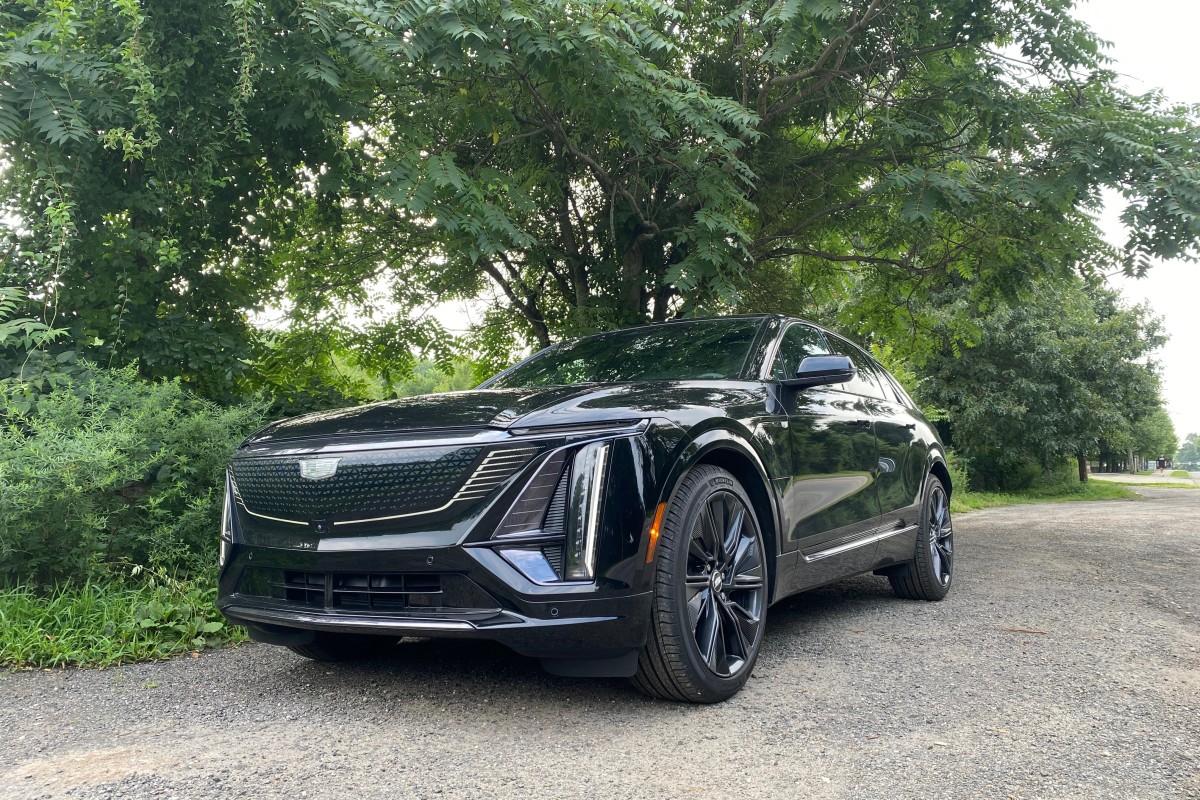
The first electric Cadillac is a midsize SUV with the brand's best interior design in a long time.
After a shortened 2023 introduction, the 2024 Lyriq is the first full model year of Cadillac's midsize electric SUV. The Lyriq is the luxury version of the GM Ultium EV platform used in other EV SUVs, including the Chevrolet Blazer EV, Honda Prologue, and Acura ZDX. With ample power, just over 300 miles of range, and a properly upscale interior that finally looks different than a Chevy, the Lyriq is a good contender if you're shopping for a higher-priced, two-row electric SUV. We tested a fully-loaded Lyriq Sport at nearly $80,000.
Verdict: As an EV, the Lyriq is average. As a Cadillac, it’s much better than anything else in the showroom. Traditional brand hallmarks, such as a cavernous back seat and a gentle ride, blend with big screens and significantly improved material quality. But it's still not up to the luxury standard that Cadillac promises.
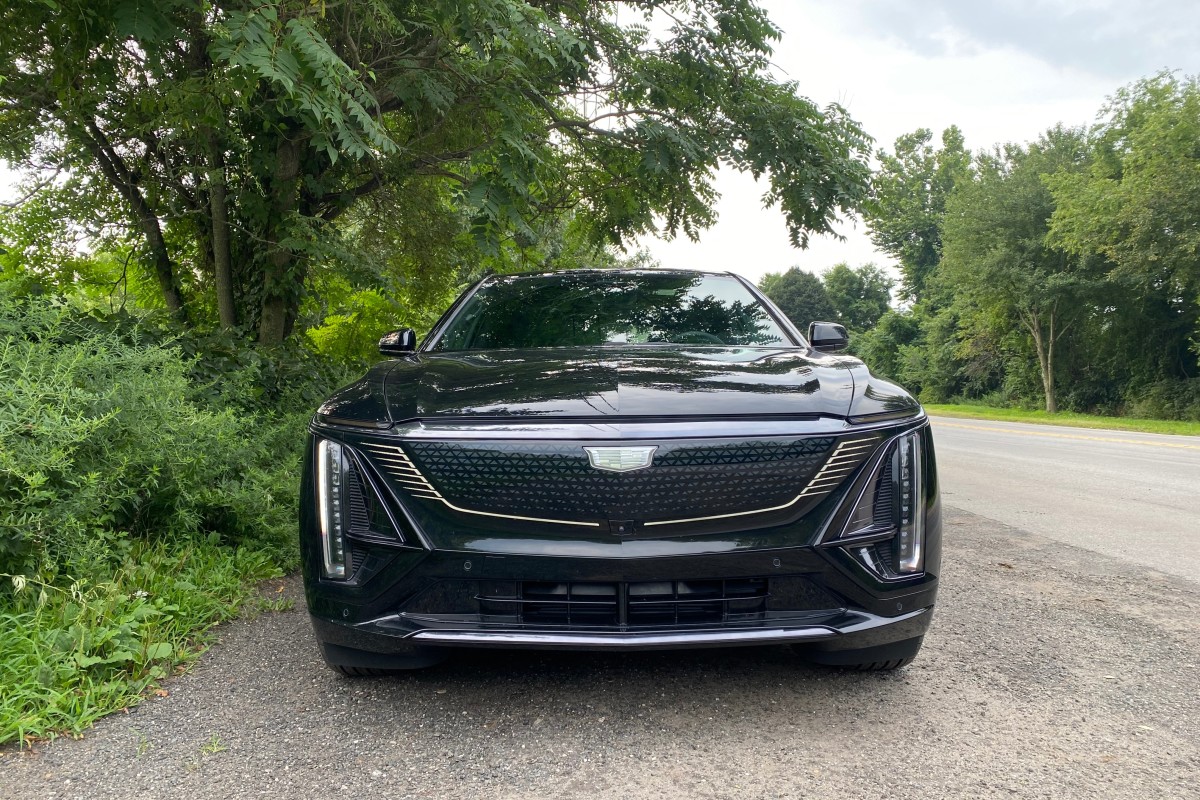
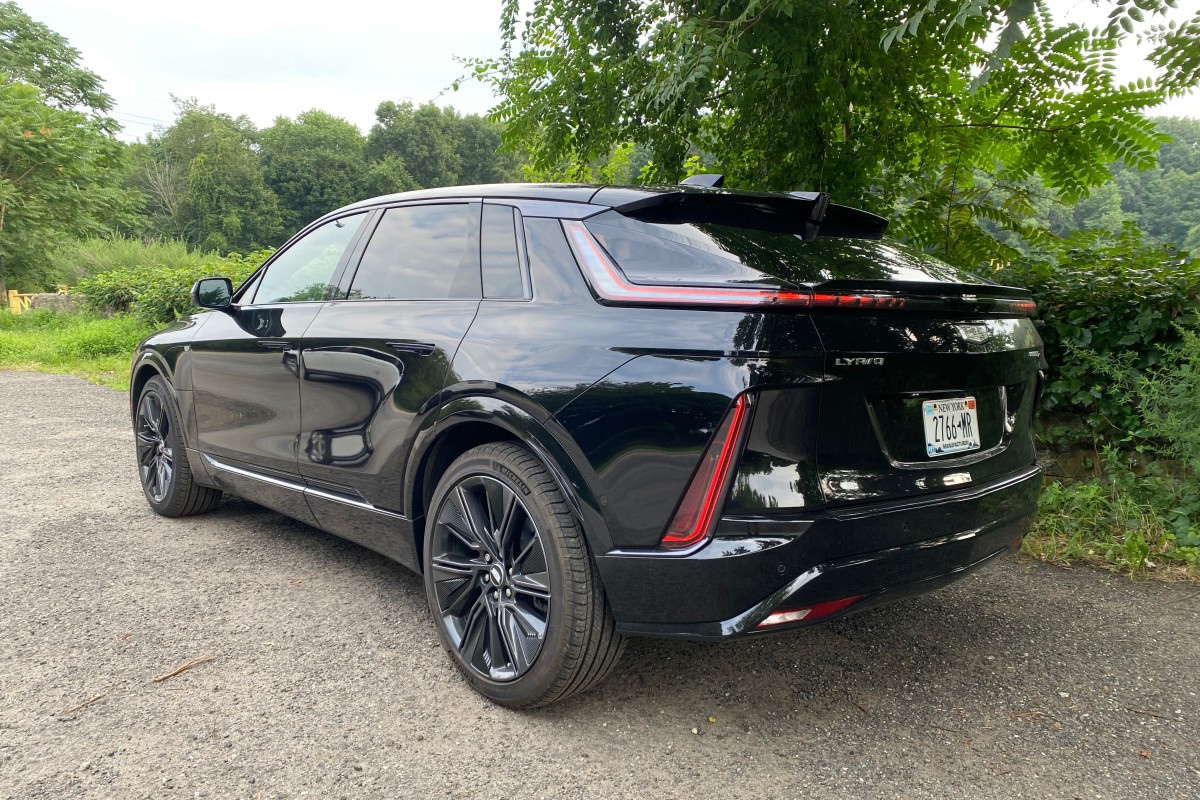
Count on Cadillac to deliver hot exterior styling. The Lyriq has street presence. It's meant to be an SUV since that's the trendy thing these days, but the long hood and low ground clearance give the impression of a long sedan. Picture the Seville in its better years—the tall-roofed Elegante from the early 1980s with the heavily-slanted trunk and two-tone body—as the Lyriq's inspiration. Like the Seville, the Lyriq boosts a long wheelbase, short tail, wide track, and a unique style all its own, in addition to that long hood.
Like all modern Cadillacs, the face has the vertical light bars that stand tall at the furthest edges of the vehicle, but here they incorporate nine LED headlights that play a light show when unlocking the car. They're surrounded by a thick, arrow-shaped molding and a solid grille with more lighting effects that slot between the headlights and sequentially-fading turn signal strips nestled at the topmost part of the fenders. On Tech and Luxury trims, the grille lines sweep in four directions toward the illuminated Cadillac crest while the Sport trim we tested is notably muted with a dark triangular motif. In all black and sitting on 22-inch wheels, the Lyriq has got it going on. But not on the standard 20-inch wheels—the imposing effect gets washed out with taller tire sidewalls.
Thin, deployable door handles are expected. What's not are the wraparound taillights that embellish the C-pillar and define the Lyriq's shoulder line at the side windows. Together with fender-mounted vertical lights, the Lyriq has the biggest turn signals of any car—bright red light sweeps from side to rear, top to bottom. The steeply raked glass window minimizes the effect of the high-waisted, blunt tailgate.
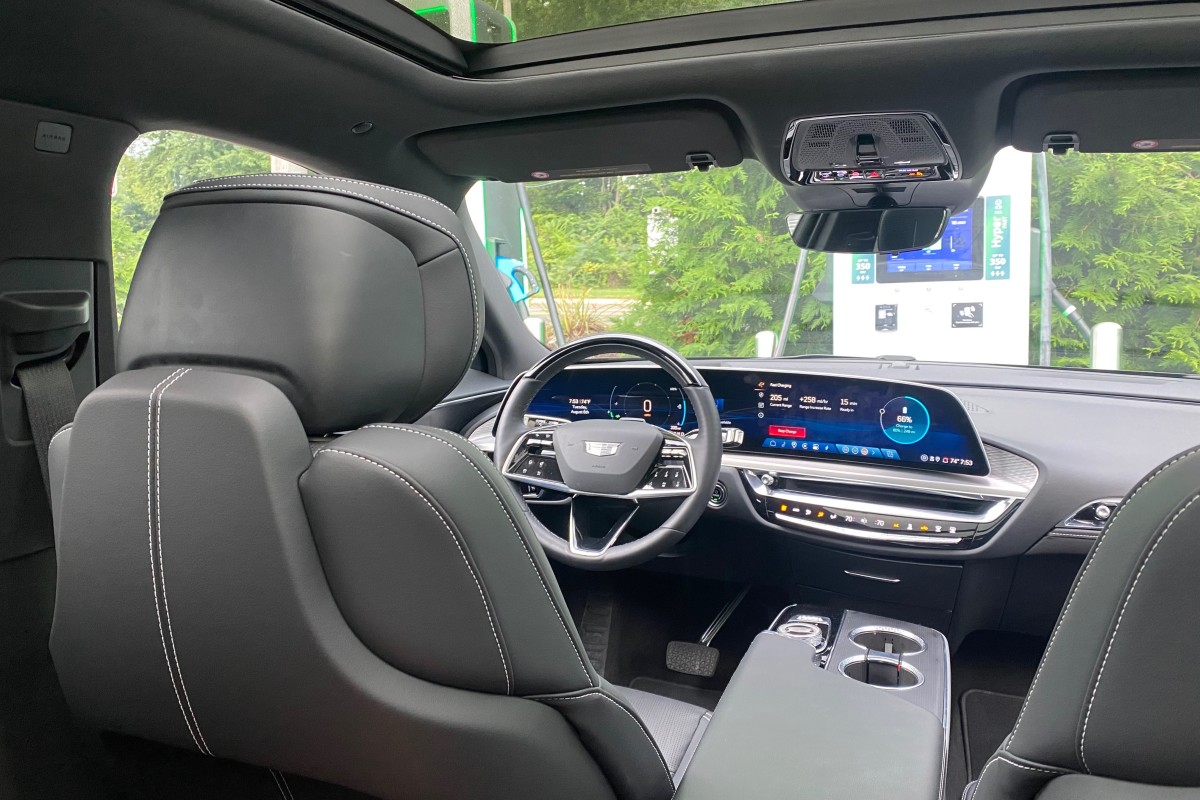
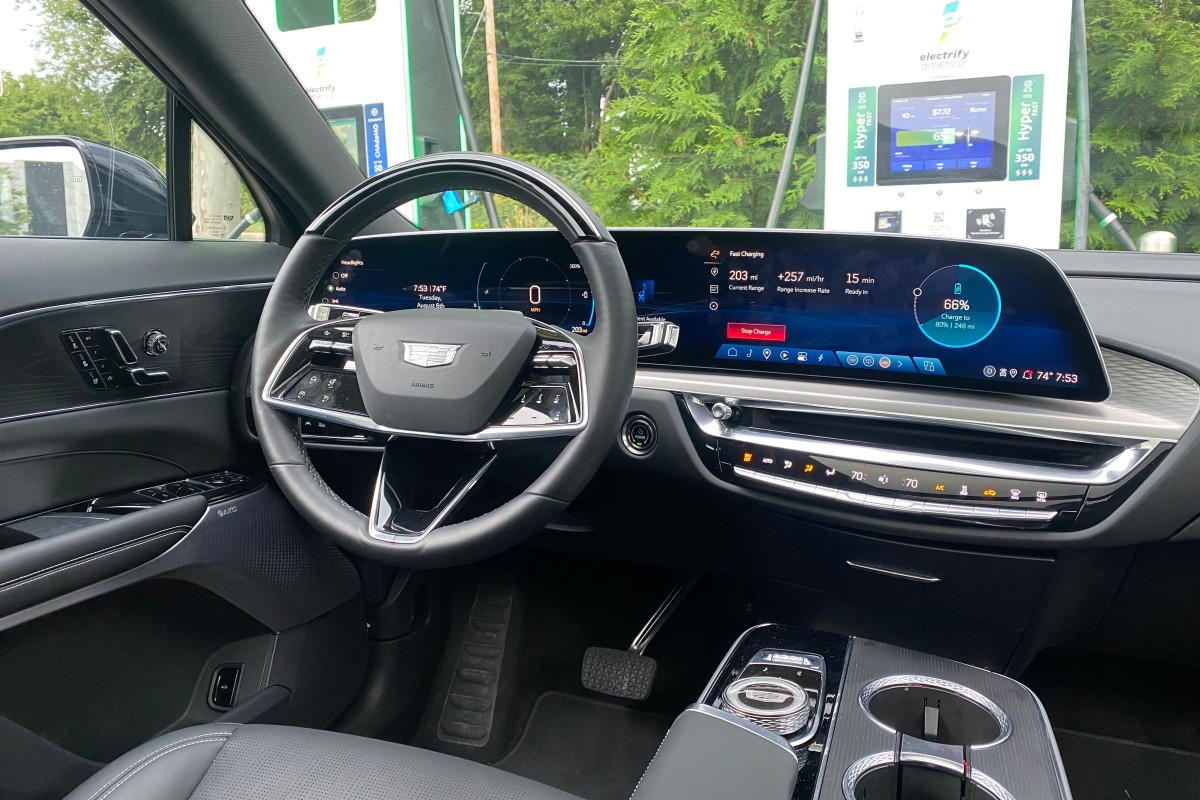
Inside, Cadillac gives proper attention to detail. The seats have C-shaped headrests and the backsides are entirely leather-wrapped and stitched with the support and adjustments you'd expect of a luxury brand. The window switches and door-mounted seat controls, which rest atop a hardy piece of stained wood, are nicely damped, polished in black, and outlined in chrome. The armrest is padded with leather and trimmed below with aluminum, which curves in a single piece to form the speaker grille at the driver's knee. The shifter and turn signal stalks on the steering wheel column are unique to Cadillac, as is the three-spoke wheel with its knurled toggle switches and a sleek black panel of buttons. The air vents are the most retro element—controlled by swiveling, knurled knobs that have no visible louvers separating the thin openings.
This is the level of detail Cadillac has long needed. The only misstep is the floating center console, another electric-vehicle style trend that's slowly dying. It offers no usable space underneath the cupholders, but at least it looks just as good as the other elements in the interior. The sweeping 33-inch OLED display makes itself known but doesn't dominate the space. It's flush and fitted.
The Lyriq doesn't drive with the sportiness that its slick exterior style would suggest. After piling on more than 500 miles, the Lyriq's sweet spot was the interstate. It's calm, poised, and rides impeccably well. There's plenty of power at the ready, though acceleration and regenerative braking are never annoyingly sharp, like in many EVs. They're dialed back, and for a car built around long-distance comfort, the softer reactions are truly welcome. Even the Sport driving mode doesn't unleash a fury of electrons, and you won't find a boost button or a launch control.
Still, the two Chinese-sourced motors in our test car output an impressive 500 horsepower and 450 pound-feet of torque for continuous all-wheel drive (AWD). This dual-motor powertrain is optional on every trim. The standard setup is a single rear motor with 340 hp and 325 lb-ft.
Both powertrains use a 102-kilowatt-hour battery pack that Cadillac claims is good for 314 miles with rear-wheel drive (RWD) and 307 miles with AWD. In 85-degree weather at highway speeds, we saw closer to 260 miles of max range (running the battery from 97 to six percent). We also didn't observe the Lyriq reaching its peak 190-kilowatt DC fast-charging rate, only seeing between 125 and 161 kW at multiple Electrify America stations. But we consistently topped the battery to 80 percent in about 30 to 35 minutes. For charging at home, it's imperative to spec the 19.2-kW Level 2 onboard charger (versus the standard 11.5-kW unit) to cut down the charge time.
Turning and steering reveal serious weaknesses. At 5,800 pounds, the midsize Lyriq weighs more than a full-size GM pickup and just a few hundred pounds shy of an Escalade. It’s insanely heavy and the heft absolutely kills the handling. While body control is good and the car never floats, the all-season Michelins howled in protest when taking sharp corners. The amount of understeer, or the tendency for the Lyriq to track too widely out of a turn, was horrendous. Cadillac’s other midsize crossover, the three-row XT6, is agile and surefooted in the corners by comparison.
It’s so egregious when Cadillac has built a sterling reputation for suspension and chassis tuning. The Lyriq feels like the engineering team quit early. The Lyriq also isn’t available with handling-enhancing features like torque vectoring, adjustable anti-roll bars, or Cadillac’s magnetic dampers—which perform magic in its other cars.
It doesn’t matter that the center of gravity is low, thanks to the big battery pack. The Lyriq is like a statue and impervious to changing direction. The steering feel, which Cadillac normally aces, is just as uninspiring and numb. Braking is strong, but with so much weight, we don't feel the stoppers will hold up to hard use, especially when towing a trailer (the AWD Lyriq has a maximum towing capacity of 3,500 pounds). Regenerative braking can be activated by holding the left paddle on the steering wheel or tapping the One-Pedal Driving option on the touchscreen, helping to take some of the stress off the friction brakes. That’s good. The rest of the chassis needs a redo.
While Cadillac says it has lines of customers willing to pay $340,000 for the hand-built Celestiq, the automaker has a hard time building regular cars. On our Lyriq, the rear fenders were misaligned to the wheel wheels, the motorized charging port would come loose and drop open on every drive, and the pull-out tray in the dash never pushed in all the way.
Functionality is another problem. The glovebox can't be easily opened while driving. Only in Park does an icon on the touchscreen appear; once moving, it disappears inside another menu. The floating console doesn't slide back for more space but just gets in the way and leaves valuables exposed. The center cubby is very small. On the console is a rotary selector for the touchscreen, but using it is much harder than touching the screen. (It doesn’t switch the screen to a circular layout like on the Escalade.)
Selecting drive modes is another multi-menu process that would have been better suited for a physical dial on the floating console. And while the metal door handles are nicely integrated into the armrests, a passenger nearly opened his door by accident thinking it was a window switch. The screens are great, but certain physical parts of the car seem cobbled together. This doesn't help Cadillac's cause in selling top-flight luxury cars.
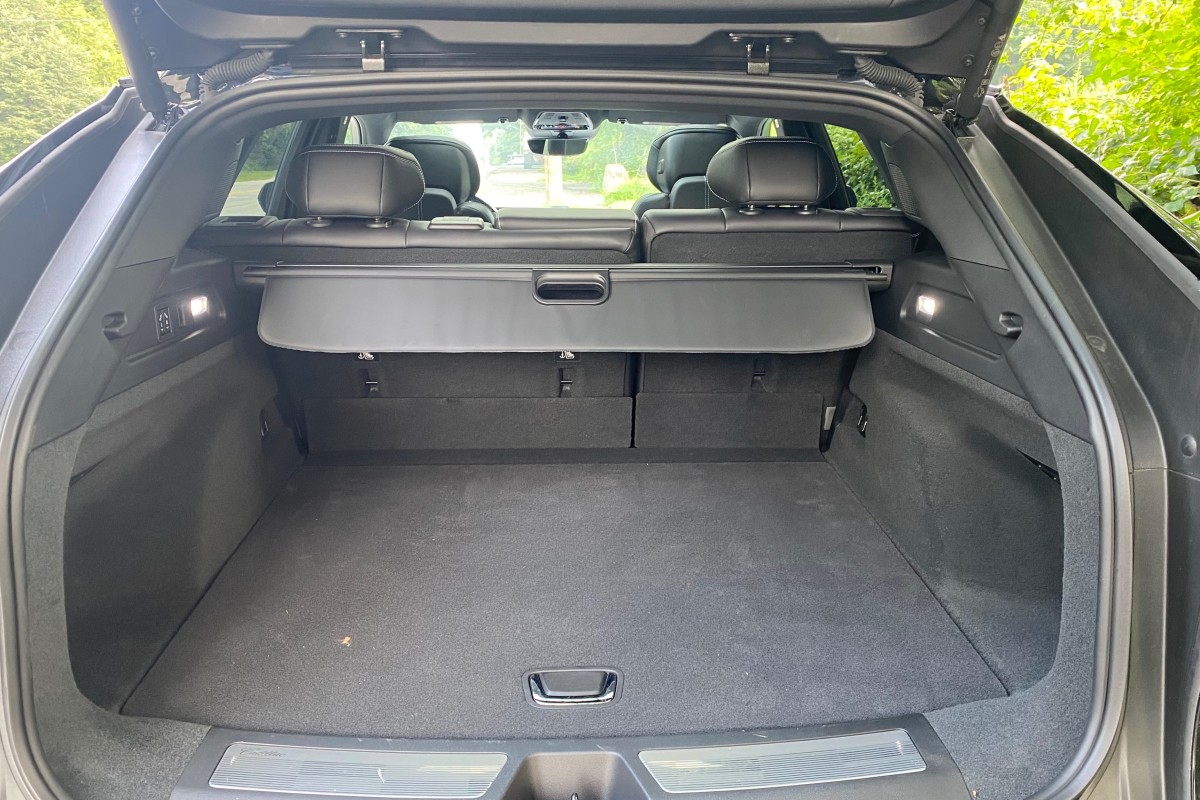
Headroom and legroom are generous. Like most EVs, the Lyriq trades cargo space for a spacious back seat. Despite its midsize dimensions, the cargo hold is smaller than most compact SUVs at 28 cubic feet behind the seats and 60.8 cubic feet when folded.
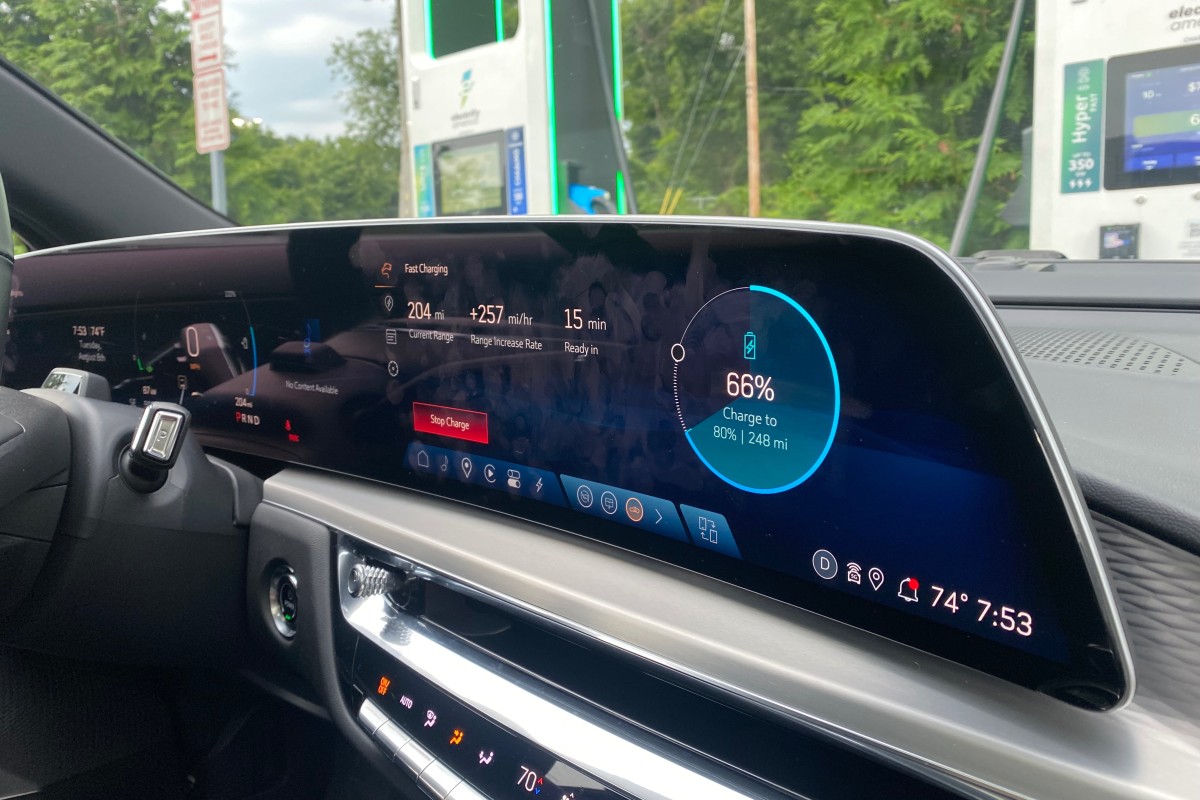
Cadillac’s best moments are inside its 33-inch OLED screen, which has three sections. The leftmost portion is touch-enabled for lighting, the trip odometer, and to switch the gauge cluster layouts. While there's no augmented reality video feed like on the Escalade, the instrument cluster is large and legible. The same goes for the main touchscreen infotainment system, which runs native Google Maps and Google Assistant. Menus are simple and the graphic quality is top notch. When navigating, the map will estimate the remaining charge on the battery at the destination—and we found it to be pretty accurate. Wireless Apple CarPlay and Android Auto come standard.
The available Super Cruise system is fabulous. It's easily the best hands-free driving system available, and while we'd prefer to see the dash display surrounding vehicles and all the lanes, the Lyriq switches lanes to pass slower moving cars and then switches back swiftly and safely. The colored bar on the steering wheel, which switches from green (active) to blue (driver taking control), to red (system deactivating) is very helpful. The 19-speaker AKG stereo is another strong point and has variable surround sound modes.

User reviews for 2024 Cadillac LYRIQ
Write a review2024 Cadillac LYRIQ Pricing
Trims & specs
Air Conditioning
Automatic climate control front air conditioning · Dual front air conditioning zones
Airbags
Dual front airbags · Dual front knee airbags · Passenger airbag deactivation: occupant sensing deactivation · Front side airbags · Rear side curtain airbags
Audio System
Antenna Type: diversity · Voice recognition audio system · Memory card slot auxiliary audio input · AM/FM radio · Satellite Radio: SiriusXM · Total Number of Speakers: 7
Brakes
ABS: 4-wheel · Braking assist: hill start assist · Electronic parking brake: auto off · Front brake diameter: 12.6 · Front brakes: ventilated disc · Rear brake diameter: 13.6 · Rear brakes: ventilated disc
Comfort Features
Armrests: rear center with cupholders · Center console trim: aluminium · Door sill trim: scuff plate · Door trim: aluminum · Floor Mat Material: carpet · Floor Material: carpet · Floor Mats: front · Steering wheel trim: leatherette
Convenience Features
Assist handle: passenger side · Cargo area power outlet: 12V · Center console: with lighting · Cupholders: front · Memorized settings: side mirrors · Multi-function remote: trunk release · One-touch windows: 4 · Power outlet(s): 12V front · Power steering: electric · Power windows: lockout button · Reading lights: front · Steering wheel: tilt and telescopic · Steering wheel mounted controls: voice recognition controls · Storage: cargo tie-down anchors and hooks · Universal garage door opener: Homelink · Vanity mirrors: dual illuminating
Driver Seat
Adjustable lumbar support: 4-way power · Power adjustments: 8
Drivetrain
Axle ratio: 11.63
Engine
EV battery capacity: 102 kWh · EV on-board charger rating: 11.5 kW · Electric Charge Cord: 240 volt · Electric Motor HP: 340 · Electric Motor Power Output (Kilowatts): 254 · Electric Motor Torque: 325 · Electric motor battery type: Ultium lithium ion · Electric motor charger: DC fast charging · Electric motor charger connector: SAE J1772 · Electric motor charging time: 10 hours · Electric motor miles per charge: 314
Exterior Features
Body side moldings: chrome · Door handle color: chrome · Fender lip moldings: black · Front bumper color: body-color · Grille color: black · Mirror color: black · Rear bumper color: black · Rear spoiler: roofline spoiler · Rear spoiler color: body-color · Rear trunk/liftgate: power operated · Window trim: chrome
Headrests
Front headrests: adjustable · Number of front headrests: 2 · Number of rear headrests: 3
In Car Entertainment
Connected in-car apps: Google search · Infotainment: Google Built-In · Integrated dashboard screen size: 33 in. · Smartphone integration: wireless Android Auto
Instrumentation
Fuel economy display: range · Warnings and reminders: maintenance reminder
Lights
Daytime running lights: LED · Exterior entry lights: security approach lamps · Headlights: automatic high beam dimmer · Tail and brake lights: LED
Mirrors
Exterior mirrors: power · Inside rearview mirror: manual day/night
Passenger Seat
Power adjustments: 6
Rear Seats
Type: 60-40 split bench
Roof
Moonroof / Sunroof: power sunshade · Sunroof: panoramic
Safety
Automatic emergency braking: front · Camera system: rearview · Child seat anchors: LATCH system · Cross Traffic Alert: rear · Crumple zones: front · Impact sensor: alert system · Parking sensors: rear · Pre-Collision Warning System: audible warning · Pre-collision warning system: pedestrian detection · Programmable safety key: MyKey · Rearview monitor: in dash
Seatbelts
Emergency locking retractors: front and rear · Front seatbelts: 3-point · Seatbelt force limiters: front · Seatbelt pretensioners: front · Seatbelt warning sensor: driver and passenger · Second row seatbelts: 3-point
Seats
Driver seat power adjustments: height · Front seat type: bucket · Passenger seat power adjustments: 4-way power lumbar · Rear headrests: adjustable · Rear seat folding: split · Rear seat manual adjustments: reclining · Upholstery: leatherette
Security
Power door locks: anti-lockout
Suspension
Front Shock Type: gas shock absorbers · Front Spring Type: coil springs · Front Suspension Classification: independent · Front Suspension Type: multi-link · Rear Shock Type: gas shock absorbers · Rear Spring Type: coil springs · Rear Suspension Classification: independent · Rear Suspension Type: multi-link · Stabilizer bar(s): front
Telematics
Driver assistance app: roadside assistance · Electronic messaging assistance: with voice recognition · Navigation system: touch screen display · Phone: voice activated · Phone wireless data link: Bluetooth · Satellite communications: Turn-by-Turn Navigation · Smart device app compatibility: Amazon Alexa · Smart device app function: maintenance scheduling · Wifi: hotspot
Tires
Type: all season
Tires and Rims
Run flat tires: puncture sealing compound with electric compressor · Wheels: painted aluminum
Wheels
Wheel spokes: 6
Windows
Front wipers: variable intermittent · Laminated glass: acoustic · Liftgate window: fixed · Power windows: with safety reverse · Solar-tinted glass: front
Air Conditioning
Automatic climate control front air conditioning · Dual front air conditioning zones
Airbags
Dual front airbags · Dual front knee airbags · Passenger airbag deactivation: occupant sensing deactivation · Front side airbags · Front side curtain airbags
Audio System
Antenna Type: diversity · Voice recognition audio system · Bluetooth auxiliary audio input · AM/FM radio · Satellite Radio: SiriusXM · Total Number of Speakers: 7
Brakes
ABS: 4-wheel · Braking assist: hill start assist · Electronic parking brake: auto off · Front brake diameter: 12.6 · Front brakes: ventilated disc · Rear brake diameter: 13.6 · Rear brakes: ventilated disc
Comfort Features
Armrests: rear center with cupholders · Center console trim: aluminium · Door sill trim: scuff plate · Door trim: aluminum · Floor Mat Material: carpet · Floor Material: carpet · Floor Mats: front · Steering wheel trim: alloy
Convenience Features
Assist handle: rear · Cargo area power outlet: 12V · Center console: front console with armrest and storage · Cupholders: front · Memorized settings: 2 driver · Multi-function remote: keyless entry with panic alarm · One-touch windows: 4 · Power outlet(s): 12V front · Power steering: electric · Power windows: lockout button · Reading lights: rear · Steering wheel: tilt and telescopic · Steering wheel mounted controls: cruise controls · Storage: cargo tie-down anchors and hooks · Universal garage door opener: Homelink · Vanity mirrors: dual illuminating
Driver Seat
Adjustable lumbar support: 4-way power · Power adjustments: 8
Drivetrain
4WD Type: on demand · Axle ratio: 9.87
Engine
EV battery capacity: 102 kWh · EV on-board charger rating: 11.5 kW · Electric Charge Cord: 240 volt · Electric Motor HP: 500 · Electric Motor Power Output (Kilowatts): 373 · Electric Motor Torque: 450 · Electric motor battery type: Ultium lithium ion · Electric motor charger: DC fast charging · Electric motor charger connector: SAE J1772 · Electric motor charging time: 10 hours · Electric motor miles per charge: 307
Exterior Features
Body side moldings: chrome · Door handle color: chrome · Fender lip moldings: black · Front bumper color: body-color · Grille color: black · Mirror color: black · Rear bumper color: black · Rear spoiler: roofline spoiler · Rear spoiler color: body-color · Rear trunk/liftgate: power operated · Window trim: chrome
Headrests
Front headrests: adjustable · Number of front headrests: 2 · Number of rear headrests: 3
In Car Entertainment
Connected in-car apps: Google search · Infotainment: Google Built-In · Integrated dashboard screen size: 33 in. · Smartphone integration: wireless Apple CarPlay
Instrumentation
Fuel economy display: range · Warnings and reminders: low battery
Lights
Daytime running lights: LED · Exterior entry lights: security approach lamps · Headlights: LED · Tail and brake lights: LED
Mirrors
Exterior mirrors: manual folding · Inside rearview mirror: manual day/night
Passenger Seat
Power adjustments: 6
Rear Seats
Type: 60-40 split bench
Roof
Moonroof / Sunroof: power sunshade · Sunroof: panoramic
Safety
Automatic emergency braking: rear · Camera system: rearview · Child seat anchors: LATCH system · Cross Traffic Alert: rear · Crumple zones: front · Impact sensor: alert system · Parking sensors: rear · Pre-Collision Warning System: audible warning · Pre-collision warning system: pedestrian detection · Programmable safety key: MyKey · Rearview monitor: in dash
Seatbelts
Emergency locking retractors: front and rear · Front seatbelts: 3-point · Seatbelt force limiters: front · Seatbelt pretensioners: front · Seatbelt warning sensor: driver and passenger · Second row seatbelts: 3-point
Seats
Driver seat power adjustments: height · Front seat type: bucket · Passenger seat power adjustments: height · Rear headrests: adjustable · Rear seat folding: split · Rear seat manual adjustments: reclining · Upholstery: leatherette
Security
Power door locks: anti-lockout
Suspension
Front Shock Type: gas shock absorbers · Front Spring Type: coil springs · Front Suspension Classification: independent · Front Suspension Type: multi-link · Rear Shock Type: gas shock absorbers · Rear Spring Type: coil springs · Rear Suspension Classification: independent · Rear Suspension Type: multi-link · Stabilizer bar(s): front
Telematics
Driver assistance app: roadside assistance · Electronic messaging assistance: with read function · Navigation system: touch screen display · Phone: voice activated · Phone wireless data link: Bluetooth · Satellite communications: Turn-by-Turn Navigation · Smart device app compatibility: Amazon Alexa · Smart device app function: lock operation · Wifi: hotspot
Tires
Type: all season
Tires and Rims
Run flat tires: puncture sealing compound with electric compressor · Wheels: painted aluminum
Wheels
Wheel spokes: 6
Windows
Front wipers: variable intermittent · Laminated glass: acoustic · Liftgate window: fixed · Power windows: with safety reverse · Solar-tinted glass: front
Air Conditioning
Automatic climate control front air conditioning · Dual front air conditioning zones
Airbags
Dual front airbags · Dual front knee airbags · Passenger airbag deactivation: occupant sensing deactivation · Front side airbags · Front side curtain airbags
Audio System
Antenna Type: diversity · Voice recognition audio system · USB auxiliary audio input · Touch screen display radio · Satellite Radio: SiriusXM · Total Number of Speakers: 7
Brakes
ABS: 4-wheel · Braking assist: hill start assist · Electronic parking brake: auto off · Front brake diameter: 12.6 · Front brakes: ventilated disc · Rear brake diameter: 13.6 · Rear brakes: ventilated disc
Comfort Features
Armrests: rear center with cupholders · Center console trim: wood · Door sill trim: scuff plate · Door trim: wood · Floor Mat Material: carpet · Floor Material: carpet · Floor Mats: front · Interior accents: wood · Steering wheel trim: leatherette
Convenience Features
Active parking system: fully automated · Adaptive stop and go cruise control: semi-automatic · Ambient lighting: color-adjustable · Assist handle: passenger side · Cargo area power outlet: 12V · Center console: with lighting · Cruise control: adaptive · Cupholders: front · Dimming rearview mirror: auto-dimming · Memorized settings: steering wheel · Multi-function remote: trunk release · One-touch windows: 4 · Power outlet(s): 12V front · Power steering: speed-proportional · Power windows: lockout button · Reading lights: rear · Steering wheel: power tilt and telescopic · Steering wheel mounted controls: voice recognition controls · Storage: in-floor · Universal garage door opener: Homelink · Vanity mirrors: dual illuminating
Driver Seat
Adjustable lumbar support: 4-way power · Power adjustments: 8
Drivetrain
Axle ratio: 11.63
Engine
EV battery capacity: 102 kWh · EV on-board charger rating: 11.5 kW · Electric Charge Cord: 240 volt · Electric Motor HP: 340 · Electric Motor Power Output (Kilowatts): 254 · Electric Motor Torque: 325 · Electric motor battery type: Ultium lithium ion · Electric motor charger: DC fast charging · Electric motor charger connector: SAE J1772 · Electric motor charging time: 10 hours · Electric motor miles per charge: 314
Exterior Features
Body side moldings: chrome · Door handle color: chrome · Fender lip moldings: black · Front bumper color: body-color · Grille color: black · Mirror color: black · Rear bumper color: black · Rear spoiler: roofline spoiler · Rear spoiler color: body-color · Rear trunk/liftgate: liftgate · Window trim: chrome
Headrests
Front headrests: adjustable · Number of front headrests: 2 · Number of rear headrests: 3
In Car Entertainment
Connected in-car apps: Google POIs · Infotainment: Google Built-In · Integrated dashboard screen size: 33 in. · Smartphone integration: wireless Android Auto
Instrumentation
Fuel economy display: range · Warnings and reminders: low battery
Lights
Daytime running lights: LED · Exterior entry lights: puddle lamps · Headlights: self-leveling · Tail and brake lights: LED
Mirrors
Exterior mirrors: power
Passenger Seat
Power adjustments: 6
Rear Seats
Type: 60-40 split bench
Roof
Moonroof / Sunroof: power sunshade · Sunroof: panoramic
Safety
Automatic emergency braking: intersection/junction cross · Camera system: surround view · Child seat anchors: LATCH system · Cross Traffic Alert: rear · Crumple zones: front · Impact sensor: battery disconnect · Parking sensors: rear · Pre-Collision Warning System: visual warning · Pre-collision warning system: intersection/junction cross · Programmable safety key: MyKey · Rear pre-collision warning system: pedestrian detection · Rearview monitor: in dash
Seatbelts
Emergency locking retractors: front · Front seatbelts: 3-point · Seatbelt force limiters: front · Seatbelt pretensioners: front · Seatbelt warning sensor: driver and passenger · Second row seatbelts: 3-point
Seats
Driver seat power adjustments: reclining · Front seat type: bucket · Passenger seat power adjustments: 4-way power lumbar · Rear headrests: adjustable · Rear seat folding: split · Rear seat manual adjustments: reclining · Upholstery: contrast stitching
Security
Power door locks: anti-lockout
Suspension
Front Shock Type: gas shock absorbers · Front Spring Type: coil springs · Front Suspension Classification: independent · Front Suspension Type: multi-link · Rear Shock Type: gas shock absorbers · Rear Spring Type: coil springs · Rear Suspension Classification: independent · Rear Suspension Type: multi-link · Stabilizer bar(s): rear
Telematics
Driver assistance app: roadside assistance · Electronic messaging assistance: with voice recognition · Navigation system: touch screen display · Phone: voice activated · Phone wireless data link: Bluetooth · Satellite communications: Turn-by-Turn Navigation · Smart device app compatibility: Amazon Alexa · Smart device app function: maintenance scheduling · Wifi: hotspot
Tires
Type: all season
Tires and Rims
Run flat tires: puncture sealing compound with electric compressor · Wheels: painted aluminum
Wheels
Wheel spokes: 6
Windows
Front wipers: variable intermittent · Laminated glass: acoustic · Liftgate window: fixed · Power windows: with safety reverse · Solar-tinted glass: front
Air Conditioning
Automatic climate control front air conditioning · Dual front air conditioning zones
Airbags
Dual front airbags · Dual front knee airbags · Passenger airbag deactivation: occupant sensing deactivation · Front side airbags · Rear side curtain airbags
Audio System
Antenna Type: diversity · Voice recognition audio system · USB auxiliary audio input · AM/FM radio · Satellite Radio: SiriusXM · Total Number of Speakers: 7
Brakes
ABS: 4-wheel · Braking assist: hill start assist · Electronic parking brake: auto off · Front brake diameter: 12.6 · Front brakes: ventilated disc · Rear brake diameter: 13.6 · Rear brakes: ventilated disc
Comfort Features
Armrests: rear center with cupholders · Center console trim: wood · Door sill trim: scuff plate · Door trim: wood · Floor Mat Material: carpet · Floor Material: carpet · Floor Mats: front · Interior accents: wood · Steering wheel trim: leatherette
Convenience Features
Active parking system: fully automated · Adaptive stop and go cruise control: semi-automatic · Ambient lighting: color-adjustable · Assist handle: rear · Cargo area power outlet: 12V · Center console: with lighting · Cruise control: adaptive · Cupholders: rear · Dimming rearview mirror: auto-dimming · Memorized settings: liftgate · Multi-function remote: proximity entry system · One-touch windows: 4 · Power outlet(s): USB-C rear · Power steering: speed-proportional · Power windows: lockout button · Reading lights: front · Steering wheel: power tilt and telescopic · Steering wheel mounted controls: multi-function screen controls · Storage: in-floor · Universal garage door opener: Homelink · Vanity mirrors: dual illuminating
Driver Seat
Adjustable lumbar support: 4-way power · Power adjustments: 8
Drivetrain
Axle ratio: 11.63
Engine
EV battery capacity: 102 kWh · EV on-board charger rating: 11.5 kW · Electric Charge Cord: 240 volt · Electric Motor HP: 340 · Electric Motor Power Output (Kilowatts): 254 · Electric Motor Torque: 325 · Electric motor battery type: Ultium lithium ion · Electric motor charger: DC fast charging · Electric motor charger connector: SAE J1772 · Electric motor charging time: 10 hours · Electric motor miles per charge: 314
Exterior Features
Body side moldings: black · Door handle color: body-color · Fender lip moldings: black · Front bumper color: body-color · Grille color: black · Mirror color: black · Rear bumper color: black · Rear spoiler: roofline spoiler · Rear spoiler color: body-color · Rear trunk/liftgate: power operated · Window trim: black
Headrests
Front headrests: adjustable · Number of front headrests: 2 · Number of rear headrests: 3
In Car Entertainment
Connected in-car apps: Google POIs · Infotainment: Google Built-In · Integrated dashboard screen size: 33 in. · Smartphone integration: wireless Apple CarPlay
Instrumentation
Fuel economy display: range · Warnings and reminders: low battery
Lights
Daytime running lights: LED · Exterior entry lights: puddle lamps · Headlights: self-leveling · Tail and brake lights: LED
Mirrors
Exterior mirrors: integrated turn signals
Passenger Seat
Power adjustments: 6
Rear Seats
Type: 60-40 split bench
Roof
Moonroof / Sunroof: power sunshade · Sunroof: panoramic
Safety
Automatic emergency braking: GM enhanced automatic emergency braking (UGN) · Camera system: surround view · Child seat anchors: LATCH system · Cross Traffic Alert: rear · Crumple zones: rear · Impact sensor: alert system · Parking sensors: rear · Pre-Collision Warning System: audible warning · Pre-collision warning system: intersection/junction cross · Programmable safety key: MyKey · Rear pre-collision warning system: pedestrian detection · Rearview monitor: in dash
Seatbelts
Emergency locking retractors: front · Front seatbelts: 3-point · Seatbelt force limiters: front · Seatbelt pretensioners: front · Seatbelt warning sensor: driver and passenger · Second row seatbelts: 3-point
Seats
Driver seat power adjustments: reclining · Front seat type: bucket · Passenger seat power adjustments: 4-way power lumbar · Rear headrests: adjustable · Rear seat folding: split · Rear seat manual adjustments: reclining · Upholstery: perforated
Security
Power door locks: anti-lockout
Suspension
Front Shock Type: gas shock absorbers · Front Spring Type: coil springs · Front Suspension Classification: independent · Front Suspension Type: strut · Rear Shock Type: gas shock absorbers · Rear Spring Type: coil springs · Rear Suspension Classification: independent · Rear Suspension Type: multi-link · Stabilizer bar(s): rear
Telematics
Driver assistance app: roadside assistance · Electronic messaging assistance: with voice recognition · Navigation system: with voice recognition · Phone: voice activated · Phone wireless data link: Bluetooth · Satellite communications: OnStar · Smart device app compatibility: myCadillac with Connected Access · Smart device app function: maintenance status · Wifi: hotspot
Tires
Type: all season
Tires and Rims
Run flat tires: puncture sealing compound with electric compressor · Wheels: painted aluminum
Wheels
Wheel spokes: 12
Windows
Front wipers: rain sensing · Laminated glass: acoustic · Liftgate window: fixed · Power windows: with safety reverse · Solar-tinted glass: front
Air Conditioning
Automatic climate control front air conditioning · Dual front air conditioning zones
Airbags
Dual front airbags · Dual front knee airbags · Passenger airbag deactivation: occupant sensing deactivation · Front side airbags · Front side curtain airbags
Audio System
Antenna Type: mast · Voice recognition audio system · Bluetooth auxiliary audio input · Touch screen display radio · Satellite Radio: SiriusXM · Total Number of Speakers: 7
Brakes
ABS: 4-wheel · Braking assist: hill start assist · Electronic parking brake: auto off · Front brake diameter: 12.6 · Front brakes: ventilated disc · Rear brake diameter: 13.6 · Rear brakes: ventilated disc
Comfort Features
Armrests: rear center with cupholders · Center console trim: wood · Door sill trim: scuff plate · Door trim: wood · Floor Mat Material: carpet · Floor Material: carpet · Floor Mats: front · Interior accents: wood · Steering wheel trim: leatherette
Convenience Features
Active parking system: fully automated · Adaptive stop and go cruise control: semi-automatic · Ambient lighting: color-adjustable · Assist handle: passenger side · Cargo area power outlet: 12V · Center console: with lighting · Cruise control: adaptive · Cupholders: rear · Dimming rearview mirror: auto-dimming · Memorized settings: side mirrors · Multi-function remote: proximity entry system · One-touch windows: 4 · Power outlet(s): USB-C front · Power steering: speed-proportional · Power windows: lockout button · Reading lights: front · Steering wheel: power tilt and telescopic · Steering wheel mounted controls: audio · Storage: door pockets · Universal garage door opener: Homelink · Vanity mirrors: dual illuminating
Driver Seat
Adjustable lumbar support: 4-way power · Power adjustments: 8
Drivetrain
4WD Type: on demand · Axle ratio: 9.87
Engine
EV battery capacity: 102 kWh · EV on-board charger rating: 11.5 kW · Electric Charge Cord: 240 volt · Electric Motor HP: 500 · Electric Motor Power Output (Kilowatts): 373 · Electric Motor Torque: 450 · Electric motor battery type: Ultium lithium ion · Electric motor charger: DC fast charging · Electric motor charger connector: SAE J1772 · Electric motor charging time: 10 hours · Electric motor miles per charge: 307
Exterior Features
Body side moldings: chrome · Door handle color: chrome · Fender lip moldings: black · Front bumper color: body-color · Grille color: black · Mirror color: black · Rear bumper color: black · Rear spoiler: roofline spoiler · Rear spoiler color: body-color · Rear trunk/liftgate: liftgate · Window trim: chrome
Headrests
Front headrests: adjustable · Number of front headrests: 2 · Number of rear headrests: 3
In Car Entertainment
Connected in-car apps: Google POIs · Infotainment: Google Built-In · Integrated dashboard screen size: 33 in. · Smartphone integration: wireless Android Auto
Instrumentation
Fuel economy display: range · Warnings and reminders: low battery
Lights
Daytime running lights: LED · Exterior entry lights: puddle lamps · Headlights: LED · Tail and brake lights: LED
Mirrors
Exterior mirrors: power folding
Passenger Seat
Power adjustments: 6
Rear Seats
Type: 60-40 split bench
Roof
Moonroof / Sunroof: power sunshade · Sunroof: panoramic
Safety
Automatic emergency braking: front pedestrian · Camera system: surround view · Child seat anchors: LATCH system · Cross Traffic Alert: rear · Crumple zones: front · Impact sensor: battery disconnect · Parking sensors: rear · Pre-Collision Warning System: audible warning · Pre-collision warning system: pedestrian detection · Programmable safety key: MyKey · Rear pre-collision warning system: pedestrian detection · Rearview monitor: in dash
Seatbelts
Emergency locking retractors: front · Front seatbelts: 3-point · Seatbelt force limiters: front · Seatbelt pretensioners: front · Seatbelt warning sensor: driver and passenger · Second row seatbelts: 3-point
Seats
Driver seat power adjustments: reclining · Front seat type: bucket · Passenger seat power adjustments: 4-way power lumbar · Rear headrests: adjustable · Rear seat folding: split · Rear seat manual adjustments: reclining · Upholstery: leatherette
Security
Power door locks: anti-lockout
Suspension
Front Shock Type: gas shock absorbers · Front Spring Type: coil springs · Front Suspension Classification: independent · Front Suspension Type: multi-link · Rear Shock Type: gas shock absorbers · Rear Spring Type: coil springs · Rear Suspension Classification: independent · Rear Suspension Type: multi-link · Stabilizer bar(s): front
Telematics
Driver assistance app: roadside assistance · Electronic messaging assistance: with read function · Navigation system: with voice recognition · Phone: voice activated · Phone wireless data link: Bluetooth · Satellite communications: OnStar · Smart device app compatibility: Amazon Alexa · Smart device app function: lock operation · Wifi: hotspot
Tires
Type: all season
Tires and Rims
Run flat tires: puncture sealing compound with electric compressor · Wheels: painted aluminum
Wheels
Wheel spokes: 6
Windows
Front wipers: variable intermittent · Laminated glass: acoustic · Liftgate window: fixed · Power windows: with safety reverse · Solar-tinted glass: front
Air Conditioning
Automatic climate control front air conditioning · Dual front air conditioning zones
Airbags
Dual front airbags · Dual front knee airbags · Passenger airbag deactivation: occupant sensing deactivation · Front side airbags · Rear side curtain airbags
Audio System
Antenna Type: mast · Voice recognition audio system · Memory card slot auxiliary audio input · AM/FM radio · Satellite Radio: SiriusXM · Total Number of Speakers: 7
Brakes
ABS: 4-wheel · Braking assist: hill start assist · Electronic parking brake: auto off · Front brake diameter: 12.6 · Front brakes: ventilated disc · Rear brake diameter: 13.6 · Rear brakes: ventilated disc
Comfort Features
Armrests: rear center with cupholders · Center console trim: wood · Door sill trim: scuff plate · Door trim: wood · Floor Mat Material: carpet · Floor Material: carpet · Floor Mats: front · Interior accents: wood · Steering wheel trim: leatherette
Convenience Features
Active parking system: fully automated · Adaptive stop and go cruise control: semi-automatic · Ambient lighting: color-adjustable · Assist handle: passenger side · Cargo area power outlet: 12V · Center console: with lighting · Cruise control: adaptive · Cupholders: rear · Dimming rearview mirror: auto-dimming · Memorized settings: driver seat · Multi-function remote: keyless entry with panic alarm · One-touch windows: 4 · Power outlet(s): 12V front · Power steering: speed-proportional · Power windows: lockout button · Reading lights: rear · Steering wheel: power tilt and telescopic · Steering wheel mounted controls: audio · Storage: in-floor · Universal garage door opener: Homelink · Vanity mirrors: dual illuminating
Driver Seat
Adjustable lumbar support: 4-way power · Power adjustments: 8
Drivetrain
4WD Type: on demand · Axle ratio: 9.87
Engine
EV battery capacity: 102 kWh · EV on-board charger rating: 11.5 kW · Electric Charge Cord: 240 volt · Electric Motor HP: 500 · Electric Motor Power Output (Kilowatts): 373 · Electric Motor Torque: 450 · Electric motor battery type: Ultium lithium ion · Electric motor charger: DC fast charging · Electric motor charger connector: SAE J1772 · Electric motor charging time: 10 hours · Electric motor miles per charge: 307
Exterior Features
Body side moldings: black · Door handle color: body-color · Fender lip moldings: black · Front bumper color: body-color · Grille color: black · Mirror color: black · Rear bumper color: black · Rear spoiler: roofline spoiler · Rear spoiler color: body-color · Rear trunk/liftgate: power operated · Window trim: black
Headrests
Front headrests: adjustable · Number of front headrests: 2 · Number of rear headrests: 3
In Car Entertainment
Connected in-car apps: Google search · Infotainment: Google Built-In · Integrated dashboard screen size: 33 in. · Smartphone integration: wireless Apple CarPlay
Instrumentation
Fuel economy display: range · Warnings and reminders: maintenance reminder
Lights
Daytime running lights: LED · Exterior entry lights: puddle lamps · Headlights: Auto on/off · Tail and brake lights: LED
Mirrors
Exterior mirrors: integrated turn signals
Passenger Seat
Power adjustments: 6
Rear Seats
Type: 60-40 split bench
Roof
Moonroof / Sunroof: power sunshade · Sunroof: panoramic
Safety
Automatic emergency braking: intersection/junction cross · Camera system: surround view · Child seat anchors: LATCH system · Cross Traffic Alert: rear · Crumple zones: front · Impact sensor: battery disconnect · Parking sensors: front · Pre-Collision Warning System: vibrating driver seat · Pre-collision warning system: intersection/junction cross · Programmable safety key: MyKey · Rear pre-collision warning system: pedestrian detection · Rearview monitor: in dash
Seatbelts
Emergency locking retractors: front and rear · Front seatbelts: 3-point · Seatbelt force limiters: front · Seatbelt pretensioners: front · Seatbelt warning sensor: driver and passenger · Second row seatbelts: 3-point
Seats
Driver seat power adjustments: height · Front seat type: bucket · Passenger seat power adjustments: 4-way power lumbar · Rear headrests: adjustable · Rear seat folding: split · Rear seat manual adjustments: reclining · Upholstery: leatherette
Security
Power door locks: anti-lockout
Suspension
Front Shock Type: gas shock absorbers · Front Spring Type: coil springs · Front Suspension Classification: independent · Front Suspension Type: strut · Rear Shock Type: gas shock absorbers · Rear Spring Type: coil springs · Rear Suspension Classification: independent · Rear Suspension Type: multi-link · Stabilizer bar(s): rear
Telematics
Driver assistance app: roadside assistance · Electronic messaging assistance: with voice recognition · Navigation system: touch screen display · Phone: voice activated · Phone wireless data link: Bluetooth · Satellite communications: Turn-by-Turn Navigation · Smart device app compatibility: myCadillac with Connected Access · Smart device app function: vehicle location · Wifi: hotspot
Tires
Type: all season
Tires and Rims
Run flat tires: puncture sealing compound with electric compressor · Wheels: painted aluminum
Wheels
Wheel spokes: 12
Windows
Front wipers: variable intermittent · Laminated glass: acoustic · Liftgate window: fixed · Power windows: with safety reverse · Solar-tinted glass: front
Air Conditioning
Automatic climate control front air conditioning · Dual front air conditioning zones
Airbags
Dual front airbags · Dual front knee airbags · Passenger airbag deactivation: occupant sensing deactivation · Front side airbags · Rear side curtain airbags
Audio System
Antenna Type: mast · Voice recognition audio system · Bluetooth auxiliary audio input · Premium brand: AKG · AM/FM radio · Satellite Radio: SiriusXM · 1 subwoofer · Total Number of Speakers: 18
Brakes
ABS: 4-wheel · Braking assist: hill start assist · Electronic parking brake: auto off · Front brake diameter: 12.6 · Front brakes: ventilated disc · Rear brake diameter: 13.6 · Rear brakes: ventilated disc
Comfort Features
Armrests: rear center with cupholders · Center console trim: wood · Door sill trim: scuff plate · Door trim: wood · Floor Mat Material: carpet · Floor Material: carpet · Floor Mats: front · Interior accents: wood · Steering wheel trim: leatherette
Convenience Features
Active parking system: fully automated · Adaptive stop and go cruise control: semi-automatic · Ambient lighting: color-adjustable · Assist handle: passenger side · Autonomous lane guidance: lane changing · Cargo area power outlet: 12V · Center console: front console with armrest and storage · Cruise control: adaptive · Cupholders: front · Dimming rearview mirror: auto-dimming · Memorized settings: steering wheel · Multi-function remote: trunk release · One-touch windows: 4 · Power outlet(s): 12V front · Power steering: electric · Power windows: lockout button · Reading lights: rear · Rear power outlet: 115V · Steering wheel: power tilt and telescopic · Steering wheel mounted controls: multi-function screen controls · Storage: in-floor · Universal garage door opener: Homelink · Vanity mirrors: dual illuminating
Driver Seat
Adjustable lumbar support: 4-way power · Power adjustments: 8
Drivetrain
Axle ratio: 11.63
Engine
EV battery capacity: 102 kWh · EV on-board charger rating: 11.5 kW · Electric Charge Cord: 240 volt · Electric Motor HP: 340 · Electric Motor Power Output (Kilowatts): 254 · Electric Motor Torque: 325 · Electric motor battery type: Ultium lithium ion · Electric motor charger: DC fast charging · Electric motor charger connector: SAE J1772 · Electric motor charging time: 10 hours · Electric motor miles per charge: 314
Exterior Features
Body side moldings: chrome · Door handle color: chrome · Fender lip moldings: black · Front bumper color: body-color · Grille color: black · Mirror color: black · Rear bumper color: black · Rear spoiler: roofline spoiler · Rear spoiler color: body-color · Rear trunk/liftgate: power operated · Window trim: chrome
Headrests
Front headrests: adjustable · Number of front headrests: 2 · Number of rear headrests: 3
In Car Entertainment
Connected in-car apps: Google POIs · Infotainment: Google Built-In · Integrated dashboard screen size: 33 in. · Smartphone integration: wireless Android Auto
Instrumentation
Fuel economy display: range · Warnings and reminders: maintenance reminder
Lights
Daytime running lights: LED · Exterior entry lights: security approach lamps · Headlights: wiper activated · Tail and brake lights: LED
Mirrors
Exterior mirrors: power
Passenger Seat
Power adjustments: 8
Rear Seats
Type: 60-40 split bench
Roof
Moonroof / Sunroof: power sunshade · Sunroof: panoramic
Safety
Automatic emergency braking: intersection/junction cross · Camera system: surround view · Child seat anchors: LATCH system · Cross Traffic Alert: rear · Crumple zones: front · Impact sensor: battery disconnect · Parking sensors: front · Pre-Collision Warning System: visual warning · Pre-collision warning system: intersection/junction cross · Programmable safety key: MyKey · Rear pre-collision warning system: pedestrian detection · Rearview monitor: in dash
Seatbelts
Emergency locking retractors: front · Front seatbelts: 3-point · Seatbelt force limiters: front · Seatbelt pretensioners: front · Seatbelt warning sensor: driver and passenger · Second row seatbelts: 3-point
Seats
Driver seat power adjustments: reclining · Front seat type: bucket · Passenger seat power adjustments: 4-way power lumbar · Rear headrests: adjustable · Rear seat folding: split · Rear seat manual adjustments: reclining · Upholstery: contrast stitching
Security
Power door locks: anti-lockout
Suspension
Front Shock Type: gas shock absorbers · Front Spring Type: coil springs · Front Suspension Classification: independent · Front Suspension Type: strut · Rear Shock Type: gas shock absorbers · Rear Spring Type: coil springs · Rear Suspension Classification: independent · Rear Suspension Type: multi-link · Stabilizer bar(s): rear
Telematics
Driver assistance app: roadside assistance · Electronic messaging assistance: with voice recognition · Navigation system: with voice recognition · Phone: voice activated · Phone wireless data link: Bluetooth · Satellite communications: Turn-by-Turn Navigation · Smart device app compatibility: Amazon Alexa · Smart device app function: vehicle location · Wifi: hotspot
Tires
Type: all season
Tires and Rims
Run flat tires: puncture sealing compound with electric compressor · Wheels: painted aluminum
Wheels
Wheel spokes: 6
Windows
Front wipers: variable intermittent · Laminated glass: acoustic · Liftgate window: fixed · Power windows: with safety reverse · Solar-tinted glass: front
Air Conditioning
Automatic climate control front air conditioning · Dual front air conditioning zones
Airbags
Dual front airbags · Dual front knee airbags · Passenger airbag deactivation: occupant sensing deactivation · Front side airbags · Front side curtain airbags
Audio System
Antenna Type: diversity · Voice recognition audio system · Memory card slot auxiliary audio input · Premium brand: AKG · Touch screen display radio · Satellite Radio: SiriusXM · 1 subwoofer · Total Number of Speakers: 18
Brakes
ABS: 4-wheel · Braking assist: hill start assist · Electronic parking brake: auto off · Front brake diameter: 12.6 · Front brakes: ventilated disc · Rear brake diameter: 13.6 · Rear brakes: ventilated disc
Comfort Features
Armrests: rear center with cupholders · Center console trim: wood · Door sill trim: scuff plate · Door trim: wood · Floor Mat Material: carpet · Floor Material: carpet · Floor Mats: front · Interior accents: wood · Steering wheel trim: alloy
Convenience Features
Active parking system: fully automated · Adaptive stop and go cruise control: semi-automatic · Ambient lighting: color-adjustable · Assist handle: rear · Autonomous lane guidance: lane changing · Cargo area power outlet: 12V · Center console: with lighting · Cruise control: adaptive · Cupholders: front · Dimming rearview mirror: auto-dimming · Memorized settings: driver seat · Multi-function remote: keyless entry with panic alarm · One-touch windows: 4 · Power outlet(s): USB-C front · Power steering: speed-proportional · Power windows: lockout button · Reading lights: front · Rear power outlet: 115V · Steering wheel: power tilt and telescopic · Steering wheel mounted controls: multi-function screen controls · Storage: in-floor · Universal garage door opener: Homelink · Vanity mirrors: dual illuminating
Driver Seat
Adjustable lumbar support: 4-way power · Power adjustments: 8
Drivetrain
Axle ratio: 11.63
Engine
EV battery capacity: 102 kWh · EV on-board charger rating: 11.5 kW · Electric Charge Cord: 240 volt · Electric Motor HP: 340 · Electric Motor Power Output (Kilowatts): 254 · Electric Motor Torque: 325 · Electric motor battery type: Ultium lithium ion · Electric motor charger: DC fast charging · Electric motor charger connector: SAE J1772 · Electric motor charging time: 10 hours · Electric motor miles per charge: 314
Exterior Features
Body side moldings: black · Door handle color: body-color · Fender lip moldings: black · Front bumper color: body-color · Grille color: black · Mirror color: black · Rear bumper color: black · Rear spoiler: roofline spoiler · Rear spoiler color: body-color · Rear trunk/liftgate: power operated · Window trim: black
Headrests
Front headrests: adjustable · Number of front headrests: 2 · Number of rear headrests: 3
In Car Entertainment
Connected in-car apps: Google search · Infotainment: Google Built-In · Integrated dashboard screen size: 33 in. · Smartphone integration: wireless Apple CarPlay
Instrumentation
Fuel economy display: range · Warnings and reminders: maintenance reminder
Lights
Daytime running lights: LED · Exterior entry lights: security approach lamps · Headlights: auto delay off · Tail and brake lights: LED
Mirrors
Exterior mirrors: power
Passenger Seat
Power adjustments: 8
Rear Seats
Type: 60-40 split bench
Roof
Moonroof / Sunroof: power sunshade · Sunroof: panoramic
Safety
Automatic emergency braking: front pedestrian · Camera system: surround view · Child seat anchors: LATCH system · Cross Traffic Alert: rear · Crumple zones: front · Impact sensor: alert system · Parking sensors: rear · Pre-Collision Warning System: vibrating driver seat · Pre-collision warning system: pedestrian detection · Programmable safety key: MyKey · Rear pre-collision warning system: pedestrian detection · Rearview monitor: in dash
Seatbelts
Emergency locking retractors: front · Front seatbelts: 3-point · Seatbelt force limiters: front · Seatbelt pretensioners: front · Seatbelt warning sensor: driver and passenger · Second row seatbelts: 3-point
Seats
Driver seat power adjustments: height · Front seat type: bucket · Passenger seat power adjustments: 4-way power lumbar · Rear headrests: adjustable · Rear seat folding: one-touch fold flat · Rear seat manual adjustments: reclining · Upholstery: perforated
Security
Power door locks: anti-lockout
Suspension
Front Shock Type: gas shock absorbers · Front Spring Type: coil springs · Front Suspension Classification: independent · Front Suspension Type: multi-link · Rear Shock Type: gas shock absorbers · Rear Spring Type: coil springs · Rear Suspension Classification: independent · Rear Suspension Type: multi-link · Stabilizer bar(s): rear
Telematics
Driver assistance app: roadside assistance · Electronic messaging assistance: with voice recognition · Navigation system: with voice recognition · Phone: voice activated · Phone wireless data link: Bluetooth · Satellite communications: Turn-by-Turn Navigation · Smart device app compatibility: myCadillac with Connected Access · Smart device app function: engine start · Wifi: hotspot
Tires
Type: all season
Tires and Rims
Run flat tires: puncture sealing compound with electric compressor · Wheels: painted aluminum
Wheels
Wheel spokes: 12
Windows
Front wipers: rain sensing · Laminated glass: acoustic · Liftgate window: fixed · Power windows: with safety reverse · Solar-tinted glass: front
Air Conditioning
Automatic climate control front air conditioning · Dual front air conditioning zones
Airbags
Dual front airbags · Dual front knee airbags · Passenger airbag deactivation: occupant sensing deactivation · Front side airbags · Rear side curtain airbags
Audio System
Antenna Type: diversity · Voice recognition audio system · USB auxiliary audio input · Premium brand: AKG · AM/FM radio · Satellite Radio: SiriusXM · 1 subwoofer · Total Number of Speakers: 18
Brakes
ABS: 4-wheel · Braking assist: hill start assist · Electronic parking brake: auto off · Front brake diameter: 12.6 · Front brakes: ventilated disc · Rear brake diameter: 13.6 · Rear brakes: ventilated disc
Comfort Features
Armrests: rear center with cupholders · Center console trim: wood · Door sill trim: scuff plate · Door trim: wood · Floor Mat Material: carpet · Floor Material: carpet · Floor Mats: front · Interior accents: wood · Steering wheel trim: leatherette
Convenience Features
Active parking system: fully automated · Adaptive stop and go cruise control: semi-automatic · Ambient lighting: color-adjustable · Assist handle: passenger side · Autonomous lane guidance: lane changing · Cargo area power outlet: 12V · Center console: with lighting · Cruise control: adaptive · Cupholders: front · Dimming rearview mirror: auto-dimming · Memorized settings: liftgate · Multi-function remote: keyless entry with panic alarm · One-touch windows: 4 · Power outlet(s): 12V front · Power steering: speed-proportional · Power windows: lockout button · Reading lights: rear · Rear power outlet: 115V · Steering wheel: power tilt and telescopic · Steering wheel mounted controls: audio · Storage: front seatback · Universal garage door opener: Homelink · Vanity mirrors: dual illuminating
Driver Seat
Adjustable lumbar support: 4-way power · Power adjustments: 8
Drivetrain
4WD Type: on demand · Axle ratio: 9.87
Engine
EV battery capacity: 102 kWh · EV on-board charger rating: 11.5 kW · Electric Charge Cord: 240 volt · Electric Motor HP: 500 · Electric Motor Power Output (Kilowatts): 373 · Electric Motor Torque: 450 · Electric motor battery type: Ultium lithium ion · Electric motor charger: DC fast charging · Electric motor charger connector: SAE J1772 · Electric motor charging time: 10 hours · Electric motor miles per charge: 307
Exterior Features
Body side moldings: chrome · Door handle color: chrome · Fender lip moldings: black · Front bumper color: body-color · Grille color: black · Mirror color: black · Rear bumper color: black · Rear spoiler: roofline spoiler · Rear spoiler color: body-color · Rear trunk/liftgate: power operated · Window trim: chrome
Headrests
Front headrests: adjustable · Number of front headrests: 2 · Number of rear headrests: 3
In Car Entertainment
Connected in-car apps: Google search · Infotainment: Google Built-In · Integrated dashboard screen size: 33 in. · Smartphone integration: wireless Apple CarPlay
Instrumentation
Fuel economy display: range · Warnings and reminders: maintenance reminder
Lights
Daytime running lights: LED · Exterior entry lights: puddle lamps · Headlights: Auto on/off · Tail and brake lights: LED
Mirrors
Exterior mirrors: integrated turn signals
Passenger Seat
Power adjustments: 8
Rear Seats
Type: 60-40 split bench
Roof
Moonroof / Sunroof: power sunshade · Sunroof: panoramic
Safety
Automatic emergency braking: intersection/junction cross · Camera system: surround view · Child seat anchors: LATCH system · Cross Traffic Alert: rear · Crumple zones: front · Impact sensor: battery disconnect · Parking sensors: rear · Pre-Collision Warning System: visual warning · Pre-collision warning system: intersection/junction cross · Programmable safety key: MyKey · Rear pre-collision warning system: pedestrian detection · Rearview monitor: in dash
Seatbelts
Emergency locking retractors: front and rear · Front seatbelts: 3-point · Seatbelt force limiters: front · Seatbelt pretensioners: front · Seatbelt warning sensor: driver and passenger · Second row seatbelts: 3-point
Seats
Driver seat power adjustments: height · Front seat type: bucket · Passenger seat power adjustments: height · Rear headrests: adjustable · Rear seat folding: split · Rear seat manual adjustments: reclining · Upholstery: contrast stitching
Security
Power door locks: anti-lockout
Suspension
Front Shock Type: gas shock absorbers · Front Spring Type: coil springs · Front Suspension Classification: independent · Front Suspension Type: strut · Rear Shock Type: gas shock absorbers · Rear Spring Type: coil springs · Rear Suspension Classification: independent · Rear Suspension Type: multi-link · Stabilizer bar(s): rear
Telematics
Driver assistance app: roadside assistance · Electronic messaging assistance: with voice recognition · Navigation system: touch screen display · Phone: voice activated · Phone wireless data link: Bluetooth · Satellite communications: Turn-by-Turn Navigation · Smart device app compatibility: myCadillac with Connected Access · Smart device app function: maintenance status · Wifi: hotspot
Tires
Type: all season
Tires and Rims
Run flat tires: puncture sealing compound with electric compressor · Wheels: painted aluminum
Wheels
Wheel spokes: 6
Windows
Front wipers: variable intermittent · Laminated glass: acoustic · Liftgate window: fixed · Power windows: with safety reverse · Solar-tinted glass: front
Air Conditioning
Automatic climate control front air conditioning · Dual front air conditioning zones · Rear air conditioning: with independent controls · Single rear air conditioning zones
Airbags
Dual front airbags · Dual front knee airbags · Passenger airbag deactivation: occupant sensing deactivation · Front side airbags · Rear side curtain airbags
Audio System
Antenna Type: diversity · Voice recognition audio system · USB auxiliary audio input · Premium brand: AKG · AM/FM radio · Satellite Radio: SiriusXM · 1 subwoofer · Total Number of Speakers: 18
Brakes
ABS: 4-wheel · Braking assist: hill start assist · Electronic parking brake: auto off · Front brake diameter: 12.6 · Front brakes: ventilated disc · Rear brake diameter: 13.6 · Rear brakes: ventilated disc
Comfort Features
Armrests: rear center with cupholders · Center console trim: wood · Door sill trim: scuff plate · Door trim: wood · Floor Mat Material: carpet · Floor Material: carpet · Floor Mats: front · Interior accents: wood · Steering wheel trim: alloy
Convenience Features
Active parking system: fully automated · Adaptive stop and go cruise control: semi-automatic · Ambient lighting: color-adjustable · Assist handle: rear · Autonomous lane guidance: lane changing · Cargo area power outlet: 12V · Cargo cover: retractable · Center console: with lighting · Cruise control: adaptive · Cupholders: front · Memorized settings: liftgate · Multi-function remote: keyless entry with panic alarm · One-touch windows: 4 · Power outlet(s): 12V front · Power steering: electric · Power windows: lockout button · Reading lights: rear · Rear power outlet: 115V · Rearview mirror: camera-based · Steering wheel: power tilt and telescopic · Steering wheel mounted controls: audio · Storage: in-floor · Universal garage door opener: Homelink · Vanity mirrors: dual illuminating
Driver Seat
Adjustable lumbar support: 4-way power · Power adjustments: 8
Drivetrain
Axle ratio: 11.63
Engine
EV battery capacity: 102 kWh · EV on-board charger rating: 11.5 kW · Electric Charge Cord: 240 volt · Electric Motor HP: 340 · Electric Motor Power Output (Kilowatts): 254 · Electric Motor Torque: 325 · Electric motor battery type: Ultium lithium ion · Electric motor charger: DC fast charging · Electric motor charger connector: SAE J1772 · Electric motor charging time: 10 hours · Electric motor miles per charge: 314
Exterior Features
Body side moldings: chrome · Door handle color: chrome · Fender lip moldings: black · Front bumper color: body-color · Grille color: black · Mirror color: black · Rear bumper color: black · Rear spoiler: roofline spoiler · Rear spoiler color: body-color · Rear trunk/liftgate: liftgate · Window trim: chrome
Headrests
Front headrests: adjustable · Number of front headrests: 2 · Number of rear headrests: 3
In Car Entertainment
Connected in-car apps: Google search · Infotainment: Google Built-In · Integrated dashboard screen size: 33 in. · Smartphone integration: wireless Apple CarPlay
Instrumentation
Fuel economy display: range · Warnings and reminders: maintenance reminder
Lights
Daytime running lights: LED · Exterior entry lights: security approach lamps · Headlights: automatic high beam dimmer · Tail and brake lights: LED
Mirrors
Exterior mirrors: power
Passenger Seat
Power adjustments: 8
Rear Seats
Type: 60-40 split bench
Roof
Moonroof / Sunroof: power sunshade · Sunroof: panoramic
Safety
Automatic emergency braking: intersection/junction cross · Camera system: surround view · Camera system washer: rear · Child seat anchors: LATCH system · Cross Traffic Alert: rear · Crumple zones: front · Impact sensor: battery disconnect · Parking sensors: rear · Pre-Collision Warning System: visual warning · Pre-collision warning system: intersection/junction cross · Programmable safety key: MyKey · Rear pre-collision warning system: pedestrian detection · Rearview monitor: in dash
Seatbelts
Emergency locking retractors: front and rear · Front seatbelts: 3-point · Seatbelt force limiters: front · Seatbelt pretensioners: front · Seatbelt warning sensor: driver and passenger · Second row seatbelts: 3-point
Seats
Driver seat power adjustments: reclining · Front seat type: bucket · Passenger seat power adjustments: 4-way power lumbar · Rear headrests: adjustable · Rear seat folding: one-touch fold flat · Rear seat manual adjustments: reclining · Upholstery: contrast stitching
Security
Power door locks: anti-lockout
Suspension
Front Shock Type: gas shock absorbers · Front Spring Type: coil springs · Front Suspension Classification: independent · Front Suspension Type: multi-link · Rear Shock Type: gas shock absorbers · Rear Spring Type: coil springs · Rear Suspension Classification: independent · Rear Suspension Type: multi-link · Stabilizer bar(s): rear
Telematics
Driver assistance app: roadside assistance · Electronic messaging assistance: with read function · Navigation system: touch screen display · Phone: voice activated · Phone wireless data link: Bluetooth · Satellite communications: Turn-by-Turn Navigation · Smart device app compatibility: Amazon Alexa · Smart device app function: maintenance scheduling · Wifi: hotspot
Tires
Type: all season
Tires and Rims
Run flat tires: puncture sealing compound with electric compressor · Wheels: painted aluminum
Wheels
Wheel locks: front and rear
Windows
Front wipers: variable intermittent · Laminated glass: acoustic · Liftgate window: fixed · Power windows: with safety reverse · Solar-tinted glass: front
Air Conditioning
Automatic climate control front air conditioning · Dual front air conditioning zones
Airbags
Dual front airbags · Dual front knee airbags · Passenger airbag deactivation: occupant sensing deactivation · Front side airbags · Rear side curtain airbags
Audio System
Antenna Type: diversity · Voice recognition audio system · Memory card slot auxiliary audio input · Premium brand: AKG · AM/FM radio · Satellite Radio: SiriusXM · 1 subwoofer · Total Number of Speakers: 18
Brakes
ABS: 4-wheel · Braking assist: hill start assist · Electronic parking brake: auto off · Front brake diameter: 12.6 · Front brakes: ventilated disc · Rear brake diameter: 13.6 · Rear brakes: ventilated disc
Comfort Features
Armrests: rear center with cupholders · Center console trim: wood · Door sill trim: scuff plate · Door trim: wood · Floor Mat Material: carpet · Floor Material: carpet · Floor Mats: front · Interior accents: wood · Steering wheel trim: alloy
Convenience Features
Active parking system: fully automated · Adaptive stop and go cruise control: semi-automatic · Ambient lighting: color-adjustable · Assist handle: rear · Autonomous lane guidance: lane changing · Cargo area power outlet: 12V · Center console: front console with armrest and storage · Cruise control: adaptive · Cupholders: front · Dimming rearview mirror: auto-dimming · Memorized settings: liftgate · Multi-function remote: trunk release · One-touch windows: 4 · Power outlet(s): USB-C rear · Power steering: electric · Power windows: lockout button · Reading lights: rear · Rear power outlet: 115V · Steering wheel: power tilt and telescopic · Steering wheel mounted controls: audio · Storage: door pockets · Universal garage door opener: Homelink · Vanity mirrors: dual illuminating
Driver Seat
Adjustable lumbar support: 4-way power · Power adjustments: 8
Drivetrain
4WD Type: on demand · Axle ratio: 9.87
Engine
EV battery capacity: 102 kWh · EV on-board charger rating: 11.5 kW · Electric Charge Cord: 240 volt · Electric Motor HP: 500 · Electric Motor Power Output (Kilowatts): 373 · Electric Motor Torque: 450 · Electric motor battery type: Ultium lithium ion · Electric motor charger: DC fast charging · Electric motor charger connector: SAE J1772 · Electric motor charging time: 10 hours · Electric motor miles per charge: 307
Exterior Features
Body side moldings: black · Door handle color: body-color · Fender lip moldings: black · Front bumper color: body-color · Grille color: black · Mirror color: black · Rear bumper color: black · Rear spoiler: roofline spoiler · Rear spoiler color: body-color · Rear trunk/liftgate: liftgate · Window trim: black
Headrests
Front headrests: adjustable · Number of front headrests: 2 · Number of rear headrests: 3
In Car Entertainment
Connected in-car apps: Google POIs · Infotainment: Google Built-In · Integrated dashboard screen size: 33 in. · Smartphone integration: wireless Android Auto
Instrumentation
Fuel economy display: range · Warnings and reminders: maintenance reminder
Lights
Daytime running lights: LED · Exterior entry lights: puddle lamps · Headlights: auto delay off · Tail and brake lights: LED
Mirrors
Exterior mirrors: power
Passenger Seat
Power adjustments: 8
Rear Seats
Type: 60-40 split bench
Roof
Moonroof / Sunroof: power sunshade · Sunroof: panoramic
Safety
Automatic emergency braking: intersection/junction cross · Camera system: surround view · Child seat anchors: LATCH system · Cross Traffic Alert: rear · Crumple zones: front · Impact sensor: alert system · Parking sensors: rear · Pre-Collision Warning System: visual warning · Pre-collision warning system: intersection/junction cross · Programmable safety key: MyKey · Rear pre-collision warning system: pedestrian detection · Rearview monitor: in dash
Seatbelts
Emergency locking retractors: front and rear · Front seatbelts: 3-point · Seatbelt force limiters: front · Seatbelt pretensioners: front · Seatbelt warning sensor: driver and passenger · Second row seatbelts: 3-point
Seats
Driver seat power adjustments: reclining · Front seat type: bucket · Passenger seat power adjustments: reclining · Rear headrests: adjustable · Rear seat folding: split · Rear seat manual adjustments: reclining · Upholstery: contrast stitching
Security
Power door locks: anti-lockout
Suspension
Front Shock Type: gas shock absorbers · Front Spring Type: coil springs · Front Suspension Classification: independent · Front Suspension Type: strut · Rear Shock Type: gas shock absorbers · Rear Spring Type: coil springs · Rear Suspension Classification: independent · Rear Suspension Type: multi-link · Stabilizer bar(s): front
Telematics
Driver assistance app: roadside assistance · Electronic messaging assistance: with voice recognition · Navigation system: touch screen display · Phone: voice activated · Phone wireless data link: Bluetooth · Satellite communications: Turn-by-Turn Navigation · Smart device app compatibility: myCadillac with Connected Access · Smart device app function: maintenance status · Wifi: hotspot
Tires
Type: all season
Tires and Rims
Run flat tires: puncture sealing compound with electric compressor · Wheels: painted aluminum
Wheels
Wheel spokes: 12
Windows
Front wipers: rain sensing · Laminated glass: acoustic · Liftgate window: fixed · Power windows: with safety reverse · Solar-tinted glass: front
Air Conditioning
Automatic climate control front air conditioning · Dual front air conditioning zones · Rear air conditioning: with independent controls · Single rear air conditioning zones
Airbags
Dual front airbags · Dual front knee airbags · Passenger airbag deactivation: occupant sensing deactivation · Front side airbags · Front side curtain airbags
Audio System
Antenna Type: mast · Voice recognition audio system · Bluetooth auxiliary audio input · Premium brand: AKG · Touch screen display radio · Satellite Radio: SiriusXM · 1 subwoofer · Total Number of Speakers: 18
Brakes
ABS: 4-wheel · Braking assist: hill start assist · Electronic parking brake: auto off · Front brake diameter: 12.6 · Front brakes: ventilated disc · Rear brake diameter: 13.6 · Rear brakes: ventilated disc
Comfort Features
Armrests: rear center with cupholders · Center console trim: wood · Door sill trim: scuff plate · Door trim: wood · Floor Mat Material: carpet · Floor Material: carpet · Floor Mats: front · Interior accents: wood · Steering wheel trim: alloy
Convenience Features
Active parking system: fully automated · Adaptive stop and go cruise control: semi-automatic · Ambient lighting: color-adjustable · Assist handle: rear · Autonomous lane guidance: lane changing · Cargo area power outlet: 12V · Cargo cover: retractable · Center console: with lighting · Cruise control: adaptive · Cupholders: rear · Memorized settings: liftgate · Multi-function remote: proximity entry system · One-touch windows: 4 · Power outlet(s): USB-C rear · Power steering: electric · Power windows: lockout button · Reading lights: front · Rear power outlet: 115V · Rearview mirror: camera-based · Steering wheel: power tilt and telescopic · Steering wheel mounted controls: voice recognition controls · Storage: door pockets · Universal garage door opener: Homelink · Vanity mirrors: dual illuminating
Driver Seat
Adjustable lumbar support: 4-way power · Power adjustments: 8
Drivetrain
Axle ratio: 11.63
Engine
EV battery capacity: 102 kWh · EV on-board charger rating: 11.5 kW · Electric Charge Cord: 240 volt · Electric Motor HP: 340 · Electric Motor Power Output (Kilowatts): 254 · Electric Motor Torque: 325 · Electric motor battery type: Ultium lithium ion · Electric motor charger: DC fast charging · Electric motor charger connector: SAE J1772 · Electric motor charging time: 10 hours · Electric motor miles per charge: 314
Exterior Features
Body side moldings: black · Door handle color: body-color · Fender lip moldings: black · Front bumper color: body-color · Grille color: black · Mirror color: black · Rear bumper color: black · Rear spoiler: roofline spoiler · Rear spoiler color: body-color · Rear trunk/liftgate: liftgate · Window trim: black
Headrests
Front headrests: adjustable · Number of front headrests: 2 · Number of rear headrests: 3
In Car Entertainment
Connected in-car apps: Google search · Infotainment: Google Built-In · Integrated dashboard screen size: 33 in. · Smartphone integration: wireless Android Auto
Instrumentation
Fuel economy display: range · Warnings and reminders: low battery
Lights
Daytime running lights: LED · Exterior entry lights: security approach lamps · Headlights: auto delay off · Tail and brake lights: LED
Mirrors
Exterior mirrors: driver side auto-dimming
Passenger Seat
Power adjustments: 8
Rear Seats
Type: 60-40 split bench
Roof
Moonroof / Sunroof: power sunshade · Sunroof: panoramic
Safety
Automatic emergency braking: front · Camera system: surround view · Camera system washer: rear · Child seat anchors: LATCH system · Cross Traffic Alert: rear · Crumple zones: rear · Impact sensor: alert system · Parking sensors: rear · Pre-Collision Warning System: visual warning · Pre-collision warning system: pedestrian detection · Programmable safety key: MyKey · Rear pre-collision warning system: pedestrian detection · Rearview monitor: in dash
Seatbelts
Emergency locking retractors: front and rear · Front seatbelts: 3-point · Seatbelt force limiters: front · Seatbelt pretensioners: front · Seatbelt warning sensor: driver and passenger · Second row seatbelts: 3-point
Seats
Driver seat power adjustments: height · Front seat type: bucket · Passenger seat power adjustments: height · Rear headrests: adjustable · Rear seat folding: one-touch fold flat · Rear seat manual adjustments: reclining · Upholstery: perforated
Security
Power door locks: anti-lockout
Suspension
Front Shock Type: gas shock absorbers · Front Spring Type: coil springs · Front Suspension Classification: independent · Front Suspension Type: multi-link · Rear Shock Type: gas shock absorbers · Rear Spring Type: coil springs · Rear Suspension Classification: independent · Rear Suspension Type: multi-link · Stabilizer bar(s): rear
Telematics
Driver assistance app: roadside assistance · Electronic messaging assistance: with voice recognition · Navigation system: touch screen display · Phone: voice activated · Phone wireless data link: Bluetooth · Satellite communications: Turn-by-Turn Navigation · Smart device app compatibility: myCadillac with Connected Access · Smart device app function: maintenance status · Wifi: hotspot
Tires
Type: all season
Tires and Rims
Run flat tires: puncture sealing compound with electric compressor · Wheels: painted aluminum
Wheels
Wheel locks: front and rear
Windows
Front wipers: rain sensing · Laminated glass: acoustic · Liftgate window: fixed · Power windows: with safety reverse · Solar-tinted glass: front
Air Conditioning
Automatic climate control front air conditioning · Dual front air conditioning zones · Automatic climate control rear air conditioning · Single rear air conditioning zones
Airbags
Dual front airbags · Dual front knee airbags · Passenger airbag deactivation: occupant sensing deactivation · Front side airbags · Rear side curtain airbags
Audio System
Antenna Type: diversity · Voice recognition audio system · USB auxiliary audio input · Premium brand: AKG · AM/FM radio · Satellite Radio: SiriusXM · 1 subwoofer · Total Number of Speakers: 18
Brakes
ABS: 4-wheel · Braking assist: hill start assist · Electronic parking brake: auto off · Front brake diameter: 12.6 · Front brakes: ventilated disc · Rear brake diameter: 13.6 · Rear brakes: ventilated disc
Comfort Features
Armrests: rear center with cupholders · Center console trim: wood · Door sill trim: scuff plate · Door trim: wood · Floor Mat Material: carpet · Floor Material: carpet · Floor Mats: front · Interior accents: wood · Steering wheel trim: alloy
Convenience Features
Active parking system: fully automated · Adaptive stop and go cruise control: semi-automatic · Ambient lighting: color-adjustable · Assist handle: rear · Autonomous lane guidance: lane changing · Cargo area power outlet: 12V · Cargo cover: retractable · Center console: front console with armrest and storage · Cruise control: adaptive · Cupholders: rear · Memorized settings: 2 driver · Multi-function remote: proximity entry system · One-touch windows: 4 · Power outlet(s): 12V front · Power steering: speed-proportional · Power windows: lockout button · Reading lights: front · Rear power outlet: 115V · Rearview mirror: camera-based · Steering wheel: power tilt and telescopic · Steering wheel mounted controls: multi-function screen controls · Storage: cargo tie-down anchors and hooks · Universal garage door opener: Homelink · Vanity mirrors: dual illuminating
Driver Seat
Adjustable lumbar support: 4-way power · Power adjustments: 8
Drivetrain
4WD Type: on demand · Axle ratio: 9.87
Engine
EV battery capacity: 102 kWh · EV on-board charger rating: 11.5 kW · Electric Charge Cord: 240 volt · Electric Motor HP: 500 · Electric Motor Power Output (Kilowatts): 373 · Electric Motor Torque: 450 · Electric motor battery type: Ultium lithium ion · Electric motor charger: DC fast charging · Electric motor charger connector: SAE J1772 · Electric motor charging time: 10 hours · Electric motor miles per charge: 307
Exterior Features
Body side moldings: chrome · Door handle color: chrome · Fender lip moldings: black · Front bumper color: body-color · Grille color: black · Mirror color: black · Rear bumper color: black · Rear spoiler: roofline spoiler · Rear spoiler color: body-color · Rear trunk/liftgate: power operated · Window trim: chrome
Headrests
Front headrests: adjustable · Number of front headrests: 2 · Number of rear headrests: 3
In Car Entertainment
Connected in-car apps: Google POIs · Infotainment: Google Built-In · Integrated dashboard screen size: 33 in. · Smartphone integration: wireless Android Auto
Instrumentation
Fuel economy display: range · Warnings and reminders: low battery
Lights
Daytime running lights: LED · Exterior entry lights: security approach lamps · Headlights: Auto on/off · Tail and brake lights: LED
Mirrors
Exterior mirrors: heated
Passenger Seat
Power adjustments: 8
Rear Seats
Type: 60-40 split bench
Roof
Moonroof / Sunroof: power sunshade · Sunroof: panoramic
Safety
Automatic emergency braking: rear · Camera system: surround view · Camera system washer: rear · Child seat anchors: LATCH system · Cross Traffic Alert: rear · Crumple zones: rear · Impact sensor: alert system · Parking sensors: front · Pre-Collision Warning System: vibrating driver seat · Pre-collision warning system: intersection/junction cross · Programmable safety key: MyKey · Rear pre-collision warning system: pedestrian detection · Rearview monitor: in dash
Seatbelts
Emergency locking retractors: front and rear · Front seatbelts: 3-point · Seatbelt force limiters: front · Seatbelt pretensioners: front · Seatbelt warning sensor: driver and passenger · Second row seatbelts: 3-point
Seats
Driver seat power adjustments: height · Front seat type: bucket · Passenger seat power adjustments: height · Rear headrests: adjustable · Rear seat folding: one-touch fold flat · Rear seat manual adjustments: reclining · Upholstery: perforated
Security
Power door locks: anti-lockout
Suspension
Front Shock Type: gas shock absorbers · Front Spring Type: coil springs · Front Suspension Classification: independent · Front Suspension Type: strut · Rear Shock Type: gas shock absorbers · Rear Spring Type: coil springs · Rear Suspension Classification: independent · Rear Suspension Type: multi-link · Stabilizer bar(s): front
Telematics
Driver assistance app: roadside assistance · Electronic messaging assistance: with read function · Navigation system: with voice recognition · Phone: voice activated · Phone wireless data link: Bluetooth · Satellite communications: OnStar · Smart device app compatibility: myCadillac with Connected Access · Smart device app function: maintenance status · Wifi: hotspot
Tires
Type: all season
Tires and Rims
Run flat tires: puncture sealing compound with electric compressor · Wheels: painted aluminum
Wheels
Wheel locks: front and rear
Windows
Front wipers: rain sensing · Laminated glass: acoustic · Liftgate window: fixed · Power windows: with safety reverse · Solar-tinted glass: front
Air Conditioning
Automatic climate control front air conditioning · Dual front air conditioning zones · Rear air conditioning: with independent controls · Single rear air conditioning zones
Airbags
Dual front airbags · Dual front knee airbags · Passenger airbag deactivation: occupant sensing deactivation · Front side airbags · Rear side curtain airbags
Audio System
Antenna Type: diversity · Voice recognition audio system · USB auxiliary audio input · Premium brand: AKG · Touch screen display radio · Satellite Radio: SiriusXM · 1 subwoofer · Total Number of Speakers: 18
Brakes
ABS: 4-wheel · Braking assist: hill start assist · Electronic parking brake: auto off · Front brake diameter: 12.6 · Front brakes: ventilated disc · Rear brake diameter: 13.6 · Rear brakes: ventilated disc
Comfort Features
Armrests: rear center with cupholders · Center console trim: wood · Door sill trim: scuff plate · Door trim: wood · Floor Mat Material: carpet · Floor Material: carpet · Floor Mats: front · Interior accents: wood · Steering wheel trim: alloy
Convenience Features
Active parking system: fully automated · Adaptive stop and go cruise control: semi-automatic · Ambient lighting: color-adjustable · Assist handle: rear · Cargo area power outlet: 12V · Cargo cover: retractable · Center console: front console with armrest and storage · Cruise control: adaptive · Cupholders: rear · Memorized settings: side mirrors · Multi-function remote: proximity entry system · One-touch windows: 4 · Power outlet(s): 12V front · Power steering: speed-proportional · Power windows: lockout button · Reading lights: front · Rear power outlet: 115V · Rearview mirror: camera-based · Steering wheel: power tilt and telescopic · Steering wheel mounted controls: voice recognition controls · Storage: door pockets · Universal garage door opener: Homelink · Vanity mirrors: dual illuminating
Driver Seat
Adjustable lumbar support: 4-way power · Power adjustments: 8
Drivetrain
4WD Type: on demand · Axle ratio: 9.87
Engine
EV battery capacity: 102 kWh · EV on-board charger rating: 11.5 kW · Electric Charge Cord: 240 volt · Electric Motor HP: 500 · Electric Motor Power Output (Kilowatts): 373 · Electric Motor Torque: 450 · Electric motor battery type: Ultium lithium ion · Electric motor charger: DC fast charging · Electric motor charger connector: SAE J1772 · Electric motor charging time: 10 hours · Electric motor miles per charge: 307
Exterior Features
Body side moldings: black · Door handle color: body-color · Fender lip moldings: black · Front bumper color: body-color · Grille color: black · Mirror color: black · Rear bumper color: black · Rear spoiler: roofline spoiler · Rear spoiler color: body-color · Rear trunk/liftgate: power operated · Window trim: black
Headrests
Front headrests: adjustable · Number of front headrests: 2 · Number of rear headrests: 3
In Car Entertainment
Connected in-car apps: Google POIs · Infotainment: Google Built-In · Integrated dashboard screen size: 33 in. · Smartphone integration: wireless Android Auto
Instrumentation
Fuel economy display: range · Warnings and reminders: maintenance reminder
Lights
Daytime running lights: LED · Exterior entry lights: puddle lamps · Headlights: Auto on/off · Tail and brake lights: LED
Mirrors
Exterior mirrors: heated
Passenger Seat
Power adjustments: 8
Rear Seats
Type: 60-40 split bench
Roof
Moonroof / Sunroof: power sunshade · Sunroof: panoramic
Safety
Automatic emergency braking: front · Camera system: surround view · Camera system washer: rear · Child seat anchors: LATCH system · Cross Traffic Alert: rear · Crumple zones: rear · Impact sensor: alert system · Parking sensors: front · Pre-Collision Warning System: vibrating driver seat · Pre-collision warning system: pedestrian detection · Programmable safety key: MyKey · Rear pre-collision warning system: pedestrian detection · Rearview monitor: in dash
Seatbelts
Emergency locking retractors: front · Front seatbelts: 3-point · Seatbelt force limiters: front · Seatbelt pretensioners: front · Seatbelt warning sensor: driver and passenger · Second row seatbelts: 3-point
Seats
Driver seat power adjustments: reclining · Front seat type: bucket · Passenger seat power adjustments: reclining · Rear headrests: adjustable · Rear seat folding: one-touch fold flat · Rear seat manual adjustments: reclining · Upholstery: perforated
Security
Power door locks: anti-lockout
Suspension
Front Shock Type: gas shock absorbers · Front Spring Type: coil springs · Front Suspension Classification: independent · Front Suspension Type: strut · Rear Shock Type: gas shock absorbers · Rear Spring Type: coil springs · Rear Suspension Classification: independent · Rear Suspension Type: multi-link · Stabilizer bar(s): front
Telematics
Driver assistance app: roadside assistance · Electronic messaging assistance: with voice recognition · Navigation system: with voice recognition · Phone: voice activated · Phone wireless data link: Bluetooth · Satellite communications: OnStar · Smart device app compatibility: myCadillac with Connected Access · Smart device app function: maintenance status · Wifi: hotspot
Tires
Type: all season
Tires and Rims
Run flat tires: puncture sealing compound with electric compressor · Wheels: painted aluminum
Wheels
Wheel locks: front and rear
Windows
Front wipers: rain sensing · Laminated glass: acoustic · Liftgate window: fixed · Power windows: with safety reverse · Solar-tinted glass: front

